


A safety policy development guide for organizations should begin with one practical rule: write a policy that sets direction, assigns accountability, and drives action. In sound practice, the policy should state leadership commitment, define responsibilities, require hazard identification and risk control, protect worker participation, set expectations for reporting and emergency readiness, and commit the organization to review and continual improvement. That structure is consistent with HSE guidance on policy content, OSHA’s recommended program elements, ILO guidance on written OSH policy, and ISO 45001’s management-system framework.
In my professional view, the policy is the organization’s top-level safety promise and control framework. It is not the place to cram every procedure, checklist, or work instruction. Risk assessments, safe work procedures, permit systems, training matrices, emergency plans, and inspection forms should sit underneath the policy. When a policy tries to do the job of all those documents at once, it usually becomes too vague to guide decisions and too long to be used.
At minimum, I want a policy to answer six questions:
What does leadership commit to protect?
Who is responsible for what?
How will hazards be identified and risks controlled?
How will workers be consulted and heard?
How will emergencies, contractors, and change be managed?
How will the organization review performance and improve?
That is the difference between a document that hangs on a wall and a document that actually governs work.
What a safety policy must do
A good safety policy should be specific to the organization, signed by top leadership, communicated to workers and relevant external parties, and reviewed regularly. It should reflect the size of the business, the nature of the work, and the level of risk. For a small, low-risk organization, the policy can be simple. For a larger or higher-risk organization, it needs stronger arrangements for oversight, coordination, and assurance.
I also advise organizations to distinguish clearly between policy, procedure, and evidence. The policy states intent and rules. Procedures explain how work is done. Evidence proves implementation through training records, inspections, incident investigations, audits, and reviews. This separation keeps governance clean and makes legal or certification review far easier.
Compliance note: Legal duties vary by jurisdiction and sector. In Great Britain, every business must have a health and safety policy, and if it has five or more employees the policy must be written down. In U.S. OSHA rules, written plans are required in specific circumstances; for example, an emergency action plan under 29 CFR 1910.38 must be written unless the employer has 10 or fewer employees, in which case it may be communicated orally. Use local law as the baseline, and then set your internal policy standard above that minimum where risk justifies it.
The non-negotiable sections every policy should include
I usually build the policy around a simple structure that leadership can understand quickly and managers can apply consistently.
Policy section | What it should cover |
|---|---|
Statement of intent | Commitment to preventing injury and ill health, meeting legal requirements, consulting workers, and improving performance |
Responsibilities | Duties of directors, senior managers, line managers, supervisors, workers, contractors, and HSE support roles |
Arrangements | How the organization manages risk assessment, controls, training, incident reporting, inspections, health monitoring where needed, and emergency readiness |
Worker participation | How workers raise concerns, join reviews, contribute to solutions, and report hazards without fear |
Contractor and change control | How safety requirements are built into procurement, contractor selection, coordination, and management of change |
Review and improvement | How the organization audits, investigates, monitors, reviews, and updates the policy |
This expands HSE’s statement of intent, responsibilities, and arrangements into a fuller operating model that also reflects OSHA’s emphasis on leadership, worker participation, hazard prevention, training, evaluation, and coordination, along with ISO 45001 and ILO expectations for planning, emergency preparedness, and continual improvement.
One point I always stress is that the policy should say enough to govern behavior, but not so much that it becomes a hidden procedure manual. For example, the policy should commit the organization to using a hierarchy of controls. It should not try to write every control measure for every task. That detail belongs in task-specific risk assessments and procedures.
How I develop a safety policy step by step
My first step is to define scope. I need to know which legal entities, sites, departments, contractors, and activities the policy applies to. A group-wide policy can work well, but only if local arrangements, legal duties, and risk profiles are reflected in supporting documents. A policy that ignores operational reality rarely survives first contact with the field.
My second step is to build the policy from the organization’s actual risk picture. That means identifying what can cause harm, how serious the consequences could be, who could be affected, and what level of control the organization needs. HSE’s risk guidance and ILO’s planning model both support this practical sequence: identify hazards, assess risk, and then put preventive and protective measures in place.
My third step is to define accountabilities before drafting the arrangements section. In many weak policies, everyone is “responsible,” which means no one is accountable. I prefer clear ownership: board or executive leadership sets direction and resources, managers implement, supervisors control daily work, workers follow arrangements and report issues, and competent advisers support assurance and improvement. OSHA’s management leadership model is especially useful here because it ties policy, resources, goals, and expected performance together.
My fourth step is worker consultation. A safety policy should never be drafted only in the executive suite. Workers, supervisors, and where relevant worker representatives understand where real exposure, workarounds, and reporting barriers sit. HSE describes consultation as a two-way process, and OSHA treats worker participation as a core element of an effective program, including participation by contractors, subcontractors, and temporary workers at the site.
My fifth step is to align the policy with related control systems: emergency response, contractor management, procurement, training, incident reporting, and management of change. This is where many organizations fail. They publish a strong policy, but their purchasing decisions, contractor onboarding, permit controls, or emergency arrangements tell a different story. A policy only works when those downstream systems visibly match it.
My final step is sign-off, communication, and review scheduling. The most senior person should sign the policy, the organization should communicate it in a usable format, and there should be a defined review trigger: periodic review, major organizational change, significant incident, change in law, or change in risk profile. A policy without a review trigger slowly becomes a historical document instead of a management tool.
Roles, consultation, and reporting
The strongest signal in any safety policy is visible leadership commitment backed by resources. OSHA’s guidance makes this point clearly: leadership should communicate commitment, allocate resources, define goals, and create an environment where safety and health concerns can be raised freely. In practice, that means budgets, time, staffing, maintenance support, training, and decision-making authority must align with the promises written in the policy.
Worker participation is just as important. I do not consider a policy mature unless it explains how workers will be involved in identifying hazards, reviewing controls, contributing to incident learning, and raising concerns. It should also make clear that participation extends to non-routine and shared-workforce situations, including contractors and temporary labor where they are part of the worksite.
The reporting route deserves special attention. U.S. OSHA recordkeeping rules require employers to inform employees of their right to report work-related injuries and illnesses free from retaliation, and OSHA also states that reporting procedures must be reasonable and not deter or discourage reporting. Even outside the U.S. context, that principle is sound: if your reporting process is slow, punitive, or bureaucratic, your policy is undermining itself.
A practical responsibility model I recommend looks like this:
Senior leadership: approve policy, set expectations, provide resources, review performance.
Line management: implement arrangements, close actions, verify controls.
Supervisors: manage daily compliance, brief teams, stop unsafe work, escalate issues.
Workers: follow arrangements, use controls, report hazards, contribute to improvement.
HSE advisers or competent persons: support legal interpretation, assurance, investigation, and system review.
That role split is consistent with the leadership, participation, and consultation principles reflected across OSHA, HSE, and ILO guidance.
From policy to implementation: risk control, emergency readiness, and contractors
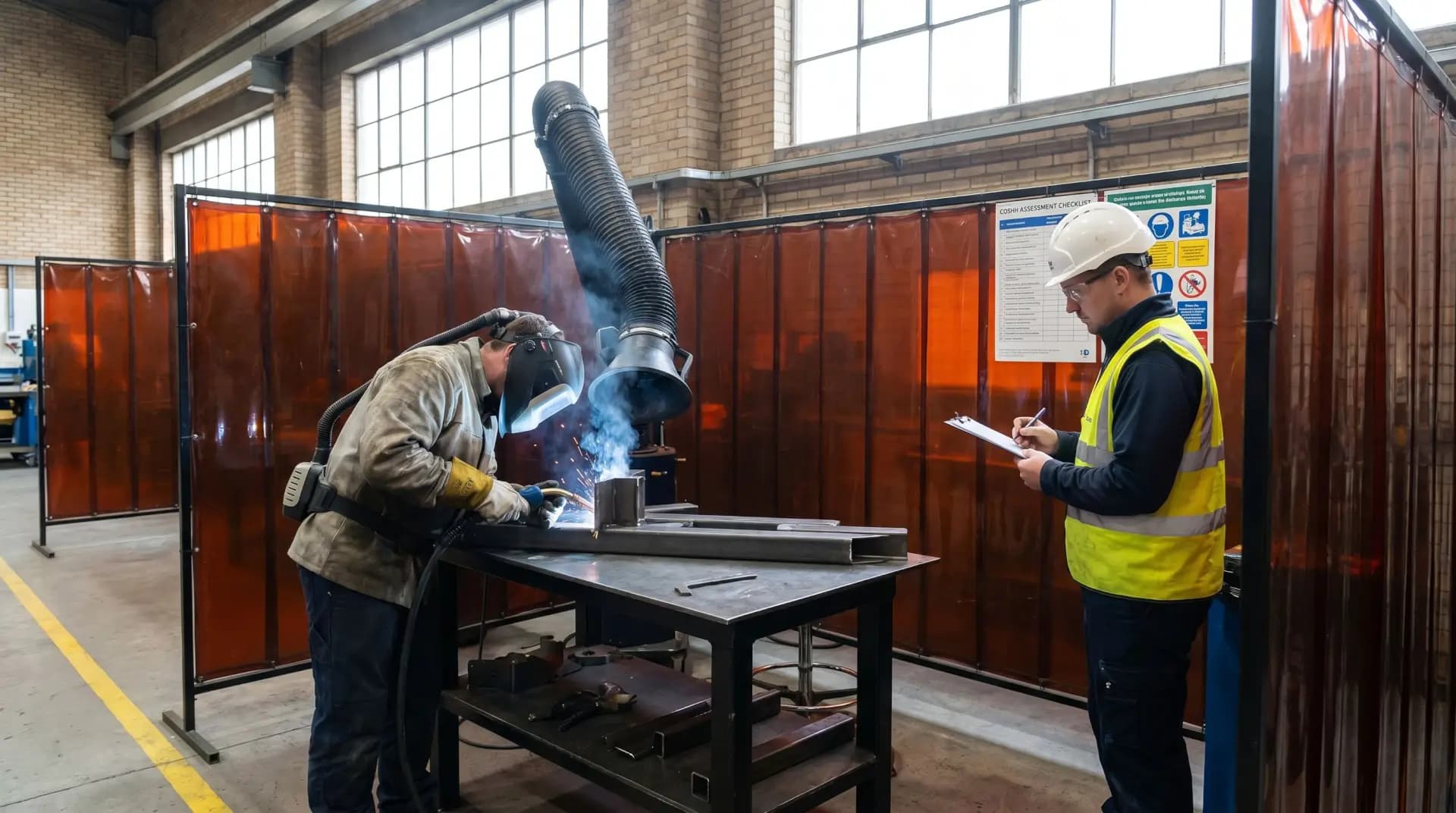
A policy becomes credible when it drives risk control choices. I advise organizations to state clearly that hazards will be controlled using the hierarchy of controls, with elimination and substitution considered before engineering, administrative measures, and PPE. NIOSH places PPE at the bottom of the hierarchy because it depends heavily on correct human behavior and does not remove the hazard at source.
That matters because many weak safety policies promise “PPE and training” without first addressing design, equipment, layout, isolation, guarding, or substitution. In professional practice, that is a warning sign. A good policy should push the organization toward safer systems, not just safer individual behavior.
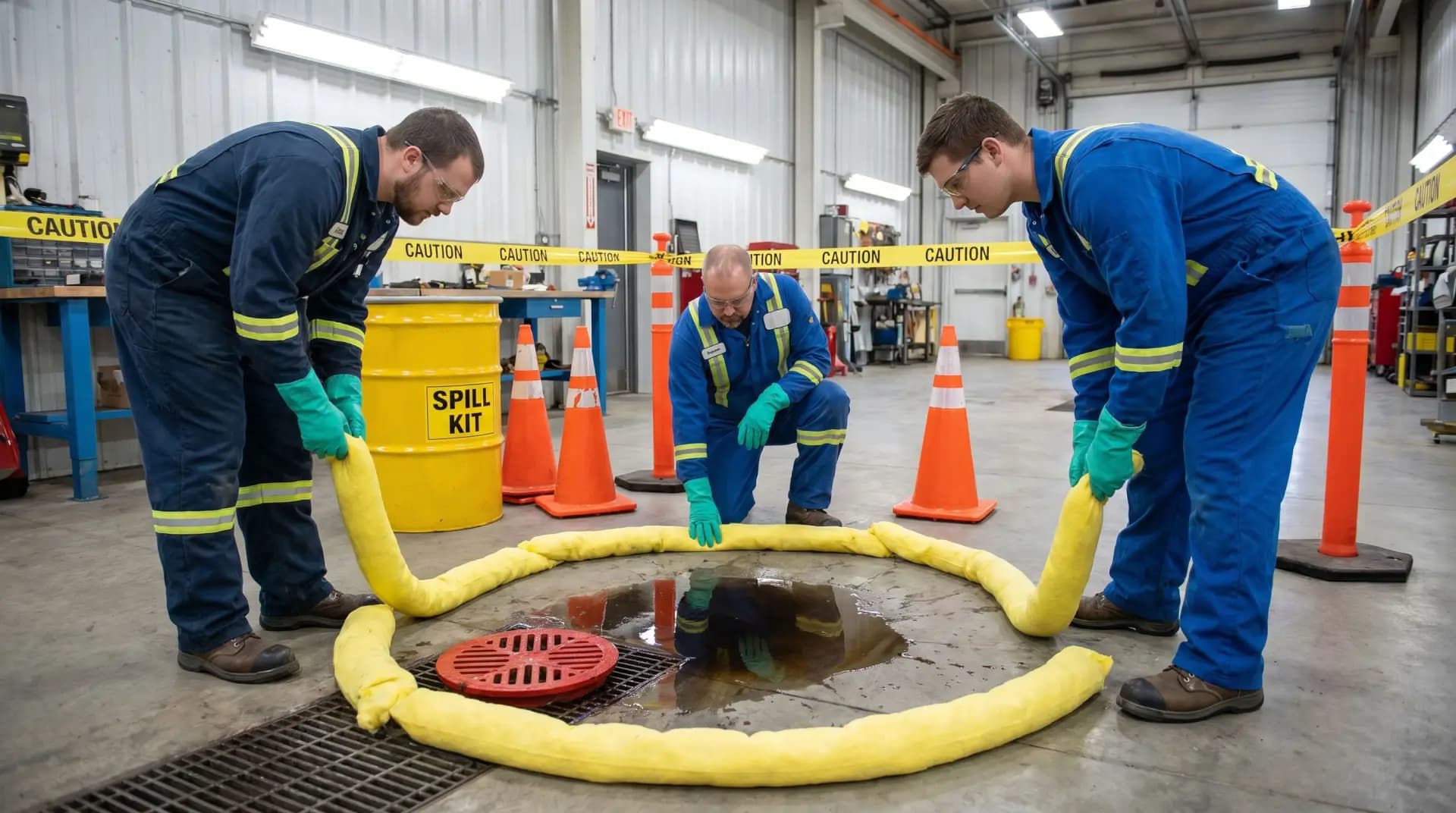
Emergency readiness should sit at policy level, while operational detail should sit in plans and drills. Under OSHA’s general industry rule for emergency action plans, minimum elements include emergency reporting, evacuation procedures, accounting for employees after evacuation, rescue or medical duties, and contact points for more information, with review required when the plan is developed, changed, or an employee’s responsibilities change. Even where that exact U.S. rule does not apply, those elements are a sound benchmark for policy-linked preparedness.
Contractors and change management also need policy attention. ILO guidance emphasizes that organizations should include safety criteria in procurement and contractor selection, establish communication and coordination before work starts, and assess the safety impact of internal and external changes before introducing them. In my view, if a policy is silent on contractors and change, it is incomplete for any organization with projects, maintenance shutdowns, third-party interfaces, or rapidly changing operations.
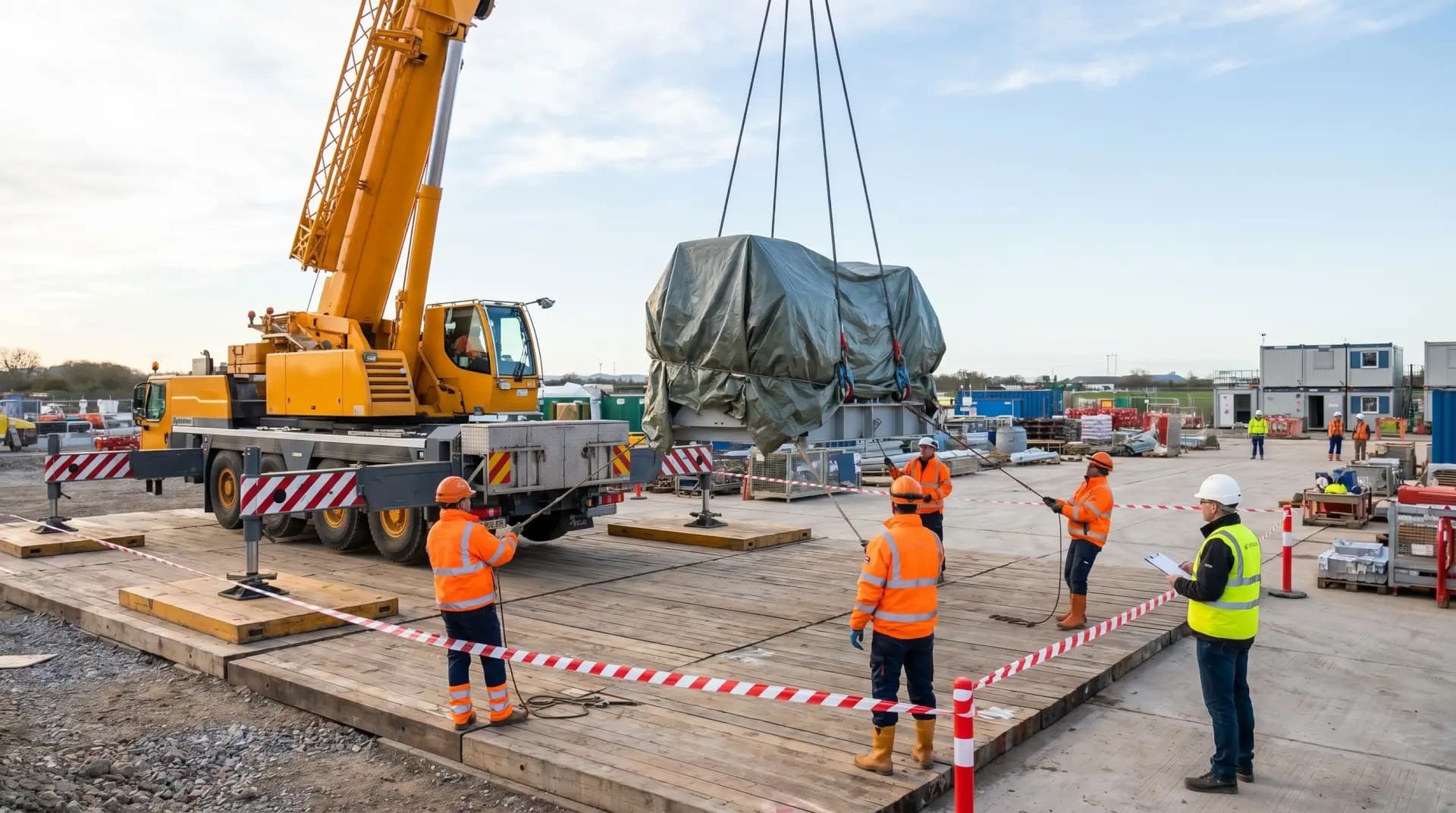
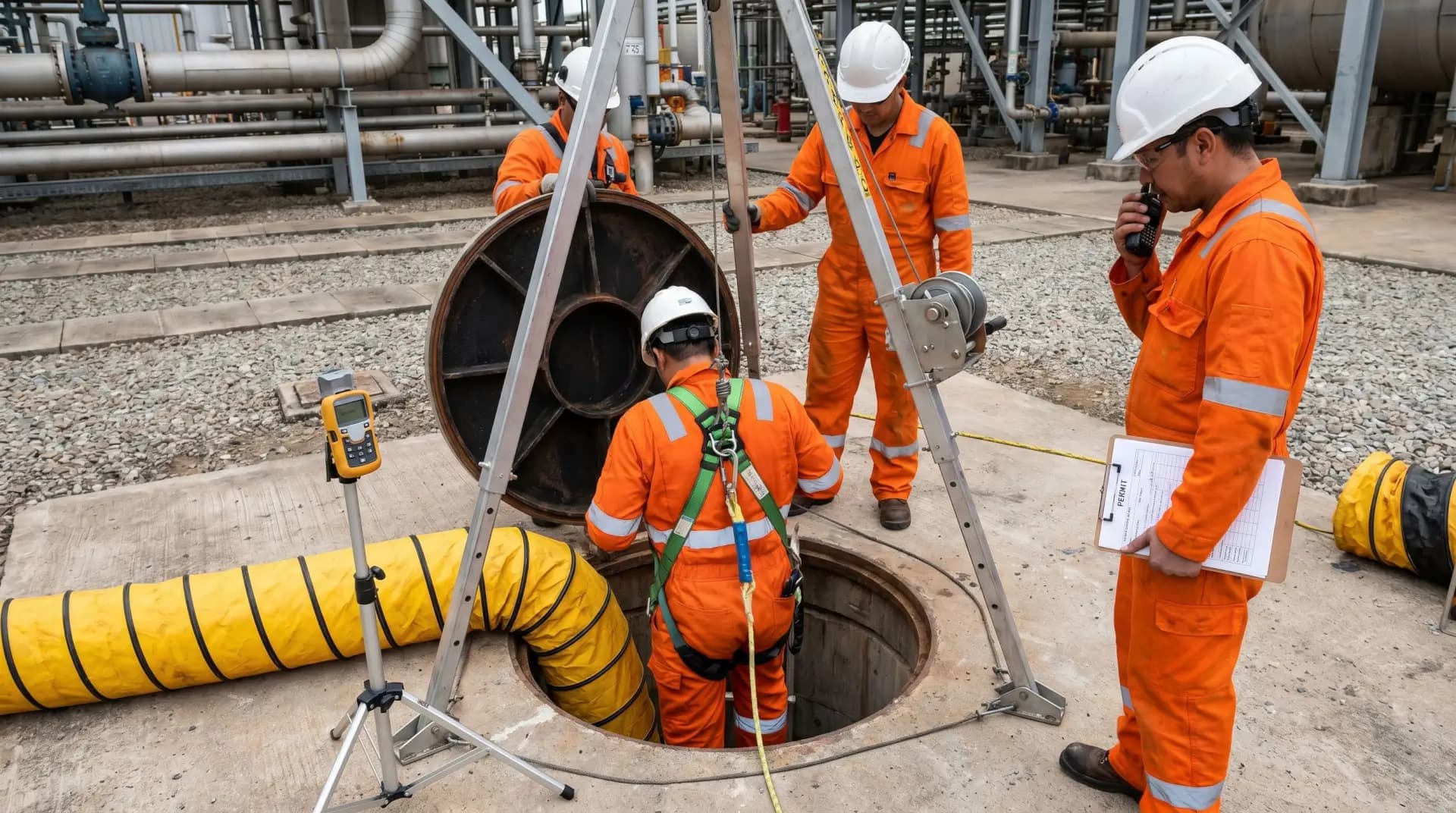
High-risk operations note: Where work involves high energy, confined spaces, working at height, chemicals, mobile plant, or complex contractor interfaces, the policy should explicitly require supporting control frameworks such as permit-to-work, isolation, emergency rescue capability, competence verification, and stronger management-of-change rules. The policy should not try to describe each technical system in detail, but it should require them.
Review, audit, and continuous improvement
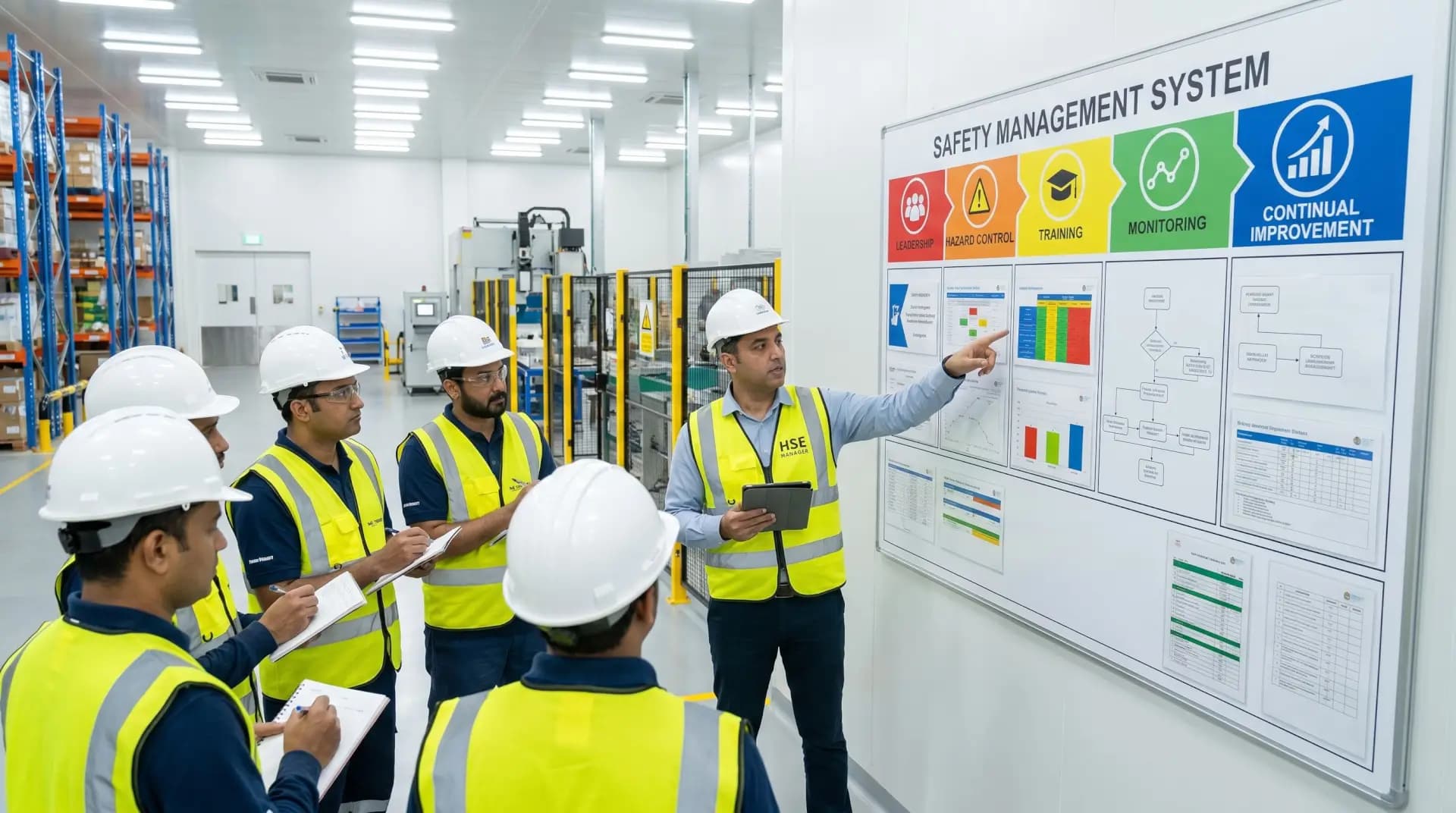
The best review model is still the simplest one: plan, do, check, act. HSE’s HSG65 and ISO 45001 both use this logic because it connects leadership intent, implementation, monitoring, and improvement into one management cycle. I recommend that organizations reflect this directly in policy language so review is not treated as an afterthought.
Review should look beyond lag indicators. OSHA recommends goals that focus on prevention activity, not just injury and illness rates. That is a smart distinction. A mature policy should drive leading indicators such as action closure, inspection quality, training completion, control verification, worker participation, emergency drill performance, and management review completion.
I also advise organizations to define clear update triggers inside the policy itself. Review after incidents, significant findings, process change, reorganization, new equipment, new substances, contractor model changes, and legal updates. Waiting for the annual review alone is too passive for dynamic operations. ILO guidance on management of change and OSHA’s emergency plan review requirements both support this more active approach.
The most common policy mistakes I see are predictable: copying a generic template, assigning vague responsibilities, excluding worker voice, over-relying on PPE, leaving contractors out, and treating review as a paperwork event. A strong policy does the opposite. It is specific, signed, understood, resourced, consulted on, and connected to real operational controls.
Conclusion
A well-developed safety policy is not a ceremonial document. It is the organization’s governing statement on how health and safety will be led, resourced, discussed, controlled, and improved. If I were guiding any organization through policy development, I would focus on six essentials: leadership commitment, clear responsibilities, risk-based arrangements, worker consultation, integration with emergency and contractor controls, and disciplined review. Get those right, and the policy becomes usable. Miss them, and the document may look professional while adding very little protection in practice.



Responses