

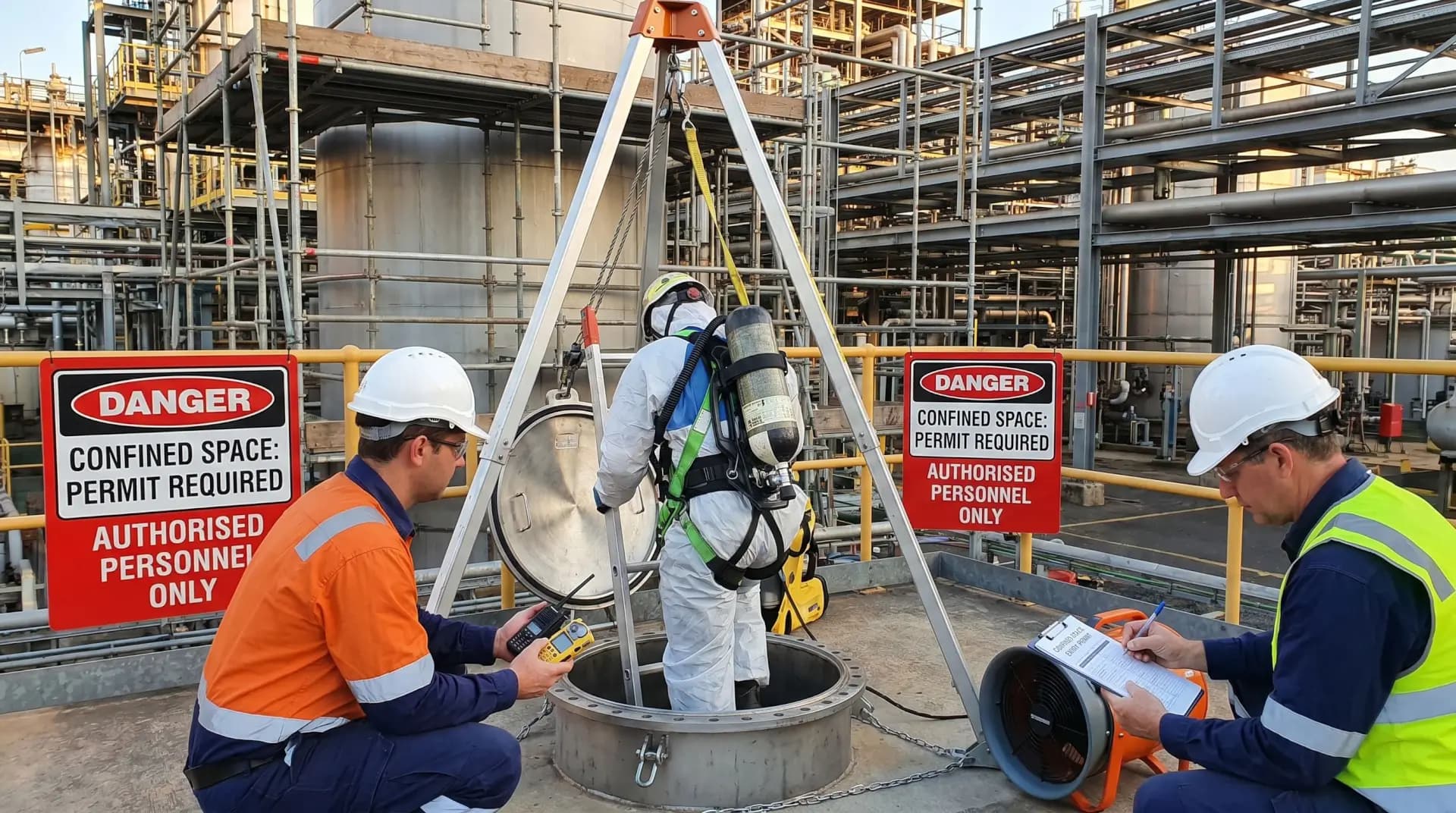
Entering a confined space is not a routine task—it is a controlled, high-risk operation that depends entirely on clearly defined roles and disciplined execution. Every incident I have evaluated in confined spaces traces back to one core failure: role confusion or breakdown in responsibility. When each person understands their duty—and performs it without deviation—the risk is controlled. When they don’t, even a minor lapse can escalate rapidly.
This article breaks down the essential roles and responsibilities in confined space entry, aligned with globally recognized safety frameworks such as OSHA Permit-Required Confined Space standards and international best practices.
What Defines a Confined Space Role Structure?
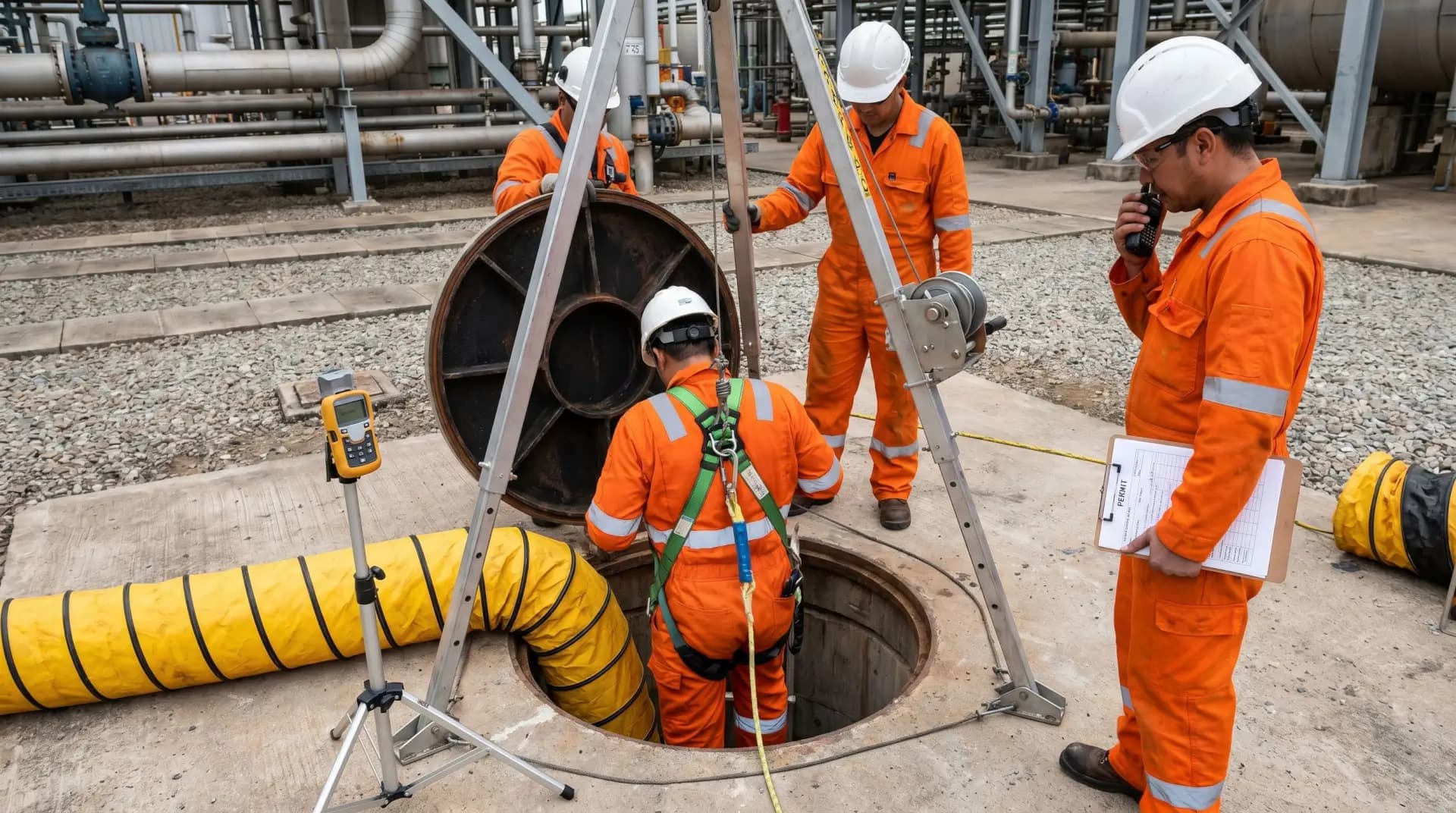
A confined space entry system is built on three primary roles:
Authorized Entrant
Attendant (Hole Watch)
Entry Supervisor
Depending on the complexity, additional support roles like gas testers or rescue teams may be assigned, but the core accountability always sits within these three.
Authorized Entrant: The Person Inside the Space
The authorized entrant is the individual physically entering the confined space to perform work. This role carries direct exposure to hazards such as oxygen deficiency, toxic gases, engulfment, or mechanical risks.
Key Responsibilities:
Understand the hazards identified in the entry permit
Properly use required PPE, including respiratory protection if specified
Maintain continuous communication with the attendant
Monitor internal conditions and recognize warning signs (e.g., dizziness, unusual odors, breathing difficulty)
Exit immediately if:
Ordered by the attendant or supervisor
Alarm systems activate
Unsafe conditions develop
Practical Insight:
In practice, entrants often underestimate gradual hazards like oxygen depletion. I emphasize one rule consistently: if something feels off, exit first—report second.
Attendant (Hole Watch): The Lifeline Outside
The attendant remains outside the confined space and is responsible for monitoring the entrant’s safety. This role is often underestimated, but it is the most critical control point in preventing fatalities.
Key Responsibilities:
Maintain constant communication with entrants
Monitor atmospheric readings (if assigned) and external conditions
Prevent unauthorized entry into the confined space
Initiate emergency response procedures if needed
Never leave the post while entry is ongoing
Critical Limitation:
The attendant must not enter the confined space to perform rescue unless properly trained and relieved by another attendant
Practical Insight:
A common failure I’ve seen is attendants becoming distracted or multitasking. This defeats the entire safety system. The attendant is not a passive observer—they are an active safety control.
Entry Supervisor: The Authority in Charge
The entry supervisor holds overall responsibility for planning, authorizing, and terminating the confined space entry.
Key Responsibilities:
Verify that all hazards have been identified and controlled
Ensure the entry permit is properly completed and authorized
Confirm that all personnel are trained and competent
Ensure rescue arrangements are in place before entry begins
Cancel the permit and stop work if unsafe conditions arise
Decision Authority:
The supervisor has the authority to halt the entire operation at any sign of risk escalation.
Practical Insight:
Effective supervisors don’t just sign permits—they actively verify conditions. A signed permit without verification is one of the most dangerous false assurances in confined space work.
Supporting Roles in Complex Entries
In higher-risk or regulated environments, additional roles may be introduced:
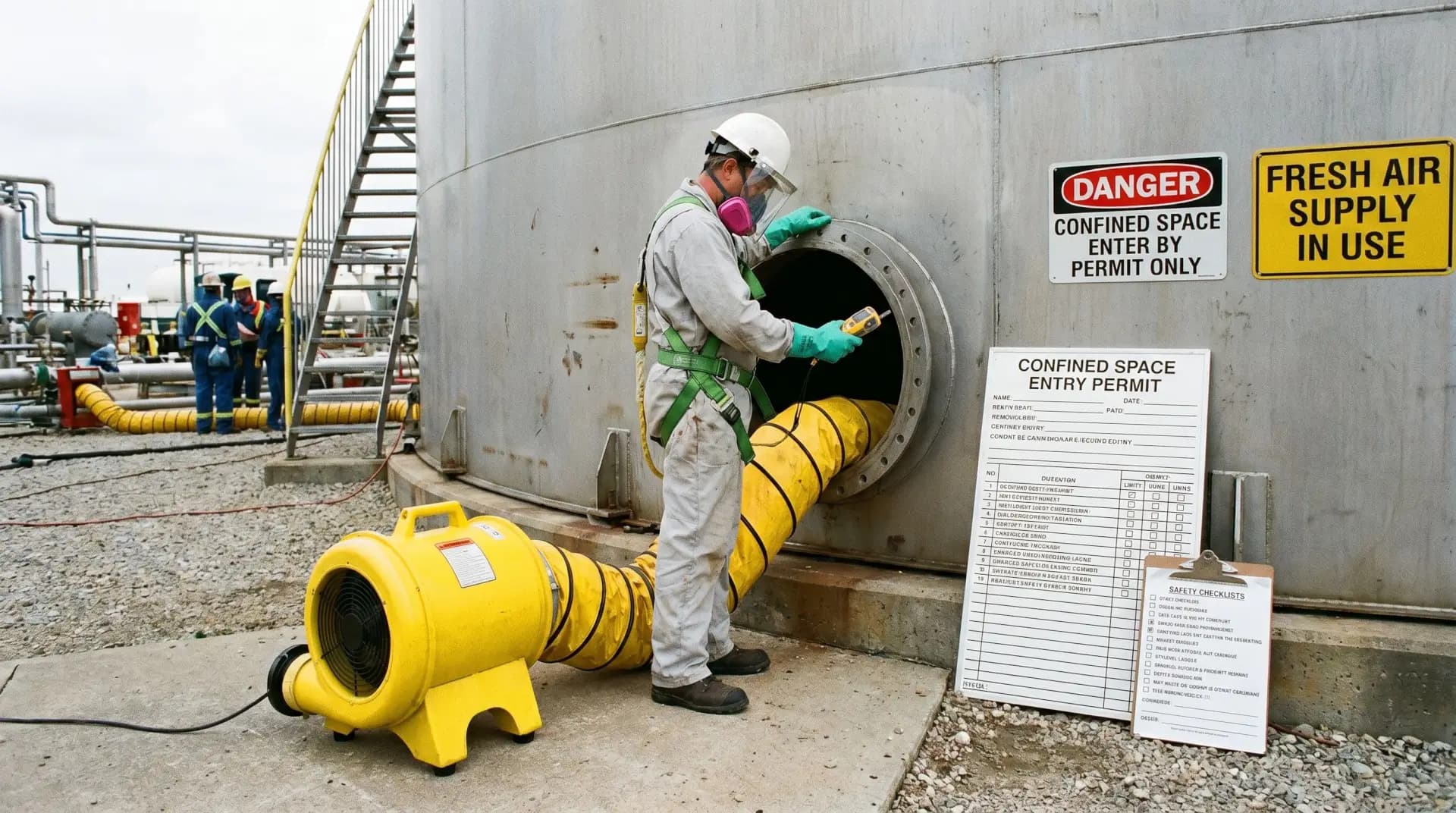
Gas Tester / Atmospheric Monitor
Conduct pre-entry and continuous gas testing
Calibrate and maintain monitoring equipment
Report readings clearly to the team
Rescue Team
Remain on standby with proper equipment
Be trained specifically for confined space rescue
Avoid improvisation—rescue must be pre-planned, not reactive
Role Interaction: How the System Works Together
Confined space safety is not about individual performance—it is about coordinated function.
Workflow Overview:
Entry Supervisor prepares and authorizes the permit
Gas testing confirms safe atmospheric conditions
Attendant takes position and establishes communication
Entrant begins work under continuous monitoring
Supervisor oversees and reassesses conditions
Entry is terminated safely and permit closed
Any breakdown in this chain introduces risk immediately.
Common Role-Based Failures (And How to Avoid Them)
1. Role Overlap Without Control
When one person tries to act as both attendant and supervisor, critical checks are missed.
Correction: Maintain strict role separation unless formally risk-assessed and permitted.
2. Inadequate Training
Personnel assigned roles without proper competency lead to misjudgment during emergencies.
Correction: Ensure role-specific training, not just general awareness.
3. Poor Communication
Lack of clear signals or communication methods leads to delayed response.
Correction: Use defined communication systems (radio, signals, or voice protocols).
4. Ignoring Permit Conditions
Deviation from permit requirements is a frequent root cause of incidents.
Correction: Treat the permit as a live control document—not paperwork.
Regulatory Alignment and Compliance Expectations
Globally, confined space role definitions align closely across standards:
OSHA (United States): Defines entrant, attendant, and entry supervisor roles under permit-required confined space regulations
HSE (UK): Requires competent persons and safe systems of work under confined space regulations
ISO and ILO frameworks: Emphasize risk assessment, role clarity, and emergency preparedness
Regardless of jurisdiction, the principle remains consistent:
Clear roles + trained personnel + controlled entry = safe operation
Conclusion
Confined space entry is a team-based safety system where every role carries equal weight in preventing incidents. From my experience, the difference between a safe entry and a fatal one is rarely equipment—it is almost always clarity of responsibility and discipline in execution.
When entrants stay alert, attendants stay focused, and supervisors stay accountable, confined space work becomes controlled rather than dangerous. Remove any one of these, and the entire system weakens instantly.

Responses