

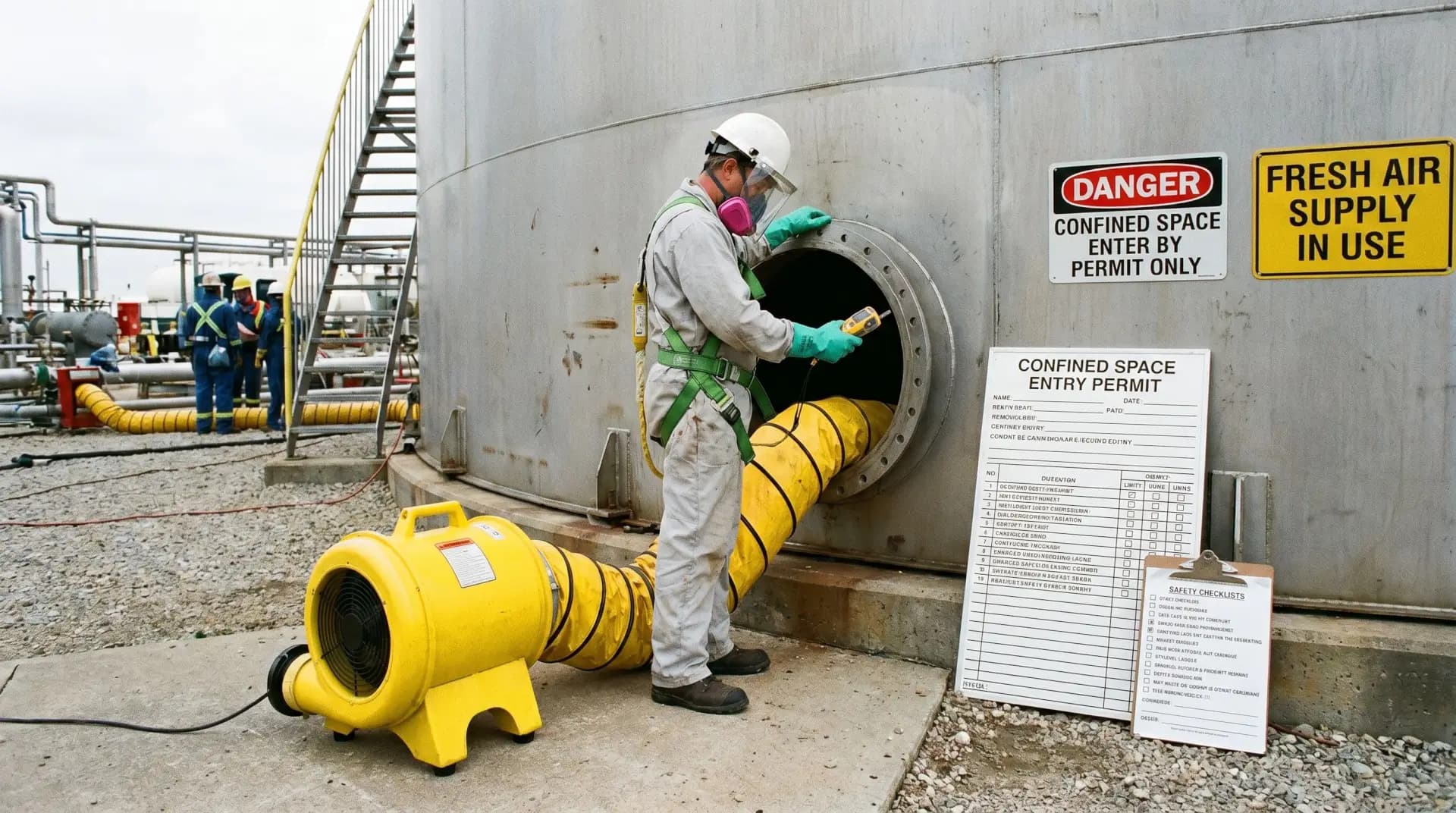
Oxygen depletion in confined spaces is prevented by controlling atmosphere before entry, maintaining continuous ventilation, and enforcing strict entry procedures with real-time monitoring. In practical terms, this means you never trust the air inside a confined space without testing it, you never enter without a permit system, and you never rely on a single safeguard. Oxygen deficiency can occur silently and rapidly, and once levels fall below safe thresholds, the margin for error disappears.
Understanding Oxygen Depletion in Confined Spaces
Oxygen depletion occurs when the concentration of oxygen in a space drops below safe levels, typically due to displacement, consumption, or chemical reactions. Normal atmospheric oxygen is about 20.9%. When it falls below 19.5%, the environment is considered oxygen-deficient and unsafe for entry.
Common causes include:
Displacement by gases such as nitrogen, carbon dioxide, or methane
Oxidation processes like rusting or fermentation
Combustion activities consuming oxygen
Poor ventilation in enclosed or poorly designed spaces
The critical issue is that oxygen deficiency is not detectable by human senses. Workers often realize the danger only after symptoms begin, which is already too late in many cases.
Pre-Entry Atmospheric Testing: The First Line of Defense
Before any entry into a confined space, atmospheric testing must be conducted using a calibrated gas detector. This is not optional—it is the primary control measure.
Key testing requirements:
Test for oxygen levels first, then flammable gases, then toxic gases
Ensure oxygen concentration is between 19.5% and 23.5%
Perform testing at multiple levels (top, middle, bottom)
Use intrinsically safe equipment
Testing must be performed by a competent person, and results must be documented as part of the confined space entry permit.
Ventilation: Maintaining a Safe Atmosphere
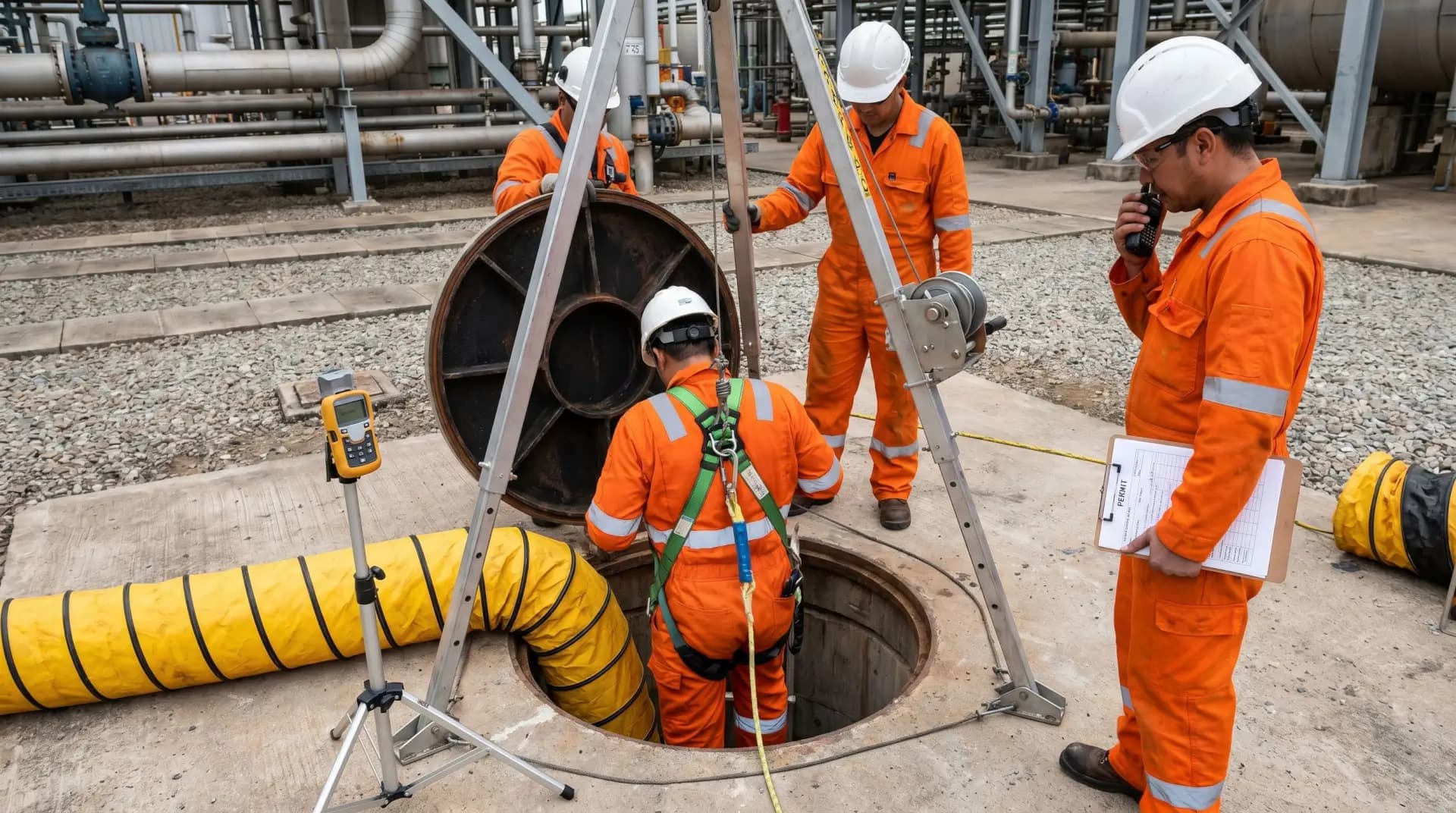
Ventilation is the most effective engineering control to prevent oxygen depletion. It ensures continuous replenishment of fresh air and removal of contaminants.
Types of ventilation:
Natural Ventilation
Limited reliability
Suitable only for low-risk, open-top spaces
Mechanical Ventilation
Forced air using blowers or fans
Required for most confined space entries
Best practices:
Start ventilation before entry and continue during occupancy
Position air inlets to avoid recirculating contaminated air
Ensure adequate air changes per hour
Avoid dead zones where air does not circulate
Ventilation should never be stopped while personnel are inside the space.
Continuous Gas Monitoring: Real-Time Protection
Atmospheric conditions inside confined spaces can change quickly. Continuous monitoring provides real-time alerts if oxygen levels drop.
Monitoring requirements:
Use portable or fixed gas detectors
Ensure alarms are audible and visible
Workers should carry personal monitors when required
Calibrate devices regularly
If oxygen levels fall below safe limits, immediate evacuation is mandatory—no exceptions.
Entry Permit System: Administrative Control That Saves Lives
A confined space entry permit ensures that all hazards are identified and controlled before entry.
A proper permit includes:
Atmospheric test results
Identified hazards and control measures
Names of authorized entrants, attendants, and supervisors
Emergency and rescue procedures
Duration of permit validity
The permit system enforces discipline and prevents unauthorized or unsafe entry.
Isolation of Hazards: Preventing Oxygen Displacement
Isolation ensures that no external source can introduce hazardous conditions into the confined space.
Isolation methods:
Lockout/tagout of mechanical and electrical systems
Blanking or disconnecting pipelines
Blocking moving parts
Draining and cleaning residues
This step is critical where gases or liquids could enter and displace oxygen.
Training and Competency: The Human Factor
Even with the best systems in place, untrained personnel can compromise safety. Workers must understand the risks and procedures associated with confined spaces.
Training should cover:
Hazards of oxygen deficiency
Use of gas detection equipment
Emergency response procedures
Roles and responsibilities (entrant, attendant, supervisor)
Competency is not just about knowledge—it’s about consistent safe behavior.
Emergency Preparedness and Rescue Planning
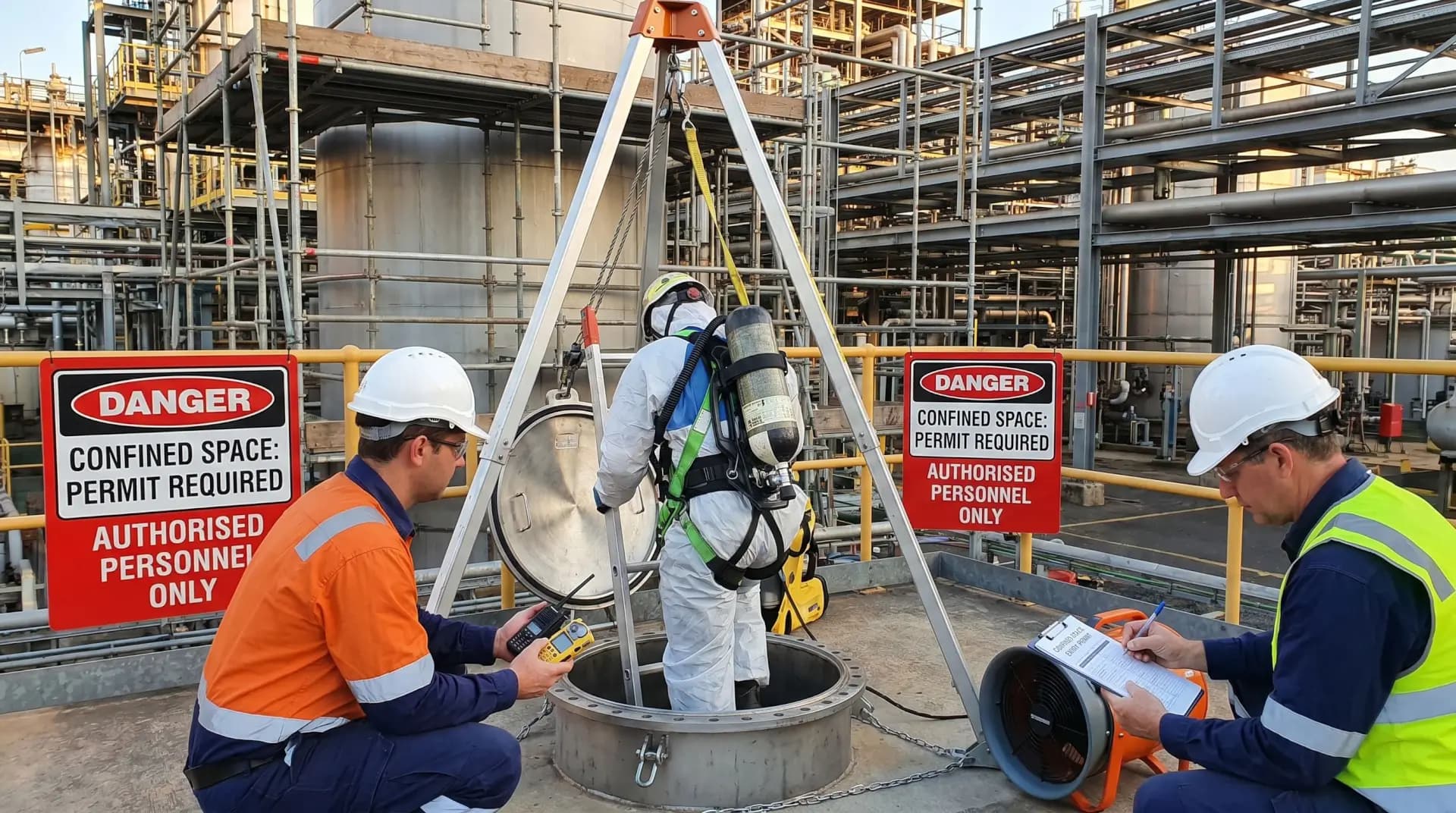
Rescue in oxygen-deficient environments is extremely high-risk. Many fatalities occur when untrained personnel attempt rescue without proper equipment.
Key elements of rescue planning:
Dedicated rescue team trained in confined space operations
Availability of breathing apparatus
Non-entry rescue systems (tripods, harnesses)
Clear communication protocols
Rescue should never rely on improvisation. It must be planned, practiced, and equipped.
Common Mistakes That Lead to Oxygen Depletion Incidents
From my professional observation, these patterns frequently contribute to failures:
Skipping or rushing atmospheric testing
Assuming a space is safe based on previous entry
Inadequate or poorly positioned ventilation
Ignoring gas monitor alarms
Lack of supervision or permit enforcement
These are not technical failures—they are procedural breakdowns.
Conclusion
Preventing oxygen depletion in confined spaces requires a layered approach: testing, ventilation, monitoring, isolation, and strict procedural control. No single measure is sufficient on its own. The reality is simple—confined spaces do not forgive shortcuts. If the atmosphere is not verified and controlled, entry should not happen. Every safe entry is the result of deliberate planning, not assumption.

Responses