

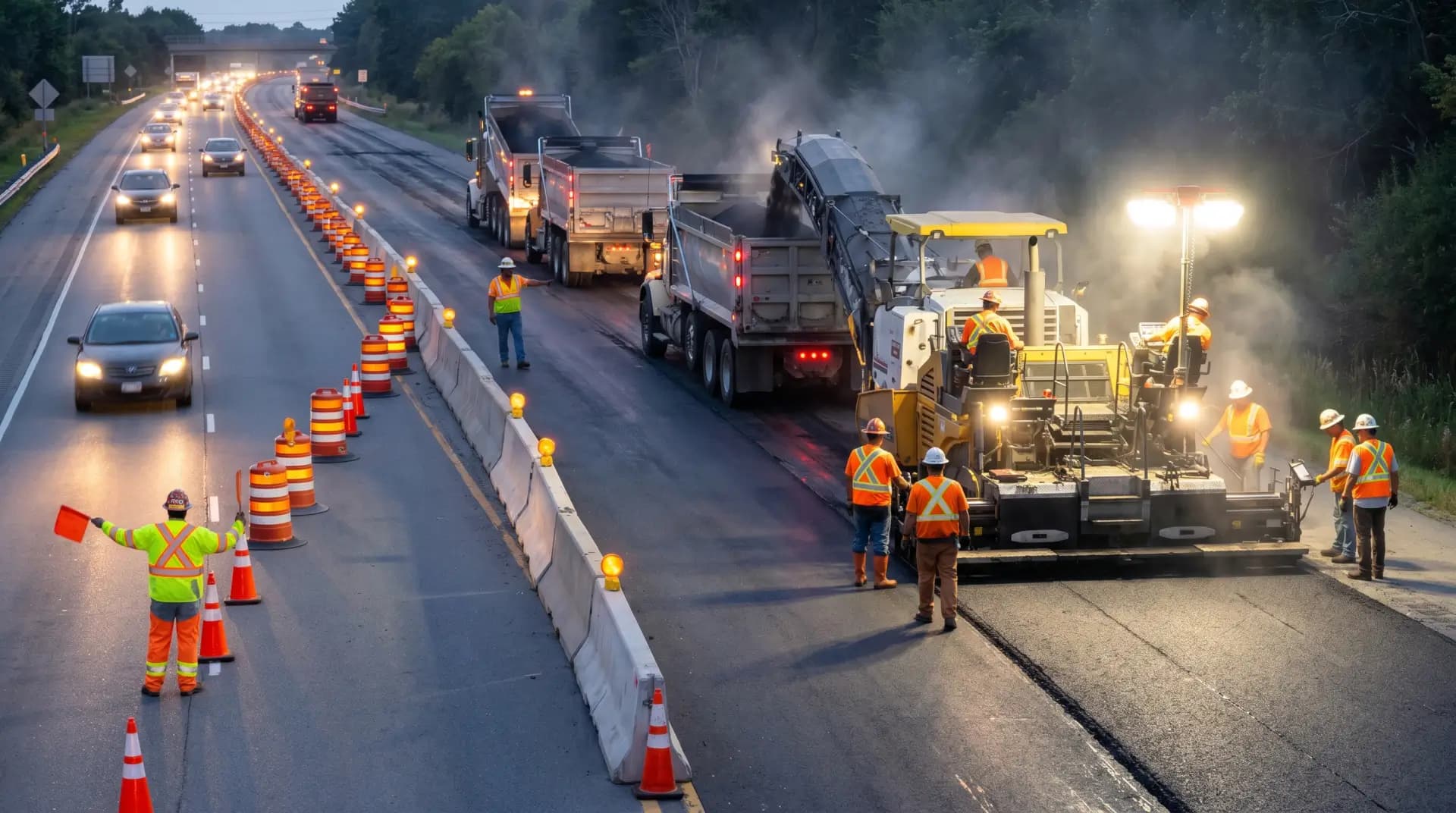
In my HSE judgment, the most reliable road construction safety approach is to design the work zone so that people are not forced to rely on driver attention, operator memory, or worker reflexes. Those are weak controls. The stronger controls are advance warning, safe tapering, barriers, exclusion zones, speed control, internal traffic control, trained flaggers, inspected equipment, proper lighting, and a daily review of changing site conditions.
Why Road Construction Safety Needs a Two-Sided Control Plan
Road construction creates a high-risk interface between the public and the workforce. Workers may be exposed to passing vehicles, reversing equipment, excavations, hot materials, dust, noise, night work, and changing weather. The public may face narrowed lanes, altered pedestrian routes, temporary surfaces, reduced visibility, and unfamiliar traffic patterns.
A good safety plan therefore needs two connected systems:
Safety Area | Main Purpose | Typical Controls |
|---|---|---|
Public traffic control | Guide drivers, cyclists, and pedestrians safely past the work zone | Warning signs, cones, barriers, lane closures, speed management, flaggers, temporary signals |
Internal work zone control | Prevent workers from being struck by site vehicles or equipment | Internal traffic control plan, haul routes, exclusion zones, spotters, reversing controls, worker walkways |
The mistake I often see in road work planning is treating traffic management as only a public road issue. In reality, many serious risks sit inside the work zone, where dump trucks, rollers, pavers, excavators, loaders, and workers on foot operate close together.
A road construction safety plan should answer five practical questions before work starts:
How will the public know what is changing before they reach the hazard?
How will workers be separated from live traffic?
How will workers be separated from construction vehicles?
How will pedestrians, cyclists, and vulnerable road users be protected?
How will the layout change safely as the work progresses?
Temporary Traffic Control Measures for Road Work Zones
Temporary traffic control is the backbone of road construction safety. It should be designed before work starts, checked after installation, and adjusted whenever the site layout changes.
In the United States, the Manual on Uniform Traffic Control Devices sets national standards for traffic control devices on streets, highways, pedestrian and bicycle facilities, and site roadways open to public travel. OSHA construction requirements also address signs, signals, and barricades for construction areas.
A practical temporary traffic control layout usually includes:
Advance warning area to alert road users before they reach the work.
Transition area to move traffic out of its normal path.
Buffer space to provide recovery distance between traffic and workers.
Work area where construction activity takes place.
Termination area to return road users to normal alignment.
These zones should not be treated as paperwork items. Each one has a safety purpose. If the warning area is too short, drivers react late. If the transition is unclear, vehicles drift unpredictably. If the buffer space is used for storage or parking, the work crew loses a critical layer of protection.
Essential public traffic controls
The following measures are normally considered for road construction projects:
Clear and legible warning signs placed before the work zone.
Cones, drums, delineators, or barriers to guide traffic.
Crashworthy barriers where exposure is severe or long-duration.
Reduced speed limits where legally authorized and properly posted.
Temporary traffic signals or trained flaggers for single-lane operation.
Safe pedestrian detours with ramps, fencing, and accessible surfaces.
Lighting for night work, without glare into drivers’ eyes.
Regular inspection after storms, traffic impact, vandalism, or layout changes.
A traffic control setup should be simple enough for a tired driver to understand quickly. Complicated layouts increase hesitation, sudden braking, and lane conflicts.
Worker Protection Measures Inside the Work Zone
Protecting workers requires more than keeping the public out. Inside the work zone, construction vehicles can create serious struck-by hazards. NIOSH identifies work zones as areas where workers may be struck by passing motorists or by construction equipment, and its work zone safety guidance highlights crashes, injuries, and fatalities as continuing concerns.
The most effective internal control is an Internal Traffic Control Plan, often called an ITCP. The purpose of an ITCP is to coordinate the movement of construction vehicles, equipment, workers, and others inside the work zone and to separate workers on foot from moving equipment as far as practicable.
Internal Traffic Control Plan checklist
A strong ITCP should include:
Designated entry and exit points for trucks and equipment.
One-way haul routes where possible.
Separate walking routes for workers.
No-go zones around operating equipment.
Controlled reversing areas.
Spotter requirements where reversing cannot be eliminated.
Communication methods between operators, spotters, and supervisors.
Safe locations for worker briefing, rest, and material staging.
Rules for delivery drivers and subcontractors entering the site.
Reversing is one of the most important activities to control. OSHA notes that backover prevention can include spotters, cameras, proximity detection systems, alarms, and other technologies that help drivers detect people or objects behind vehicles.
In practice, I prefer a hierarchy: first eliminate unnecessary reversing, then redesign traffic flow, then use spotters and technology as supporting controls. A backup alarm alone is not enough in a noisy road construction environment.
High-visibility clothing and PPE
High-visibility clothing is essential, but it should not be mistaken for full protection. OSHA has addressed high-visibility garments for workers exposed to road and construction traffic, including flaggers and workers exposed to public vehicular traffic near excavations.
Typical PPE for road construction may include:
High-visibility vest, jacket, shirt, or trousers suitable for the work environment.
Hard hat with reflective markings where required.
Safety footwear with toe and sole protection.
Gloves suitable for handling, hot work, or chemical exposure.
Eye and face protection for cutting, chipping, grinding, or asphalt work.
Hearing protection near plant, breakers, saws, and compactors.
Respiratory protection where dust or fumes cannot be adequately controlled by engineering methods.
PPE should be selected for the actual exposure. For night work, retroreflective performance matters. For hot asphalt or cutting work, general-purpose gloves may not be enough. For dusty cutting, a vest does nothing to protect lungs.
Equipment, Excavation, and Material Handling Safety
Road construction often combines heavy equipment, excavation, utility work, lifting, asphalt, concrete cutting, and compacting. Each activity needs task-specific controls.
Heavy equipment safety
Heavy equipment should be inspected before use, maintained in safe condition, and operated only by competent authorized persons. Common controls include:
Daily pre-use inspections.
Functional brakes, lights, horn, mirrors, cameras, and alarms.
Seat belt use where fitted.
Stable travel routes with suitable ground conditions.
Exclusion zones around swing radius and blind spots.
Clear rules for approaching equipment.
Banksman or spotter control where visibility is restricted.
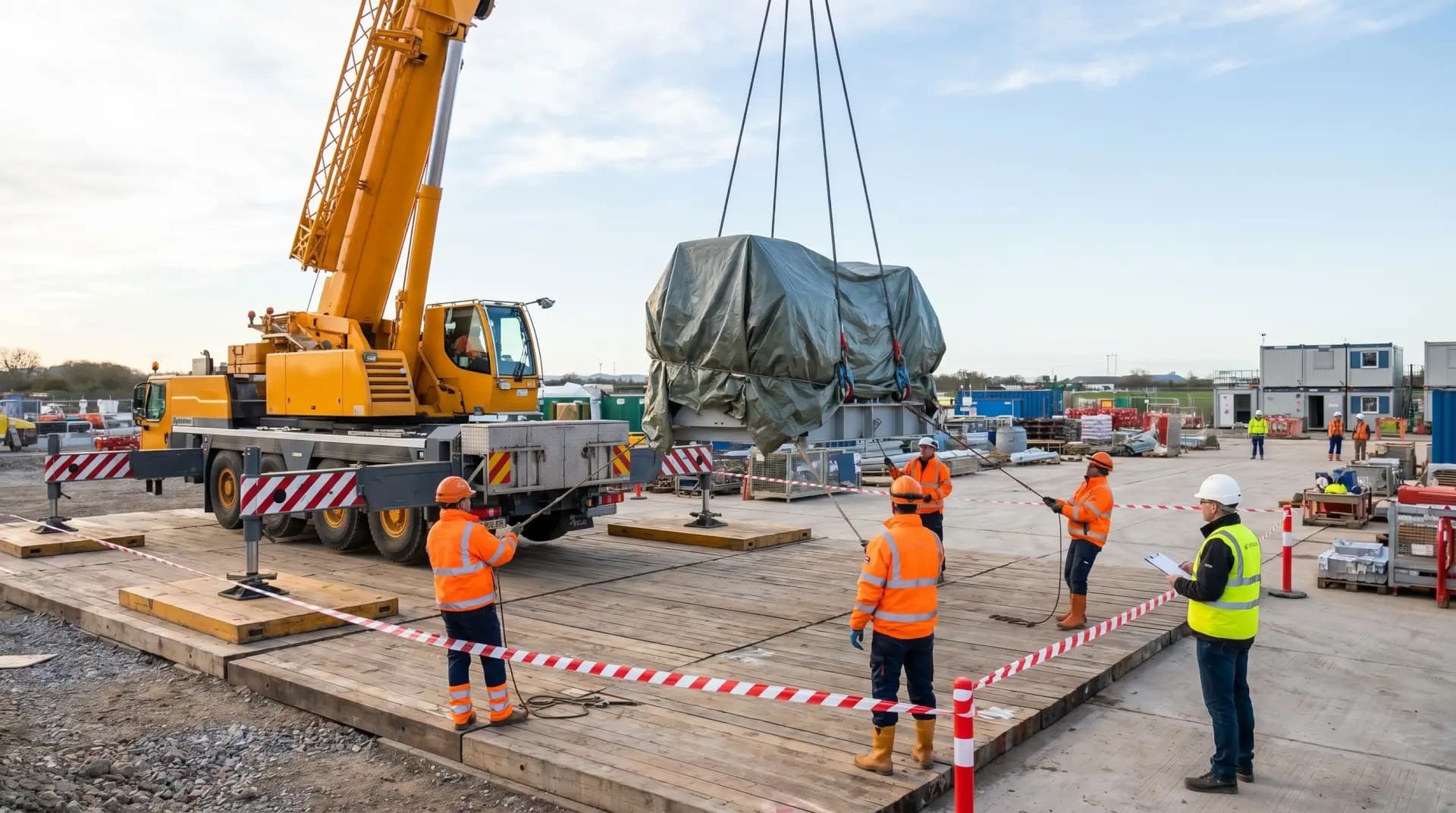
Safe loading and unloading of plant from transport vehicles.
Blind spots deserve serious attention. Large road construction vehicles can hide workers from the operator’s view, especially close to the machine. NIOSH provides construction equipment visibility resources to help identify areas around equipment that may not be visible from the operator’s position.
Excavation and trenching controls
Road work often involves drainage, utility relocation, ducting, culverts, and trenching. Excavations should never be treated as routine. OSHA’s excavation standards apply to open excavations, including trenches, and cover requirements such as protection from cave-ins and other excavation hazards.
Key excavation safety measures include:
Locating underground services before digging.
Using permits and utility clearance procedures.
Providing safe access and egress.
Keeping spoil piles and equipment away from excavation edges.
Preventing vehicles from approaching unsupported edges.
Using shoring, shielding, sloping, or benching where required.
Inspecting excavations after rain, vibration, ground movement, or changes in condition.
Protecting the public from open excavations with barriers and covers.
For public-facing road work, open trenches and incomplete surfaces must be controlled after working hours as carefully as during active work. A trench left behind a weak barrier can become a public fatality risk.
Dust, silica, asphalt, and hot work
Cutting, grinding, milling, and breaking concrete or asphalt can generate hazardous dust. OSHA’s construction silica standard requires employers to limit worker exposure to respirable crystalline silica and take protective measures where the standard applies.
Practical controls include:
Wet cutting or water suppression.
On-tool extraction where suitable.
Isolation of dusty tasks.
Respiratory protection where engineering controls do not reduce exposure adequately.
Housekeeping that avoids dry sweeping of hazardous dust.
Worker training on dust hazards and controls.
Hot asphalt and bitumen work also need controls for burns, heat exposure, fumes, fire risk, and safe plant movement. Workers should understand safe distances from pavers, rollers, spray bars, and delivery trucks.
Protecting Pedestrians, Cyclists, Drivers, and Nearby Properties
Public protection is a legal and moral duty on road construction projects. The public may not understand construction hazards, may ignore signs, or may be distracted. A safe plan anticipates foreseeable behavior rather than assuming perfect compliance.
Pedestrian and cyclist protection should be planned with the same seriousness as vehicle traffic. Temporary pedestrian routes should be continuous, stable, well-lit, clearly signed, and accessible. Where sidewalks are closed, the detour should not force pedestrians into live traffic without protection.
Good public protection measures include:
Physical barriers between pedestrians and work activities.
Safe crossing points with clear sight lines.
Temporary ramps that do not create trip hazards.
Protected routes around excavations and plant movement.
Separate cyclist guidance where cycle lanes are affected.
Clear access to homes, businesses, bus stops, and emergency routes.
Dust, noise, and vibration controls for nearby residents and properties.
Secure fencing and covers after working hours.
A road work site should be checked from the viewpoint of a driver, a pedestrian, a cyclist, a delivery driver, a child, an elderly person, and a person with mobility limitations. This simple mental exercise often reveals hazards that the construction team may overlook.
Training, Communication, and Supervision
Road construction safety depends heavily on communication because the work environment changes frequently. A safe setup in the morning can become unsafe by afternoon when paving progresses, deliveries arrive, traffic increases, or weather changes.
Training should cover:
Site-specific traffic management arrangements.
Emergency procedures.
Plant and pedestrian separation rules.
Flagging or traffic control duties where applicable.
Reversing and spotter procedures.
Excavation hazards.
PPE requirements.
Heat stress, fatigue, dust, noise, and manual handling.
Public interaction and reporting unsafe behavior.
Daily briefings should be short, specific, and based on the actual work for that shift. I do not consider a generic toolbox talk enough for high-risk road work. Workers need to know what has changed today: which lane is closed, where trucks will reverse, where pedestrians are being diverted, which excavation is open, and who has authority to stop work.
Communication with road users
Road users need early, clear, and consistent information. Confusing signs or sudden changes create public risk. Communication may include:
Advance public notices for major works.
Variable message signs.
Clear diversion signs.
Coordination with local authorities and emergency services.
Access notices for businesses and residents.
Dedicated contact channels for complaints or urgent issues.
For long-duration projects, public communication should be reviewed regularly. A sign that made sense during phase one may be misleading in phase three.
Inspection, Emergency Preparedness, and Continuous Improvement
A road construction safety plan is only effective if it is inspected and corrected. Site conditions change faster than many written plans. Supervisors should inspect traffic control devices, barriers, pedestrian routes, lighting, excavations, equipment routes, and housekeeping before work starts and during the shift.
What supervisors should inspect
Inspection Area | What to Check |
|---|---|
Signs and cones | Correct placement, visibility, stability, damage, missing devices |
Barriers and fencing | Alignment, gaps, impact damage, public access points |
Worker routes | Separation from plant, slip and trip hazards, lighting |
Equipment routes | Ground condition, turning areas, reversing zones, edge protection |
Excavations | Protection systems, access, edge loading, water, public barriers |
Night work | Lighting coverage, glare, reflective devices, worker visibility |
Emergency access | Ambulance route, fire access, rescue equipment, communication |
Emergency planning should include vehicle intrusion, worker struck-by incident, trench collapse, fire, spill, heat illness, severe weather, and public injury. Rescue arrangements must be realistic. For example, a trench rescue plan that depends only on calling emergency services after collapse is not enough; prevention and immediate site control are critical.
NIOSH heat stress guidance also recognizes that outdoor and hot-environment workers can be at risk of heat-related illness, and heat risk is influenced by environmental heat, workload, and PPE.
For hot weather road work, practical controls include:
Scheduling heavy tasks for cooler periods where possible.
Drinking water access.
Rest breaks in shaded or cooler areas.
Acclimatization for new or returning workers.
Monitoring for heat illness symptoms.
Supervisor authority to slow or stop work when conditions become unsafe.
Stop-work authority
Every road construction project should have a clear stop-work rule. Workers and supervisors should stop work when:
Traffic control devices are missing, damaged, or wrongly positioned.
A vehicle enters the work zone unexpectedly.
Workers and equipment cannot be safely separated.
Excavation conditions change.
Visibility becomes poor.
A pedestrian route becomes unsafe.
A worker shows signs of heat illness or serious fatigue.
The work method no longer matches the approved plan.
A mature safety culture does not punish people for stopping unsafe road work. It treats stop-work action as a control, not an inconvenience.
Conclusion
Road construction safety measures protect workers and the public when they are planned as a complete system, not as isolated items. The safest projects combine temporary traffic control, internal traffic separation, trained workers, competent supervision, safe equipment movement, excavation controls, public protection, and continuous inspection.
My practical rule is simple: do not allow workers, public traffic, pedestrians, and heavy equipment to negotiate safety informally in the same space. Design the separation, communicate the changes, inspect the controls, and correct weaknesses before exposure becomes an incident.
Road work will always involve changing conditions, but change should not mean confusion. A disciplined safety plan gives drivers clear direction, gives workers protected space, and gives supervisors the authority to act before a hazard becomes a loss.

Responses