

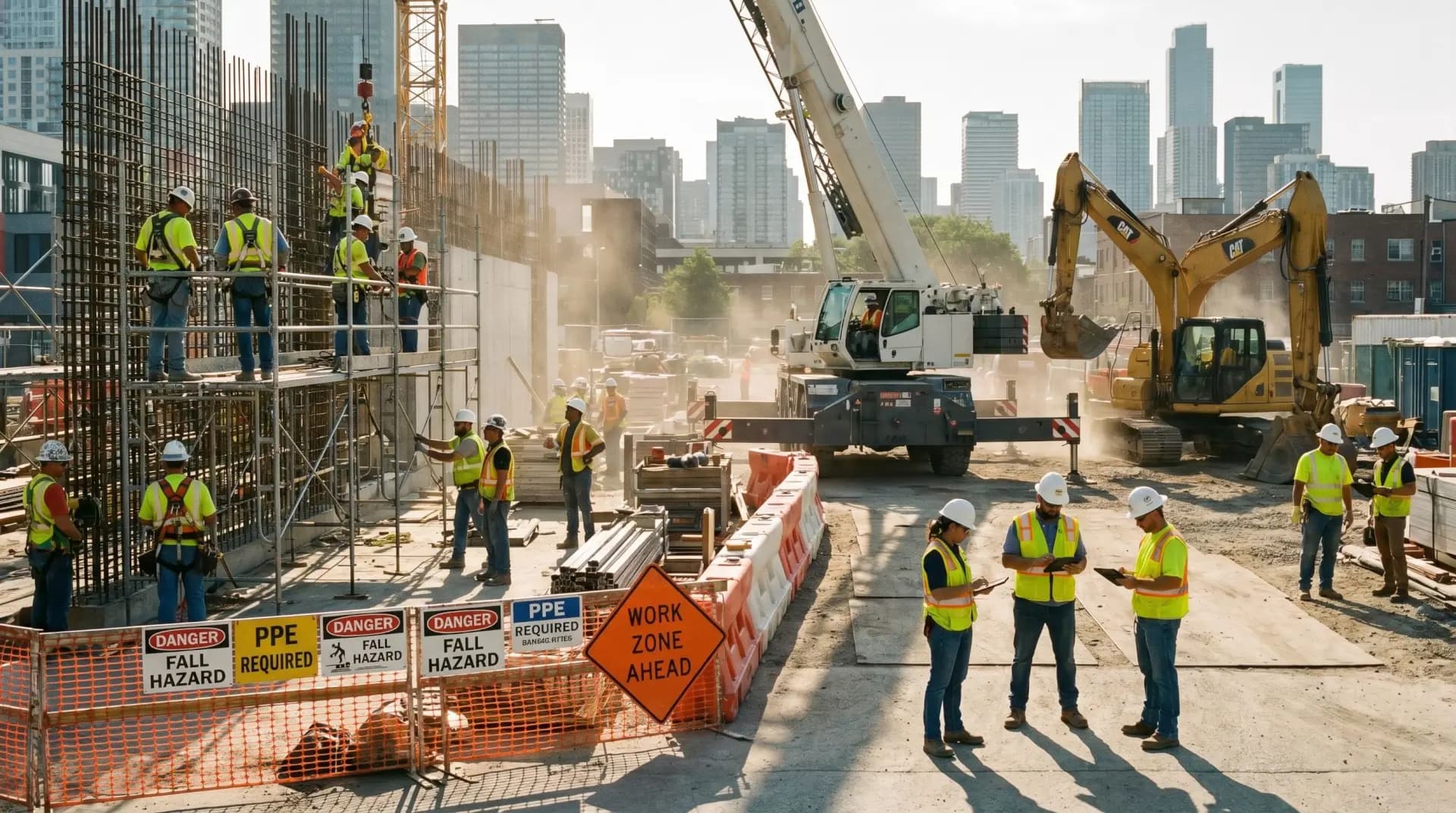
Construction site safety rules for workers are not optional guidelines—they are operational controls that directly prevent injuries, fatalities, and project disruptions. Every worker on a construction site must follow structured safety practices covering personal protective equipment (PPE), hazard awareness, equipment use, and behavioral discipline. When these rules are applied consistently, they form a reliable barrier against the most common construction risks such as falls, struck-by incidents, electrocution, and caught-in/between hazards.
Understanding the Core Safety Principles
Construction safety begins with a simple principle: recognize hazards before they become incidents. Workers are exposed to dynamic risks—changing work zones, moving equipment, elevated work, and temporary structures.
From my professional practice, effective safety on site always aligns with three fundamentals:
Awareness – knowing the hazards in your immediate environment
Control – using systems, PPE, and procedures to manage risks
Discipline – consistently following rules even under pressure
Without these, even well-designed safety systems fail in execution.
Mandatory Personal Protective Equipment (PPE)
PPE is the last line of defense, but on construction sites, it becomes a daily necessity. Workers must wear PPE appropriate to their tasks at all times.
Basic PPE Requirements
Safety helmets to protect from falling objects
High-visibility clothing for visibility around vehicles
Safety boots with toe protection and slip resistance
Gloves suited to the task (cut-resistant, chemical-resistant, etc.)
Eye protection when cutting, grinding, or drilling
Task-Specific PPE
Fall arrest harnesses for work at height
Respiratory protection in dusty or confined environments
Hearing protection in high-noise areas
A common mistake I observe is selective PPE use—workers wearing gear only when supervision is present. This behavior defeats the entire purpose of protection.
Fall Protection Rules
Falls remain one of the leading causes of serious injuries in construction. Controlling fall risks requires strict adherence to working-at-height protocols.
Key Safety Rules
Always use guardrails, safety nets, or fall arrest systems when working at height
Inspect ladders and scaffolds before use
Never improvise platforms using unstable materials
Maintain three points of contact when climbing ladders
Practical Insight
Workers often underestimate low-height falls. In reality, even short falls can lead to severe injuries depending on landing conditions.
Safe Use of Tools and Equipment
Construction sites rely heavily on tools and machinery, which introduce mechanical hazards if misused.
Essential Practices
Inspect tools before use for defects or damage
Use the right tool for the job—never substitute
Ensure machinery guards are in place
Only trained and authorized personnel should operate heavy equipment
Behavioral Risk to Watch
Rushing tasks often leads to bypassing safety features. This is where most tool-related incidents originate.
Electrical Safety Awareness
Temporary electrical systems are common on construction sites and present significant risks.
Critical Rules
Never handle electrical equipment with wet hands
Use properly insulated tools and cables
Report damaged wiring immediately
Maintain safe distance from live circuits
High-Risk Scenario
Unauthorized modifications to electrical setups are a frequent cause of incidents. Workers must never attempt repairs unless qualified.
Housekeeping and Site Organization
Poor housekeeping creates hidden hazards that can escalate quickly.
Key Requirements
Keep walkways clear of debris and materials
Store tools properly after use
Manage waste regularly
Secure loose materials that may fall or shift
From experience, slips, trips, and falls are often dismissed as minor risks—but they are among the most frequent causes of lost-time injuries.
Communication and Reporting
Safety is a shared responsibility. Workers must actively participate in communication processes.
Expected Actions
Attend toolbox talks and safety briefings
Report hazards, near misses, and unsafe conditions immediately
Follow signage and warning systems
Coordinate clearly when working in teams
Cultural Observation
Sites with open reporting cultures consistently perform better in safety metrics than those where workers hesitate to speak up.
Emergency Preparedness
Every worker must know how to respond when things go wrong.
Basic Emergency Rules
Know the location of emergency exits and assembly points
Understand alarm signals and evacuation procedures
Be aware of first aid facilities and trained personnel
Do not panic—follow established protocols
Preparedness reduces chaos and prevents secondary incidents during emergencies.
Behavioral Safety and Personal Responsibility
Rules alone do not ensure safety—worker behavior determines outcomes.
Core Expectations
Do not take shortcuts
Avoid distractions, especially when operating equipment
Never work under the influence of drugs or alcohol
Challenge unsafe acts when observed
In practice, most serious incidents can be traced back to unsafe decisions rather than lack of rules.
Conclusion
Construction site safety rules for workers are built around prevention, control, and accountability. PPE, fall protection, equipment safety, electrical awareness, housekeeping, communication, and emergency readiness all work together as a system—not isolated measures.
From years of HSE practice, one pattern remains consistent: sites that enforce simple rules consistently outperform those with complex systems poorly applied. Safety is not about adding more procedures—it is about ensuring the existing ones are followed every single time.

Responses