

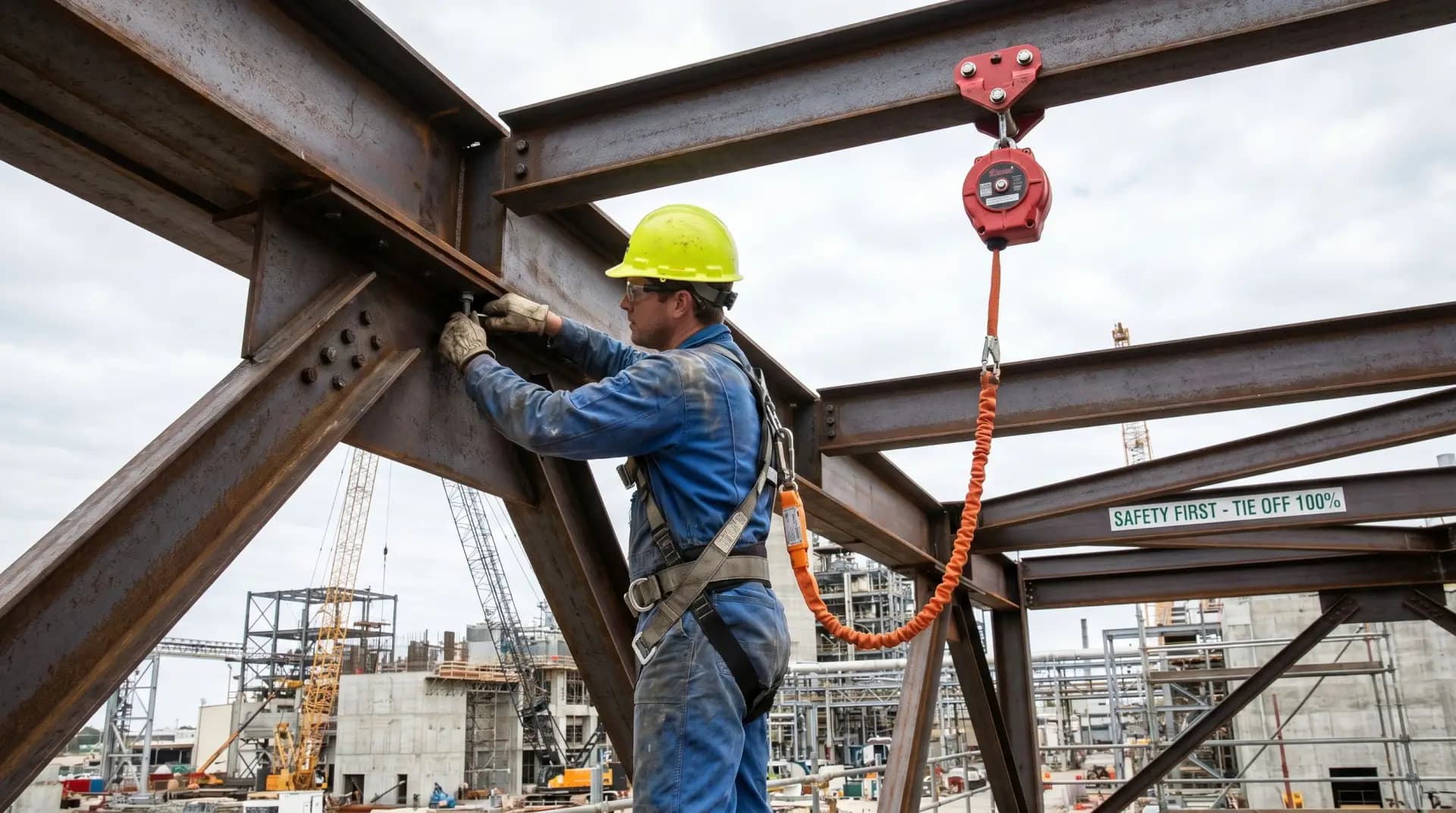
Retractable fall protection devices—commonly known as self-retracting lifelines (SRLs)—are engineered to arrest a fall almost instantly by automatically locking when a rapid descent is detected. Unlike traditional lanyards, they maintain constant tension on the lifeline, reducing free-fall distance and significantly lowering the forces transmitted to the worker. In practical terms, they are one of the most effective controls for working at height where mobility and rapid fall arrest are both critical.
What Is a Retractable Fall Protection Device?
A retractable fall protection device is a mechanical fall arrest system consisting of a drum-wound lifeline that extends and retracts as the user moves. Inside the housing, a braking mechanism engages when the line accelerates beyond a set speed, locking the drum and stopping the fall within a short distance.
These devices are typically used as part of a personal fall arrest system (PFAS) and are connected between an anchorage point and a worker’s full-body harness.
Key Components
Housing Unit: Contains the drum, spring, and braking system
Lifeline (Cable or Webbing): Extends and retracts with user movement
Braking Mechanism: Activates during sudden acceleration
Connector (Hook/Carabiner): Attaches to harness D-ring
Energy Absorption Feature: Reduces arresting forces
How Retractable Devices Work in Practice
In normal operation, the lifeline extends smoothly as the worker moves and retracts automatically to eliminate slack. The system continuously maintains light tension, preventing trip hazards and minimizing fall distance.
When a fall occurs:
The lifeline accelerates rapidly
The internal braking system engages
The drum locks almost instantly
The worker’s fall is arrested within a short distance
This rapid response is what differentiates SRLs from shock-absorbing lanyards, which allow longer free-fall distances before engaging.
Types of Retractable Fall Protection Devices
1. Self-Retracting Lifelines (SRLs)
Standard units used in construction, maintenance, and general industry. Available in various lengths and materials.
2. Leading Edge SRLs
Designed for situations where the lifeline may contact sharp or abrasive edges. These include enhanced durability and energy absorption systems.
3. Personal SRLs (Compact Units)
Lightweight and shorter devices worn directly on the harness. Ideal for tasks requiring frequent movement.
4. Retrieval SRLs (SRL-R)
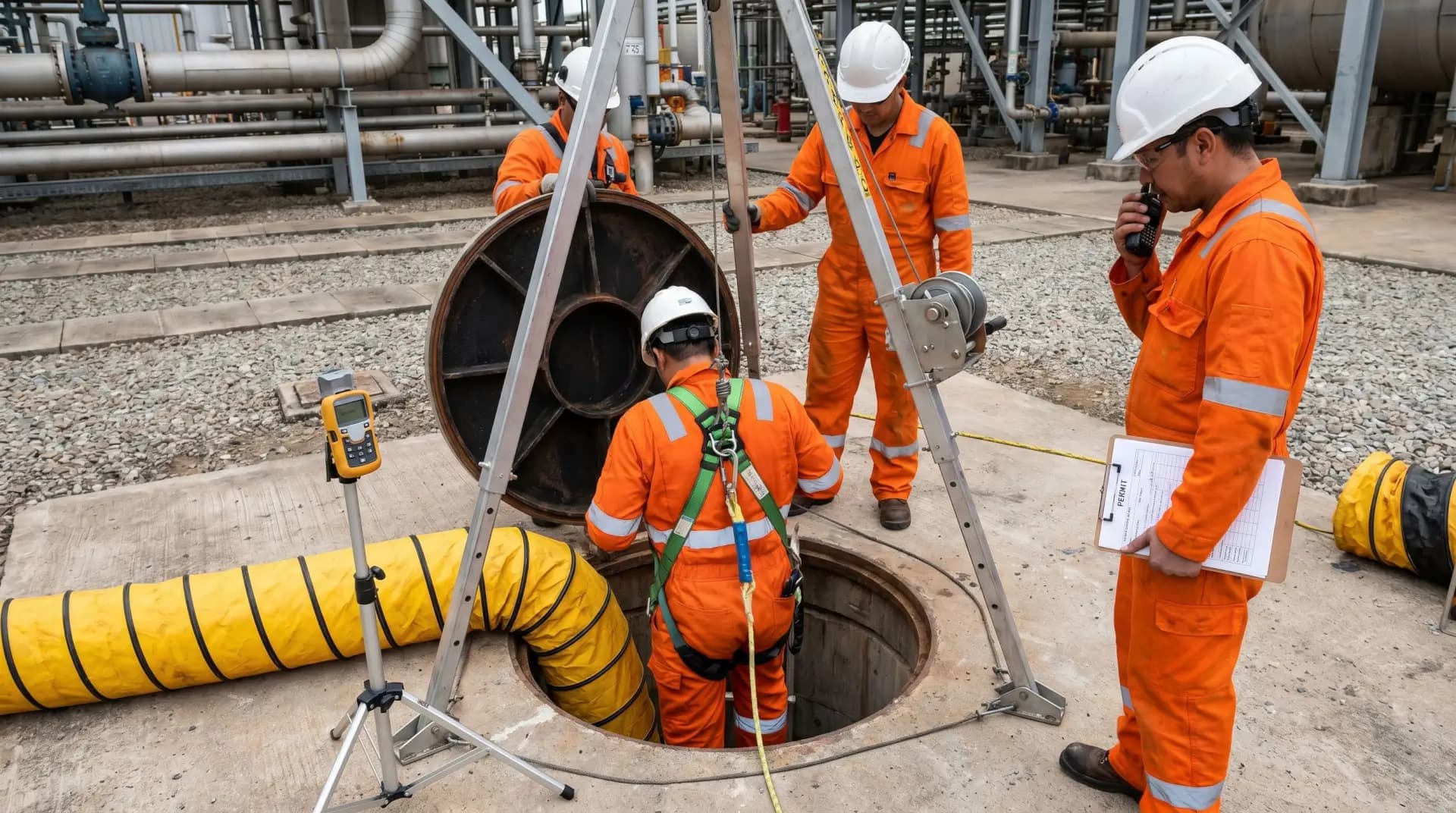
Equipped with a winch mechanism for rescue or confined space entry. These allow controlled lifting or lowering of a worker.
Advantages Over Traditional Lanyards
From field application and system performance evaluation, retractable devices provide several operational advantages:
Reduced Free-Fall Distance: Immediate locking minimizes drop length
Lower Arrest Forces: Helps reduce injury severity
Improved Mobility: No slack means fewer obstructions
Enhanced Productivity: Workers can move freely without constant adjustment
Better Fall Clearance: Requires less vertical clearance than lanyards
These benefits make SRLs particularly valuable in environments with limited fall clearance.
Limitations and Misuse Risks
Despite their advantages, retractable devices are not fail-proof. Misuse or incorrect selection can introduce serious hazards.
Common Issues
Using standard SRLs near sharp edges without leading-edge rating
Improper anchorage positioning (e.g., foot-level anchoring without proper design)
Lack of inspection or maintenance
Over-reliance without considering swing fall hazards
One recurring issue I’ve observed is the assumption that SRLs eliminate all fall risks. They reduce risk—but only when correctly selected and installed.
Inspection and Maintenance Requirements
Routine inspection is non-negotiable for retractable devices. These systems rely on internal mechanical components that must function flawlessly under stress.
Pre-Use Inspection
Check lifeline for cuts, frays, or corrosion
Verify smooth extension and retraction
Test locking mechanism with a sharp pull
Inspect connectors and housing integrity
Periodic Inspection
A competent person must conduct formal inspections at defined intervals depending on usage intensity and environmental exposure.
If a device has arrested a fall, it must be removed from service immediately and assessed according to manufacturer guidance.
Regulatory Expectations and Compliance
Regulatory frameworks globally require fall protection systems when working at height above defined thresholds. While specific requirements vary by jurisdiction, consistent expectations include:
Use of certified fall arrest systems
Proper anchorage design (typically rated to withstand significant loads)
Worker training and competency
Routine inspection and documentation
International standards such as those from ISO, OSHA (United States), and HSE (United Kingdom) align on the importance of minimizing free-fall distance and ensuring reliable fall arrest performance—both of which SRLs are designed to achieve.
Selecting the Right Device for the Job
Choosing the correct retractable fall protection device is not a generic decision—it depends on task-specific risk factors.
Key Selection Criteria
Working Height and Clearance
Potential for Leading Edge Exposure
Worker Mobility Requirements
Environmental Conditions (corrosion, dust, moisture)
Rescue Planning Needs
A mismatch between device capability and site conditions is one of the most common root causes of system failure.
Practical Implementation Considerations
From an operational standpoint, integrating retractable devices into a fall protection program requires more than just procurement.
Implementation Focus Areas
Anchor point verification and testing
Worker training on correct use and limitations
Rescue planning (often overlooked)
Compatibility with harnesses and connectors
A well-implemented SRL system is part of a broader hierarchy of controls—not a standalone solution.
Conclusion
Retractable fall protection devices are a critical advancement in fall arrest technology, offering faster response, reduced fall distance, and improved worker mobility. However, their effectiveness depends entirely on correct selection, proper use, and consistent inspection.
In my professional judgment, SRLs should be treated as precision safety equipment—not general-purpose gear. When applied correctly within a structured fall protection system, they significantly enhance safety performance at height.

Responses