


Refresher training is required when workers need to maintain, update, or regain the competence necessary to work safely. It is not simply a repeat of old training. In safety management, refresher training becomes necessary when regulations require it, when a defined time period has passed, when work conditions change, when equipment or procedures change, when an incident or near miss exposes a gap, or when observation shows that workers are no longer applying the required controls correctly.
The most common mistake I see is treating refresher training as a calendar exercise. A certificate may satisfy part of the requirement, but it does not prove competence by itself. A strong refresher training system links legal requirements, site risk, worker performance, and documented evidence.
What Refresher Training Means in Safety Compliance
Refresher training is a planned update of safety knowledge, practical skills, and behavioral expectations after initial training has already been completed. It is used to keep workers competent as hazards, tasks, equipment, and legal duties change.
In practical HSE terms, refresher training should answer three questions:
Does the worker still understand the hazard?
Can the worker still apply the control measures correctly?
Is there evidence that the employer verified competence?
This is important because many safety failures do not happen because training was never delivered. They happen because the training became stale, the workplace changed, shortcuts became normal, or the original message was not reinforced through supervision.
Refresher training may be required by:
Specific safety regulations
Industry standards
Client or contractor requirements
Insurance conditions
Internal HSE management systems
Findings from audits, inspections, incidents, or risk assessments
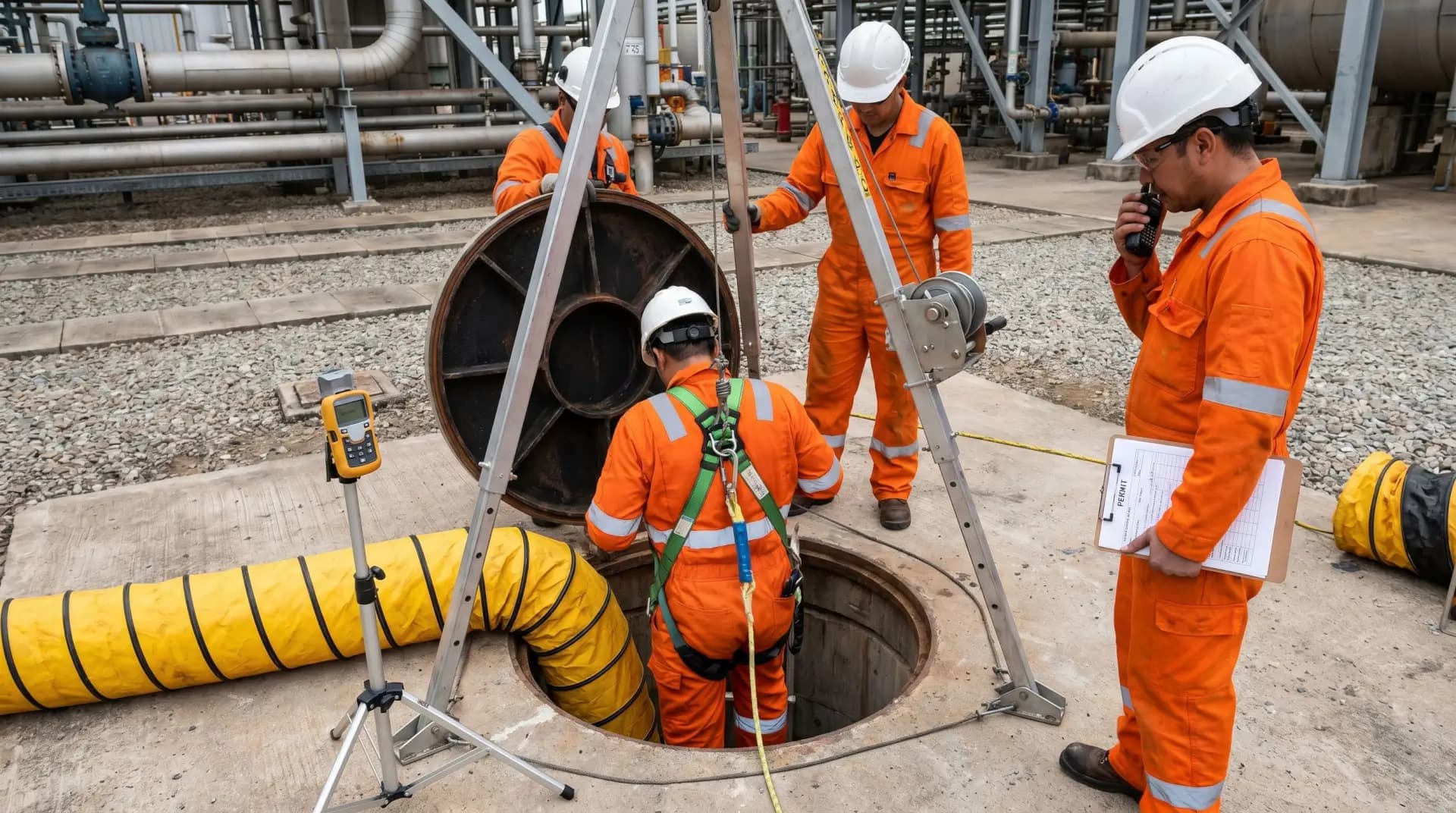
For higher-risk work, refresher training should include practical demonstration, not just classroom discussion. For example, a confined space entrant, forklift operator, respirator user, first aider, or lockout/tagout authorized employee needs more than awareness. They need to show that they can perform critical steps correctly under realistic conditions.
When Refresher Training Is Required
There is no single universal refresher interval for all safety training. Some topics have fixed legal renewal periods, while others require retraining when conditions change or competence is in doubt.
A practical rule is this: refresh safety training whenever time, change, exposure, or performance creates a risk that workers may no longer be competent.
The main triggers are:
1. A regulation requires periodic refresher training
Some regulations specify annual training, periodic requalification, or recurring evaluation. For example, under U.S. OSHA requirements, certain hazardous waste operations, respiratory protection, bloodborne pathogens, and portable fire extinguisher education include recurring training expectations depending on applicability.
Where a regulation gives a fixed interval, the organization should not replace it with a risk-based interval. Risk-based planning can make training more frequent, but it should not make legally required training less frequent.
2. The worker’s job or responsibilities change
A worker moving from general labor to permit-required confined space entry, chemical handling, equipment operation, maintenance isolation, or emergency response needs additional training before performing the new duty.
This also applies when a supervisor takes on approval, inspection, permit, rescue, or emergency coordination responsibilities. The refresher must match the role, not just the department.
3. Equipment, substances, process, or workplace conditions change
Refresher training is required when change affects the risk profile. Examples include:
A new chemical with different health hazards
A new type of powered industrial truck
Revised lockout/tagout isolation points
A modified production line
New fall protection anchor points
Different respiratory protection equipment
New confined space entry conditions
Revised emergency arrangements
Change is one of the strongest reasons to refresh training because workers often rely on memory and habit. When the workplace changes, old habits can become unsafe.
4. An incident, near miss, or unsafe observation reveals a gap
After an incident or near miss, refresher training may be needed if the investigation shows that workers misunderstood the hazard, skipped a step, used equipment incorrectly, or were not aware of the required control.
This should be targeted. A toolbox talk may be enough for a simple reminder, but it is not enough where the gap involves a critical safety task such as energy isolation, breathing protection, rescue arrangements, or emergency response.
5. Competence has not been maintained
If audits, inspections, drills, or supervisor observations show poor performance, retraining is required even if the certificate has not expired.
This is where HSE judgment matters. A valid training record does not override visible unsafe behavior. If a forklift operator is observed driving unsafely, if a respirator user cannot complete a seal check, or if an authorized employee cannot explain the isolation sequence, the organization should act before the next scheduled refresher date.
Common Safety Topics That Need Refresher Training
The following table gives a practical overview. Exact requirements depend on jurisdiction, industry, and the applicable standard.
Safety Topic | Common Refresher Requirement or Trigger | Practical HSE Note |
|---|---|---|
Hazardous waste operations and emergency response | Often annual for covered roles under U.S. OSHA HAZWOPER requirements | Match the refresher to the worker’s response level and exposure potential |
Respiratory protection | Annual retraining is commonly required where respirators are mandatory; also retrain when conditions or respirator types change | Include fit, limitations, seal checks, maintenance, and medical-use restrictions |
Bloodborne pathogens | Annual training for workers with occupational exposure under U.S. OSHA requirements | Keep training connected to exposure control plans and real task scenarios |
Powered industrial trucks / forklifts | Refresher required after unsafe operation, incident, near miss, different truck type, workplace change, or poor evaluation; performance evaluation is required at least every three years under U.S. OSHA | Do not confuse evaluation with automatic classroom refresher only |
Lockout/tagout | Retraining when job assignments, machines, procedures, or inspections show gaps | Practical verification is essential because errors can be fatal |
Hazard communication / chemical safety | Training when new chemical hazards are introduced; some employers refresh annually as best practice | Focus on SDS use, labels, routes of exposure, PPE, and emergency actions |
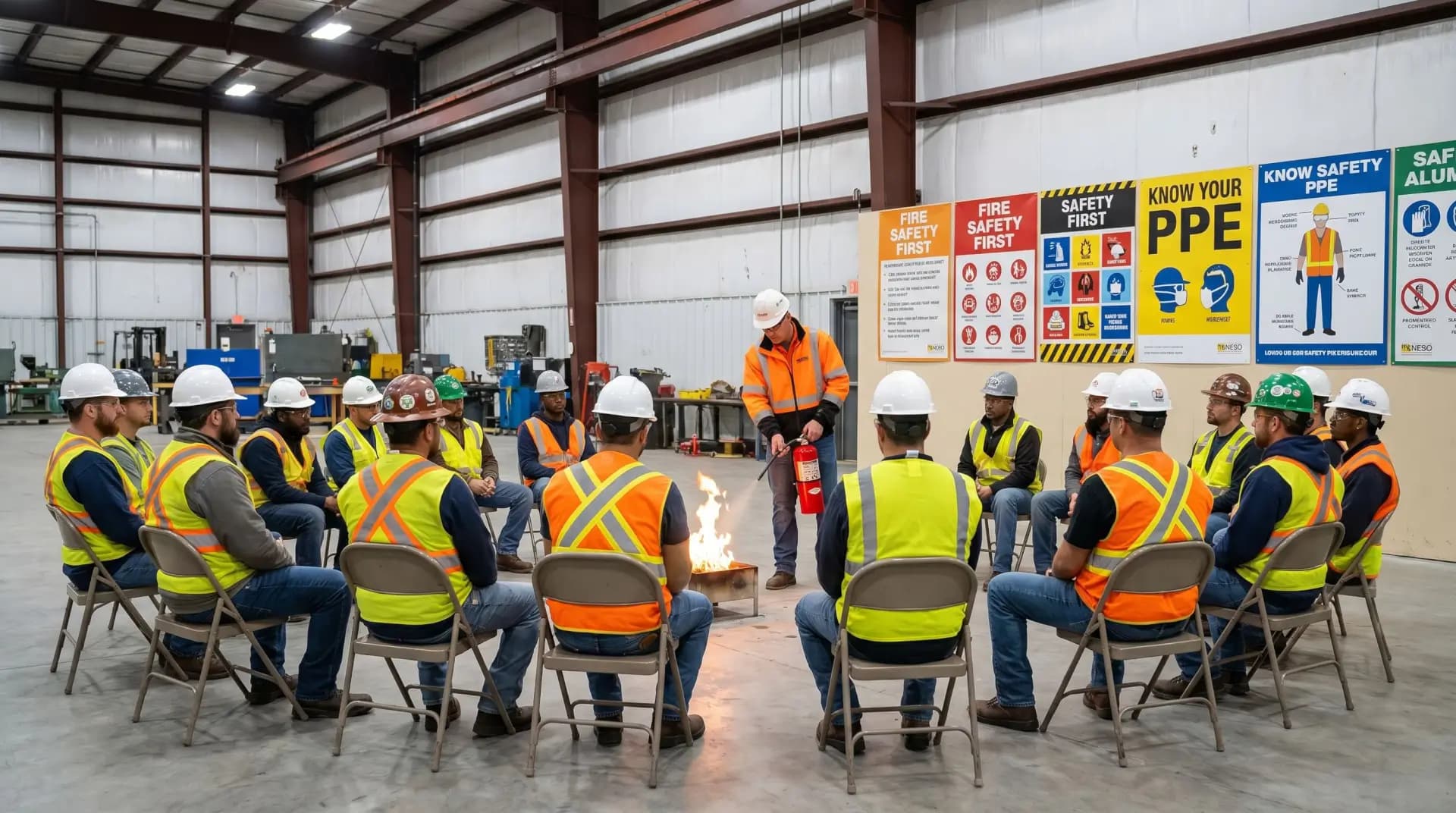
Fire extinguisher use | Where extinguishers are provided for employee use, recurring education may apply depending on jurisdiction | Train workers on when not to fight a fire as much as how to use an extinguisher |
Permit-required confined spaces | Retrain when duties change, hazards change, procedures change, or performance is inadequate | Include rescue arrangements, atmospheric testing, permits, communication, and stop-work authority |
First aid | Certificates and refresher expectations vary by jurisdiction; annual skills refreshers are often recommended, with full requalification at defined intervals | Skill decay is real; practical repetition matters |
Working at height / fall protection | Refresher after equipment, procedure, site condition, or behavior changes; periodic refreshers are good practice for high-risk work | Include inspection, fitting, anchor selection, rescue planning, and suspension trauma awareness |
PPE use | Retrain when PPE changes, workplace conditions change, or workers show improper use | PPE training should cover limitations, not just issue and storage |
How Often Should Safety Refresher Training Be Done?
The right frequency depends on the topic. I normally separate refresher training into three categories.
Fixed-interval refresher training
This applies when the law, standard, client requirement, or certification body gives a defined period. Examples may include annual, three-year, or role-specific renewal cycles.
For fixed-interval training, the organization should maintain a training matrix with expiry dates, responsible owners, and escalation before expiry. Workers should not be assigned to covered tasks if their required training has expired.
Risk-based refresher training
This applies when the law does not give a fixed interval but expects workers to remain competent. In these cases, the interval should be based on:
Severity of possible harm
Frequency of task performance
Complexity of the procedure
Incident and near-miss history
Worker turnover
Changes in equipment or process
Audit and inspection findings
Emergency readiness requirements
For high-risk tasks, waiting several years without refresher training is rarely defensible, even if no specific annual rule exists.
Event-triggered refresher training
This is required when a trigger occurs before the normal refresher date. Typical triggers include:
Incident or near miss
Unsafe act or unsafe condition
Failed competence assessment
New equipment
New chemical or material
Revised risk assessment
Updated safe work procedure
New regulatory or client requirement
Worker returning after a long absence from a critical task
Event-triggered refresher training is often the most important because it responds to actual risk, not just a calendar date.
What Effective Refresher Training Should Include
A good refresher course should not repeat the original training word for word. Workers quickly disengage when the session feels like a formality. The content should focus on what has changed, what is being done incorrectly, and what controls must be applied without compromise.
An effective safety refresher should include:
Updated hazard information
Workers should understand current hazards, not historical ones. This includes changes in substances, equipment, layout, weather exposure, energy sources, traffic routes, emergency arrangements, and work methods.
Review of legal and site requirements
The trainer should explain the applicable requirements in plain language. Workers do not need a legal lecture, but they do need to know what the rule means for their task.
Lessons from incidents and observations
Use real internal learning where available, without blame or unnecessary personal detail. Discuss what failed, what controls should have worked, and what must change.
Practical demonstration
For critical tasks, workers should demonstrate competence. This may include:
Performing a respirator seal check
Inspecting fall protection equipment
Completing an isolation sequence
Conducting a pre-use forklift check
Reading a chemical label and SDS
Completing a confined space permit
Using emergency equipment
Practicing first aid skills
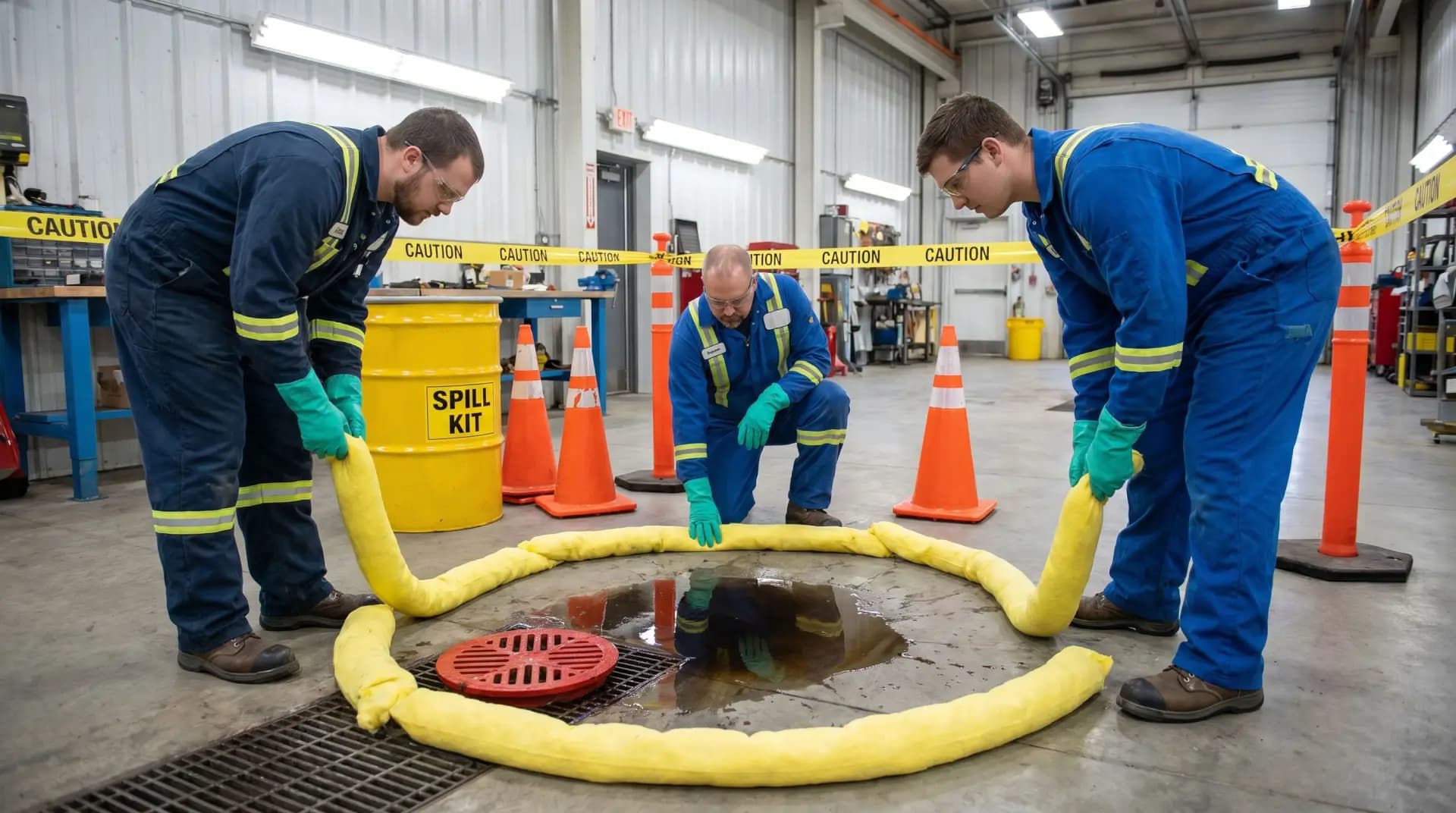
Demonstrating spill response steps
Assessment and feedback
A short quiz may confirm knowledge, but it does not prove practical competence. For higher-risk work, assessment should include observation, questioning, and task-based demonstration.
Clear correction of misconceptions
Refresher training is the right place to correct unsafe beliefs, such as:
“I have done this for years, so I do not need retraining.”
“A certificate means I am competent forever.”
“PPE makes the job safe by itself.”
“A near miss does not require action because no one was hurt.”
“Online training alone is enough for every safety topic.”
These misconceptions are common, and they can weaken even a well-designed HSE system.
Records, Competence Checks, and Audit Evidence
Training records must show more than attendance. In compliance reviews, incident investigations, and audits, weak records can create serious problems even when training was actually delivered.
A complete refresher training record should include:
Worker name and identification
Job title or role
Training topic
Date of training
Training duration
Trainer name and competence
Training method
Content covered
Regulation, standard, or procedure addressed where applicable
Assessment results
Practical competence verification where required
Expiry or next review date
Corrective action for anyone who did not meet the required standard
For high-risk tasks, I prefer a record that separates training completed from competence verified. This prevents a common audit weakness: assuming that attendance equals authorization.
A strong refresher training matrix should include:
Field | Why It Matters |
|---|---|
Training topic | Defines the safety requirement clearly |
Applicable roles | Prevents overtraining some workers and missing others |
Legal or internal basis | Shows why the refresher is required |
Frequency | Controls expiry and planning |
Trigger conditions | Captures retraining before expiry when risk changes |
Delivery method | Confirms whether classroom, online, practical, or blended learning is suitable |
Competence evidence | Shows whether the worker can apply the training |
Responsible owner | Prevents training from becoming an orphaned administrative task |
Compliance caution
Safety refresher requirements vary by jurisdiction and industry. U.S. OSHA, UK HSE guidance, EU directives, national labor laws, ISO 45001 systems, client standards, and sector-specific rules may apply differently. Employers should confirm the exact legal duty for their location and activity before setting refresher intervals.
As a professional practice, I do not recommend using the lowest visible requirement as the only benchmark. If the risk assessment, incident history, or worker performance shows a need for more frequent refreshers, the training plan should reflect that.
Conclusion
Refresher training requirements for safety should be built around legal compliance, workplace risk, and proven competence. Some safety topics have fixed renewal periods, while others require retraining when tasks, equipment, hazards, procedures, or worker performance change.
The strongest approach is to maintain a role-based training matrix, define refresher intervals, track trigger-based retraining, and verify competence through observation and practical assessment. A certificate may help demonstrate compliance, but safe performance is the real objective.
In my view, refresher training should never be treated as an administrative reminder. It is a control measure. When it is planned properly, delivered practically, and supported by supervision, it keeps critical safety knowledge alive where it matters most: at the point of work.
Refresher training is not optional: You need it when risk changes, performance drops, incidents happen, or legal intervals require retraining.
Triggers matter more than calendars: New equipment, revised procedures, contractor turnover, and near-misses should all prompt immediate refresher training.
Competence must be verified: Attendance alone proves nothing; supervisors need observation, questioning, and practical checks in the field.
High-risk tasks need tighter control: Confined space, LOTO, work at height, lifting, chemicals, and emergency response need structured refresher cycles.
Weak records create liability: If you cannot show who was trained, on what, when, and why, you will struggle after an incident or audit.
I have stopped jobs where every worker held an induction card, yet half the crew could not explain the isolation boundary they were standing inside. On one shutdown, a contractor team signed a training register that showed “safety refresher completed,” but when I asked the fire watch about extinguisher selection and alarm escalation, he guessed. That gap between attendance and competence is where incidents start.
Refresher training requirements for safety exist because people forget, sites change, controls drift, and bad habits return faster than most managers admit. In this article, I will break down what refresher training is, when it is required, which tasks demand stricter intervals, how to set defensible retraining triggers, and the common failures I keep finding during audits, incident reviews, and field inspections.
What Are Refresher Training Requirements for Safety?
Refresher training requirements for safety are the conditions, intervals, and risk-based triggers that require workers, supervisors, or contractors to be retrained so they can continue performing work safely and competently. In practice, refresher training is required when legal standards demand it, when workplace conditions change, or when evidence shows the original training is no longer effective.
On site, refresher training is not a repeat of induction for the sake of paperwork. It is a targeted intervention to restore competence where memory, behavior, or operating conditions have shifted.
The requirement usually comes from a combination of legal duty, management system expectations, and operational reality. The main drivers I use in the field are the following:
Time-based expiry: Some topics have fixed retraining periods set by regulation, company standard, or client requirement.
Change in risk: New plant, chemicals, layouts, procedures, or work methods can make previous training outdated.
Evidence of poor understanding: Unsafe acts, failed drills, weak permit controls, and poor questioning results show competence has decayed.
Incident or near-miss learning: Any event that exposes a knowledge or behavior gap should trigger focused refresher training.
Return after absence: Long absence from site or from a specific task often requires retraining before resuming work.
Under ISO 45001, organizations are expected to ensure workers are competent on the basis of appropriate education, training, or experience, and to take actions to acquire and maintain competence where needed.
That last phrase matters in the field: maintain competence. If competence can fade, refresher training becomes part of the control system, not an administrative extra. Once that principle is clear, the next question is when retraining should actually happen.
When Refresher Training Is Required in Real Operations
Most training failures I investigate are not caused by a total lack of training. They come from training that was delivered once, filed away, and never revisited after the job changed. The safest sites treat refresher training as event-driven first and calendar-driven second.
The most common operational triggers I use when setting refresher training requirements for safety are listed below:
After an incident or near-miss: If the event shows misunderstanding of a control, the affected group needs retraining before work normalizes.
Following procedure changes: Revised SOPs, permit rules, emergency plans, or isolation steps require structured communication and retraining.
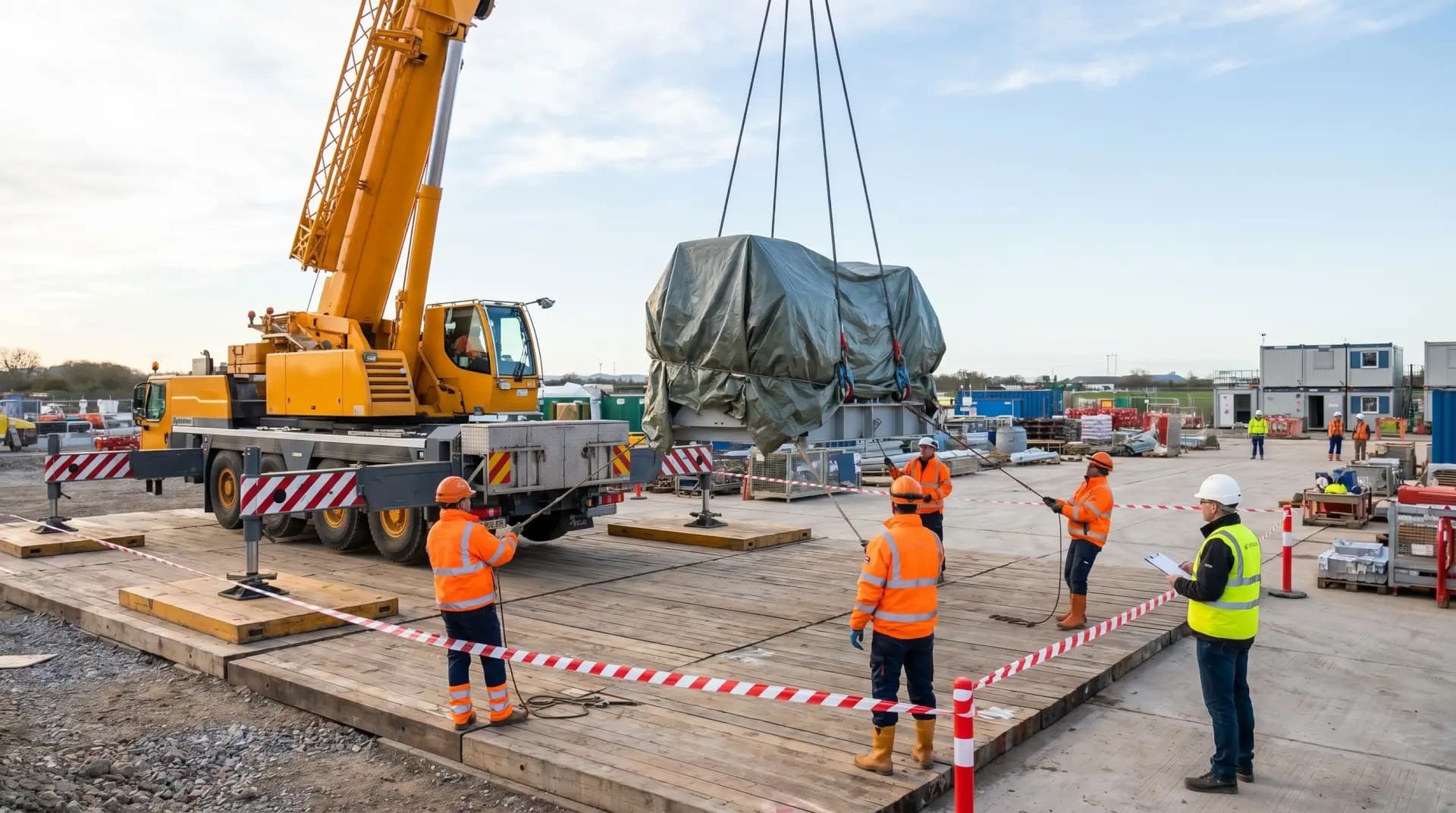
Before high-risk campaigns: Shutdowns, turnarounds, lifting campaigns, excavations, and confined space entries justify targeted refreshers.
When introducing new equipment: Different interfaces, alarms, guarding, or maintenance points create new error pathways.
When supervision identifies drift: Repeated shortcuts, PPE misuse, poor housekeeping, or weak hazard recognition are clear triggers.
After long absence from task: Workers returning after months away from cranes, respirators, or rescue duties should not restart cold.
When drills fail: A weak evacuation, spill response, or rescue exercise means the training has not held.
At contract mobilization turnover: New contractor crews often inherit permits and routines they do not fully understand.
I have seen management try to solve all of this with an annual refresher day for everyone. That approach looks tidy on a dashboard, but it misses the point. A worker can sit through a yearly classroom session and still be unfit for a changed task next week.
Where a site needs a clear trigger sequence, I recommend a simple decision path that supervisors can actually use in the field.
Identify the task or exposure: Define exactly what work activity or hazard the retraining relates to.
Check for legal or internal interval: Confirm whether a regulation, client rule, or company standard sets a fixed frequency.
Assess what has changed: Review equipment, process, staffing, environment, and procedure updates.
Review performance evidence: Look at incidents, observations, permit deviations, audits, and drill results.
Decide the refresher scope: Use full retraining, short focused briefing, practical reassessment, or supervised return-to-work.
Verify competence in the field: Observe the worker doing the task before closing the action.
That leads directly into the issue that causes most confusion: not all safety topics need the same refresher interval.
Refresher Training Requirements for Safety by Risk Level
In audits, I often find the same retraining interval applied to office ergonomics and confined space rescue. That is poor risk management. Refresher training should reflect the severity of harm, complexity of the task, frequency of exposure, and likelihood of skill fade.
The table below shows a practical way to set refresher training priorities. Exact intervals should still be checked against applicable regulations, client standards, and manufacturer requirements.
Training Topic | Typical Risk Level | Practical Refresher Approach | Field Verification Needed |
|---|---|---|---|
Site induction / general safety rules | Moderate | At re-entry, major site change, or periodic cycle set by site | ID check, questioning, supervisor observation |
Work at height | High | Scheduled refresher plus retraining after equipment or method change | Harness inspection, anchorage selection, rescue understanding |
Confined space entry | High | Frequent refresher, especially before campaigns and after permit deviations | Gas test interpretation, attendant duties, rescue steps |
Lockout/Tagout (LOTO) | High | Refresher after process change, energy source change, or audit failure | Isolation point identification, zero-energy verification |
Chemical handling / SDS awareness | High | Refresher when substances, labels, or controls change | PPE selection, spill response, incompatibility checks |
Manual handling / ergonomics | Lower to moderate | Periodic refresher and targeted coaching where strains are recurring | Observed technique and workplace layout review |
Fire warden / emergency response | High | Refresher linked to drills, occupancy changes, and role assignment | Alarm actions, evacuation route control, accountability |
Forklift / mobile plant awareness | High | Periodic retraining and immediate refresher after unsafe operation | Pre-use checks, pedestrian separation, route discipline |
On a heavy industrial site, I separate training into three bands so resources go where failure hurts most. That keeps the program defensible and practical.
Critical life-saving topics: Confined space, energy isolation, work at height, lifting, respiratory protection, emergency response.
Operational control topics: permit-to-work, chemical handling, traffic management, excavation, hot work, contractor interface.
General awareness topics: housekeeping, basic PPE rules, reporting expectations, welfare, and routine hazard awareness.
Pro Tip: If the task can kill someone in one mistake, do not rely on slide-based refresher training alone. Add a practical demonstration and supervisor sign-off.
Once risk levels are sorted, the next step is understanding what standards and legal frameworks expect from the employer.
Regulatory and Management System Expectations for Refresher Training Requirements for Safety
Different jurisdictions use different wording, but the duty is broadly consistent: employers must provide training that is adequate, understandable, and updated when conditions change. The legal test after an incident is rarely “Did you hold training once?” It is usually “Was the worker competent for the work being done that day?”
The following references shape refresher training requirements for safety across many operations:
OSHA 29 CFR 1910 and 1926: Several standards require retraining when there is reason to believe employees lack understanding or when workplace changes render previous training obsolete.
HSE UK framework: Employers must provide health and safety training on recruitment, on exposure to new or increased risks, and when responsibilities change.
ISO 45001: Requires organizations to determine competence needs and ensure workers are competent, including actions to maintain competence.
NFPA and emergency standards: Fire response, extinguisher use, and emergency roles often require drill-based validation, not just classroom delivery.
Industry-specific codes: Lifting, hazardous chemicals, process safety, and electrical safety often carry additional retraining expectations from sector guidance.
Where standards differ, I apply the stricter requirement and then add site-specific triggers. A legal minimum may keep you compliant, but it may still leave you exposed operationally.
One common mistake is treating all refresher requirements as annual because that is easy to schedule. Regulators and auditors look past the calendar. They want to see that retraining responds to actual risk.
When I review a training matrix, I check whether it captures both mandatory frequencies and event-based triggers. A workable matrix should include the following elements:
Role-specific training needs: Operator, rigger, permit receiver, fire watch, supervisor, first aider, and contractor roles should not be merged.
Fixed retraining intervals: Use these where standards, licenses, or internal rules clearly require them.
Trigger-based retraining rules: Incident, procedure change, equipment change, failed observation, or return from absence.
Competence verification method: Written test, oral questioning, drill, practical assessment, or direct observation.
Record ownership: Someone must be accountable for updating the matrix and blocking expired personnel from critical tasks.
That structure is where many training systems start to fail, especially when contractors are involved.
Common Site Failures in Safety Refresher Training Programs
I rarely see a site collapse because the training procedure was missing. The collapse usually comes from weak execution, poor follow-up, or a false belief that a signed register equals competence. These are the failures that keep appearing in investigations and audits.
The most damaging weaknesses in refresher training programs are usually the following:
Attendance counted as competence: Workers sign in, sit through slides, and return to work without any proof they understood the content.
Generic training for specific hazards: A broad “safety refresher” does not prepare someone for benzene handling, rescue tripod setup, or electrical isolation.
No trigger after change: Procedures are revised, but crews continue using old habits because nobody retrained them.
Contractor gaps: Main contractor records look complete while subcontractor crews rotate in and out without equivalent refresher control.
Language mismatch: Training is delivered in a language workers can repeat but not truly understand under pressure.
No field validation: Supervisors are not checking whether the trained behavior appears at the workface.
Expired role-critical training: Fire wardens, permit receivers, banksmen, and rescue team members continue in role after expiry.
Weak record traceability: There is no clear link between training content, attendee, date, trainer, and competence result.
During one contractor audit on an infrastructure project, the records showed 100% completion for working at height refresher training. In the field, two workers clipped to the same unsuitable point on a temporary handrail. The training register was accurate. The competence claim was not.
Pro Tip: If you want to know whether refresher training worked, leave the classroom and watch the first live task after training. That is where the truth sits.
Fixing these failures starts with designing training around actual risk and task performance, not around convenience.
How to Build an Effective Refresher Training Program
A strong refresher program does not need to be complicated, but it does need to be disciplined. The best systems I have worked with were simple enough for supervisors to use and strict enough to stop unqualified people entering critical work.
When I set up or repair a refresher training system, I build it around these controls:
Training matrix by role and hazard: Map each role to the exact training, interval, and trigger required.
Risk-based prioritization: Give critical tasks shorter review cycles and stronger competence checks.
Change management link: Any management of change process should automatically review training impacts.
Incident learning loop: Significant incidents and near-misses should generate targeted retraining actions with deadlines.
Supervisor involvement: Frontline leaders must confirm whether trained behaviors are visible in the field.
Practical assessment: Use demonstrations, simulations, permit walk-throughs, and drills for high-risk activities.
Access control: Expired critical training should block permit authorization, system access, or task assignment.
Record integrity: Keep version-controlled content, trainer details, attendance, assessment results, and retraining reasons.
Where teams need a repeatable process, I use a straightforward implementation sequence. It keeps the system tied to operations rather than HR administration.
List critical tasks and exposures: Start with what can seriously injure, kill, or create major loss.
Assign legal and internal requirements: Add fixed intervals and any client or site rules.
Define event triggers: Build in retraining after change, incidents, failed observations, and long absence.
Select verification methods: Match each topic to written, verbal, practical, or drill-based assessment.
Train supervisors on their role: They must know when to stop work and request retraining.
Audit the system monthly or quarterly: Check expiry, field behavior, and record quality.
That system only works if the content of the refresher session is sharp and relevant. Repeating the same old presentation every year is one of the fastest ways to lose worker attention.
What Good Safety Refresher Training Should Cover
Workers disengage when refresher training repeats obvious rules and ignores current site problems. The session should be short enough to hold attention, but specific enough to correct the exact failures you are seeing in the field.
For most safety refresher training, I expect the content to cover these areas:
Recent incidents and near-misses: Use real site events or relevant industry cases to show what failed and why.
Critical rule reminders: Focus on permit controls, isolation, line of fire, dropped objects, vehicle interfaces, and emergency actions.
Changes since last training: New procedures, revised layouts, new chemicals, changed muster points, or updated equipment.
Role-specific responsibilities: Clarify what the worker, supervisor, permit issuer, attendant, or fire watch must do.
Common error traps: Shortcuts, assumptions, alarm fatigue, routine violation, and poor handover.
Practical demonstrations: Show the correct method for donning PPE, checking gas monitors, isolating systems, or setting barriers.
Emergency response expectations: Who raises the alarm, who stops work, who evacuates, and who takes command.
On high-risk sites, I also insist on a short knowledge check. It does not need to be academic. It needs to show whether the worker can apply the control under pressure.
The most useful competence checks include the following methods:
Task demonstration: The worker performs the activity or key safety steps under observation.
Scenario questioning: Ask what they would do if gas alarms, a dropped load blocks egress, or a permit condition changes.
Equipment inspection: Have them identify defects in harnesses, slings, extinguishers, or respirators.
Permit walk-through: Ask them to explain the hazards, controls, and stop-work points on an actual permit.
Drill participation: Use emergency exercises to validate that people can act, not just talk.
Pro Tip: If a refresher session cannot answer “What has changed since last time?” it is probably too generic to reduce risk.
One group that deserves special attention here is supervisors, because weak supervisory reinforcement can undo good training within days.
Supervisor Responsibilities After Refresher Training
Refresher training does not end when the session finishes. Supervisors decide whether the content becomes behavior or disappears by the next shift. In every serious incident review I have led, supervision was either the final barrier or the missing one.
After refresher training, supervisors should be expected to do the following in the field:
Observe the first task: Watch the worker apply the retrained method on a live job.
Question for understanding: Ask why a control exists, not just whether the worker remembers the rule.
Correct drift immediately: Stop shortcuts before they normalize across the crew.
Check tools and PPE: Confirm the equipment used in training matches what is available at the workface.
Reinforce permit conditions: Make sure the permit briefing reflects the refreshed controls.
Escalate competence concerns: If someone still cannot perform safely, remove them from the task and retrain.
I have seen good training fail because supervisors were under production pressure and treated the refresher as a box already ticked. Once that happens, the workforce reads the real message quickly: output matters more than control discipline.
A refresher session may reset knowledge, but only supervision resets behavior.
That is why recordkeeping and verification matter so much. If the system cannot prove who is competent and current, supervision gets weaker and accountability becomes blurred.
Documentation and Recordkeeping for Refresher Training Requirements for Safety
After an incident, training records are examined in detail. I have sat in reviews where a company had records of attendance but no evidence of content, no assessment result, and no explanation for why retraining was due or overdue. That is a hard position to defend.
A defensible refresher training record should capture more than a sign-in sheet. At minimum, I expect to see the following:
Worker identity and role: Full traceability to the person and the task they are authorized to perform.
Training topic and scope: Exact subject covered, not just “safety refresher.”
Date and expiry or review date: Clear timing for next action where applicable.
Reason for refresher: Scheduled interval, procedure change, incident, return from absence, or failed observation.
Trainer and method: Classroom, practical, drill, toolbox, e-learning, or blended delivery.
Assessment outcome: Pass, fail, remedial action, restrictions, or supervised return-to-task requirement.
Version control: Evidence that the worker received the current procedure or standard, not an outdated one.
Where organizations struggle is usually at the interface between training records and work authorization. To close that gap, I recommend linking records to operational controls.
Permit systems: Prevent permit roles from being assigned to expired personnel.
Access badges: Restrict entry to certain areas or tasks where critical training has lapsed.
Contractor onboarding: Verify refresher status before mobilization, not after the first shift starts.
Audit sampling: Compare records against actual workers in the field every month.
Once records are reliable, the final question is how often refresher training should happen in practice.
How Often Should Safety Refresher Training Be Done?
There is no single interval that suits every hazard. The right answer depends on legal requirements, task criticality, worker turnover, complexity, and how quickly poor habits reappear. In high-risk operations, waiting for an annual cycle can leave a dangerous gap.
As a practical field rule, I use the following frequency logic when setting refresher training requirements for safety:
Immediately: After serious incidents, major near-misses, failed drills, critical procedure changes, or clear evidence of unsafe misunderstanding.
Before task resumption: After long absence, shutdown remobilization, or return to a specialist role.
Periodically by risk: Shorter cycles for life-critical tasks, longer cycles for lower-risk awareness topics.
At re-induction points: When workers re-enter site after a defined break or contract restart.
Whenever audits show drift: Repeat non-compliances in the same control area are a retraining signal, not just a discipline issue.
To avoid confusion, I tell managers to stop asking for a universal number and start asking better questions:
What is the worst credible outcome if this person gets it wrong?
How quickly does this skill or knowledge degrade?
What evidence do we have that the current training is still effective?
Has the task, equipment, crew, or environment changed since the last session?
If those questions are answered honestly, the refresher interval usually becomes obvious. The final challenge is making sure workers and managers understand that refresher training is a control measure, not a scheduling burden.
Making Refresher Training Effective Without Turning It Into Paperwork
The strongest programs are the ones crews respect because they solve real work problems. The weakest are the ones everyone attends because they have to, then forget before lunch. If the training does not connect directly to the hazards workers face that week, it will not hold.
To keep refresher training practical and credible, I use these rules:
Keep it hazard-specific: Train on the jobs and failures currently happening on site.
Use short focused sessions: Ten strong minutes on dropped objects can beat an hour of generic slides.
Bring real equipment: Harnesses, permits, gas detectors, SDS sheets, and isolation locks make the session tangible.
Use current examples: Recent observations and near-misses get attention because crews recognize them.
Train mixed groups carefully: Supervisors, operators, and visitors do not need the same depth.
Measure field effect: Track whether the unsafe behavior or control failure actually reduces afterward.
I have had better results from a 15-minute focused retraining at the permit board than from a polished classroom package that ignored the live job. Workers respond when the training respects the reality of their shift.
Refresher training requirements for safety only work when they are tied to competence, supervision, and operational control. A register can show who sat in a room. It cannot show who will make the right decision when the alarm sounds, the permit changes, or the job starts to drift.
In practice, the best refresher training programs are risk-based, trigger-driven, role-specific, and verified in the field. They respond to incidents, changes, failed observations, and returning workers before those gaps become injuries. That is how refresher training should function: as an active barrier in the safety management system, not a yearly ritual.
When a company asks what refresher training requirements for safety really mean, my answer is simple: train again before memory, change, or routine puts someone in the line of fire. A worker should never pay for an expired safety lesson with a permanent injury.



Responses