
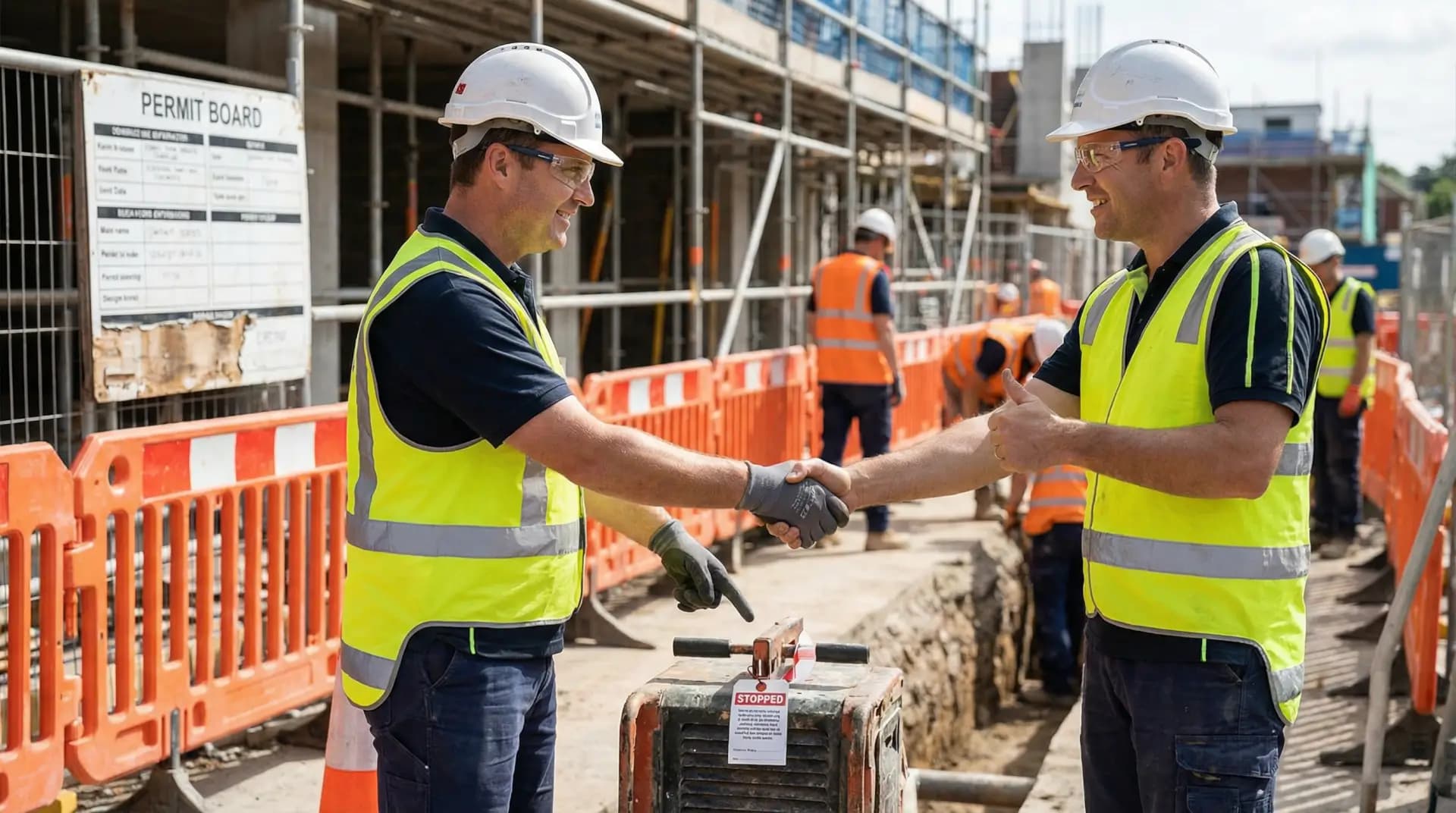
In my view, positive reinforcement works best when it is tied to actions people can control: reporting a near miss, stopping an unsafe job, correcting a hazard, wearing the right PPE properly, following a permit condition, helping a new worker understand a risk, or speaking up during a toolbox talk. When reinforcement is used this way, it supports a stronger safety culture because workers learn that safety is not only enforced after something goes wrong; it is noticed and supported when people do the right thing.
Positive reinforcement should never replace hazard control, supervision, training, engineering safeguards, or legal compliance. It is one part of a wider safety management system. Used correctly, it improves participation, trust, and consistency. Used poorly, it can hide incidents, create false confidence, and reward silence.
What Positive Reinforcement Means in Safety Management
Positive reinforcement is the deliberate recognition of safe behavior so that the behavior is more likely to continue. In safety management, this usually means acknowledging workers, supervisors, or teams for actions that reduce risk.
Examples include:
Reporting a damaged guard before equipment is used
Raising a stop-work concern when conditions change
Submitting a useful near-miss report
Completing pre-use equipment checks properly
Identifying a housekeeping issue and correcting it
Following lockout/tagout steps without shortcuts
Coaching a co-worker respectfully on a safe method
Participating honestly in a risk assessment
The important word here is behavior. Reinforcement must focus on what people do, not just what did not happen. A workplace can have no injuries for a month and still be unsafe if hazards are being ignored. On the other hand, a site may have several near-miss reports in one week and actually be improving because workers are bringing risks into the open.
This is where many organizations misunderstand reinforcement. They reward the absence of recorded injuries, but they fail to recognize the presence of good safety behaviors. That approach can push reporting underground. A better approach is to reinforce the actions that make incidents less likely.
Why Positive Reinforcement Improves Safety Culture
A safety culture is shaped by what leaders tolerate, measure, discuss, correct, and recognize. Workers quickly learn whether management genuinely values safe work or only reacts when an incident occurs.
Positive reinforcement improves safety culture because it sends a practical message: safe behavior matters before someone gets hurt.
When workers see that hazard reporting, participation, and intervention are appreciated, they are more likely to stay involved. This supports several important safety outcomes:
Better reporting of near misses and unsafe conditions
More open communication between workers and supervisors
Higher participation in inspections and toolbox talks
Stronger confidence in stop-work authority
Less dependence on punishment as the main safety driver
Improved learning from weak signals before major failures occur
In mature safety systems, reinforcement is not soft management. It is a disciplined leadership tool. It helps move safety from a compliance-only activity to a daily operating habit.
A practical safety culture is built when people believe three things:
I am expected to work safely.
I am allowed to speak up about risk.
My safe actions will be supported, not ignored or punished.
Positive reinforcement strengthens all three.
Positive Reinforcement vs. Incentives: The Difference Matters
Many companies confuse positive reinforcement with safety incentives. They are not the same thing.
Area | Positive Reinforcement | Safety Incentive |
|---|---|---|
Main focus | Safe behavior and participation | Reward or prize |
Timing | Immediate or regular | Often monthly, quarterly, or yearly |
Best use | Strengthening desired actions | Supporting campaigns or short-term focus |
Risk | Low when behavior-based | High if tied to injury-free records |
Example | Recognizing a worker for reporting a serious near miss | Giving a team a prize for no lost-time injuries |
Incentives are not automatically wrong, but they can become harmful when they reward outcomes that workers may feel pressured to control through underreporting. A “no injury = reward” system can discourage honest reporting, especially in high-pressure environments.
Positive reinforcement should reward actions such as:
Reporting hazards
Participating in risk assessments
Correcting unsafe conditions
Following procedures
Asking for clarification before starting a task
Using stop-work authority appropriately
Sharing lessons learned
It should not reward silence, luck, or manipulated numbers.
A good test is simple: Would this recognition still make sense if a minor incident was reported honestly on the same day? If the answer is yes, the reinforcement is probably healthy. If the answer is no, the system may be rewarding underreporting.
How Supervisors Should Use Positive Reinforcement
Supervisors have the greatest daily influence on reinforcement because they are closest to the work. A senior manager may set the policy, but the supervisor sets the tone during the shift.
Effective reinforcement should be specific, timely, and sincere. Generic praise such as “good job on safety” has limited value. Specific recognition tells the worker exactly which behavior should continue.
A weak example is:
“You worked safely today.”
A stronger example is:
“I noticed you stopped the lifting activity when the tag line arrangement changed. That was the right decision because the load path was no longer controlled.”
The second example teaches, reinforces, and validates judgment.
Supervisors can apply positive reinforcement through:
1. Immediate verbal recognition
This is the simplest and often the most powerful method. When a worker reports a hazard or follows a critical control, the supervisor should acknowledge it promptly.
2. Toolbox talk mentions
Safe actions can be shared during toolbox talks, provided individuals are comfortable being named. This turns one good action into a team learning point.
3. Safety observation feedback
Behavior-based observations should not only record unsafe acts. They should also capture safe practices and explain why they matter.
4. Peer recognition
Workers often notice good safety behavior before management does. A structured peer recognition process can help reinforce positive norms across teams.
5. Corrective action closure recognition
When a worker identifies a hazard and the organization closes the action, recognition should include both the reporter and the people who helped resolve the issue.
The strongest reinforcement connects behavior to risk reduction. It explains why the action mattered.
What to Reinforce in a Safety Management System
Positive reinforcement should be linked to the safety management system, not treated as a separate morale activity. The best reinforcement targets behaviors that support hazard prevention and control.
Key behaviors worth reinforcing include:
Hazard identification
Recognize workers who identify hazards early, especially conditions that could have become serious if ignored. This includes damaged equipment, missing guards, poor access, blocked emergency routes, chemical labeling issues, and changes in work conditions.
Near-miss reporting
Near-miss reporting is one of the most valuable leading indicators in safety management. Workers should be recognized for reporting useful information, not blamed for being near the event.
Stop-work decisions
Stop-work authority only works when people believe they will be supported. A worker who stops a job for a genuine safety concern should receive visible backing from supervision.
Procedure compliance
Following procedures is especially important for high-risk tasks such as confined space entry, lifting operations, electrical isolation, hot work, work at height, excavation, and chemical handling.
Risk assessment participation
Good risk assessments depend on honest worker input. Reinforce workers who identify missing controls, challenge assumptions, or explain how the task is actually performed.
Learning behavior
Recognize people who share lessons learned, ask questions, mentor new workers, or participate constructively in incident reviews.
Housekeeping and readiness
Housekeeping is often treated as basic, but poor housekeeping contributes to slips, trips, falls, fire load, access problems, and emergency response delays. Consistent housekeeping behavior deserves reinforcement.
Common Mistakes That Make Reinforcement Unsafe
Positive reinforcement can fail when it is poorly designed. In some cases, it can even damage the safety culture.
The most common mistakes are:
Rewarding zero incidents
This is the biggest concern. Rewarding teams only because no injuries were reported can create pressure not to report minor injuries, near misses, or unsafe conditions.
Praising shortcuts that saved time
A job completed quickly is not a safety success if controls were bypassed. Productivity should never be reinforced at the expense of risk control.
Recognizing only supervisors or managers
If workers are expected to participate in safety, recognition must reach the workforce. Reinforcement that stays at management level weakens trust.
Making recognition feel political
If the same people are always recognized, the program loses credibility. Recognition must be fair, evidence-based, and connected to real behavior.
Ignoring serious hazards while praising small actions
Workers will not take reinforcement seriously if visible hazards remain unresolved. Recognition must be matched by action.
Using praise to avoid difficult conversations
Positive reinforcement does not remove the need for accountability. Unsafe behavior still needs correction, investigation, and appropriate consequences where required.
A balanced system reinforces what is right and corrects what is wrong. Both are necessary.
Building a Positive Reinforcement Program That Works
A useful reinforcement program does not need to be complicated. It needs to be consistent, fair, and connected to risk.
Here is a practical structure I would recommend:
Step 1: Define the behaviors
List the specific safety behaviors the organization wants to encourage. Keep them observable and practical.
Examples:
Reports hazards before work starts
Uses stop-work authority when controls are missing
Completes equipment inspections correctly
Participates in risk assessments
Shares lessons from near misses
Corrects housekeeping issues immediately
Step 2: Train supervisors
Supervisors need to understand what to recognize and how to do it. Without supervisor training, recognition becomes random or superficial.
Training should cover:
How to give specific feedback
How to avoid rewarding underreporting
How to reinforce reporting behavior
How to balance recognition with accountability
How to document meaningful observations
Step 3: Use leading indicators
Measure positive safety activity, not only injury outcomes. Useful leading indicators include near-miss quality, hazard reports closed, safety observations completed, corrective action closure, participation in safety meetings, and verification of critical controls.
Step 4: Keep rewards modest
Recognition does not need to be expensive. In many workplaces, sincere acknowledgment, leadership visibility, certificates, team mentions, and small tokens are enough. Large rewards can distort behavior and create unhealthy competition.
Step 5: Make it inclusive
Contractors, temporary workers, new employees, maintenance teams, cleaners, drivers, and night-shift workers should not be excluded. Safety culture includes everyone exposed to workplace risk.
Step 6: Review for unintended effects
Check whether reporting decreases after incentives are introduced. If near-miss reports suddenly drop while work risk remains the same, the program may be creating silence rather than safety.
Step 7: Link recognition to corrective action
When workers report hazards, management must respond. Recognition without action becomes empty. The strongest message is: “You raised it, we listened, and the risk was controlled.”
Legal and Ethical Boundaries
Positive reinforcement must operate inside the legal duties of the jurisdiction where the work is performed. In the United States, OSHA’s safety and health program guidance encourages worker participation and recognition, but employers still retain legal duties to provide safe and healthful working conditions. In the United Kingdom, health and safety leadership guidance places clear responsibility on employers and senior leaders to manage risk effectively. Under ISO 45001, leadership, worker participation, consultation, hazard identification, and continual improvement are core expectations of an occupational health and safety management system.
The practical point is clear: recognition is not a substitute for compliance.
A company cannot praise workers into safety while leaving uncontrolled hazards in place. Engineering controls, safe systems of work, competent supervision, emergency arrangements, health surveillance where required, and proper training must come first.
Positive reinforcement should support these controls by encouraging the behaviors that keep them alive in daily work.
Conclusion
Positive reinforcement in safety management is most effective when it recognizes the behaviors that prevent harm: reporting hazards, stopping unsafe work, following controls, participating in risk assessments, and helping others work safely. It should be specific, timely, fair, and linked to the safety management system.
The wrong approach rewards low injury numbers and can push problems out of sight. The right approach rewards openness, control, and responsible action.
As an HSE professional, I see positive reinforcement as a leadership discipline, not a feel-good exercise. When leaders recognize the right behaviors consistently and still maintain strong accountability, workers receive a clear message: safety is not only demanded after failure; it is valued every day before failure occurs.


Responses