

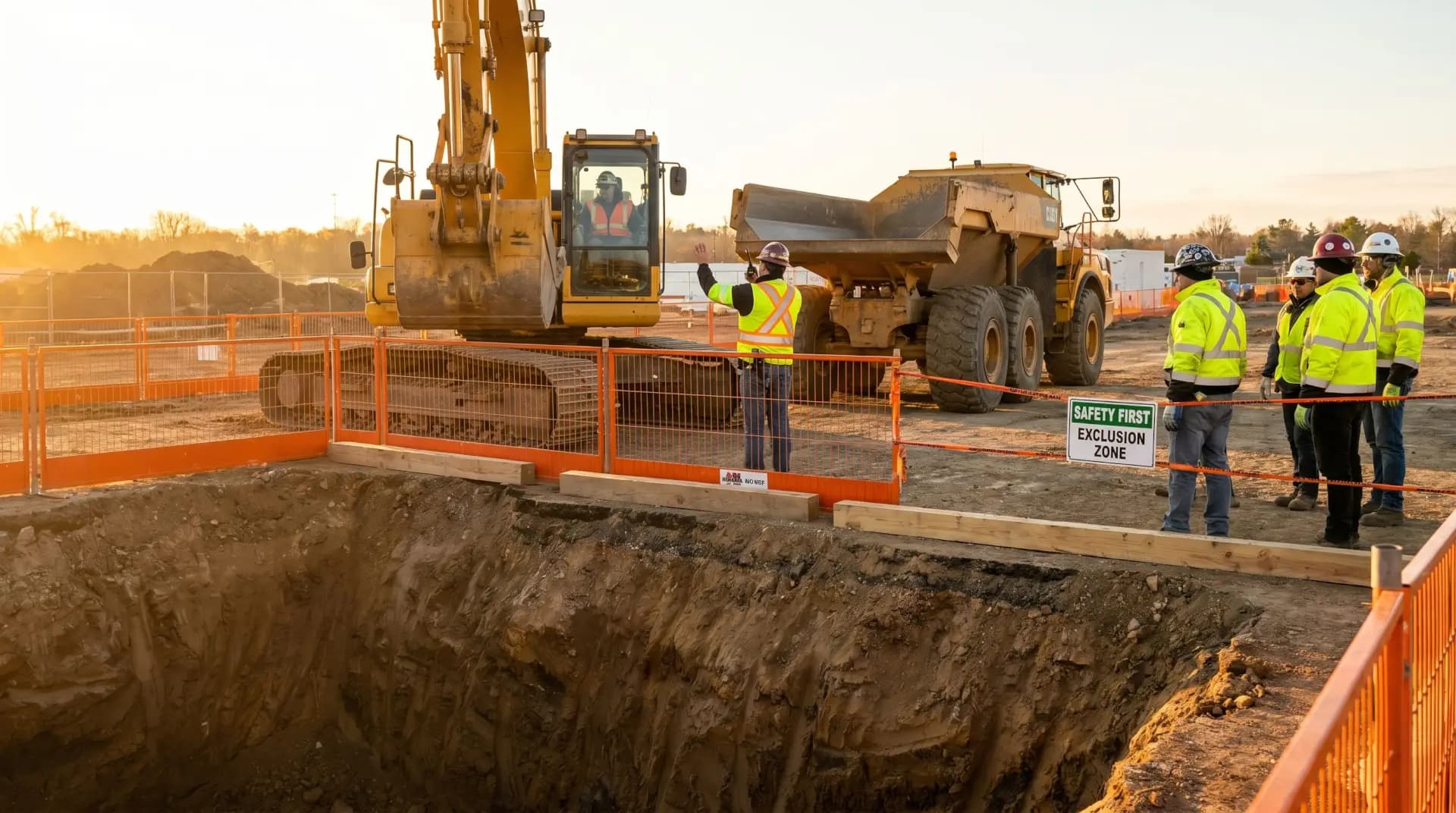
Heavy equipment around excavations must be controlled with strict separation, ground stability assurance, and disciplined operator practices—because most failures in excavation zones are not sudden; they are predictable results of poor planning, surcharge loading, or loss of edge integrity. Safe management starts by treating every excavation edge as a failure boundary and every machine movement as a potential trigger.
Understanding the Risk Profile Around Excavations
Operating heavy equipment near excavations introduces three primary hazards:
Edge collapse due to surcharge loads
Machine instability or rollover
Struck-by incidents involving workers in or near the excavation
The weight and vibration of equipment can compromise soil integrity, especially in loose, saturated, or previously disturbed ground. Even stable-looking edges can fail when subjected to repeated loading cycles.
Establishing Safe Equipment Setback Distances
The most fundamental control is maintaining a safe distance between equipment and the excavation edge. This is not arbitrary—it depends on soil type, excavation depth, and protective systems in place.
General Safe Practices:
Keep heavy equipment at least the depth of the excavation away from the edge as a baseline.
Increase setbacks in:
Loose or sandy soils
Wet or waterlogged conditions
Deep excavations
Never park or idle equipment near edges unnecessarily.
Why It Matters:
The load from equipment creates surcharge pressure, increasing the likelihood of cave-in. Even a stationary machine can destabilize the trench wall.
Ground Stability and Load Assessment
Before equipment is allowed near an excavation, the ground must be evaluated for its load-bearing capacity.
Key Considerations:
Soil classification (stable rock, cohesive, granular)
Moisture content and drainage conditions
Presence of underground utilities or voids
Recent weather impacts (rain, freeze-thaw cycles)
Practical Controls:
Use engineered platforms or mats where soil strength is questionable.
Avoid repetitive travel paths near edges.
Conduct visual inspections for cracks, sloughing, or bulging soil.
Equipment Selection and Configuration
Not all equipment is suitable for excavation work. Selection must align with site conditions and task requirements.
Best Practices:
Use tracked equipment instead of wheeled machines in unstable terrain.
Ensure proper load limits are not exceeded.
Equip machines with:
Roll-over protective structures (ROPS)
Functional alarms and signaling systems
Position counterweights away from excavation edges whenever possible.
Traffic Management and Movement Control
Uncontrolled equipment movement is one of the leading contributors to excavation incidents.
Site Control Measures:
Define designated travel routes away from excavation edges.
Install physical barriers or stop blocks to prevent over-travel.
Use banksmen or spotters for guidance near critical zones.
Implement one-way systems where space is limited.
Operator Responsibilities:
Maintain low speeds near excavations.
Avoid sudden braking or turning near edges.
Stay alert to ground changes and worker proximity.
Worker Protection Around Equipment
Workers inside or near excavations are highly vulnerable to equipment-related hazards.
Essential Controls:
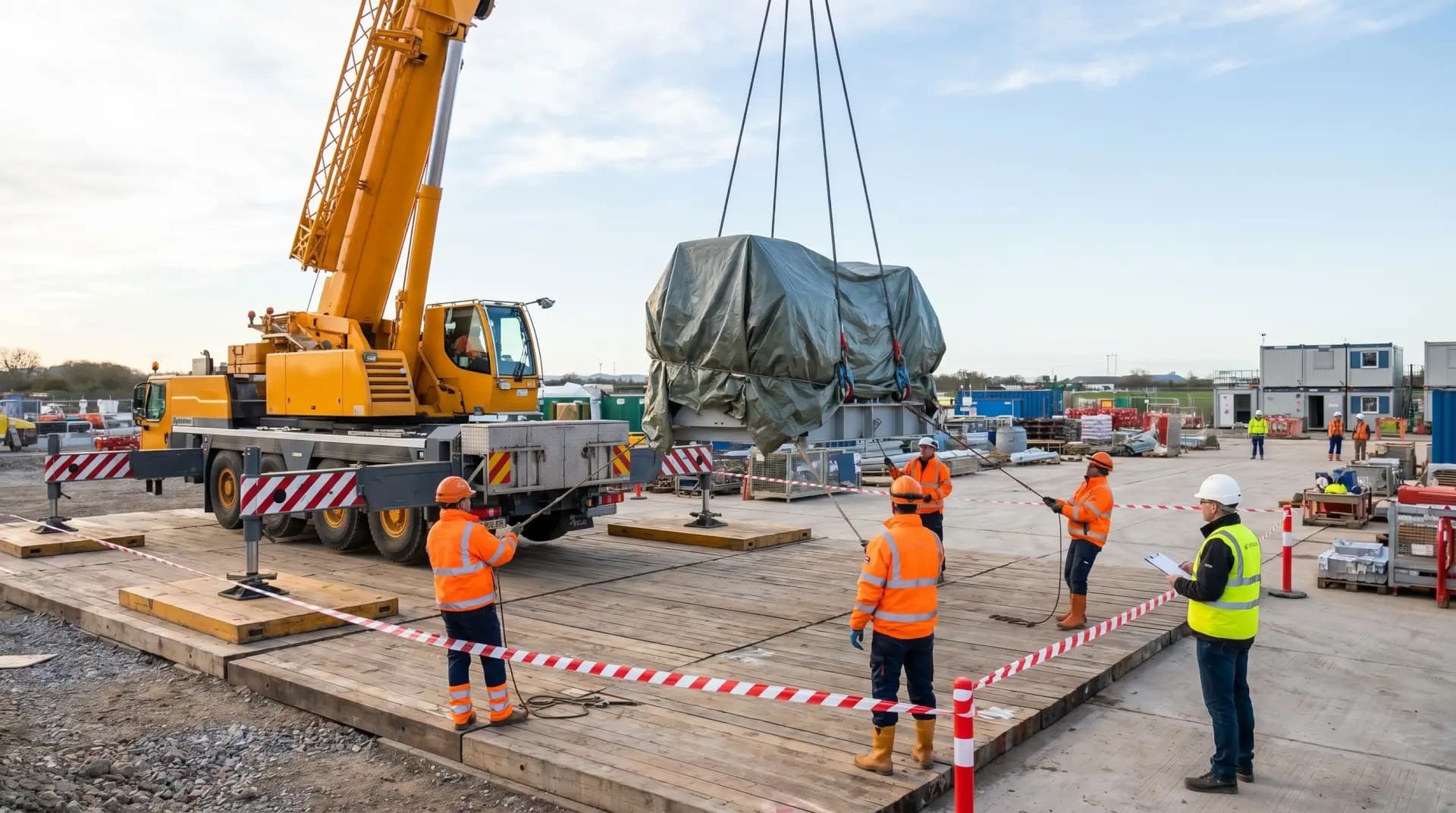
Establish exclusion zones between workers and operating machinery.
Use high-visibility clothing for all personnel.
Prohibit workers from standing between equipment and excavation edges.
Maintain clear communication between operators and ground workers.
Inspection, Monitoring, and Supervision
Excavation environments are dynamic and require continuous oversight.
Inspection Focus Areas:
Edge condition and signs of distress
Equipment positioning and compliance with setbacks
Ground condition changes throughout the shift
Supervision Practices:
Assign a competent person to monitor excavation safety.
Reassess conditions after:
Rainfall
Equipment movement
Extended work pauses
Emergency Preparedness
Even with controls in place, emergency readiness is essential.
Preparedness Measures:
Develop a rescue plan specific to excavation collapse scenarios.
Ensure access/egress points are not blocked by equipment.
Train operators and workers on emergency response procedures.
Keep communication systems functional at all times.
Common Mistakes That Lead to Failures
From my professional observations, the same patterns repeat:
Parking equipment too close to trench edges
Ignoring early warning signs like soil cracking
Allowing uncontrolled equipment movement
Underestimating the impact of water on soil stability
Lack of coordination between operators and ground workers
These are not technical failures—they are management failures.
Conclusion
Managing heavy equipment around excavations is not about reacting to hazards—it is about preventing the conditions that create them. Distance, discipline, and ground awareness are the three pillars of safe operation. When equipment is kept under control and excavation edges are respected as critical risk zones, the likelihood of collapse or incident reduces significantly.

Responses