

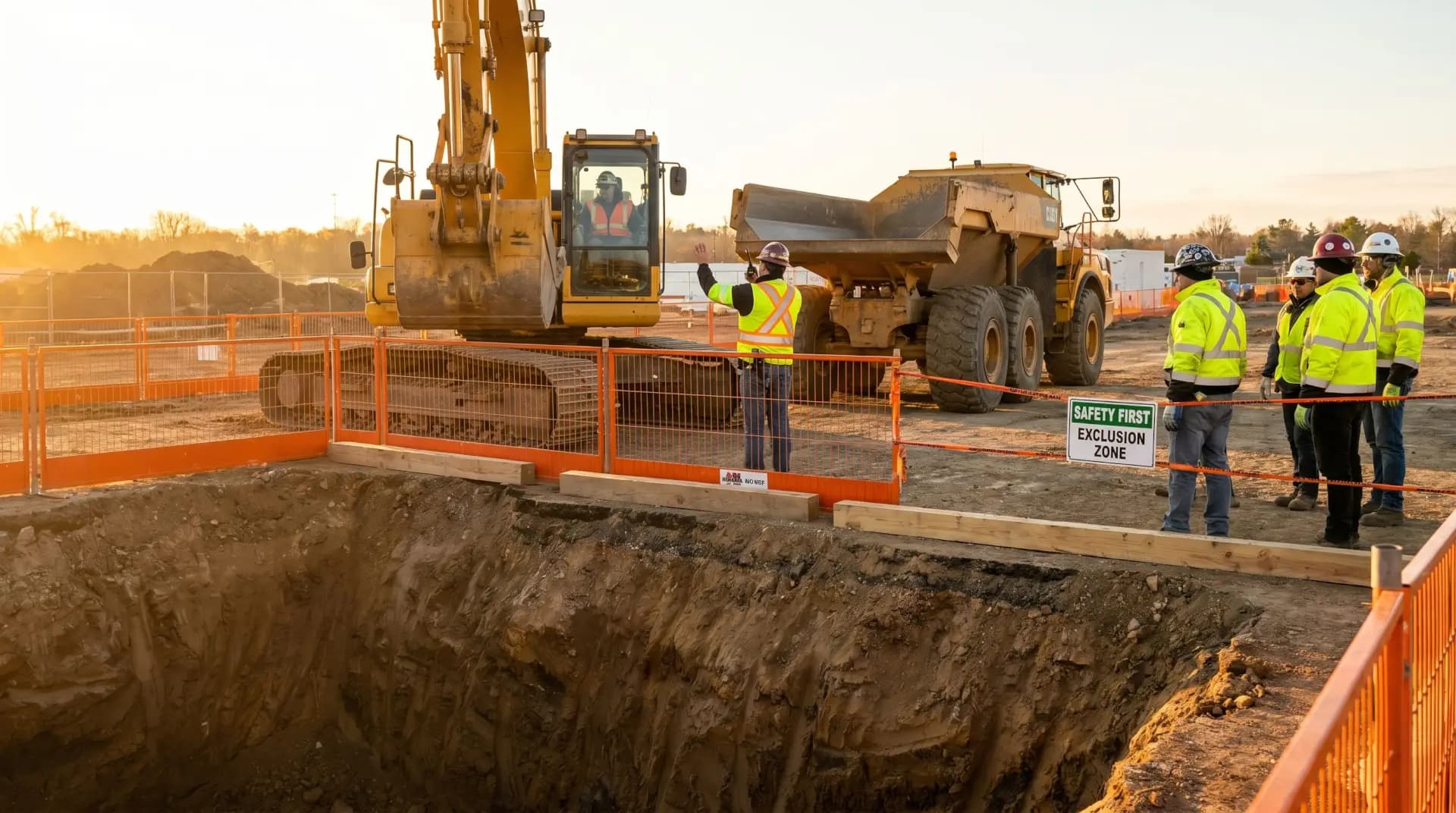
Excavation safety training teaches workers how to recognize ground collapse risks, underground services, falling materials, unsafe access, hazardous atmospheres, water ingress, and equipment-related hazards before entering or working near an excavation.
A worker should never treat an open trench as “just a hole in the ground.” Soil can fail without warning, and once it moves, escape time is almost nonexistent. Effective excavation safety training must therefore focus on practical decisions: when to stop, when to ask for inspection, when protection is required, and when entry is not allowed.
What Excavation Safety Training Must Cover
Excavation safety training should help workers understand:
Why cave-ins are the primary life-threatening hazard
How trench boxes, shoring, sloping, and benching protect workers
Why a competent person must inspect excavations
How to identify unstable soil, cracks, bulging, water, vibration, and surcharge loads
Safe access and egress requirements
Risks from underground utilities and buried services
Controls for falling objects, mobile plant, and edge protection
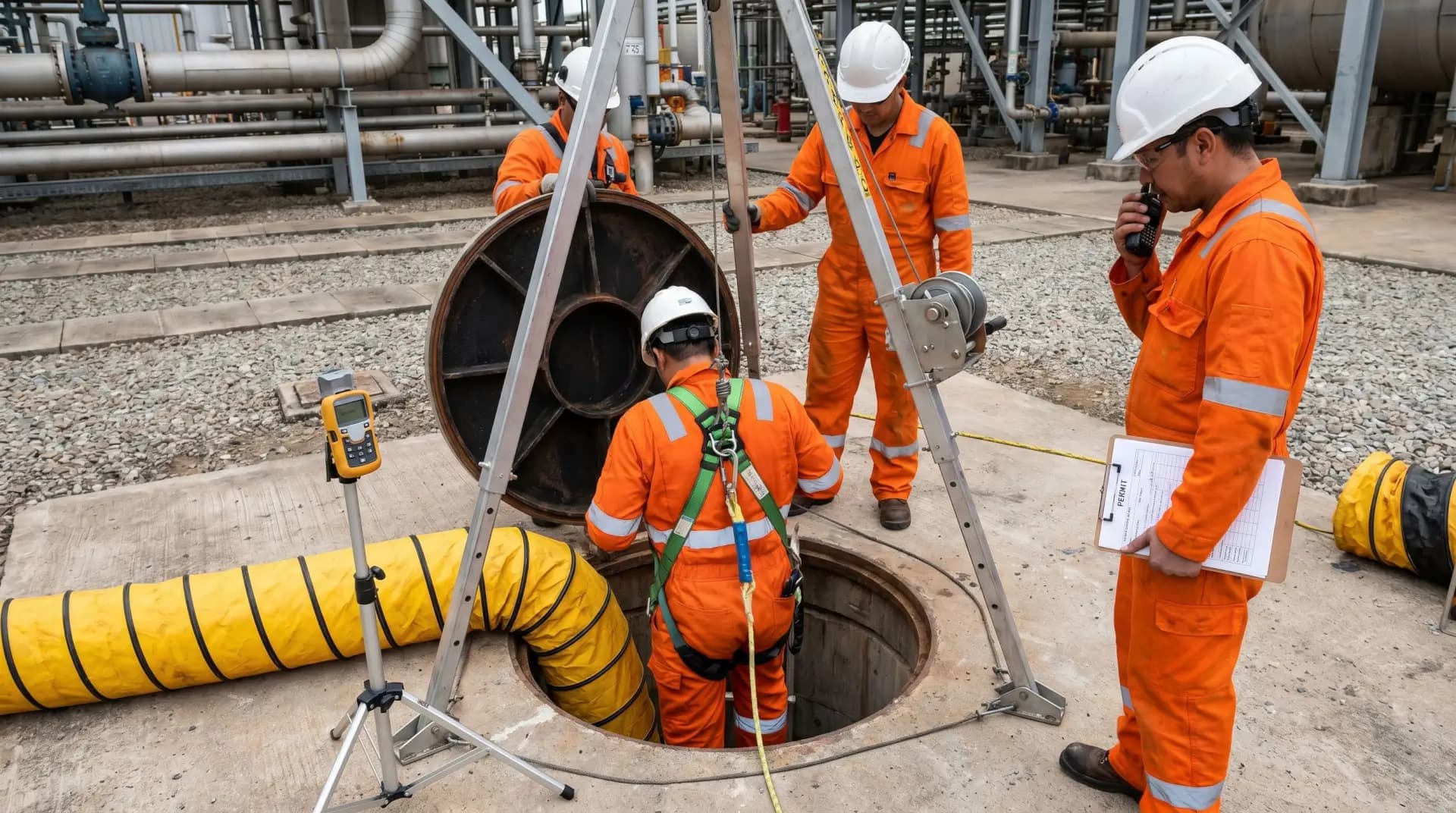
When atmospheric testing may be needed
The purpose is not to turn every worker into an engineer. The purpose is to make every worker capable of recognizing danger and refusing unsafe entry.
Key Excavation Hazards Workers Must Recognize
The most serious excavation hazards include:
Hazard | What Workers Should Look For |
|---|---|
Cave-in | Unsupported vertical faces, cracks, water, loose soil |
Underground services | Gas, electrical, water, communication, or drainage lines |
Falling materials | Spoil piles, tools, pipe, or equipment near the edge |
Unsafe access | No ladder, blocked exit, excessive travel distance |
Mobile equipment | Excavators, dumpers, reversing vehicles near the trench |
Hazardous atmosphere | Low oxygen, gases, vapors, or exhaust accumulation |
Water accumulation | Seepage, flooding, softened soil, pump failure |
A trained worker should know that these hazards often combine. For example, water weakens soil, nearby plant adds vibration, and spoil placed close to the edge increases collapse pressure.
Protective Systems Workers Need to Understand
Workers do not normally design excavation protection, but they must understand what safe protection looks like.
Common protective systems include:
Sloping – cutting the excavation wall back to a safe angle.
Benching – forming steps in suitable soil conditions.
Shoring – supporting excavation walls with hydraulic, timber, or engineered systems.
Shielding – using trench boxes to protect workers if soil collapses.
A common misconception is that a trench box prevents the ground from moving. It does not always stop collapse; it protects workers inside the shielded zone. That is why workers must stay within the protection and avoid working between the trench wall and the shield.
The Role of the Competent Person
Excavation training must clearly explain the competent person’s role. This person must be able to identify hazards, assess conditions, and take corrective action.
Workers should expect the competent person to inspect:
Before work starts
After weather changes
After vibration or nearby heavy movement
After water accumulation
After any condition that may affect stability
Whenever the excavation changes
No worker should enter an excavation simply because “it looked fine yesterday.” Excavations are dynamic. Soil, water, load, vibration, and weather can change the risk within hours.
Safe Work Practices Before Entry
Before entering an excavation, workers should confirm:
The excavation has been inspected
The protective system is installed correctly
Safe access and egress are available
Spoil and materials are kept away from the edge
Underground services have been identified and controlled
Plant and vehicles are controlled near the excavation
Water is managed
The work area is barricaded or protected
Emergency arrangements are understood
A practical rule I apply in excavation safety discussions is simple: if the worker cannot explain how the trench is protected, how to get out, and what could make it unsafe, the training has not done its job.
Underground Services and Safe Digging
Damage to buried services can cause electrocution, fire, explosion, flooding, toxic exposure, or service disruption. Workers must be trained to respect permit-to-dig systems, utility drawings, cable avoidance tools, trial holes, and safe hand-digging methods.
Drawings are useful, but they are not proof that the ground is clear. Training should make workers cautious around:
Unmarked ground
Old industrial areas
Road crossings
Utility corridors
Previous repair zones
Areas with conflicting drawings or unclear markings
The safest excavation teams treat underground services as a live hazard until positively identified and controlled.
Worker Stop-Work Triggers
Excavation safety training must give workers clear authority to stop and report unsafe conditions.
Work should stop when workers see:
Cracks forming near the edge
Soil falling or sloughing into the trench
Water entering or pooling
A missing or damaged protective system
Spoil, pipe, or equipment too close to the edge
Plant operating too close without controls
Missing ladder or unsafe access
Unknown utility line exposed
Strong odors, dizziness, or breathing difficulty
Any excavation entered without inspection
A worker who stops unsafe excavation work is not delaying the job. They are preventing a high-consequence incident.
Conclusion
Excavation safety training for workers must be practical, clear, and focused on life-critical decisions. Workers need to understand collapse hazards, protective systems, competent person inspections, safe access, underground services, and stop-work conditions.
The best training does not overload workers with legal language. It teaches them what unsafe excavation looks like, what questions to ask, and when not to enter. In excavation work, hesitation can be protective. Confidence should only come after inspection, protection, and control.

Responses