

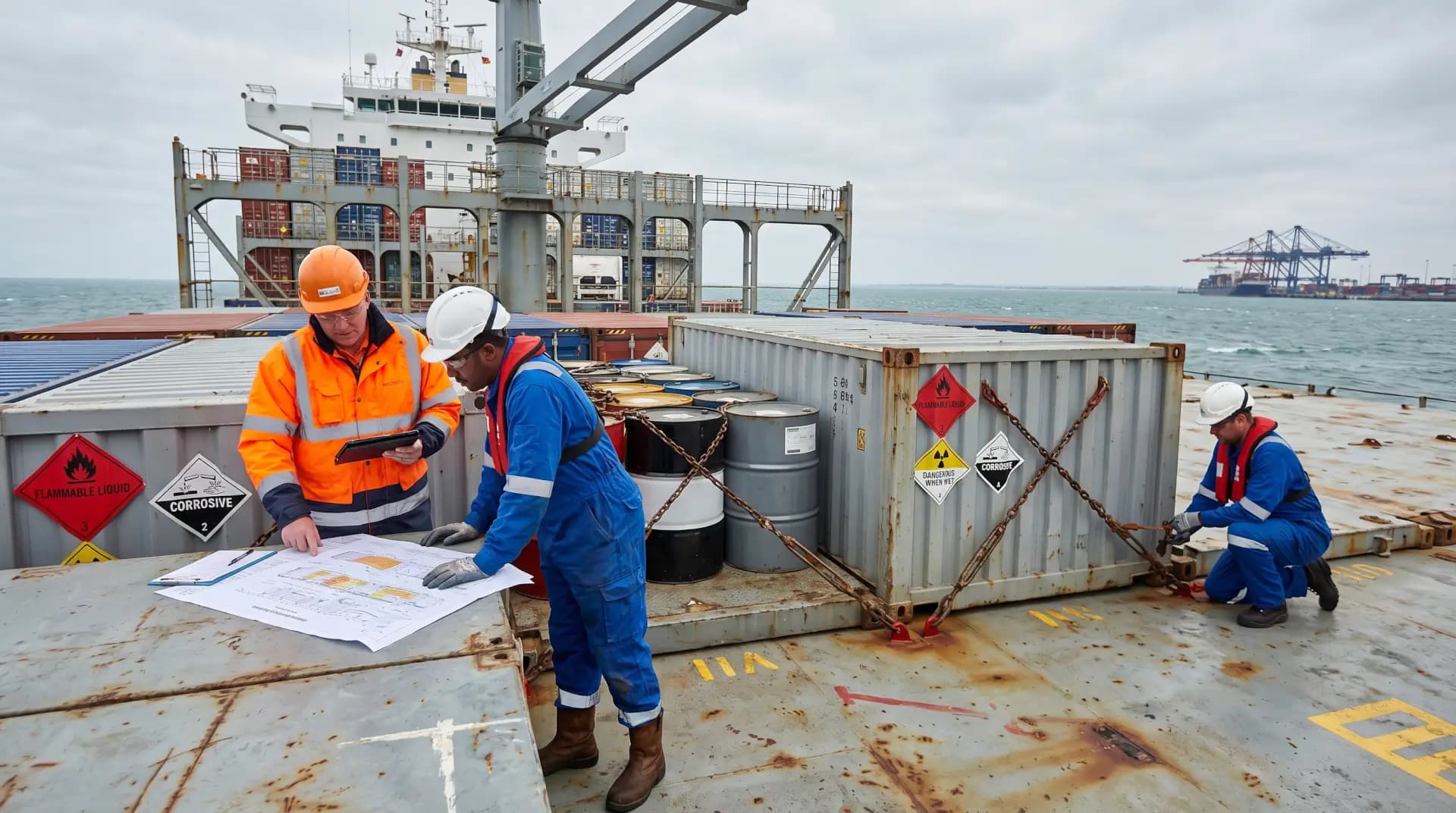
Managing hazardous cargo on ships is not mainly about moving dangerous goods. It is about preventing a small classification error, a packing mistake, or a poor stowage decision from turning into fire, toxic exposure, structural damage, cargo shift, pollution, or detention. In practice, I manage hazardous cargo through one simple chain: identify the cargo exactly, apply the correct code, verify every loading condition before acceptance, segregate and stow it correctly, and keep emergency controls live until discharge. If one critical link fails, the cargo should not sail.
As of 2026, the mandatory international baseline for dangerous goods in packaged form is the IMDG Code 2024 Edition, incorporating Amendment 42-24. But hazardous cargo management on ships is broader than packaged dangerous goods alone. Solid bulk cargoes, bulk liquid chemicals, and liquefied gases each sit under different IMO frameworks, and good management starts by choosing the right rulebook before anyone starts planning the load.
Safety boundary: This article supports operational understanding. It does not replace the vessel’s safety management system, the current mandatory code edition, flag-state instructions, class requirements, terminal rules, or shipper declarations.
Match the cargo to the correct code first
One of the biggest mistakes I see in hazardous cargo management is treating every risky cargo as an IMDG problem. That is only true for dangerous goods in packaged form. The moment the cargo changes form, the governing controls change as well. If the cargo is in bags, drums, IBCs, portable tanks, freight containers, or vehicles, I start with SOLAS Chapter VII and the IMDG Code. If it is a dangerous solid bulk cargo, I move to the IMSBC Code. If it is a dangerous or noxious liquid chemical in bulk, I work under the IBC Code. If it is liquefied gas in bulk, the IGC Code governs the ship, systems, and carriage conditions. Harmful substances carried in packaged form also trigger pollution controls under MARPOL Annex III.
Cargo form | Primary framework I use | Main management focus |
|---|---|---|
Packaged dangerous goods | SOLAS Chapter VII Part A + IMDG Code | Classification, packaging, marks, labels, documentation, segregation, stowage |
Harmful substances in packaged form | IMDG Code + MARPOL Annex III | Pollution prevention, marine pollutant handling, emergency control |
Dangerous solid bulk cargoes | SOLAS Chapter VII Part A-1 + IMSBC Code | Moisture limits, chemical reaction, stability, trimming, ventilation |
Dangerous liquid chemicals in bulk | IBC Code | Ship type suitability, cargo compatibility, containment, pollution control |
Liquefied gases in bulk | IGC Code | Containment, pressure/temperature control, gas safety, fire protection |
When I set the code correctly at the start, the rest of the job becomes structured. When I get the code wrong, every later control becomes weaker, even if the paperwork looks complete.
Build the pre-loading verification gate
Before hazardous cargo comes alongside or onto the terminal stack, I want a hard acceptance gate. This is where unsafe shipments should be stopped. I do not rely on generic cargo descriptions such as “chemicals,” “paint,” “cleaning material,” or “batteries.” I want the exact transport identity: proper shipping name, UN number, hazard class, subsidiary risk where applicable, packing group where assigned, marine pollutant status if relevant, package type, quantity, and any stowage or segregation conditions attached to that specific entry. That is the difference between managing a known hazard and gambling with a vague one.
My pre-loading gate usually looks like this:
Verify the transport information
The dangerous goods declaration must be complete, legible, and aligned with the cargo actually presented.Verify packing and packing responsibility
For containerized or vehicle loads, I expect the container or vehicle packing certificate where required, because safe packing and securing inside the unit is a separate control, not an assumption.Verify package, CTU, and marking condition
I check for leaks, bulging, corrosion, damaged closures, incorrect labels, missing placards, poor overpack control, and contamination.Verify ship suitability
The vessel must be permitted and equipped to carry the cargo in the proposed location, with the required fire protection, ventilation, water supply, electrical safety, and protective equipment where applicable.Verify stowage position and segregation plan
I want the cargo placed on a real plan, not just allocated space in a booking system.Verify mass and handling limits
Packed containers need verified gross mass under SOLAS, and actual load distribution matters for both safety and cargo securing.
The practical rule I use is blunt: incomplete papers, damaged containment, doubtful declaration, or an incompatible stowage request should lead to refusal or escalation before loading starts. Hazardous cargo management gets dramatically harder once the unit is on board.
Plan segregation, stowage, and securing as one decision
Segregation is not just about keeping class labels apart. Good segregation on ships is a layered decision: general class-to-class segregation, substance-specific instructions, location on board, distance from heat and accommodation, exposure to seawater, foodstuff separation where required, and the behavior of the cargo if packages are damaged. The IMDG system is designed around that logic, which is why I never stop at a broad class table. I also look at the individual dangerous goods entry and any special stowage or segregation wording tied to it.
In practical terms, I ask these questions before I approve a stowage position:
Decision point | What I check |
|---|---|
Can these cargoes be near each other? | General segregation requirements plus substance-specific instructions |
Can the cargo go under deck? | Stowage permission, ventilation and fire protection arrangements, ship compliance |
Can it share a CTU? | Compatibility, internal securing, cleanliness, dryness, load distribution |
Is the cargo water-reactive or moisture-sensitive? | Exposure risk from weather, wash water, leaks, and firefighting implications |
Is the cargo heat-sensitive or self-reactive? | Distance from heat sources, temperature control, inspection frequency |
Could movement make the hazard worse? | Securing strength, friction, dunnage, bracing, crush protection |
I also treat packing and securing inside the cargo transport unit as part of the shipboard risk, not a shore-only issue. The CTU Code exists for a reason. A perfectly legal dangerous goods declaration can still hide a badly packed unit that will shift, collapse, react, or leak once the ship starts moving. From an HSE standpoint, that means I care about what is inside the box, not only what is written outside it.
For ships carrying dangerous goods in packaged form, I also pay close attention to the ship’s special safety arrangements under SOLAS fire protection requirements. On some vessels and cargo spaces, the question is not simply “Is this cargo dangerous?” but “Is this ship configured and certified for this cargo in this exact location?” That distinction prevents many bad loading decisions.
Prepare the ship, crew, and emergency response around the actual load
I do not accept “the crew are generally trained” as enough. Hazardous cargo readiness must match the cargo that is actually on board for that voyage. The IMDG framework includes training requirements, and emergency support tools such as the EmS Guide and MFAG exist because incidents involving dangerous goods develop fast and punish hesitation. The ship needs the right information, the right equipment, and the right access to that information under pressure.
Before sailing, I want these controls in place:
a current dangerous goods manifest or stowage plan showing location by cargo type and position
bridge, cargo, and emergency teams briefed on the highest-consequence loads
cargo-specific fire, spill, exposure, and isolation actions aligned with EmS and MFAG
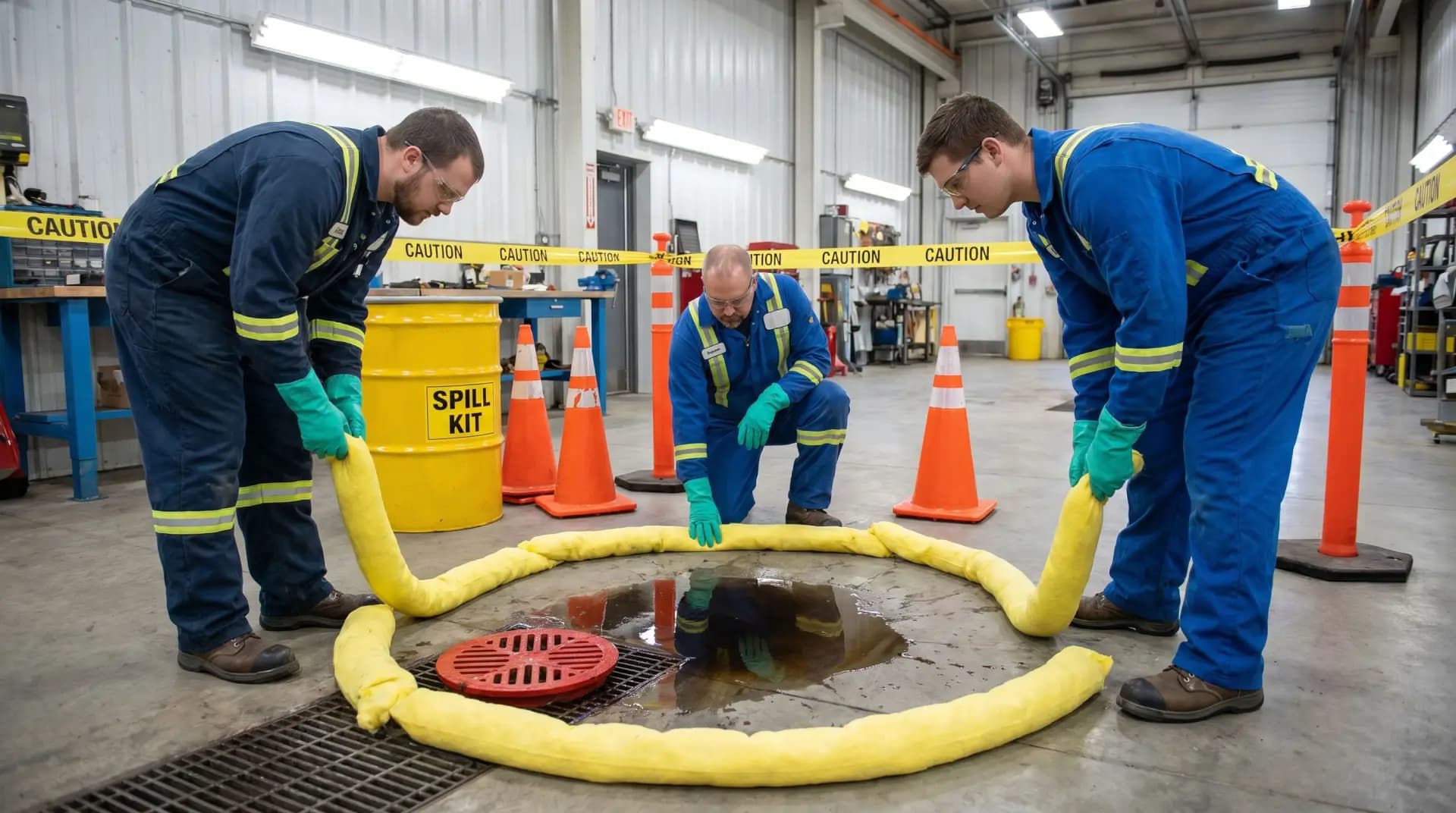
suitable PPE, spill materials, detection equipment, and decontamination arrangements for the risks on board
watchkeepers clear on what abnormal signs matter: heat, odor, smoke, pressure, leakage, staining, vapors, or damaged lashings
clear escalation triggers to master, company, terminal, port authority, and emergency services as required.
This is also where I correct a common misconception: emergency response for hazardous cargo does not begin when the fire alarm sounds. It begins when the cargo is accepted, because the wrong stowage plan, the wrong firefighting method, or the wrong medical response can worsen the event. Water-reactive substances, toxic inhalation hazards, marine pollutants, fumigated units, and refrigerated asphyxiant atmospheres all need different decision paths.
Control the risk from berth to discharge
Hazardous cargo management is easy to weaken after loading because teams assume the hardest part is over. In my view, that is exactly when management has to become more active. During loading, I watch for damaged packages, wrong placards, CTUs that do not match the declaration, load units with odors or staining, and poor segregation developing in real time as the bay plan changes. If the cargo presented does not match the cargo approved, the operation should stop and reset.
At sea, I focus on what can change the hazard profile: weather, vessel motion, water ingress, hold conditions, temperature, ventilation settings, lashing performance, access restrictions, and the possibility of an undeclared problem inside a closed unit. With some cargoes, the risk grows quietly before it becomes obvious. That is why inspections, patrols, and watchkeeping quality matter more than many crews realize. The most valuable question on passage is often not “Has an incident happened?” but “What early signs would tell us one is developing?”
Discharge needs the same discipline. Suspect or damaged packages, fumigated or oxygen-depleted units, chemical residues, and leaking cargo spaces should be treated as live hazards until proven otherwise. Rushing the final stage of the chain is a classic way to convert a controlled voyage into a personnel exposure or pollution event alongside.
Common failures that still lead to incidents and detentions
The failure patterns are remarkably consistent. Most hazardous cargo problems at sea do not start with exotic chemistry. They start with ordinary control failures:
misdeclared or poorly described cargo
incorrect packing inside CTUs
missing or flawed dangerous goods documentation
incompatible stowage or weak segregation
ship suitability not checked against the actual cargo and location
poor communication between shipper, terminal, planner, and vessel
emergency information not translated into practical crew action.
Recent port state control enforcement shows that improper stowage of dangerous goods is still serious enough to trigger repeated detention and even refusal of access. That matters because detention is not only a compliance issue; it is evidence that the control system broke down before the ship sailed.
If I had to reduce the whole subject to one professional judgment, it would be this: hazardous cargo on ships is best managed as a refusal-driven process. You do not prove safety by hoping the chain will hold. You prove it by refusing weak links before they become shipboard consequences.
Conclusion
To manage hazardous cargo on ships well, I keep the job disciplined and unsentimental. I identify the cargo precisely, choose the correct maritime code, verify every acceptance condition before loading, build the stowage and segregation plan around the actual hazard, prepare the ship and crew for the exact response they may need, and then keep monitoring until the cargo is discharged safely. That approach is not bureaucratic. It is the shortest route to protecting people, the vessel, the cargo, and the marine environment.



Responses