

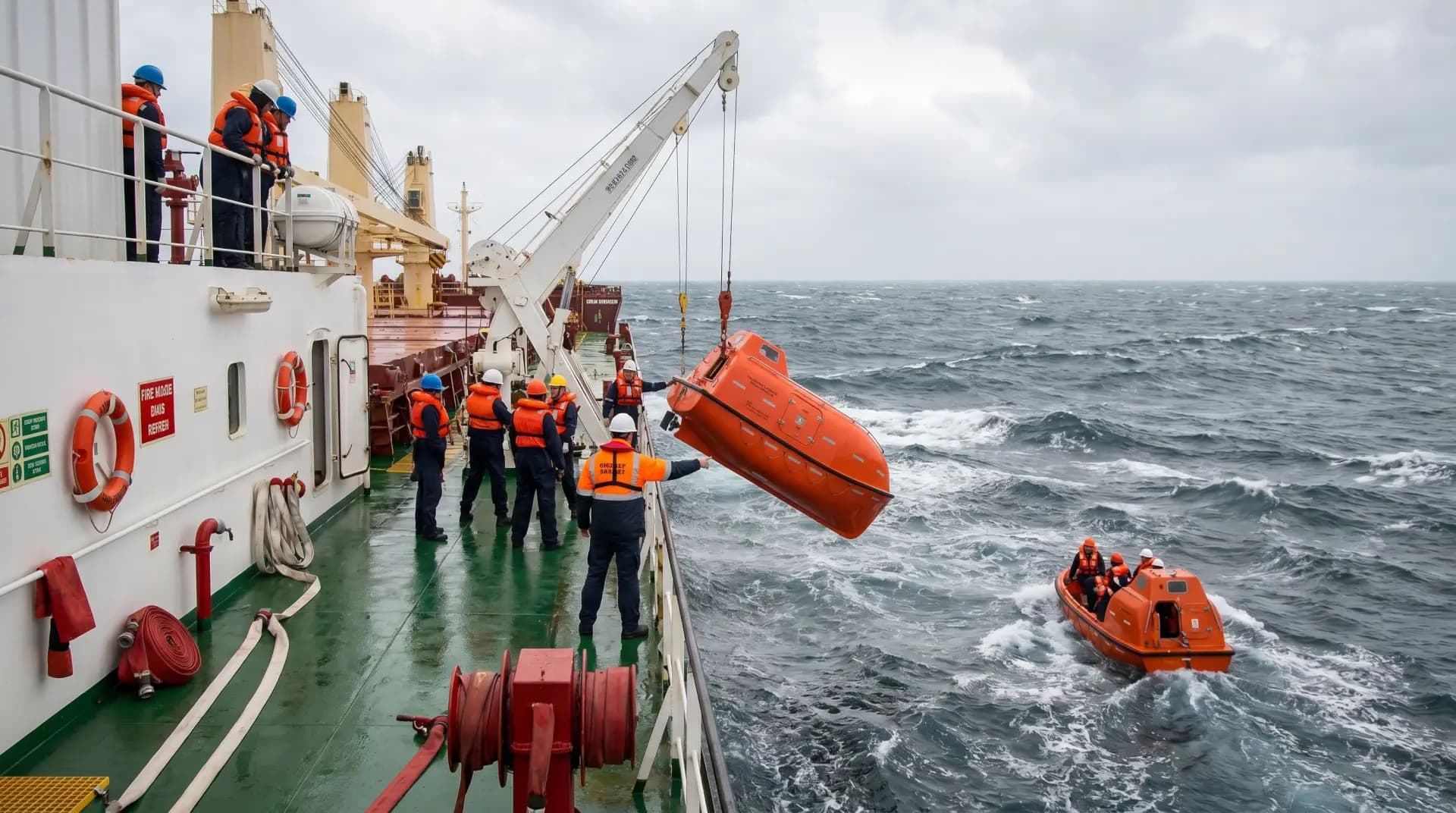
Life-saving appliances (LSA) on ships are the last line of defense when prevention fails. They are designed to preserve life during emergencies such as fire, collision, flooding, or abandonment. In practical terms, LSAs are not just equipment—they are a complete survival system that includes lifesaving gear, communication tools, and structured procedures aligned with international maritime safety requirements.
What Are Life Saving Appliances?
Life-saving appliances are all equipment and systems provided on a vessel to ensure the safe evacuation, survival, detection, and recovery of persons in distress at sea. Their design, quantity, and maintenance are governed by international maritime conventions, particularly those addressing safety of life at sea.
From my professional perspective, LSAs should be understood as an integrated safety layer—not isolated items. Their effectiveness depends on readiness, crew familiarity, and correct deployment under pressure.
Core Categories of Life Saving Appliances
1. Personal Life-Saving Equipment
These are assigned to individuals and must be immediately accessible.
Common items include:
Lifejackets
Immersion suits
Lifebuoys
Thermal protective aids
Key safety expectations:
Proper sizing for all crew members
Clearly marked storage locations
Lights and whistles attached where required
A recurring issue I’ve observed is improper donning during drills. Equipment exists, but usability under stress is often overlooked.
2. Survival Craft
Survival craft are designed to sustain life after abandoning the vessel.
Types include:
Lifeboats (enclosed, partially enclosed, or open)
Liferafts (inflatable or rigid)
Rescue boats
Critical features:
Capacity sufficient for all onboard
Independent propulsion (for lifeboats)
Emergency supplies (water, rations, first aid)
The difference between lifeboats and liferafts is operational control—lifeboats allow navigation, while liferafts are primarily passive survival units.
3. Launching and Embarkation Arrangements
Having survival craft is not enough—they must be deployable under adverse conditions.
Includes:
Davits and winches
Embarkation ladders
Muster stations
In real scenarios, launch failure is one of the most critical risks. Mechanical readiness and crew drills are essential here.
4. Visual and Audible Distress Signals
These appliances are used to attract attention and signal distress.
Examples:
Rocket parachute flares
Hand flares
Smoke signals
Emergency Position Indicating Radio Beacons (EPIRBs)
From a risk standpoint, these are time-sensitive tools. Expiry dates and storage conditions must be strictly managed.
5. Onboard Communication and Detection Systems
These systems support rescue coordination.
Includes:
Search and Rescue Transponders (SARTs)
Two-way VHF radios
Alarm systems
Their role is often underestimated, yet they significantly reduce rescue time when used correctly.
Regulatory Framework Governing LSAs
Life-saving appliances are regulated under international maritime safety frameworks. These regulations define:
Minimum quantity requirements
Performance standards
Testing and maintenance intervals
Crew training and drills
Compliance is not optional—it directly correlates with survivability rates during maritime emergencies.
Inspection, Maintenance, and Readiness
In my field experience, the biggest gap is not the absence of equipment—but the condition of it.
Effective LSA management includes:
Routine inspections (weekly, monthly, annual)
Functional testing of launch systems
Replacement of expired items
Servicing of inflatable equipment by certified providers
A poorly maintained liferaft is as dangerous as having none at all.
Common Operational Failures
Through pattern observation across multiple safety audits, the most frequent LSA-related failures include:
Blocked or inaccessible lifeboats
Corroded davit systems
Missing or expired distress signals
Crew unfamiliarity with equipment
Incomplete muster procedures
These are preventable issues and often indicate weak safety culture rather than technical limitations.
Crew Training and Drills
No life-saving appliance can compensate for untrained personnel.
Effective drills should cover:
Muster procedures
Lifejacket and immersion suit use
Lifeboat launching
Emergency communication
Drills must simulate realistic conditions—not just checklist exercises. I always emphasize that muscle memory saves lives when panic sets in.
Practical Safety Considerations
From a professional standpoint, LSAs must be evaluated using three critical questions:
Accessibility: Can it be reached within seconds?
Functionality: Will it work under emergency conditions?
Usability: Can crew operate it without hesitation?
If any of these fail, the system is compromised.
Conclusion
Life-saving appliances on ships are a structured survival ecosystem designed to protect human life in worst-case scenarios. Their presence alone does not ensure safety—proper maintenance, regulatory compliance, and continuous crew training define their effectiveness.
In real-world safety management, LSAs are not passive equipment. They are active safeguards that require discipline, ownership, and constant readiness. When maintained and used correctly, they turn a potential catastrophe into a controlled emergency response.


Responses