

Battery charging safety in warehouses is managed well when charging is treated as a controlled operation, not a convenience task. The essentials are straightforward: know the battery chemistry, use a designated charging area, separate charging from traffic and combustible storage, control ignition sources, match emergency equipment to the real exposure, and train people to stop work when a battery behaves abnormally. The big mistake I see is applying one battery rule to every battery. Lead-acid charging is primarily a hydrogen, acid, heat, and handling issue; lithium-ion charging is primarily a damage, abnormal heating, and thermal-runaway preparedness issue.
Operational safety note: Use this guidance with your site risk assessment, equipment manuals, fire strategy, and local legal duties. In the United States, forklift battery charging is framed by OSHA requirements. In Great Britain, DSEAR and HSE guidance make the fire and explosion assessment a central part of the control plan.
Start with the battery type, not the charger
Before I approve any charging setup, I first separate lead-acid and lithium-ion into different risk pathways. That one decision changes the ventilation plan, the emergency equipment, the housekeeping rules, and the response to abnormal conditions.
Topic | Lead-acid batteries | Lithium-ion batteries |
|---|---|---|
Main routine hazard | Gassing, hydrogen buildup, acid exposure, heavy battery handling | Damaged cells, electrical abuse, abnormal heating, fire escalation |
Area design priority | Ventilation, no ignition sources, spill control, safe battery handling | Approved equipment, manufacturer instructions, separation from combustibles, damaged-battery isolation |
Emergency focus | Acid splash response, spill neutralization, fire protection, gas dispersion | Written incident response, trained personnel, isolation, escalation for thermal runaway |
Common mistake | Charging in a poorly ventilated corner or treating battery changes like ordinary manual handling | Treating lithium charging like ordinary plug-in work and continuing to charge damaged or modified batteries |
This distinction is consistent with OSHA’s powered industrial truck rules, OSHA’s lithium-ion workplace guidance, UK HSE chemical warehousing guidance, and current warehousing loss-control guidance for lithium-ion batteries. Some lithium controls are best understood as strong good practice rather than one universal regulatory text, so they should be built into your site standard and fire-risk process.
Design a charging area that can actually control the hazard
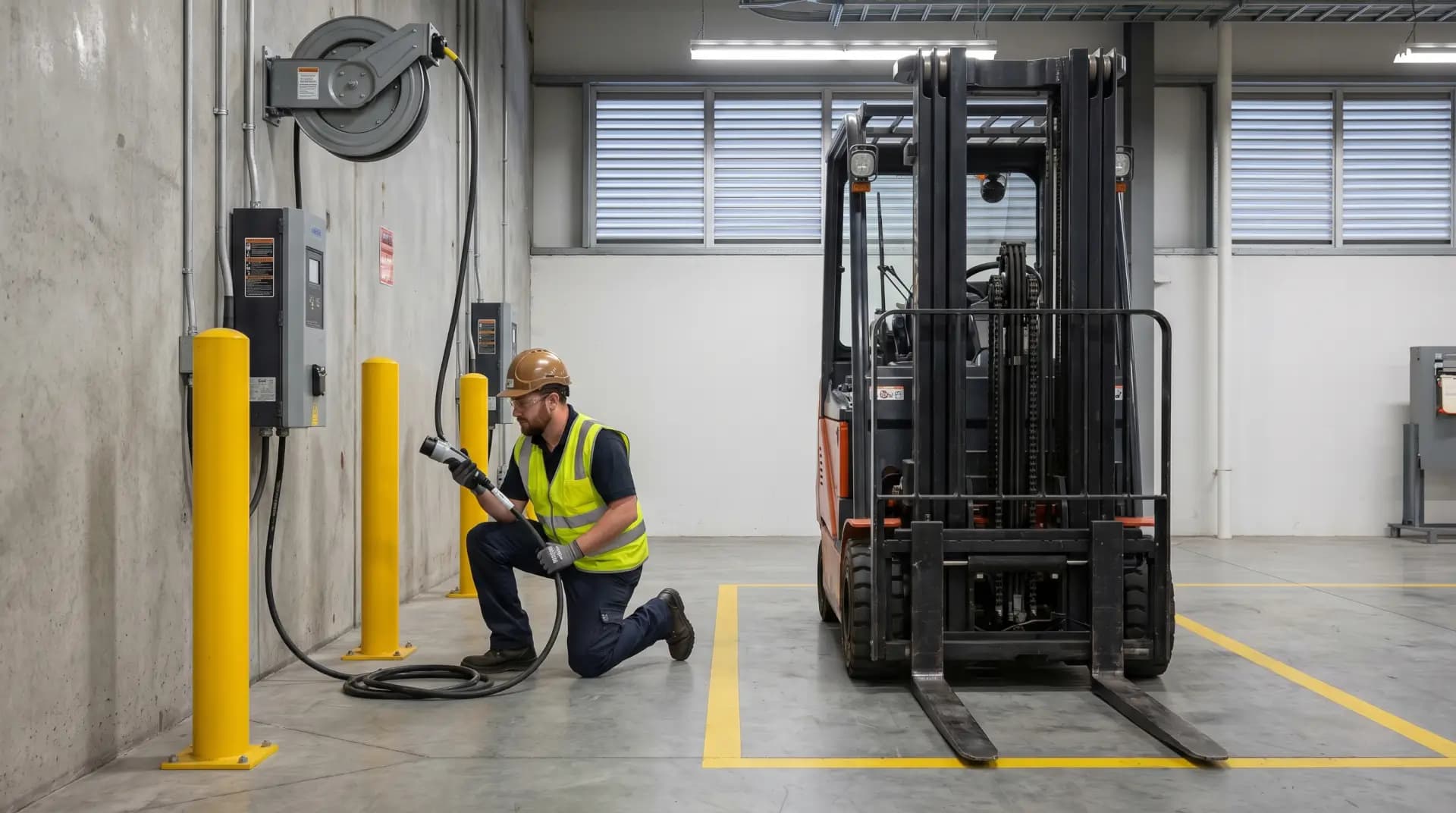
A safe warehouse does not scatter chargers wherever trucks happen to stop. Charging belongs in a defined area or bay, with clear boundaries, supervision, and a layout that prevents forklift impact, cable damage, and encroachment by stored goods. OSHA requires designated battery charging areas for powered industrial trucks, and HSE guidance for chemical warehousing says electric-powered vehicles should be recharged in a bay separate from the store, with good mechanical ventilation.
I use these design rules:
Put charging in a designated area, not in travel aisles, not beside pallet build-up points, and not inside normal storage flow.
Protect chargers and associated equipment from truck strikes with barriers or equivalent protection.
For lead-acid systems, provide ventilation appropriate to the charging activity so gases do not accumulate; in higher-risk warehouse settings, treat mechanical ventilation as a design control, not an afterthought.
Ban smoking and prevent open flames, sparks, and electric arcs in the charging area.
For lithium-ion forklift charging, use listed or approved equipment, follow the manufacturer’s charging instructions, do not use damaged or modified batteries, and avoid locating charging stations within storage racks.
One nuance matters. OSHA has historically distinguished a simple charge-only setup from a full battery-change or maintenance area. If batteries are only being charged on the truck, with no battery removal, no maintenance, and no electrolyte present, some battery-room features are treated differently. That does not mean the area can be informal. The designated-area, truck-positioning, vent-cap, no-smoking, and no-spark controls still matter.
Standardize the charging procedure
The safest charging procedure is short, visual, and chemistry-specific. I do not want workers making judgment calls from memory while standing next to energized equipment.
A practical warehouse charging procedure should include these steps:
Position the truck properly and secure it before charging or battery change. Apply the brake and control the area before anyone touches the battery or charger.
Inspect before connection. Do not proceed if cables, connectors, housings, vent caps, or the battery case are damaged. For lithium-ion, any damaged or modified battery should be removed from service and handled under the site isolation process.
Use only the correct charger and settings for that battery. Mixed chemistries, unofficial chargers, and improvised adapters are where routine charging starts to become incident potential.
Manage heat and exposed metal. For lead-acid charging, vent caps must function properly and covers should be managed so heat can dissipate as required. Metallic objects should be kept away from uncovered batteries.
Use proper handling equipment for battery changes. If the battery must be removed, use a conveyor, overhead hoist, lifting beam, or equivalent equipment. Never improvise heavy battery handling.
Control electrolyte work separately from charging. If acid is handled, use the correct transfer equipment and procedure. Where dilution is required, acid goes into water, not water into acid.
For lithium-ion, the stop-work rule should be stricter than many warehouses currently apply. If a pack is damaged, modified, overheating, or showing abnormal behavior, do not “finish the shift and check later.” Isolate it under the site procedure and follow the manufacturer-based emergency plan.
Match PPE, spill response, and emergency equipment to the real task
This is where I see the most confusion. Not every charging point needs the same emergency setup, but every credible exposure needs one.
If workers are handling batteries or acid, provide PPE that matches corrosive and splash hazards. OSHA construction rules explicitly require face shields, aprons, and rubber gloves for workers handling acids or batteries, and OSHA general-industry rules require quick drenching or flushing facilities where eyes or body may be exposed to injurious corrosive materials. OSHA’s forklift guidance also points to goggles, face shields, gloves, aprons, and emergency eyewash arrangements for battery work.
For simple charge-only arrangements, do not automatically copy a full battery-room layout if there is no realistic acid exposure. OSHA has historically interpreted this differently where batteries are simply undergoing charge and electrolyte is not being handled. But the moment workers remove caps, add water, clean corrosion, change batteries, or deal with spills, the emergency flushing and splash protection expectation changes.
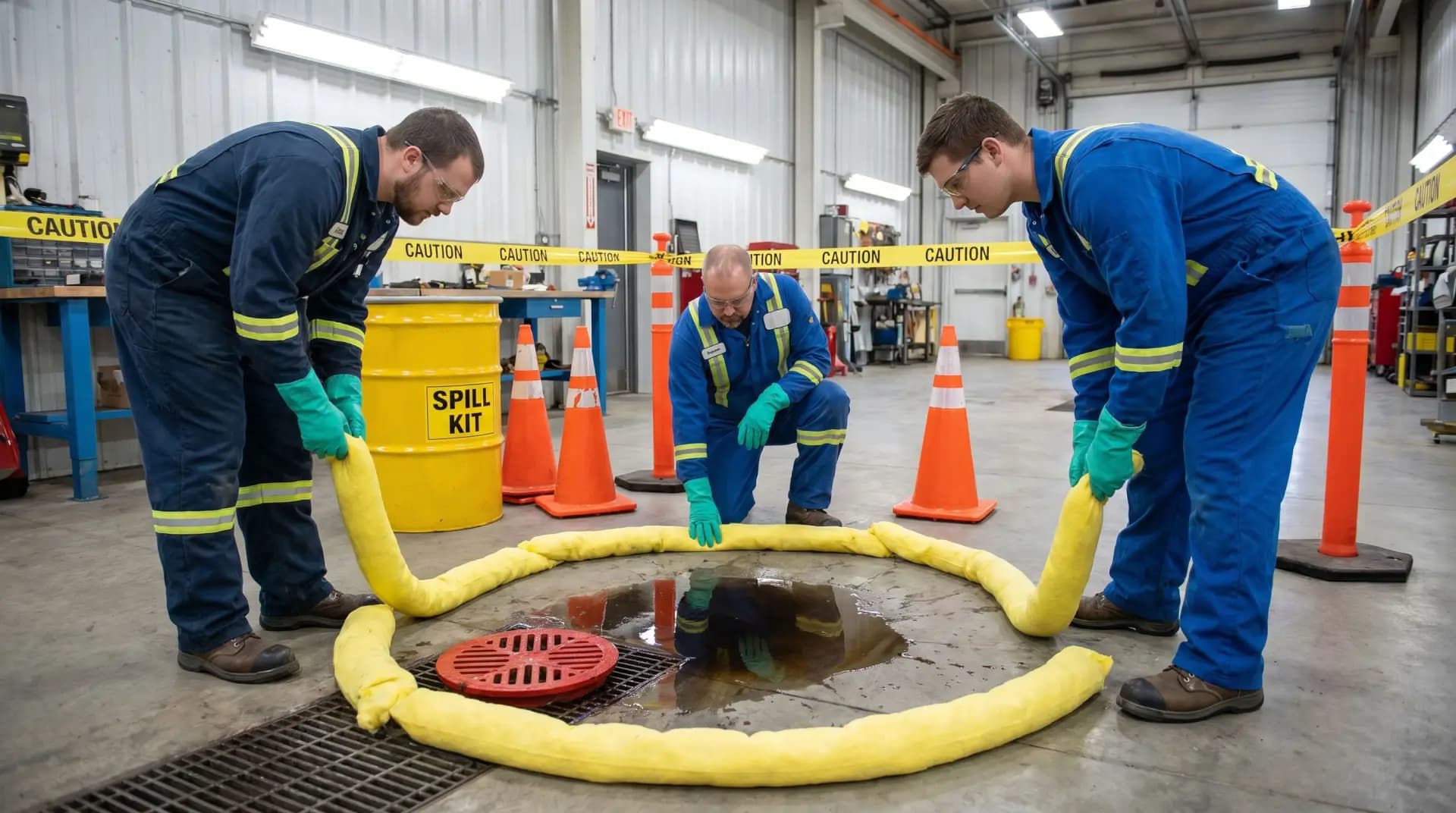
For lead-acid charging areas, I expect four physical supports to be obvious and ready: water for flushing, means to neutralize spilled electrolyte, fire protection, and ventilation that actually suits the charging activity. For lithium-ion, the higher-value controls are different: approved charging equipment, damaged-battery isolation, a written response plan, and trained actions for fire or thermal-runaway conditions based on manufacturer instructions and NFPA-aligned emergency guidance.
Train for normal work and abnormal signs
Battery charging safety is not mostly about the charger. It is about worker decisions around abnormal conditions.
I train three groups differently: operators, battery attendants or technicians, and supervisors. Operators need to know what they may do and what they must never improvise. Battery attendants need chemistry-specific procedures, spill response, inspection criteria, and isolation steps. Supervisors need authority triggers: when to stop charging, when to isolate an area, when to escalate to emergency response, and when equipment is not allowed back into service.
Your training content should cover, at minimum, battery chemistry, charger compatibility, no-smoking and no-spark rules, cable protection, housekeeping standards, signs of damage or abnormal heat, spill or electrolyte response where relevant, and the exact reporting path for defects. For lithium-ion batteries, OSHA says the emergency action plan should include lithium-related incident response procedures based on manufacturer instructions and NFPA guidance, and workers should be trained on those procedures.
In Great Britain, this should sit inside the DSEAR logic: identify the dangerous substances, examine the work activity, decide how harm could occur, and then eliminate or reduce the risk as far as reasonably practicable. In practical warehouse terms, that means battery charging cannot be left as a vague facilities issue. It has to be a defined hazard with defined controls.
Audit the area with a practical checklist
A battery charging area is safe only if the controls still exist on a busy day. I recommend a short weekly audit and a deeper monthly review.
Use this checklist:
Charging is confined to a marked, designated area.
Chargers and cables are protected from vehicle impact.
Combustible storage has not crept into the charging zone.
Lead-acid charging ventilation is working and appropriate.
No-smoking and ignition-control signage is visible and enforced.
Correct chargers are used for the battery type and model.
Damaged or modified lithium-ion batteries are isolated, not charged.
Vent caps, covers, and basic battery condition checks are part of the routine where applicable.
Spill control and emergency flushing arrangements match the real exposure.
Emergency response instructions are posted and understood.
Training records, inspection records, and defect close-out actions are current.
That checklist reflects the controls required or strongly supported across OSHA forklift rules, OSHA lithium-ion workplace guidance, HSE/DSEAR expectations, and current warehousing guidance for lithium-ion storage and charging.
Conclusion
Battery charging safety in warehouses improves fast when the site stops treating all batteries as the same problem. My advice is simple: separate the chemistries, formalize the charging area, remove ignition and impact risks, match emergency equipment to actual exposure, and train people to stop work at the first abnormal sign. When those five controls are in place, charging becomes a managed operation instead of a hidden warehouse risk.






Responses