

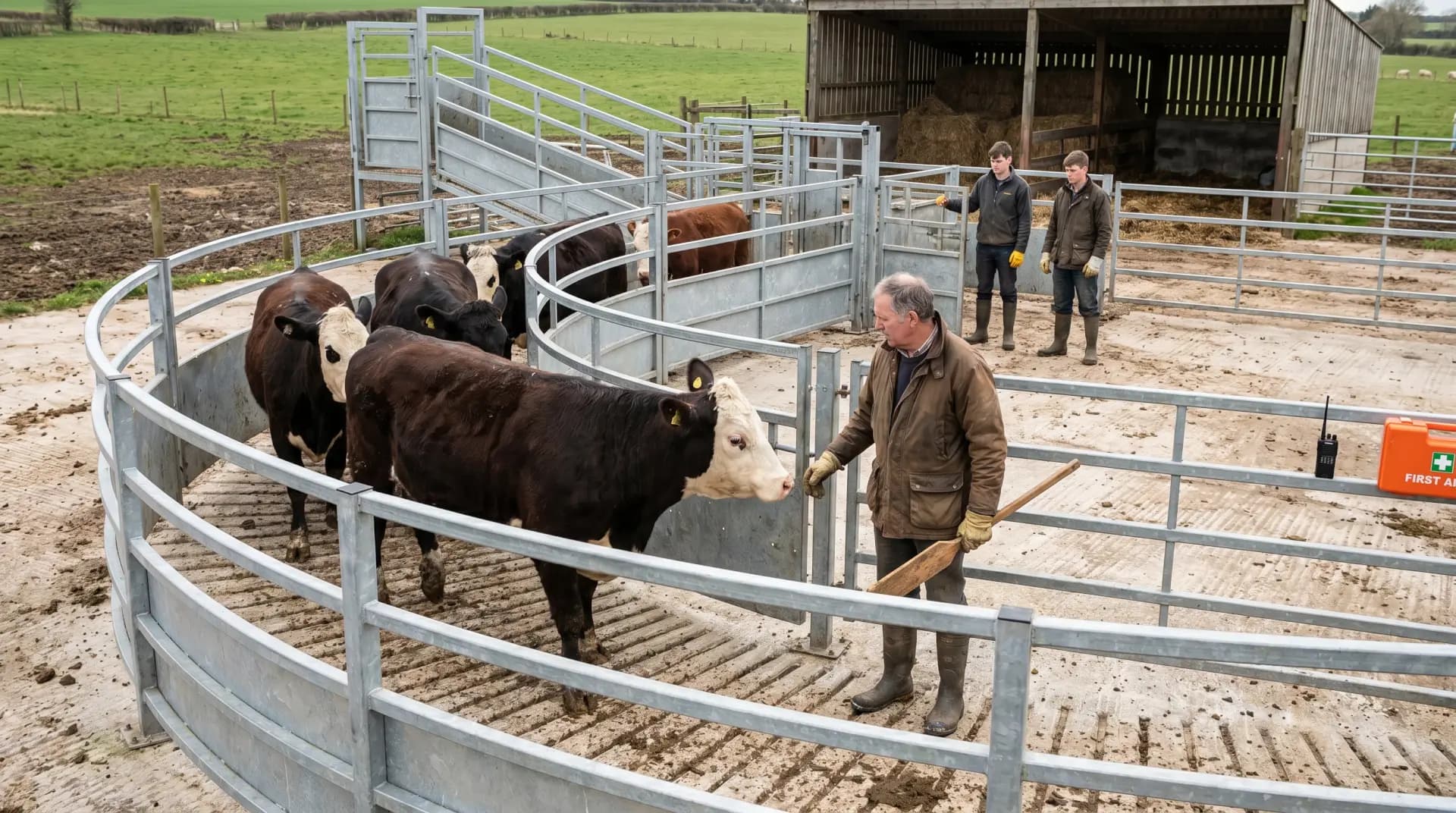
Livestock handling safety is the disciplined control of animal movement, worker position, facilities, equipment, hygiene, and emergency readiness so farm workers are not crushed, kicked, bitten, gored, trampled, pinned, or exposed to animal-borne disease. In practical terms, safe handling begins before a worker enters the pen: the animals must be understood, the route must be prepared, the gates must work, escape options must be clear, and no high-risk task should depend on speed, strength, or luck.
I treat livestock handling as a high-energy work activity. A calm animal can still injure a person because of its size, instinct, fear response, maternal behaviour, or reaction to noise and pressure. Good livestock safety does not come from being “good with animals” alone. It comes from designing the job so the animal has a clear path, the worker has a protected position, and the task can stop safely when conditions change.
The Main Livestock Handling Hazards Farm Workers Must Control
The most serious livestock handling incidents usually follow predictable patterns. A worker enters a confined area without an exit. An animal turns back in a race. A gate swings under pressure. A cow protects a calf. A bull is underestimated. A worker becomes trapped between an animal and a fixed object. These are not random events; they are signs of weak planning or poor control.
The main hazards include:
Crushing and pinning against gates, walls, rails, trailers, posts, feed barriers, or crush equipment.
Kicking, butting, biting, trampling, and goring, especially during close contact tasks.
Unpredictable animal movement caused by fear, pain, unfamiliar people, noise, dogs, poor lighting, slippery floors, or overcrowding.
Handling aggressive or temperamental animals, including bulls, recently calved cows, rams, boars, stallions, and animals not handled regularly.
Manual handling injuries from pushing gates, lifting hurdles, restraining smaller animals, dragging bedding, or working in awkward positions.
Slips, trips, and falls on wet concrete, manure, mud, uneven yards, ramps, and poorly drained areas.
Zoonotic disease exposure through contact with animal fluids, manure, birthing material, contaminated clothing, cuts, aerosols, and poor hand hygiene.
Vehicle and loading risks during transport, trailer work, yard transfers, and animal movement across tracks or roads.
My working rule is simple: if the task requires a worker to stand where an animal can trap them, the job is not properly controlled yet.
Safe Handling Starts Before the Gate Opens
The safest livestock task is the one that has been prepared before pressure is applied to the animals. Rushing into a pen to “just get it done” is one of the most common judgement errors I see in farm work. Livestock handling should start with a brief assessment of the animal, the environment, the people, and the route.
Before moving or restraining animals, workers should confirm:
The purpose of the task
Vaccination, loading, tagging, milking, hoof trimming, calving assistance, drafting, weighing, shearing, or veterinary treatment all carry different risks.The animal group involved
Young stock, adult cattle, bulls, newly calved cows, breeding animals, sick animals, isolated animals, and animals unused to handling need different levels of control.The movement route
Gates, races, pens, ramps, yards, lanes, and crushes must be checked before animals are moved.The worker positions
Everyone must know where to stand, where not to stand, and where to move if the animal turns, charges, or refuses to move.The stopping point
A safe job includes a planned pause point. If animals become agitated, equipment fails, weather changes, or a worker loses position, the team must know how to stop the task safely.
A short pre-task discussion is enough for many routine jobs, but high-risk work needs stricter control. I would not treat bull handling, loading unfamiliar cattle, assisting a difficult birth, or restraining a distressed animal as routine work just because the farm has done it many times before.
Practical pre-task check
Check Area | What Good Looks Like | Unsafe Sign |
|---|---|---|
Animals | Calm, visible, not overcrowded | Animals pushing, turning, vocalising, slipping, or bunching |
Gates and rails | Secure, latched, no sharp edges | Broken latches, loose rails, makeshift barriers |
Worker access | Clear walkways and exits | Worker must climb, squeeze, or stand in blind corners |
Floors and ramps | Dry or controlled for traction | Mud, manure, ice, algae, steep loading angle |
Communication | Agreed signals and roles | Workers shouting mixed instructions |
Emergency readiness | First aid, phone/radio, access route | Lone worker with no reliable communication |
Facilities, Equipment, and Escape Routes Matter More Than Strength
A strong worker cannot outmuscle a frightened cow, a charging bull, or a group of animals turning in a tight space. Engineering controls are the backbone of livestock handling safety. Properly designed and maintained facilities reduce the need for workers to enter dangerous zones.
A safe livestock handling setup should include:
Well-maintained gates and latches that can be operated without placing hands, legs, or the body in crush points.
Strong pens and barriers suitable for the species, size, and temperament of the animals.
A race and crush or equivalent restraint system appropriate for the work being carried out.
Non-slip flooring in yards, parlours, ramps, races, and loading areas.
Adequate lighting without harsh shadows that cause animals to stop or turn.
Clear escape routes or refuges for workers in pens and handling areas.
Loading ramps and trailers designed to prevent slipping, gaps, sudden drops, and worker trapping.
No reliance on temporary makeshift equipment for high-pressure handling tasks.
I pay close attention to gate swing direction. A gate that opens into a worker’s escape path can turn a manageable event into a serious incident. The same applies to narrow corners, dead-end pens, and races where a worker has no protected side access.
Common facility mistakes
The most common weaknesses are rarely complicated. They are usually basic items left unresolved:
A latch that only works if the worker leans into the animal’s path.
A rail gap wide enough for a leg, horn, or head to become trapped.
A slippery ramp accepted as “normal” because animals eventually load.
A crush used for tasks it was not designed to control.
A pen layout that forces workers behind animals with no exit.
Broken lighting that creates shadows at the race or trailer entrance.
When I assess livestock facilities, I do not ask only whether the job can be completed. I ask whether it can be completed without workers entering the animal’s strike, kick, crush, or flight zone unnecessarily.
Worker Positioning and Animal Behaviour
Livestock handling depends heavily on understanding animal behaviour. Animals respond to pressure, space, movement, sound, light, pain, isolation, and previous handling experience. A worker who ignores these signals often creates more risk for everyone in the yard.
Good handlers work calmly, deliberately, and from a position of control. They avoid sudden movements, shouting, hitting, crowding, or standing directly behind large animals. They also avoid standing in front of an animal with no barrier, especially when the animal is stressed or confined.
Key behaviour principles
Give animals a clear route forward. Confused movement causes stopping, turning, and bunching.
Avoid blind pressure. Animals may react sharply when startled from behind or from a blind spot.
Use calm movement and consistent signals. Noise and panic transfer quickly through a group.
Do not overcrowd pens or races. Overcrowding removes the animal’s ability to move and increases pressure.
Avoid separating cows from calves without control. Maternal behaviour can change quickly.
Treat isolated animals as higher risk. A single animal may become more defensive or unpredictable.
Do not trust familiarity as a control. Animals that are usually quiet can still react under pain, fear, heat, illness, or breeding pressure.
Low-stress handling is not soft handling. It is controlled handling. It reduces panic, protects workers, improves animal flow, and prevents the task from becoming a contest between people and livestock.
High-risk animals need stricter decisions
Some animals should not remain in a system simply because workers have learned to “manage around them.” Aggressive, unpredictable, or repeatedly dangerous animals require a formal decision: additional controls, restricted handling, specialist assistance, or removal from the herd where appropriate. Keeping a known dangerous animal without upgrading controls is not experience; it is exposure.
PPE, Hygiene, and Health Precautions Around Livestock
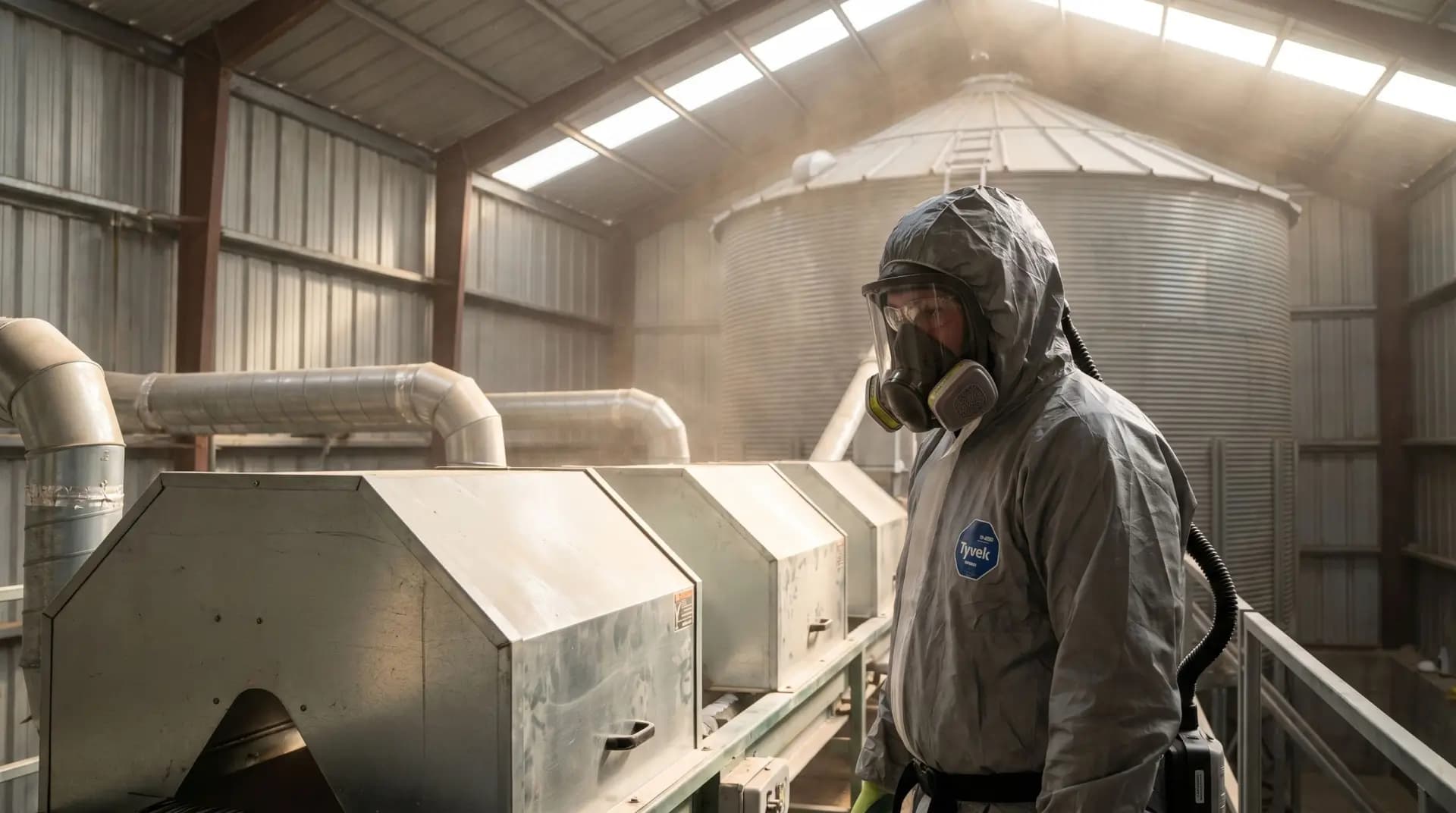
Personal protective equipment is necessary, but it is not the first control. Boots, gloves, helmets, eye protection, waterproof clothing, and respiratory protection have value only when the handling system, worker position, and task planning are already controlled.
For routine livestock work, PPE should be selected according to the species and task. Typical requirements may include:
Safety boots with toe protection and slip-resistant soles.
Durable gloves suitable for gates, ropes, bedding, and animal contact.
Waterproof or washable outer clothing for wet, dirty, or contaminated work.
Eye and face protection where splashes, chemicals, pressure washing, or veterinary products are involved.
Respiratory protection where dust, aerosols, disinfectants, mouldy bedding, or enclosed housing conditions create exposure.
Hearing protection where noise levels from animals, machinery, or enclosed buildings are high.
Head protection where there is a realistic risk of impact, falling objects, or working in confined livestock structures.
Health protection is equally important. Farm workers can be exposed to zoonoses through manure, urine, blood, birth fluids, aborted material, saliva, hides, wool, bedding, pests, and contaminated surfaces. Cuts and abrasions increase the risk of infection.
Basic hygiene controls
Wash hands with soap and clean running water after animal contact and before eating, drinking, smoking, or touching the face.
Cover cuts with waterproof dressings before work.
Keep eating and drinking areas separate from livestock areas.
Clean and disinfect contaminated tools, boots, and protective clothing.
Remove dirty workwear before entering vehicles, homes, offices, or clean welfare areas.
Report illness after animal exposure, especially fever, diarrhoea, skin infection, breathing symptoms, or unusual fatigue.
Follow veterinary and public health instructions for suspected infectious disease, abortions, outbreaks, or quarantine situations.
A farm’s hygiene system must be practical. If workers have no clean water, no soap, no place to dry hands, and no way to clean boots, the written instruction to “maintain hygiene” has little value.
Training, Supervision, and Emergency Readiness
Competence in livestock handling is developed through instruction, supervised practice, and clear limits. It should not be assumed because a worker grew up around animals or has worked on farms before. Different farms have different layouts, animals, equipment, breeds, weather conditions, and work pressures.
Training should cover:
Animal behaviour and warning signs.
Safe approach and movement techniques.
Use of gates, races, crushes, ramps, trailers, and restraint equipment.
Bull, cow-calf, ram, boar, stallion, and other high-risk animal procedures.
Loading and unloading controls.
Hygiene and zoonotic disease prevention.
Manual handling and safe use of tools.
Lone working rules and communication.
Emergency response after crushing, kicking, trampling, entrapment, bite, chemical exposure, or suspected disease exposure.
Local legal duties and farm-specific standard operating procedures.
New, young, seasonal, migrant, temporary, and inexperienced workers need close supervision until they have proved competence in the actual tasks they will perform. Language barriers must also be controlled. A worker who cannot understand an emergency instruction in the yard is not safely briefed.
Lone working and high-risk tasks
Some livestock jobs should not be done alone unless a specific risk assessment shows the controls are strong enough. Examples include handling bulls, loading difficult animals, calving assistance, treating aggressive animals, working in isolated yards, and entering pens with animals known to be unpredictable.
Where lone work is unavoidable, there should be:
A reliable phone or radio.
Agreed check-in times.
Known work location.
Clear emergency access.
A stop-work rule for conditions beyond the worker’s safe control.
Emergency readiness also includes the basics: first-aid arrangements, trained first-aiders where required, accessible emergency numbers, clear farm directions for responders, and gates or access routes that emergency services can use without delay.
Practical Livestock Handling Safety Checklist
Use this checklist before routine and non-routine livestock handling. It is not a replacement for local legal requirements or a full risk assessment, but it is a practical control tool for farm supervisors and workers.
Safety Question | Yes/No |
|---|---|
Have workers been briefed on the task, animal group, route, and roles? | |
Are only trained and competent workers assigned to the task? | |
Are gates, latches, races, crushes, pens, and ramps checked before use? | |
Is the floor condition controlled for slips, mud, manure, water, ice, or steep gradients? | |
Are escape routes or refuges available before workers enter the handling area? | |
Can workers operate gates and equipment without standing in crush points? | |
Are aggressive, newly calved, sick, isolated, or unfamiliar animals treated as higher risk? | |
Is overcrowding avoided in pens, races, and loading areas? | |
Is communication clear, especially where noise or distance is a factor? | |
Is suitable PPE available and actually worn? | |
Are hygiene facilities available after animal contact? | |
Is there a plan for injury, entrapment, animal escape, or equipment failure? | |
Has the team agreed when to stop the job if conditions become unsafe? |
The most important item in this checklist is the final one. Many incidents escalate because workers continue after the job has already become unstable. A safe farm gives workers authority to pause, reset, and call for help.
Conclusion
Livestock handling safety for farm workers is built on preparation, competent people, suitable facilities, calm animal movement, effective restraint, hygiene discipline, and emergency readiness. The safest farms do not rely on bravery or habit. They remove workers from danger zones, maintain equipment before it fails, train people before they are exposed, and treat animal behaviour as a serious workplace risk.
My professional position is clear: every livestock task should be planned so workers are not forced to choose between finishing the job and protecting themselves. When the animal has a clear path, the worker has a safe position, and the team has permission to stop, livestock handling becomes controlled work rather than preventable exposure.

Responses