

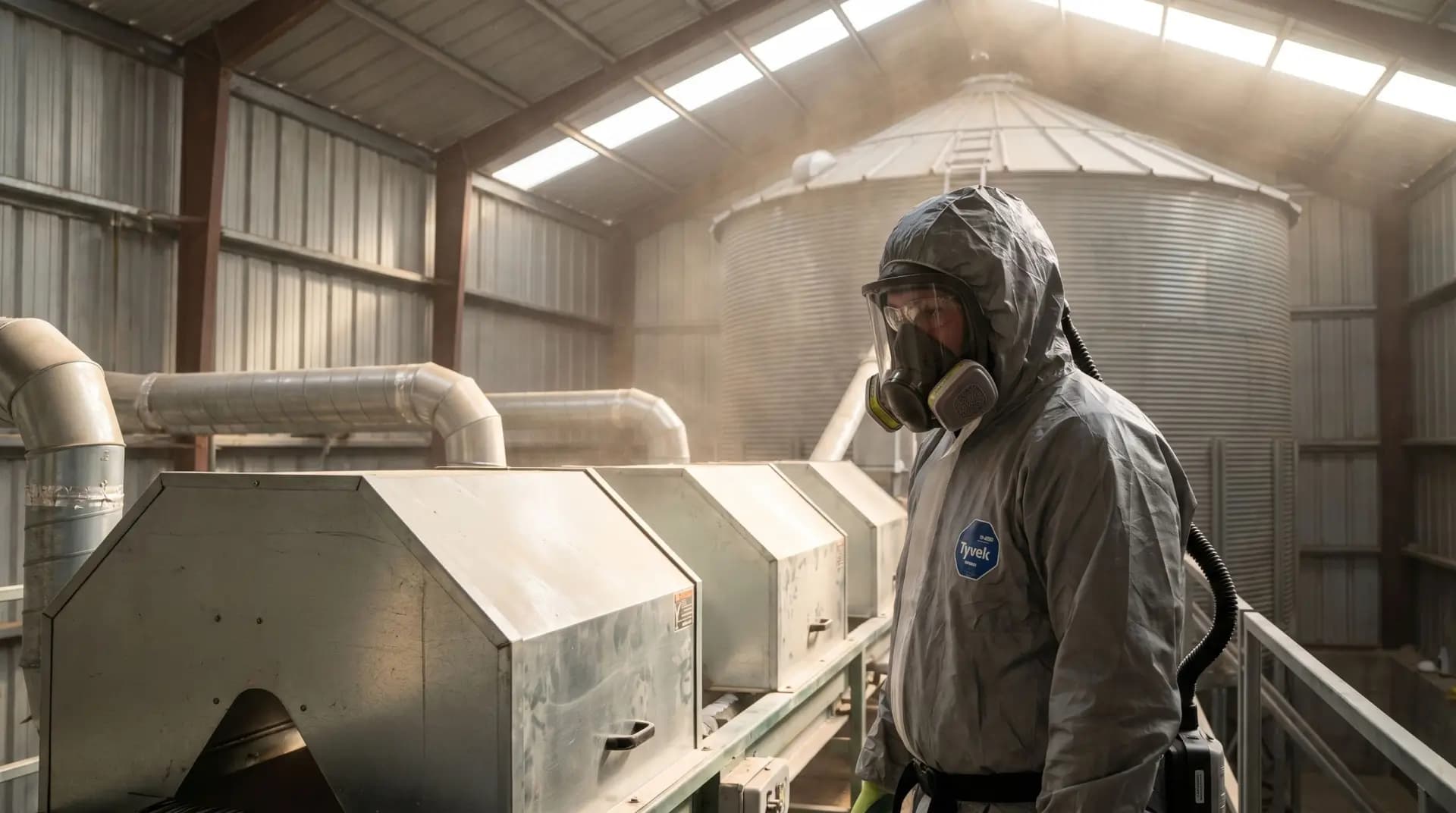
Agricultural dust is not just “farm dirt.” It is a mixed respiratory hazard that may contain grain particles, soil, mold spores, bacteria, endotoxins, animal dander, mites, feed additives, pesticide residues, and dried plant material. When inhaled repeatedly or at high concentration, it can irritate the airways, trigger asthma, contribute to chronic bronchitis, and cause serious conditions such as farmer’s lung or organic dust toxic syndrome.
In HSE practice, I treat agricultural dust as a controllable exposure, not an unavoidable part of farm work. The right approach is simple: identify where dust is generated, reduce it at source, limit the number of exposed workers, verify respiratory protection, and monitor early breathing symptoms before they become long-term disease.
What Makes Agricultural Dust Hazardous?
Agricultural dust is dangerous because it is rarely one substance. Its health effect depends on what the dust contains, particle size, exposure duration, ventilation, moisture, microbial contamination, and the worker’s respiratory health.
Common sources include:
Dust Source | Typical Work Activity | Main Respiratory Concern |
|---|---|---|
Grain dust | Harvesting, loading, milling, bin cleaning | Asthma, bronchitis, ODTS, irritation |
Moldy hay or silage | Handling stored fodder | Farmer’s lung, allergic reactions |
Poultry and livestock dust | Feeding, bedding, housing cleanup | Asthma-like symptoms, chronic airway irritation |
Soil dust | Tillage, harvesting, dry-field operations | Irritation, asthma aggravation, silica concern in some soils |
Cotton and plant dust | Processing, picking, storage | Byssinosis-type symptoms, airway inflammation |
Compost and organic waste dust | Turning, spreading, cleanup | Bioaerosol exposure, ODTS-like illness |
The biggest mistake I see in dust risk assessment is judging exposure only by visibility. Visible dust is a warning sign, but respirable particles can remain airborne even when the air looks reasonably clear.
Respiratory Illnesses Linked to Agricultural Dust
Dust exposure can affect workers in different ways. Some effects are immediate and reversible; others develop slowly after repeated exposure.
Short-Term Irritation
Short-term exposure may cause:
Coughing
Sneezing
Throat irritation
Watery eyes
Chest tightness
Shortness of breath
Excess phlegm
These symptoms should not be dismissed as “normal harvest season effects.” Repeated irritation can become a pattern of occupational respiratory disease.
Occupational Asthma
Grain dust, poultry dust, animal proteins, and mold-contaminated organic dust can act as asthmagens. A worker may notice wheezing, coughing, or chest tightness that worsens during work and improves away from the farm.
Once sensitization develops, even low exposure may trigger symptoms. This is why early reporting and health surveillance are important.
Organic Dust Toxic Syndrome
Organic dust toxic syndrome, often called ODTS, can occur after heavy exposure to organic dust contaminated with microorganisms. It may feel like flu, with fever, chills, body aches, cough, headache, and fatigue.
The practical problem is misdiagnosis. Workers may assume they have a seasonal virus, when the real trigger is a high-dust task such as cleaning grain bins, handling moldy hay, or working in enclosed livestock areas.
Farmer’s Lung
Farmer’s lung is a hypersensitivity pneumonitis linked to inhaling moldy organic material, especially from hay, grain, or silage. It is not simple irritation. It is an immune reaction in the lungs.
Warning signs may include:
Breathlessness after dusty work
Dry cough
Fever or chills after exposure
Fatigue
Symptoms that return after similar tasks
Repeated exposure can lead to lasting lung damage. Any suspected case needs medical evaluation by a competent healthcare professional.
Chronic Bronchitis and COPD Risk
Long-term exposure to agricultural dust is associated with chronic cough, phlegm, and reduced lung function. Smoking increases the risk, but non-smokers can also develop respiratory problems from repeated occupational exposure.
High-Risk Agricultural Tasks
The highest exposures usually happen when dust is disturbed in enclosed or poorly ventilated spaces.
High-risk tasks include:
Cleaning grain bins, silos, elevators, and storage rooms
Loading, unloading, or transferring grain
Handling moldy hay, straw, or silage
Bedding chopping in livestock operations
Sweeping dry floors inside sheds or barns
Working in poultry houses or animal confinement buildings
Operating combines, harvesters, and tractors in dusty conditions
Mixing dry feed or powdered additives
Turning compost or handling organic waste
Working in dry, windy field conditions
A useful rule is this: if the task creates a visible dust cloud, coats clothing, or leaves workers coughing afterward, the exposure needs control.
How to Control Agricultural Dust Exposure
The best dust control strategy follows the hierarchy of controls. Respirators matter, but they should not be the first or only control.
1. Eliminate or Reduce Dust at Source
Practical controls include:
Avoid handling moldy material where possible
Dispose of heavily spoiled hay, grain, or feed safely
Use enclosed transfer systems for grain
Maintain conveyor seals and loading chutes
Keep grain handling equipment in good condition
Repair leaks that allow dust escape
Use low-dust bedding materials where suitable
Reduce drop heights when transferring grain or feed
A small design change can produce a large exposure reduction. In my practice, poorly maintained chutes, broken covers, and open transfer points are often the real cause of dust clouds.
2. Use Moisture Carefully
Light wetting can reduce dust during some tasks, especially bedding or dry cleanup. However, moisture must be controlled carefully because damp organic material can promote mold growth if stored incorrectly.
Use wet methods for cleaning where they are suitable, but avoid creating slippery surfaces, electrical hazards, or conditions that damage stored products.
3. Improve Ventilation
Ventilation helps dilute and remove airborne dust, especially in barns, poultry houses, grain handling areas, and workshops.
Good ventilation should:
Move contaminated air away from workers
Avoid blowing dust from one worker’s zone to another
Provide fresh air in enclosed spaces
Work alongside source control, not replace it
Opening doors may help in some cases, but it is not a complete ventilation strategy for enclosed dusty tasks.
4. Control Work Methods
Safe systems of work make a major difference. Controls should include:
Scheduling dusty work when fewer people are nearby
Keeping non-essential workers away from dusty zones
Using vacuum systems with suitable filtration instead of dry sweeping
Cleaning progressively rather than allowing dust buildup
Avoiding compressed air for personal cleaning or surface dust removal
Keeping cab doors and windows closed where filtered cabs are provided
Compressed air is a common bad habit. It makes settled dust airborne again and drives particles into the breathing zone.
5. Use Respiratory Protective Equipment Correctly
Respiratory protection should be selected based on the hazard, exposure level, task duration, and contaminants present. A simple nuisance dust mask is not enough for many agricultural dust tasks.
A suitable respiratory protection program should include:
Correct respirator selection
Fit testing for tight-fitting respirators
Clean-shaven policy where face seal is required
Training on use and limitations
Inspection before use
Filter replacement schedule
Clean storage
Medical suitability where required
For dusty agricultural work, particulate respirators may be needed. Where gases, vapors, pesticides, or oxygen-deficient atmospheres are involved, a particulate filter alone may not protect the worker.
Health Surveillance and Early Warning Signs
Health surveillance is essential where workers are exposed to respiratory sensitizers or significant agricultural dust. The purpose is not paperwork. It is early detection.
Workers should report:
Wheezing
Shortness of breath
Repeated cough
Chest tightness
Symptoms that improve away from work
Fever or flu-like illness after dusty tasks
Reduced exercise tolerance
Recurrent bronchitis
A simple symptom questionnaire can identify patterns early. Spirometry may be appropriate where occupational health advice recommends it.
Supervisors should never pressure workers to “push through” breathing symptoms. Respiratory illness can progress quietly, and by the time a worker is visibly struggling, exposure control has already failed.
Legal and HSE Responsibilities
Duties vary by jurisdiction, but the core expectation is consistent: employers must assess respiratory hazards, control exposure, provide information and training, maintain controls, and ensure suitable health surveillance where required.
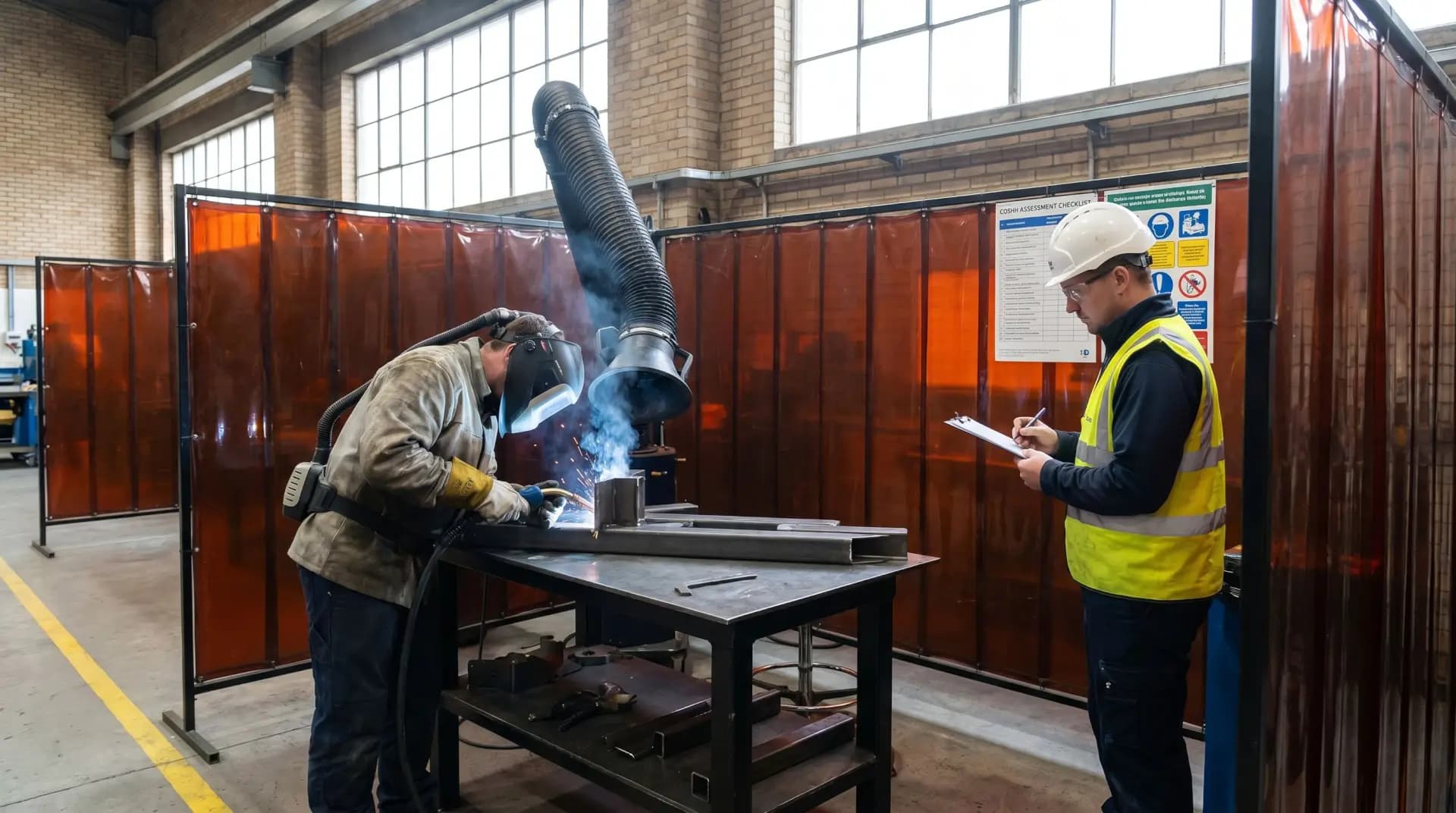
For example, in the United States, OSHA addresses agricultural hazards, respiratory protection, hazard communication, and grain handling risks through applicable standards and guidance. In Great Britain, agricultural dust exposure may fall under COSHH duties where hazardous substances, including respiratory sensitizers such as grain dust, must be adequately controlled. Other jurisdictions may apply their own occupational health and safety regulations.
The legal label may differ, but the HSE test is the same: can you demonstrate that exposure has been identified, reduced, monitored, and reviewed?
Practical Dust Risk Assessment Checklist
Use this checklist before dusty agricultural work begins:
Question | What to Check |
|---|---|
What dust will be generated? | Grain, soil, mold, animal, feed, compost, pesticide residue |
Who will be exposed? | Operators, helpers, cleaners, nearby workers, contractors |
How much dust is expected? | Visible clouds, enclosed space, task duration, previous complaints |
Can dust be reduced at source? | Enclosure, wet methods, maintenance, low-dust material |
Is ventilation adequate? | Airflow direction, extraction, filtered cab, enclosed building |
Is respiratory protection suitable? | Correct filter, fit test, training, storage, replacement |
Are workers trained? | Symptoms, controls, reporting, respirator limitations |
Is health surveillance needed? | Asthmagens, repeated exposure, previous symptoms |
What emergency action is required? | Severe breathing difficulty, collapse, suspected confined space issue |
A risk assessment that does not change how the task is done is not controlling the hazard. It is only describing it.
Conclusion
Agricultural dust is a serious occupational health hazard because it combines physical particles, biological contaminants, allergens, and sometimes chemical residues. The respiratory effects can range from temporary irritation to occupational asthma, organic dust toxic syndrome, farmer’s lung, chronic bronchitis, and long-term lung impairment.
The safest approach is to control dust before it reaches the worker’s breathing zone. That means better storage, cleaner handling systems, ventilation, wet or vacuum methods where suitable, restricted access, correct respiratory protection, worker training, and health surveillance. Dust may be part of agricultural work, but uncontrolled exposure should never be accepted as part of the job.





Responses