TL;DR
Use an extinguisher only on small fires: If smoke builds, flames spread, or your exit is blocked, get out immediately.
Match the extinguisher to the fire: Using the wrong type can worsen electrical, flammable liquid, or cooking oil fires.
Follow PASS correctly: Pull, Aim, Squeeze, Sweep—while keeping a safe exit route behind you.
Stand at the right distance: Too close and you risk burn injury; too far and the agent will not control the fire.
Report and isolate after discharge: Even a partly used extinguisher must be removed, inspected, and replaced before work continues.
I was in a warehouse loading area when a small fire started at a pallet wrapping station. An operator grabbed the nearest extinguisher, pulled the pin, and discharged half the cylinder straight into the top of the flames from too far back. The fire kept burning because he was aiming high, not at the base, and he had not checked whether the extinguisher was suitable for the ignition source.
That is how most failures happen. People know a fire extinguisher is for emergencies, but they do not know how to use a fire extinguisher correctly under real pressure. This article covers when an extinguisher should be used, the PASS method, extinguisher selection, common site mistakes, and the practical controls I expect during drills, inspections, and emergency response reviews.
What It Means to Use a Fire Extinguisher Correctly
Using a fire extinguisher correctly means selecting the right extinguisher for the fire class, keeping a safe escape route, applying the agent at the base of the fire, and stopping only if the fire is controlled quickly. If the fire grows, smoke increases, or the extinguisher is ineffective, evacuation is the correct action—not persistence.
On site, I do not judge extinguisher use by whether someone pulled the handle. I judge it by whether they made the right decision before discharge and whether they controlled the fire without trapping themselves.
When I brief crews, I break correct use into four practical elements:
Correct fire assessment: Identify what is burning before selecting an extinguisher.
Correct extinguisher selection: Use an agent suitable for solids, liquids, electrical equipment, or cooking oils as applicable.
Correct body position: Keep low if smoke is present and maintain a clear path to retreat.
Correct discharge technique: Apply the agent in a controlled sweep at the fire base, not into the smoke plume.
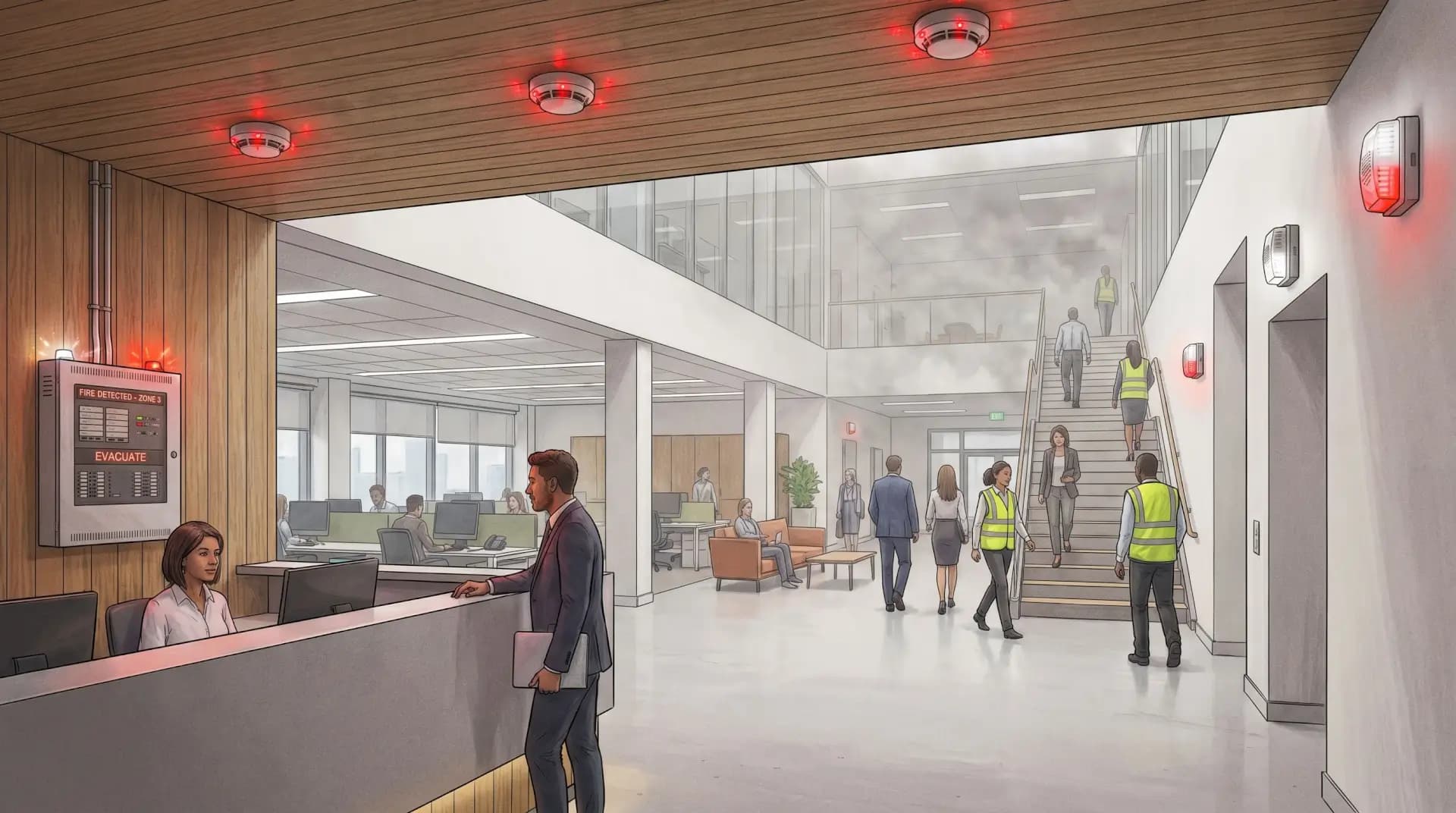
Portable fire extinguishers are for incipient-stage fires. Once the fire is beyond early control, evacuation and alarm activation take priority over firefighting.
That distinction matters because many injuries happen when workers try to fight a fire that has already passed the point of safe manual control.
When You Should and Should Not Use a Fire Extinguisher
Before anyone reaches for an extinguisher, they need to decide whether the fire is still small enough to tackle. I have stopped plenty of well-meaning workers from charging toward a fire that should have triggered immediate evacuation.
The following conditions must be in place before you attempt to use a fire extinguisher correctly:
The fire is small and contained: It is limited to the material first ignited and has not spread beyond the immediate area.
You know the fire class: You can identify what is burning and choose the right extinguisher.
You have been trained: Untrained use wastes time and often puts the user directly in the smoke path.
Your exit is clear: You must keep a safe route behind you at all times.
The alarm has been raised: Others must know there is a fire before any firefighting attempt starts.
Smoke is limited: If visibility drops or breathing becomes difficult, leave immediately.
There are also clear red flags that mean do not fight the fire. In investigations, these are usually obvious after the event, but they are missed in the first ten seconds.
If any of the following are present, evacuation is the correct response:
Flames are spreading rapidly: Fire is moving beyond the original point of ignition.
The room is filling with smoke: Smoke incapacitates faster than most people expect.
Heat is intense at the doorway: High radiant heat means the fire is already developing beyond incipient stage.
You do not know what is burning: Unknown fuels create wrong-extinguisher risk.
There may be gas cylinders or chemicals nearby: Escalation potential is too high for manual attack.
The first extinguisher does not control it quickly: If one unit is ineffective, do not stand there experimenting.
Pro Tip: In drills, I tell workers to ask one question before touching the extinguisher: “Can I still walk out if this doubles in size right now?” If the answer is no, leave.
Know the Fire Class Before You Discharge
One of the most dangerous mistakes in fire response is treating every fire the same. A fire extinguisher only works correctly when the extinguishing agent matches the fuel involved.
On mixed-use sites, I often find extinguishers mounted correctly but workers cannot explain which one they would use on energized equipment, flammable liquids, or a fryer fire. That gap shows up during real incidents.
Fire Class | What Is Burning | Typical Extinguisher | Key Field Warning |
|---|---|---|---|
Class A | Wood, paper, cloth, packaging, ordinary combustibles | Water, foam, dry powder | Common in offices, stores, warehouses, and temporary site cabins |
Class B | Flammable liquids such as fuel, solvents, paints | Foam, CO2, dry powder | Do not use unsuitable agents that can spread burning liquid |
Class C | Flammable gases | Dry powder | Isolate gas supply if safe; extinguishing flame without isolation can worsen leak risk |
Electrical | Energized electrical equipment | CO2, dry powder | Do not use water-based extinguishers on live equipment |
Class F | Cooking oils and fats | Wet chemical | Never use water on hot oil fires |
Different regions classify fires slightly differently, but the operational principle stays the same: identify the fuel first, then choose the extinguisher.
When I inspect workplaces, I look for these selection failures:
CO2 placed where deep-seated Class A fire is more likely: It may knock flames down but not stop re-ignition.
Water extinguishers near electrical panels: Wrong placement encourages wrong response.
No wet chemical extinguisher in commercial kitchens: This is a repeated compliance failure.
Workers relying on label colour only: They need to read the class marking, not guess.
Temporary work areas left without suitable units: Hot work zones often change faster than extinguisher placement.
NFPA and workplace fire safety guidance consistently require extinguishers to be selected and installed based on the hazards present, not simply distributed evenly through a building.
Once the correct extinguisher is in hand, technique becomes the next point of failure.
How to Use a Fire Extinguisher Correctly with the PASS Method
The PASS method is the standard memory tool, but on site I never teach it as a slogan alone. Each step has to be done with control, spacing, and awareness of the fire behavior in front of you.
Here is the correct sequence I expect during training and emergency response drills:
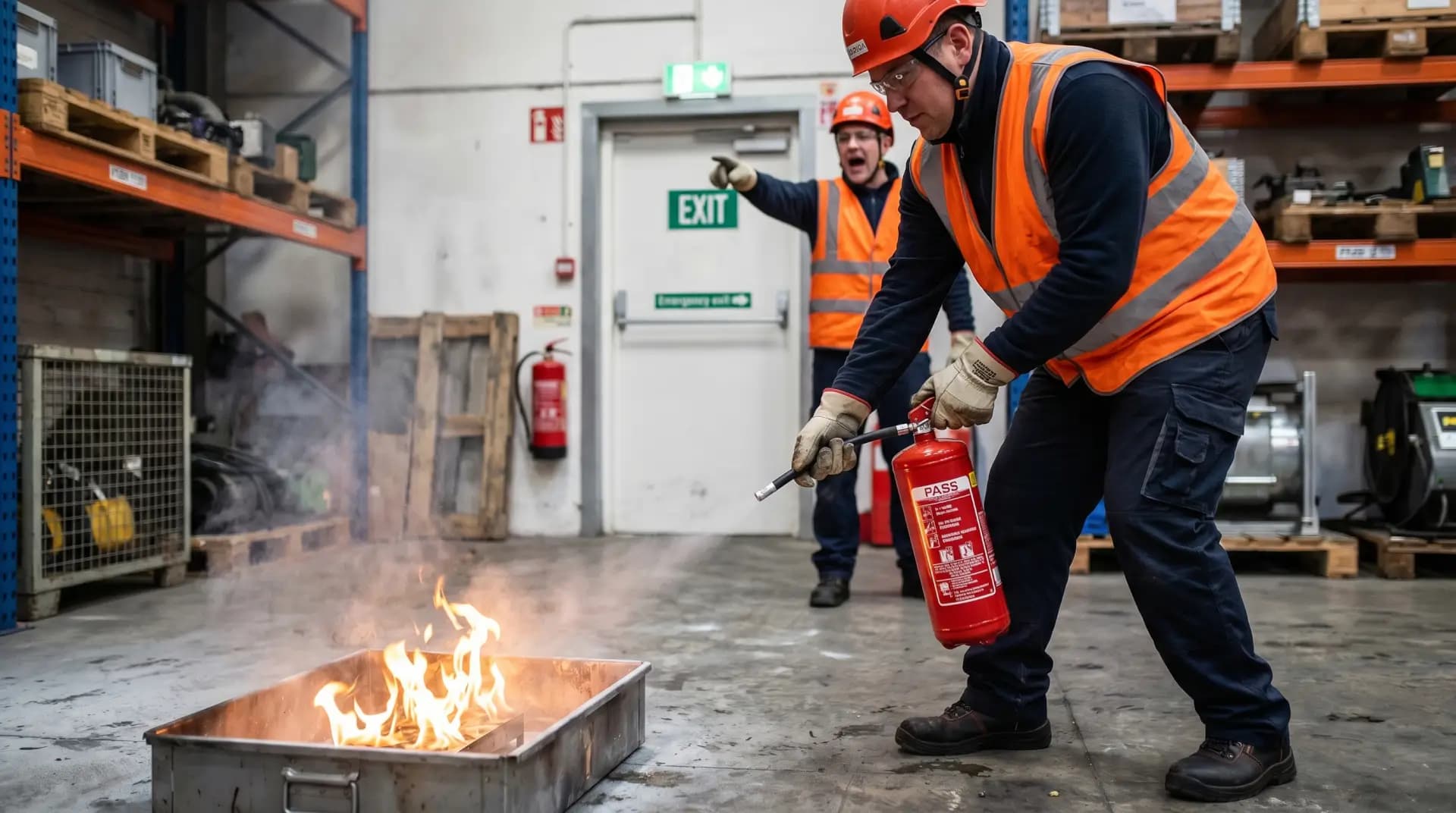
Pull the pin: Break the tamper seal and confirm the operating lever moves freely.
Aim at the base of the fire: Point the nozzle or horn at the burning material, not at the flames above it.
Squeeze the handle: Discharge in a controlled manner. Do not panic and empty the unit in one burst unless conditions demand it.
Sweep side to side: Move across the base of the fire until the flames are knocked down.
Advance carefully if the fire reduces: Step forward only when the fire is visibly shrinking and your exit remains open.
Watch for re-ignition: Many fires appear out, then flare back once the agent cloud clears.
In practical terms, workers need more detail than the acronym gives them. These are the points I stress during live extinguisher drills:
Test your stance before discharge: Keep balanced footing and avoid standing directly in a spill path.
Start from a safe distance: Follow the extinguisher type and manufacturer guidance, then close in only if effective.
Use short controlled sweeps: Random spraying wastes agent and reduces coverage at the fuel surface.
Keep the extinguisher upright if required: Some types lose performance when tilted excessively.
Do not turn your back too early: Stay in position long enough to confirm the fire is actually out.
Pro Tip: I make trainees say “base, not flame” out loud during practice. Under stress, people naturally look at the visible flame front and forget where extinguishment actually happens.
Body Position, Distance, and Escape Route During Extinguisher Use
Technique is not just about the handle and nozzle. I have seen competent workers fail because they stood in the wrong place, approached from the wrong direction, or let smoke move between them and the exit.
Correct positioning gives you control and time to retreat. Without it, even a small fire becomes a trap.
These positioning rules should be built into every fire extinguisher training session:
Keep the exit behind you: Never move between the fire and your only way out.
Approach from upwind where relevant: On outdoor fires, avoid standing where smoke and agent blow back into your face.
Stay low if smoke is developing: Heat and smoke stratify upward first.
Do not crowd the fire: Over-approach exposes you to flash, splashing liquid, and radiant heat.
Maintain clear footing: Wet floors, hoses, cables, and debris create slip and trip hazards during retreat.
Assign one person to fight, one to observe: A second person can monitor conditions and call for withdrawal.
During one plant room inspection, I found extinguishers mounted behind stored materials and directly beside the likely fire source. In a real incident, that placement would force the user to move into the hazard to retrieve the extinguisher. That is poor emergency design, not just poor housekeeping.
The next issue is knowing the limits of each extinguisher type, because handling differs from one unit to another.
How Different Fire Extinguishers Behave in Real Use
Workers often assume every extinguisher discharges the same way. They do not. The discharge pattern, visibility effect, residue, noise, and cooling capacity all influence how you use a fire extinguisher correctly.
These are the field differences that matter most during an actual fire:
Water extinguishers: Good cooling on Class A fires, but unsuitable for live electrical equipment and dangerous on cooking oil fires.
Foam extinguishers: Effective on Class A and many Class B fires because they blanket the fuel surface.
CO2 extinguishers: Good for electrical fires and some flammable liquid fires, but they give poor cooling and re-ignition is common.
Dry powder extinguishers: Versatile and fast knockdown, but visibility drops quickly and clean-up can be severe.
Wet chemical extinguishers: Designed for cooking oil and fat fires, where they cool and form a soap-like sealing layer.
Each type also creates user-specific risks that need to be understood before an emergency happens.
When I train teams, I highlight these practical cautions:
CO2 discharge horn gets extremely cold: Mishandling can cause cold burns.
Dry powder creates a dust cloud: In confined rooms, orientation can be lost within seconds.
Foam application must be controlled: Aggressive impact can disturb burning liquid if used poorly.
Water stream can spread contamination: This matters in chemical or energized areas.
Wet chemical needs the right application angle: Splashing hot oil is a serious burn hazard.
Pro Tip: If your site uses CO2 extinguishers, train with the actual horn and carrying method. People who have only seen posters often grab the horn body during first use.
Common Mistakes When Using a Fire Extinguisher
Most extinguisher failures are not equipment failures. They are decision failures, positioning failures, or training failures. I see the same mistakes across warehouses, offices, kitchens, workshops, and construction compounds.
These are the common errors that turn a manageable fire into an injury event:
Using the wrong extinguisher: This is the fastest route to escalation on electrical and cooking oil fires.
Aiming at the flames instead of the base: The fire looks dramatic, but the fuel source is what must be suppressed.
Standing too close too early: Users get hit by heat, splashing fuel, or sudden flare-up.
Emptying the extinguisher in one burst: Agent is wasted before the user adjusts aim.
Fighting fire without raising the alarm: Others lose critical evacuation time.
Ignoring re-ignition: The user walks away and the fire starts again minutes later.
Trying to be a hero: Workers stay too long after the fire has clearly exceeded extinguisher capacity.
I have also seen management create the conditions for these mistakes by treating extinguisher training as a five-minute induction topic. That approach satisfies paperwork, not emergency readiness.
What to Do Immediately After Using a Fire Extinguisher
Once the visible flames are down, the incident is not over. I have investigated several re-ignition events where everyone relaxed too early, left the area unsecured, and allowed heat to build again in hidden material.
After any extinguisher discharge, these actions need to happen in sequence:
Confirm the fire is out: Check for smoke, heat, glowing material, and concealed ignition points.
Raise or maintain the emergency response: Do not cancel the response until the area is verified safe.
Isolate the source if possible: Shut off power, fuel, or process feed under safe conditions.
Monitor for re-ignition: Stay in attendance until competent personnel take control.
Remove the used extinguisher from service: Even partial discharge means it must be inspected and recharged or replaced.
Report the incident: Record what burned, what extinguisher was used, and whether response arrangements worked.
Post-use management is where many organizations expose weak fire systems. The extinguisher is used, but no one replaces it, no one investigates the ignition source, and the same area remains vulnerable.
During post-incident reviews, I look for these follow-up failures:
No scene control: Workers re-enter before the area is declared safe.
No extinguisher replacement: The next emergency finds an empty bracket or a discharged unit.
No root cause review: Ignition source remains in service.
No alarm or drill review: Delays and confusion go uncorrected.
No housekeeping recovery: Burnt packaging, residues, and damaged equipment are left in place.
An extinguisher discharge is an incident, not a housekeeping issue. If you do not investigate why the fire started, you have only interrupted the sequence once.
Inspection and Training Controls That Make Correct Extinguisher Use Possible
Workers do not use extinguishers correctly by instinct. They use them correctly because the site has the right equipment, the right placement, and repeated practical training. That is what I check during audits and fire preparedness inspections.
These workplace controls make a real difference before the emergency starts:
Hazard-based extinguisher selection: Match unit type to actual fire load and process risk.
Visible and accessible placement: Extinguishers must not be blocked by stock, waste, or temporary works.
Routine inspection: Check pressure, seal, pin, hose, body condition, signage, and access.
Competent maintenance: Servicing intervals must follow applicable fire code and manufacturer requirements.
Live practical drills: Workers need hands-on use, not just classroom slides.
Area-specific training: Kitchen staff, maintenance teams, office staff, and hot work crews face different fire scenarios.
Permit-to-work coordination: Hot work permits must confirm suitable extinguishers are at the job location.
Where training is weak, response becomes chaotic. Where inspections are weak, the extinguisher may be missing, discharged, inaccessible, or wrong for the hazard.
When I run a workplace fire readiness check, I verify these points in order:
Can staff identify extinguisher types by use, not just colour?
Can they explain when not to fight a fire?
Can they demonstrate PASS without prompting?
Are escape routes clear from extinguisher locations?
Are high-risk areas provided with the correct specialist extinguishers?
Do supervisors know how to account for used units after an incident?
For management systems, this links directly to emergency preparedness under ISO 45001 and to fire risk control expectations in occupational safety regulations.
Practical Fire Extinguisher Training Points for Supervisors and Workers
Classroom awareness has limits. If I need a team to respond properly, I want them to practice the decision, the approach, the discharge, and the withdrawal. That is how you build reliable behavior.
Supervisors should reinforce the following points during toolbox talks and drills:
Fight only incipient-stage fire: Small, contained, and with a safe exit behind you.
Identify the fuel first: Wrong extinguisher choice can intensify the hazard.
Use PASS with control: Pull, Aim, Squeeze, Sweep—without rushing the discharge.
Keep low and keep distance: Heat and smoke conditions change fast.
Stop if ineffective: If the fire does not reduce quickly, withdraw and evacuate.
Report every use: A discharged extinguisher and a small fire both require follow-up action.
For drills, I prefer a simple sequence that mirrors real behavior under pressure.
This is the training flow I use for site teams:
Recognize the fire and raise the alarm.
Check the fire size, smoke level, and escape route.
Select the correct extinguisher.
Approach safely and use PASS.
Withdraw if the fire is not controlled immediately.
Secure, report, and replace the extinguisher after use.
That sequence keeps the focus where it belongs: life safety first, property protection second.
Conclusion
Knowing how to use a fire extinguisher correctly is not just about memorizing PASS. It is about making the right decision before discharge, choosing the right extinguisher for the fire class, keeping your exit protected, and stopping the moment conditions move beyond early control. Most failures I have seen were preventable long before the fire started—through better placement, better drills, and better supervision.
If you want workers to use a fire extinguisher correctly, train them on real scenarios, not posters alone. Teach them what the extinguisher can do, what it cannot do, and when evacuation is the only safe option. A portable extinguisher is a first response tool, not a license to take on a growing fire.
In fire safety, the right action is not the bravest action. The right action is the one that gets everyone out alive and keeps a small fire from becoming a fatal one.


Responses (0)