

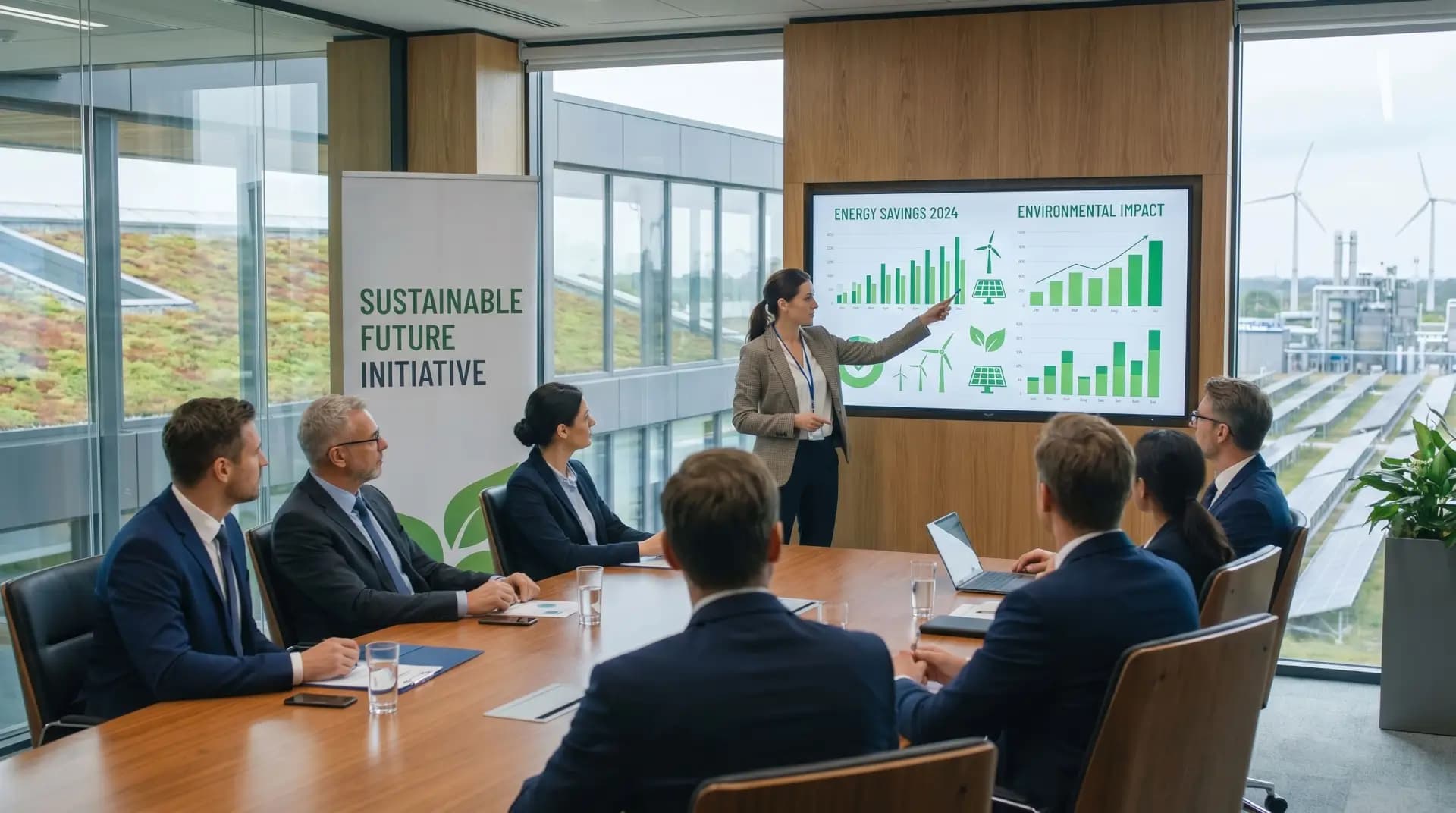
Sustainability becomes a business priority the moment it is translated into risk reduction, cost control, and long-term value creation. A strong business case for sustainability does not rely on ideals—it connects environmental and social performance directly to financial outcomes, operational resilience, and regulatory positioning. When I build or review such cases, I focus on proving that sustainability is not an added cost layer but a structured way to protect margins, reduce volatility, and future-proof the organization.
Define the Core Business Objective First
Before introducing sustainability concepts, I anchor the case in a familiar business driver. This could be:
Cost reduction (energy, waste, resource efficiency)
Risk mitigation (regulatory exposure, supply chain disruption)
Revenue growth (new markets, customer preference shifts)
Asset protection (climate resilience, operational continuity)
Sustainability initiatives fail at approval stage when they are presented as standalone environmental efforts. They gain traction when framed as solutions to existing business pressures.
Identify Material Sustainability Issues
Not every sustainability topic is relevant to every organization. I prioritize issues based on operational impact and stakeholder expectations. This typically includes:
Energy consumption and carbon exposure
Waste generation and disposal costs
Water usage in resource-sensitive operations
Worker health, safety, and productivity
Supply chain reliability and ethical sourcing
A focused materiality approach prevents dilution of the business case and ensures leadership sees direct relevance.
Translate Sustainability into Financial Terms
This is where many proposals weaken. I convert sustainability outcomes into measurable financial indicators:
Cost Savings
Reduced energy bills through efficiency upgrades
Lower waste disposal and material costs
Decreased insurance premiums through risk reduction
Cost Avoidance
Avoidance of regulatory penalties
Reduced likelihood of operational shutdowns
Lower incident-related losses
Revenue Impact
Access to sustainability-driven markets
Improved customer retention
Competitive differentiation in procurement processes
Capital Efficiency
Longer asset life through efficient systems
Reduced maintenance costs
I avoid speculative numbers. Where precise data is unavailable, I describe patterns and conservative projections based on operational benchmarks.
Address Risk and Compliance Exposure
A strong sustainability business case always includes a risk lens. I map how sustainability initiatives reduce:
Regulatory non-compliance risks
Environmental liabilities
Occupational health and safety incidents
Supply chain interruptions
In many industries, compliance alone justifies investment. Sustainability strengthens that compliance by going beyond minimum requirements and building operational buffers.
Demonstrate Operational Feasibility
Even the strongest financial argument can fail if implementation appears complex or disruptive. I outline:
Required resources (people, technology, time)
Integration with existing systems
Phased implementation approach
Minimal disruption to core operations
Clarity here reassures decision-makers that sustainability is manageable, not experimental.
Build a Measurable Performance Framework
Leadership needs visibility. I define clear KPIs such as:
Energy intensity per unit of production
Waste reduction percentage
Incident rate improvements
Resource efficiency ratios
Tracking mechanisms and reporting frequency should be simple and aligned with existing performance systems.
Align with Strategic and External Drivers
Finally, I connect the business case to broader forces:
Corporate strategy and long-term goals
Investor expectations and ESG considerations
Industry trends and competitor positioning
Regulatory trajectory in relevant jurisdictions
This alignment shows that sustainability is not optional—it is directionally inevitable.
Common Mistakes I See in Sustainability Business Cases
From experience, these are recurring issues that weaken proposals:
Over-reliance on environmental language without business translation
Unrealistic financial projections without operational backing
Ignoring implementation complexity
Lack of clear ownership and accountability
Treating sustainability as a branding exercise rather than a performance driver
Avoiding these pitfalls significantly improves approval chances.
Conclusion
A compelling business case for sustainability is built on clarity, not ambition. It connects operational realities with financial outcomes, demonstrates risk reduction, and proves feasibility. In my practice, the most successful cases are those that speak the language of business first and sustainability second—because that is what drives decisions.






Responses