

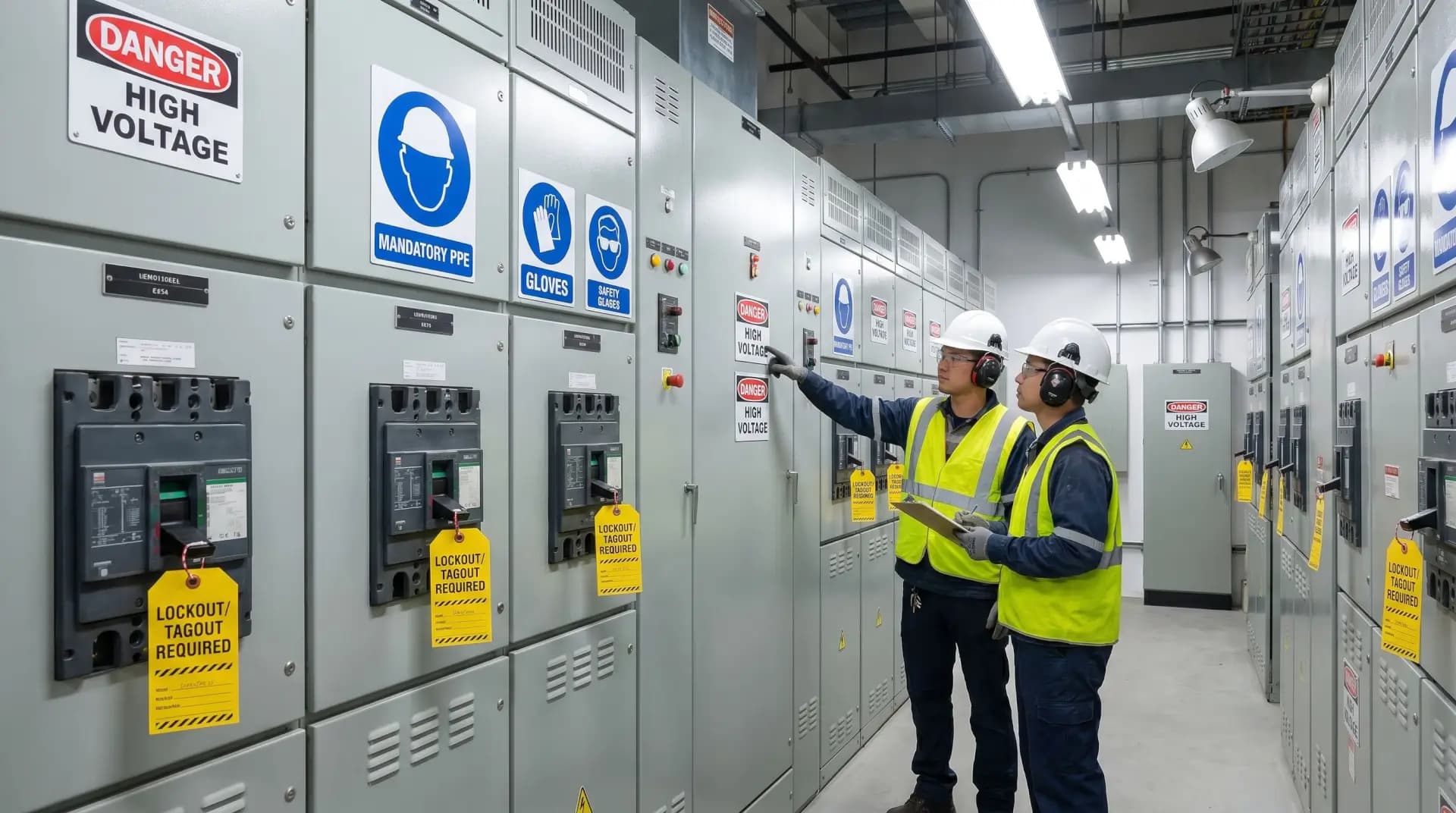
Electrical safety signs are not decorative labels—they are control measures. Each sign communicates a specific hazard, restriction, or required action related to electrical risk. Misunderstanding or ignoring these signs is a direct pathway to electric shock, arc flash injuries, burns, or fatal incidents. In my practice, I treat electrical signage as part of the overall risk control system, sitting alongside isolation, grounding, and safe work procedures.
Understanding these signs starts with recognizing their categories, shapes, colors, and the behaviors they demand.
Categories of Electrical Safety Signs
Electrical safety signs generally fall into internationally recognized categories based on safety standards frameworks. While exact designs may vary slightly by jurisdiction, the intent remains consistent.
1. Prohibition Signs (Do Not Do)
These signs indicate actions that are strictly forbidden because they increase electrical risk.
Key Features:
Red circular border
Diagonal red slash
Black pictogram on white background
Common Examples:
Do not touch
No unauthorized access
Do not switch on
Meaning in Practice:
When you see a prohibition sign near electrical equipment, assume there is a live or potentially energized hazard. In field conditions, these signs are often placed during maintenance or lockout situations to prevent unintended energization.
2. Warning Signs (Hazard Present)
Warning signs alert personnel to the presence of electrical hazards that may not be immediately obvious.
Key Features:
Yellow triangle
Black border
Black symbol
Common Examples:
High voltage
Risk of electric shock
Overhead power lines
Meaning in Practice:
A warning sign is not a suggestion—it indicates that a hazard exists even if the equipment appears inactive. I often emphasize that “no visible activity does not mean no energy.” Stored energy and induced voltage are real risks.
3. Mandatory Signs (Must Do)
These signs instruct specific actions that must be followed to remain safe.
Key Features:
Blue circular background
White pictogram
Common Examples:
Wear insulated gloves
Use protective footwear
Disconnect before maintenance
Meaning in Practice:
Mandatory signs define minimum safety behavior. Ignoring them usually means bypassing a layer of protection designed into the system. In audits, non-compliance with mandatory signage is often linked to procedural failures.
4. Emergency Information Signs
These signs provide guidance during abnormal or emergency situations involving electrical systems.
Key Features:
Green rectangular or square background
White symbols
Common Examples:
Emergency shut-off location
First aid station
Emergency exit routes
Meaning in Practice:
In electrical emergencies, response time matters. These signs ensure that personnel can quickly locate isolation points or escape routes without confusion.
5. Fire Safety Signs (Electrical Context)
Electrical fires require specific response methods, and these signs help identify firefighting equipment and procedures.
Key Features:
Red rectangular or square background
White symbols
Common Examples:
Fire extinguisher (CO₂ type for electrical fires)
Fire alarm call point
Meaning in Practice:
Not all extinguishers are suitable for electrical fires. These signs guide workers toward appropriate equipment, reducing the risk of escalation.
Common Electrical Safety Symbols and Their Interpretation
Beyond categories, individual symbols carry precise meanings that workers must recognize instantly.
High Voltage Symbol
Typically shown as a lightning bolt.
Interpretation:
Indicates dangerous voltage levels capable of causing severe injury or death. Always assume live conditions unless proven otherwise through proper isolation.
Electric Shock Risk Symbol
Often depicted as a hand with a lightning bolt.
Interpretation:
Direct contact hazard. This is commonly seen on panels, switchgear, and exposed terminals.
Lockout/Tagout Sign
Indicates that equipment must not be operated.
Interpretation:
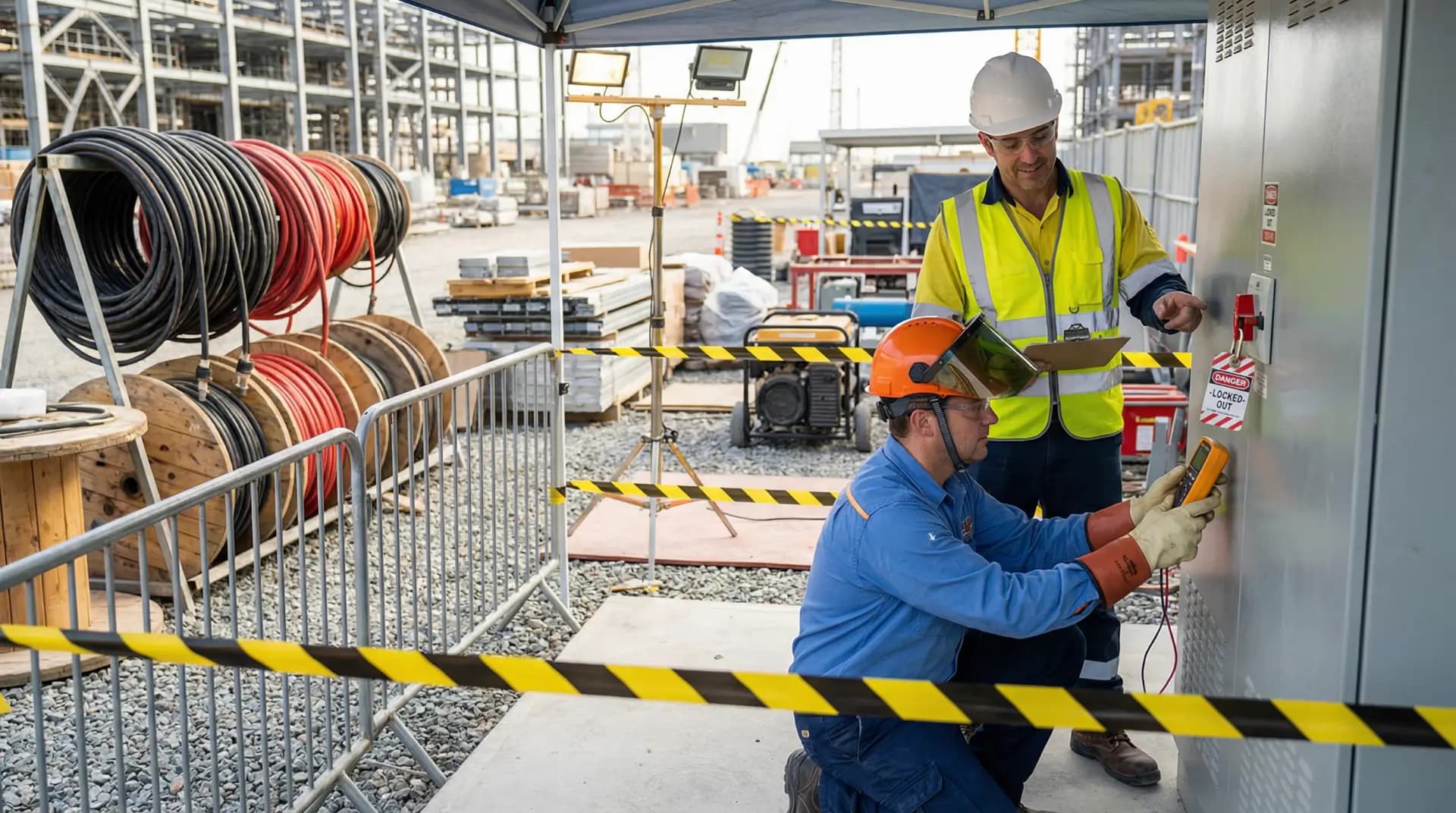
This sign usually accompanies physical lockout devices. It signals that someone may be working on the system and energizing it could be fatal.
PPE Requirement Symbol
Shows gloves, boots, or face protection.
Interpretation:
Specifies the exact protective equipment required before interacting with electrical systems.
Color Coding and Why It Matters
Color is not aesthetic—it’s functional. It allows instant recognition even from a distance or in low-visibility environments.
Red: Danger, stop, or fire-related equipment
Yellow: Caution or hazard warning
Blue: Mandatory action
Green: Safe condition or emergency information
In high-risk environments like substations or industrial plants, this color coding reduces reaction time and supports quick decision-making.
Placement of Electrical Safety Signs
Even the most accurate sign fails if poorly placed. From practical experience, effective placement follows these principles:
Positioned at eye level where possible
Located at entry points to hazard zones
Placed directly on or near the hazard source
Clearly visible and unobstructed
Maintained in legible condition
A faded or hidden sign is equivalent to no sign at all.
Limitations of Safety Signs
One of the most common misconceptions I encounter is over-reliance on signage.
Safety signs:
Do not eliminate hazards
Do not replace isolation procedures
Do not protect untrained individuals
They are part of administrative controls, which are inherently weaker than engineering controls. Their effectiveness depends entirely on awareness, training, and compliance.
Integrating Safety Signs into Electrical Safety Systems
In a well-managed electrical safety program, signage works in coordination with:
Risk assessments
Permit-to-work systems
Lockout/tagout procedures
Preventive maintenance
Competency training
When these elements align, signs reinforce safe behavior instead of acting as the sole line of defense.
Conclusion
Electrical safety signs are a critical communication tool that translates invisible hazards into visible warnings and instructions. Their true value lies not just in recognition, but in correct interpretation and disciplined response.
From my experience, incidents rarely occur because signs were absent—they occur because signs were ignored, misunderstood, or treated as routine background noise. The difference between safe operations and serious injury often comes down to whether a worker stops, reads, and acts on what the sign is telling them.




Responses