TL;DR
Isolate before touch: De-energize, lock out, tag out, and verify zero energy before any electrical work starts.
Arc flash is not just shock: A worker can suffer fatal burns without direct contact with a live conductor.
Temporary power fails often: Damaged cords, poor grounding, and overloaded boards create daily site-level electrical hazards.
Competence matters: Unqualified workers opening panels or bypassing protection is where many serious incidents begin.
Inspection must be active: Electrical safety depends on testing, supervision, and stopping unsafe work early.
I stopped a maintenance job once when I saw a technician standing in front of an open motor control center with no arc-rated face shield, no barricade, and no verified isolation. The panel was live, the floor was damp from washdown, and the task had already drifted from “inspection only” into hands inside the enclosure. That is how electrical incidents develop on site: not with one dramatic mistake, but with a chain of small accepted deviations.
Electrical hazards and how to control them is not a classroom topic for me. I have seen electric shock, arc flash burns, cable fires, and near-miss events caused by damaged extensions, poor lockout, failed residual current protection, and workers assuming a circuit was dead because someone said it was. This article covers what electrical hazards are, how they occur in real operations, why they are dangerous, the controls that work in the field, and the mistakes that keep showing up during inspections and investigations.
What Are Electrical Hazards and How Do They Harm Workers?
Electrical hazards are conditions where electrical energy can injure people, ignite fires, damage equipment, or trigger explosions. Workers are harmed through direct contact, indirect contact, arc flash, arc blast, thermal burns, and falls caused by sudden shock or startle response.
On site, the hazard is rarely limited to “touching a live wire.” In construction, shutdowns, utilities, and industrial maintenance, the exposure often comes from damaged insulation, exposed conductors, faulty grounding, overloaded temporary systems, or opening energized equipment without understanding the fault energy.
The main forms of electrical harm show up in predictable ways during work activities. When I review incidents, they usually fall into the following categories:
Electric shock: Current passes through the body and can cause muscle contraction, respiratory failure, ventricular fibrillation, or death.
Electrocution: Fatal exposure to electrical current, often from direct contact or failed isolation.
Arc flash: A high-energy release from an electrical fault creates extreme heat, molten metal, and pressure.
Arc blast: The pressure wave from an arc event can throw a worker, rupture eardrums, and send shrapnel across the work area.
Thermal burns: Burns may occur from current flow, hot surfaces, or clothing ignition during an arc event.
Fire and explosion: Faults, short circuits, and overheating can ignite combustible materials or flammable atmospheres.
Secondary injuries: Workers fall from ladders, platforms, or structures after electric shock or sudden reaction.
“Live conductors should be presumed energized until isolated, locked out, and proven dead by suitable testing.”
That principle sounds basic, but it is still one of the most commonly broken rules in electrical safety. Once you understand how the hazard injures people, the next step is seeing where it develops in day-to-day work.
Where Electrical Hazards Develop in Real Operations
Electrical hazards build up in ordinary work areas long before an incident happens. During inspections, I usually find the same exposure points repeated across construction sites, workshops, plants, warehouses, and temporary project facilities.
These are the site conditions and activities where electrical hazards and how to control them becomes a live operational issue rather than a policy statement:
Temporary power systems: Distribution boards, trailing cables, adapters, and extension leads get damaged, overloaded, or left exposed to weather.
Maintenance on energized equipment: Workers troubleshoot live panels because production pressure discourages shutdown.
Poor housekeeping around cables: Cords run through water, sharp edges, vehicle routes, and doorways.
Improvised repairs: Tape over damaged insulation, homemade joints, and bypassed breakers create hidden failure points.
Wet or conductive environments: Tanks, washdown areas, concrete work, and metal structures increase shock severity.
Portable tools and equipment: Grinders, drills, welders, pumps, and lighting units often enter service without inspection or testing.
High-voltage interfaces: Switching, isolation, and testing errors around substations or large plant equipment can escalate fast.
Excavation and drilling: Buried electrical services are struck when utility surveys and permit controls are weak.
Work near overhead lines: Cranes, scaffolds, dump bodies, ladders, and MEWPs breach safe approach distances.
Hazardous areas: Electrical equipment not suited for explosive atmospheres can become an ignition source.
I have also seen electrical exposure develop because the job changed but the controls did not. A team starts with simple inspection, then removes covers, then tests live, then swaps a component. By that point, the permit, PPE, and supervision no longer match the actual risk. That is why task drift is a serious electrical safety issue.
Why Electrical Hazards Are So Dangerous
Electrical incidents are unforgiving because the body does not need much current to suffer severe harm, and the worker often gets no second chance. In high-energy systems, the worker may never touch the conductor and still receive life-changing burns from arc flash.
The danger increases when electrical exposure combines with site realities that I regularly see during audits and incident reviews:
Current is invisible: Workers rely on assumptions unless testing and isolation are disciplined.
Contact time can lock a person on: Muscle contraction may prevent self-release from the source.
Wet skin lowers resistance: Sweat, rain, and damp gloves increase current flow through the body.
Fault energy escalates consequences: Higher available energy means more severe burns, pressure, and equipment destruction.
Reaction causes falls: Even non-fatal shock can throw a worker off ladders or elevated work areas.
Fire spreads beyond the panel: A small electrical fault can become a building, cable trench, or equipment fire.
Rescue is difficult: Untrained rescuers often become victims if they touch the casualty before isolation.
When I brief supervisors after an electrical near miss, I remind them that low-voltage does not mean low-risk. Many fatal shocks occur on systems people treat casually because the equipment looks familiar. The controls have to match the hazard, not the worker’s comfort level.
Common Electrical Hazards Found During Inspections
Most electrical deficiencies are visible before they injure someone. The problem is that crews get used to seeing them, so they stop treating them as urgent. During field inspections, these are the findings that repeatedly indicate weak electrical control.
If a supervisor can spot and correct the following conditions early, many electrical incidents never develop:
Exposed live parts: Missing covers, open junction boxes, and damaged sockets leave conductors accessible.
Frayed or cut cables: Insulation damage exposes conductors and increases short-circuit risk.
Overloaded outlets and boards: Multiple adapters and daisy-chained extensions create overheating.
Defeated protective devices: Breakers, fuses, interlocks, and earth leakage protection are bypassed or replaced incorrectly.
Improper grounding or bonding: Fault current has no reliable path, increasing shock risk.
Unlabeled circuits: Workers isolate the wrong source or leave hidden feeds energized.
Water ingress: Outdoor boards, plugs, and tools are used without weather protection.
Unauthorized access: Panels are left unlocked or opened by unqualified personnel.
Poor cable routing: Leads are crushed by doors, vehicles, scaffolds, or material stacks.
Use of non-rated equipment: Standard electrical gear is used in corrosive, wet, or explosive environments.
Pro Tip: If I find one taped cable repair on a site, I assume there are more hidden electrical defects. That single defect usually points to a weak inspection culture, not a one-off lapse.
Visible defects matter, but serious incidents usually involve management and work control failures behind the scenes. That is where the next layer of prevention sits.
Root Causes Behind Electrical Incidents
After an electrical event, the damaged cable or open panel is only the surface evidence. The real causes usually sit in planning, competence, supervision, and production pressure. I have investigated enough of these cases to say that electrical incidents are rarely random.
The root causes below show up repeatedly across construction, industrial maintenance, and shutdown work:
Failure to isolate: Equipment is worked on live because shutdown was seen as inconvenient.
No lockout/tagout discipline: Isolation points are not locked, tagged, or controlled by the work team.
No test before touch: Workers assume de-energized status without proving zero energy.
Unqualified persons doing electrical tasks: Mechanical or production staff enter panels beyond their competence.
Poor permit-to-work control: The permit does not reflect actual scope, energy sources, or boundaries.
Weak maintenance: Protective devices, cables, and enclosures deteriorate without routine inspection and testing.
Inadequate risk assessment: Arc flash, induced voltage, stored energy, and environmental conditions are missed.
Production pressure: Supervisors push for quick restoration instead of safe isolation.
Poor change management: Temporary modifications remain in service and become normal.
Lack of emergency readiness: Teams do not know how to isolate, rescue, or respond after electrical contact.
The electrical incident usually starts long before the spark. It starts when the organization decides that speed matters more than controlled energy.
Once those root causes are understood, control measures become far more practical. The goal is to break the chain before exposure reaches the worker.
Practical Control Measures for Electrical Hazards
Electrical hazards and how to control them comes down to disciplined energy control, competent people, suitable equipment, and active supervision. The strongest controls are the ones that remove exposure rather than asking workers to rely on reflexes or luck.
In the field, I expect electrical control measures to follow the hierarchy of controls, starting with elimination and isolation before PPE. The most effective measures are these:
De-energize wherever possible: Plan shutdowns so work is performed dead, not live.
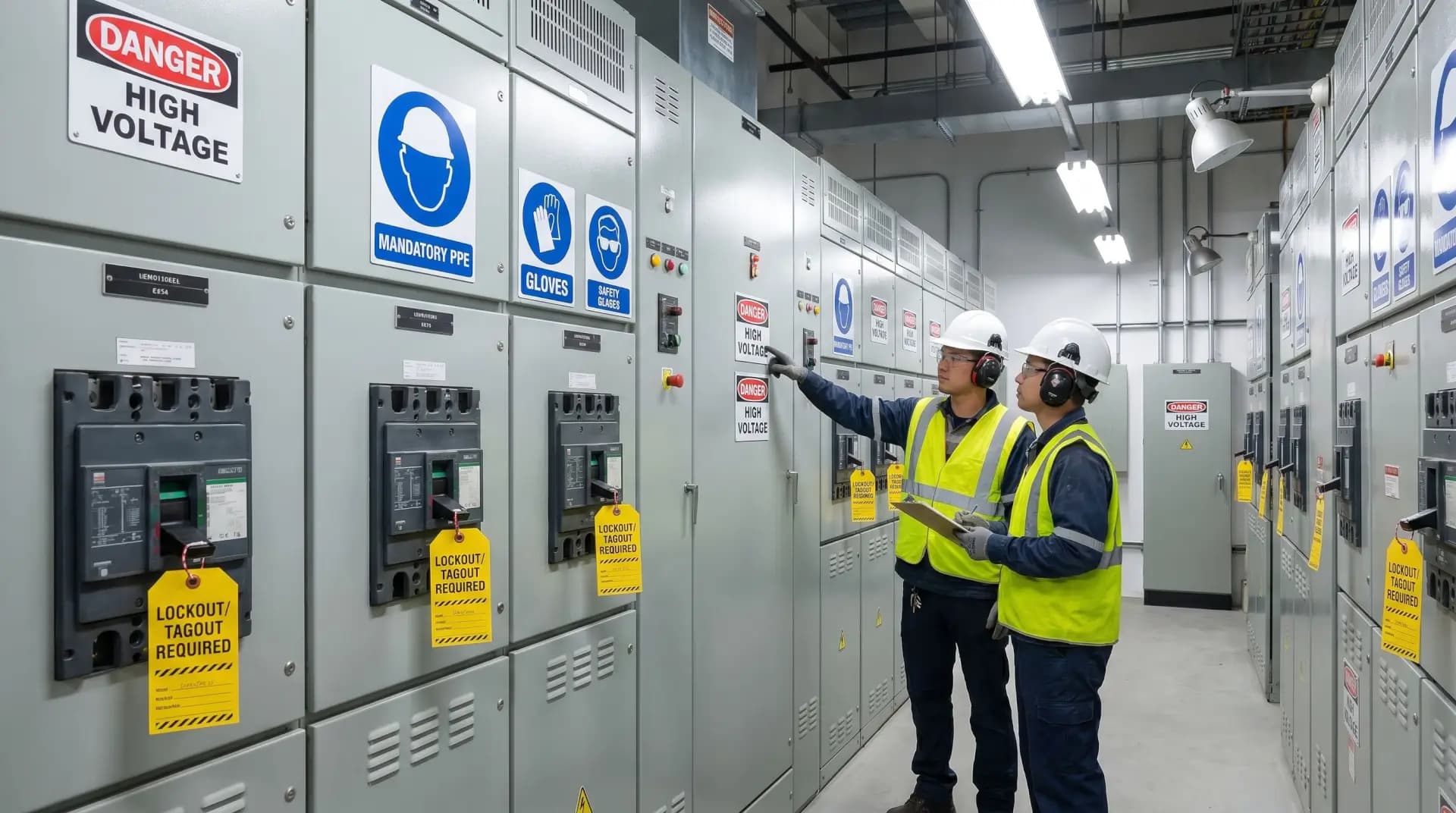
Apply lockout/tagout: Secure every isolation point with personal locks and clear tags.
Verify absence of voltage: Use an approved tester on the equipment, not assumption or verbal confirmation.
Use qualified electrical personnel: Restrict electrical tasks to trained and authorized workers.
Install residual current protection: Use RCD/GFCI protection, especially on temporary power and portable tools.
Maintain grounding and bonding: Ensure fault current has a safe path and exposed metal parts stay at safe potential.
Select proper equipment: Match enclosures, IP rating, insulation class, and hazardous-area suitability to the environment.
Inspect cords and tools before use: Remove damaged items from service immediately.
Protect cables from damage: Route them away from traffic, water, heat, and sharp edges.
Use barriers and approach limits: Control access around live equipment and exposed parts.
Label circuits and panels clearly: Workers must identify sources quickly and accurately.
Control temporary installations: Treat temporary power as a formal system with inspection, testing, and ownership.
The table below shows how I explain electrical controls to supervisors who focus too quickly on gloves and face shields. PPE matters, but it sits at the bottom of the control structure for a reason.
Control Level | Electrical Example | Field Value |
|---|---|---|
Elimination | Design work so equipment is fully de-energized | Removes worker exposure to live energy |
Substitution | Use lower-voltage tools or battery equipment where suitable | Reduces shock severity and cable dependence |
Engineering Controls | RCD/GFCI, insulated barriers, dead fronts, interlocks | Controls exposure even when conditions change |
Administrative Controls | Permit-to-work, LOTO, competence checks, inspections | Creates disciplined work execution |
PPE | Arc-rated clothing, voltage-rated gloves, face shield | Limits injury but does not remove the hazard |
Pro Tip: If a job can be done de-energized but the team wants to do it live “to save time,” the risk assessment is already compromised.
Lockout/Tagout and Test-Before-Touch: The Core of Electrical Safety
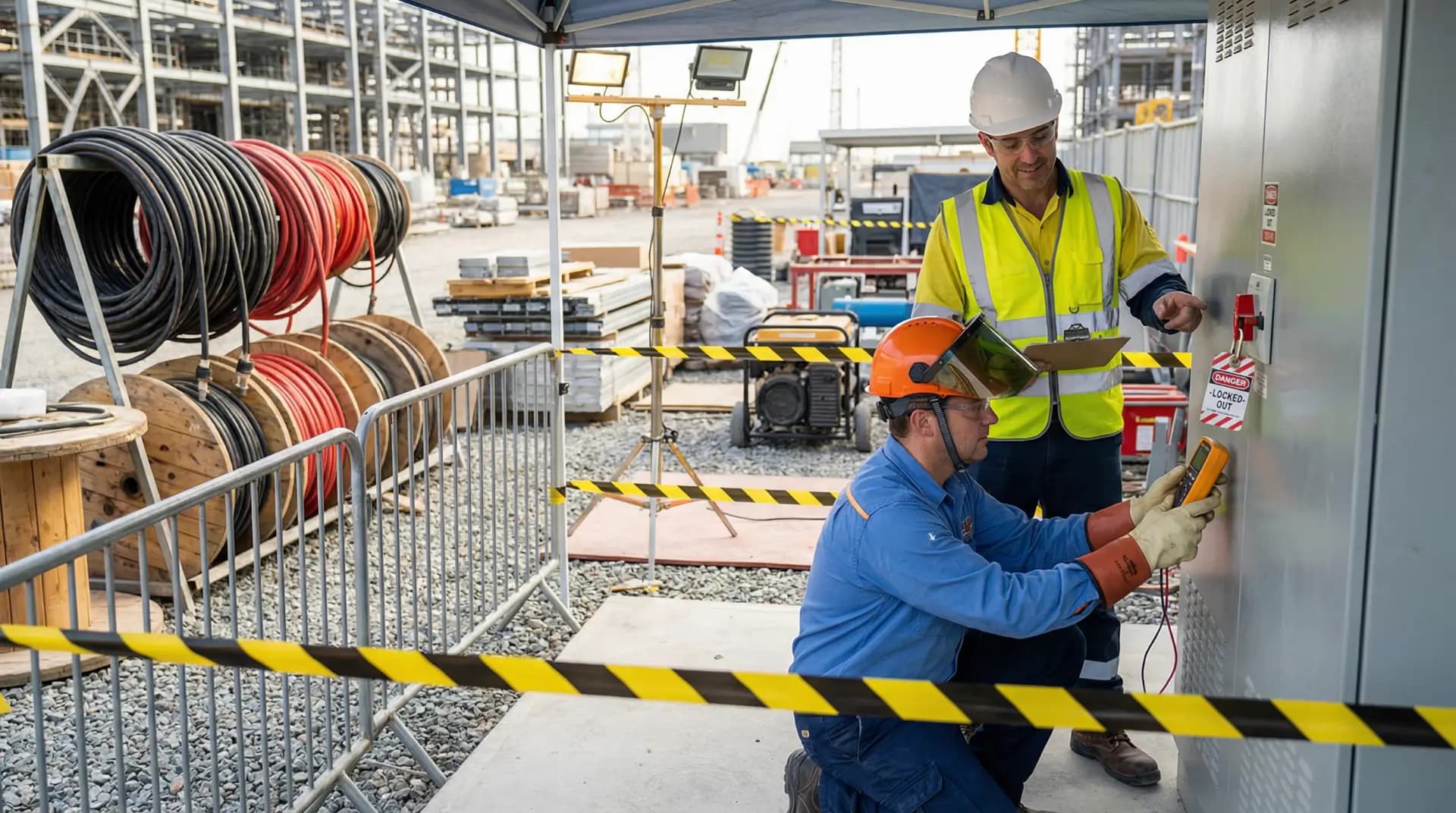
When electrical controls fail, the missing step is often simple: nobody proved the equipment was dead. Lockout/tagout is not a paperwork step. It is the physical control that stops unexpected energization and protects the person with hands on the equipment.
I expect teams to follow a clear sequence every time they isolate electrical equipment. The basic process should not be improvised:
Identify all energy sources: Main supply, backup supply, stored energy, capacitors, generators, and interlocks.
Notify affected personnel: Make sure operations and nearby workers understand the shutdown.
Shut down equipment normally: Use the standard stopping sequence before isolation.
Isolate every source: Open disconnects, breakers, valves, or other isolation devices.
Apply locks and tags: Each authorized worker uses personal lock control.
Release stored energy: Discharge capacitors, block movement, and verify residual hazards are controlled.
Test for absence of voltage: Prove the tester works, test the circuit, then re-prove the tester.
Start work only after verification: Do not rely on labels, drawings, or someone else’s word.
Restore safely after completion: Remove tools, replace guards, clear personnel, then remove locks under controlled procedure.
OSHA electrical safety rules and HSE UK expectations both support isolation before work, but site practice often fails at the verification step. The stricter field position is always the safer one: treat all conductors as live until the worker performing the task has personally verified zero energy.
Pro Tip: I never accept “the breaker is off” as evidence. I want to know who isolated it, who locked it, and who tested the point of work.
Controlling Arc Flash and Arc Blast Risk
Arc flash control needs more than standard electrical awareness. I have seen crews prepare properly for shock protection but ignore fault energy, working distance, and the condition of the equipment. That gap is where severe burn injuries happen.
Arc flash risk increases when equipment is energized, poorly maintained, improperly closed, contaminated, or operated beyond its design condition. The controls below are the ones that matter most in front of switchgear, MCCs, panels, and large distribution systems:
De-energize before opening equipment: This remains the strongest arc flash control.
Use arc flash studies and labels where required: Workers need incident energy and boundary information in practical form.
Wear arc-rated PPE: Clothing, hood, face shield, gloves, and hearing protection must match the task risk.
Maintain equipment condition: Loose connections, dust, corrosion, and failed components increase fault likelihood.
Keep covers and doors secured: Proper enclosure integrity reduces exposure during operation.
Use remote operation where feasible: Remote racking or switching increases worker distance from the hazard.
Control approach boundaries: Barricade and restrict access to authorized personnel only.
Review switching procedures: Complex switching should follow written steps and competent supervision.
Where standards differ in method, I apply the stricter practical control: if there is uncertainty about incident energy or equipment condition, the task does not proceed energized. That decision has delayed work on my sites, but it has also prevented workers from standing in the line of fire.
Electrical Safety for Temporary Power, Tools, and Cables
On construction sites and shutdown projects, the highest frequency electrical exposure usually comes from temporary power rather than fixed plant equipment. These systems are moved, modified, and abused daily. If supervision is weak, defects multiply fast.
The following controls are the ones I check first when auditing temporary electrical installations:
Use site-approved distribution boards: Boards should be weather-protected, labeled, and fitted with correct protective devices.
Fit RCD/GFCI protection: Portable tools and outdoor circuits need fast fault interruption.
Inspect before each use: Check plugs, sockets, cable sheathing, strain relief, and casings.
Remove damaged equipment immediately: Do not leave defective tools in circulation for “later repair.”
Avoid daisy-chaining extensions: This causes voltage drop, overheating, and unstable supply.
Elevate or protect cables: Use cable ramps, overhead routing, or guarded paths in traffic areas.
Keep connections dry: Off-ground supports and weather covers reduce water ingress.
Use the right voltage for the task: Reduced low-voltage systems may be appropriate in higher-risk environments.
Control portable lighting: Lamps in confined, wet, or metal environments need suitable voltage and protection.
Assign ownership: One responsible person or team must manage temporary power changes and inspections.
During one project audit, nearly every serious electrical deficiency traced back to temporary systems installed quickly and then left unmanaged. Permanent systems usually have drawings, maintenance, and ownership. Temporary systems often have none unless the site enforces them.
Safe Work Near Overhead and Underground Electrical Services
Not all electrical incidents involve electricians. Plant operators, scaffolders, excavation crews, and delivery drivers are regularly exposed to live services they do not control. Contact with overhead lines and buried cables still causes fatal incidents across multiple industries.
Before work starts near electrical services, the planning controls need to be visible and verified, not assumed. I expect these precautions as a minimum:
Survey and identify services: Use current drawings, detection tools, and physical verification where needed.
Establish safe approach distances: Mark exclusion zones around overhead lines and enforce them.
Use permit controls for excavation: Digging near buried services must be authorized and supervised.
Brief plant operators clearly: Crane, MEWP, and dump truck operators must know line locations and limits.
Use spotters where visibility is restricted: A trained observer helps maintain clearance.
Install barriers and goalposts: Physical warnings reduce line strikes at access routes and work faces.
Hand dig where required: Mechanical excavation should not proceed blindly near known services.
Stop after service exposure: Once a cable is uncovered, protect it and reassess before continuing.
If a buried cable is struck or overhead contact occurs, emergency actions must be immediate and controlled. Panic and uncontrolled rescue attempts can turn one casualty into several.
Emergency Response When Electrical Contact Occurs
Electrical emergencies move fast, and the first minute matters. I have seen well-meaning workers rush to grab a casualty and nearly become part of the incident. Response must start with scene safety and isolation, not instinctive contact.
The emergency sequence below is the one I teach and enforce during drills and site briefings:
Do not touch the casualty until power is isolated: Assume the person and surrounding area are energized.
Shut off the source: Use emergency stop, breaker, disconnect, or utility isolation if accessible and safe.
Raise the alarm: Call emergency response and communicate exact location and hazard.
Keep others clear: Establish a safety perimeter, especially after downed lines or panel faults.
Use non-conductive rescue methods only if trained and necessary: This is a last resort when isolation cannot be achieved immediately.
Start first aid and CPR once safe: Treat for cardiac arrest, burns, and trauma from falls.
Arrange urgent medical evaluation: Even a conscious casualty needs medical assessment after electric shock.
Preserve the scene: Do not disturb evidence beyond what is needed for rescue and stabilization.
After electrical contact, a worker who says “I feel fine” may still have serious internal injury or cardiac effects. Medical evaluation is not optional.
Emergency response reduces the outcome severity, but prevention still depends on competent planning and supervision before the task begins.
Training, Competence, and Supervision for Electrical Safety
Electrical safety programs fail when training is treated as a slide deck instead of a competence system. I have removed workers from tasks not because they lacked certificates, but because they could not explain isolation points, test methods, or arc flash boundaries on the actual equipment.
A site with strong electrical safety control usually has the following competence elements in place:
Clear authorization levels: Workers know what electrical tasks they may and may not perform.
Task-specific training: Isolation, testing, switching, temporary power, and rescue are trained separately where needed.
Practical verification: Supervisors observe the worker performing the task, not just attending training.
Refresher intervals: Skills degrade, especially for infrequent high-risk tasks.
Contractor control: Third-party electricians and technicians are checked for competence before mobilization.
Supervisor involvement: Frontline leaders challenge unsafe steps and stop work when conditions change.
Toolbox talks linked to actual tasks: Briefings focus on the equipment and hazards in front of the crew.
Learning from incidents: Near misses and audit findings are fed back into training content.
Pro Tip: Ask a worker to show you the isolation point, prove dead procedure, and emergency action for the exact job. That short conversation tells you more than a folder of certificates.
Competence also needs a regulatory backbone. Workers and supervisors should understand what standards expect in practice, not just know the standard numbers.
Key Electrical Safety Standards and What They Mean on Site
Standards matter when they are translated into field controls. I use them to set the baseline, especially where contractors come from different systems and habits. For electrical hazards and how to control them, the most useful references are the ones that drive isolation, safe equipment use, and risk assessment.
The following standards and frameworks commonly shape electrical safety expectations in the field:
OSHA 29 CFR 1910 Subpart S: Covers electrical safety requirements for general industry, including safe installation and use.
OSHA 29 CFR 1910.147: Requires control of hazardous energy through lockout/tagout.
OSHA 29 CFR 1926 Subpart K: Covers electrical safety in construction activities.
HSE UK Electricity at Work Regulations: Requires systems to be constructed and maintained to prevent danger, with work on or near live conductors tightly controlled.
NFPA 70E: Provides practical guidance on electrical safe work practices, including shock and arc flash risk controls.
ISO 45001: Supports management system controls for competence, risk assessment, and operational planning.
IFC/World Bank EHS Guidelines: Useful for project environments where international lender standards apply.
Where there is variation in detail, I default to the stricter control in the field. For example, if one framework allows limited energized work under narrow conditions but the site cannot demonstrate competence, justification, and protection, the safer decision is to prohibit the task until it can be done de-energized.
Common Mistakes That Defeat Electrical Controls
Most sites do not fail because they have no electrical rules. They fail because routine behavior erodes those rules until the controls exist only on paper. These are the mistakes I see most often before an electrical incident or enforcement action.
Supervisors should treat the following warning signs as active failures, not minor housekeeping issues:
Assuming power is off: No personal verification at the point of work.
Allowing live work by default: The team normalizes energized troubleshooting and repair.
Using damaged extensions anyway: Defects are tolerated because replacement is inconvenient.
Letting unqualified workers open panels: Boundaries between trades are ignored.
Skipping pre-use checks: Tools and cords enter service without inspection.
Relying only on PPE: The team talks about gloves and face shields before isolation.
Failing to update permits: Scope changes but the controls stay frozen.
Ignoring environmental conditions: Rain, condensation, metal contact, and confined spaces increase risk.
Leaving temporary fixes in place: Short-term repairs become permanent hazards.
Weak incident learning: Near misses are closed administratively without changing field practice.
The correction is not complicated, but it requires discipline. Electrical safety improves when supervisors challenge assumptions early, verify controls physically, and refuse to trade energy control for schedule recovery.
How Supervisors Can Strengthen Electrical Safety Every Shift
Frontline supervision is where electrical safety either holds or collapses. The best procedures in the world do not help if no one checks the board, the cord, the isolation point, or the worker’s understanding before the task starts.
These are the shift-level actions that consistently improve electrical control on site:
Walk the work area before energizing or starting tasks: Look for exposed parts, cable damage, and environmental changes.
Challenge any energized work request: Ask why it cannot be done de-energized.
Verify permits and LOTO in the field: Check the actual isolation points, not just the paperwork.
Confirm worker authorization: Make sure only qualified personnel perform electrical tasks.
Inspect temporary power daily: Boards, cables, plugs, and RCD/GFCI devices need routine checks.
Control access to panels and switchrooms: Keep unauthorized workers out.
Stop work when conditions change: Water ingress, damaged equipment, or scope drift means reassessment.
Review near misses openly: Use real site examples to reset standards with crews.
That level of supervision is what turns an electrical safety procedure into actual protection. Without it, the site slowly drifts back toward assumption-based work.
Conclusion
Electrical hazards and how to control them comes down to one hard rule: control the energy before the energy reaches the worker. Shock, arc flash, burns, fire, and secondary falls are not unpredictable events. They follow weak isolation, poor equipment condition, unqualified intervention, and supervision that accepts shortcuts.
On every site where I have seen strong electrical safety performance, the pattern is the same. Work is planned to be de-energized, lockout/tagout is enforced, absence of voltage is personally verified, temporary power is managed like a real system, and supervisors challenge unsafe drift early. That is what prevents incidents, not posters, not signatures, and not toolbox talks delivered from memory.
Electrical safety is tested in the moment when someone says, “It will only take a minute.” That is the point where leaders either protect life or gamble with it. Electricity does not care about production pressure, and it does not forgive casual decisions.


Responses (0)