

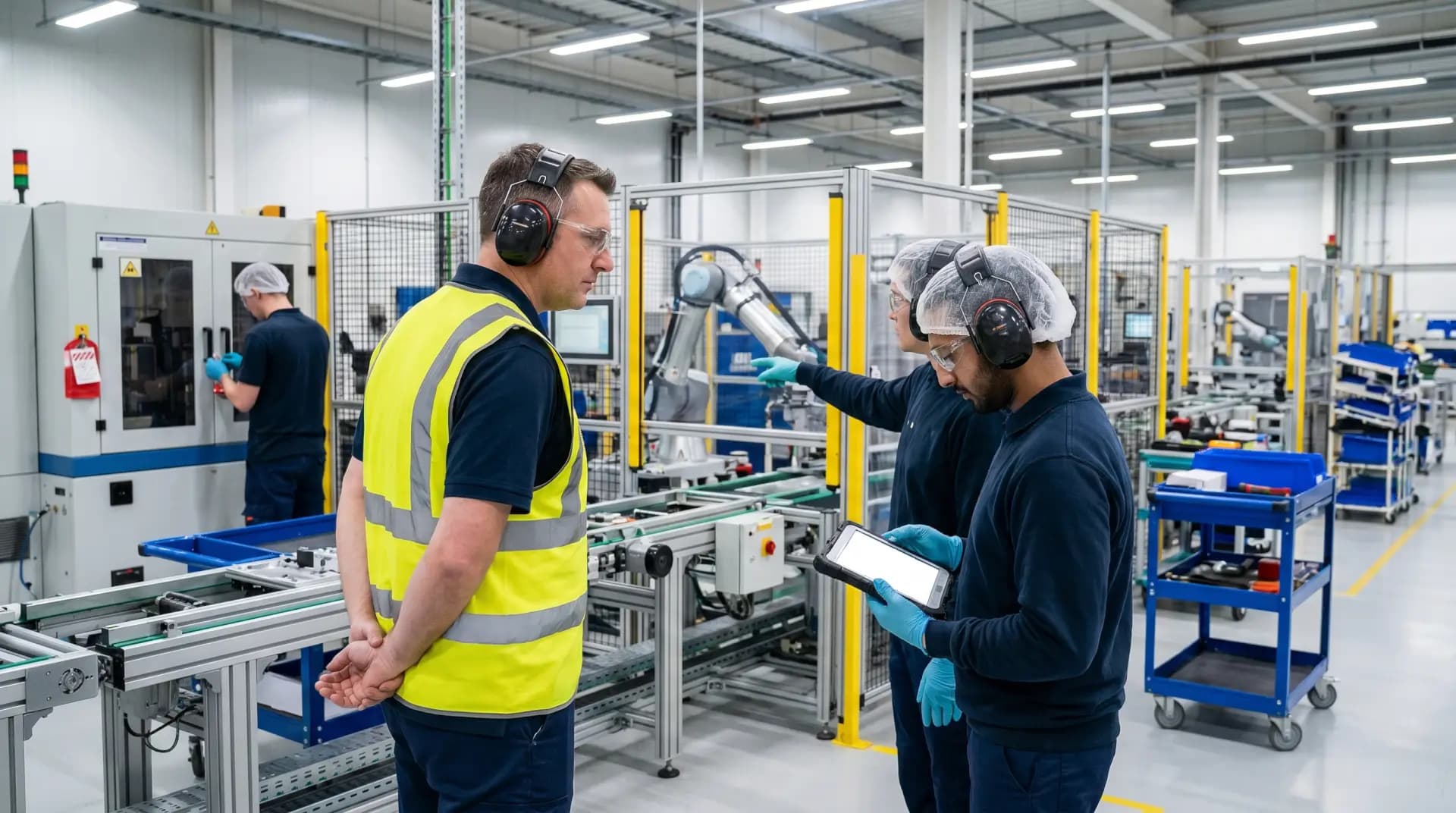
Safety culture is the deeper way an organization thinks, decides, leads, and behaves around health and safety. Safety climate is the current perception workers have about how safety is actually treated today. In practical HSE terms, culture is the underlying system of values and repeated behaviors; climate is the present “temperature reading” of that system.
I do not treat these terms as academic labels only. In real workplaces, confusing safety culture with safety climate can lead to weak improvement plans. A company may run a survey, receive a positive climate score, and assume its safety culture is strong. That is risky. A survey can show how people feel at a point in time, but culture is proven through decisions, supervision, planning, communication, accountability, and how the organization behaves when production pressure increases.
The simplest distinction is this:
Area | Safety Culture | Safety Climate |
|---|---|---|
Meaning | Shared values, beliefs, systems, habits, and leadership patterns around safety | Workers’ current perceptions of safety priorities, support, trust, and fairness |
Timeframe | Long-term and deeply embedded | Short-term and changeable |
Measured by | Leadership behavior, decisions, investigations, audits, learning, accountability, participation | Surveys, interviews, focus groups, perception checks |
Example question | “How do we normally treat safety when it competes with cost or schedule?” | “Do workers currently believe management acts on safety concerns?” |
Main use | Building sustainable safety performance | Diagnosing the current state of trust, confidence, and engagement |
NIOSH describes safety culture as broader, involving organizational values and actions, while safety climate is narrower and focused on current staff perceptions of supervision, resources, policies, trust, and transparency. UK HSE also emphasizes that organizational culture can influence safety outcomes as much as the formal safety management system.
What Is Safety Culture?
Safety culture is the collective pattern of how safety is understood, prioritized, and practiced across an organization. It includes what leaders reward, what supervisors tolerate, how workers participate, how hazards are reported, how incidents are investigated, and how decisions are made when work becomes difficult.
A strong safety culture is not proven by posters, slogans, campaigns, or toolbox talks alone. It is proven by consistency. When leaders stop unsafe work without blaming people, when supervisors plan work around real hazards, when workers can report near misses without fear, and when corrective actions are closed properly, safety culture becomes visible.
Internationally, ISO 45001 places strong emphasis on leadership, worker participation, hazard identification, risk control, competence, performance evaluation, and continual improvement as part of an occupational health and safety management system. These are not “culture clauses” in a casual sense, but they shape the conditions in which a healthy safety culture can develop.
From my HSE practice perspective, safety culture becomes weak when organizations say the right things but reward the wrong outcomes. For example, if supervisors are praised only for finishing early, but not for controlling risks properly, workers quickly learn the real priority. Culture is not what leadership announces. It is what the organization repeatedly allows.
Common signs of a mature safety culture
A mature safety culture normally shows these patterns:
Leaders ask about risk controls before asking about deadlines.
Workers raise concerns without expecting punishment or embarrassment.
Near misses are treated as learning opportunities.
Procedures are reviewed when they do not match real work.
Contractors are included in safety communication and controls.
Supervisors challenge shortcuts consistently.
Incident investigations look beyond worker error.
Corrective actions are tracked until they are genuinely effective.
The key point is that safety culture is built through repeated organizational behavior. It is not a single program.
What Is Safety Climate?
Safety climate is the workforce’s current perception of safety. It tells us what people believe is happening now. Do workers believe management listens? Do they believe reporting is safe? Do they believe supervisors care about safe work when production pressure increases? Do they believe hazards are corrected quickly?
This makes safety climate very useful, but also limited. It is useful because perceptions often reveal hidden weaknesses before serious incidents occur. It is limited because perception can change quickly after a leadership change, serious incident, shutdown, campaign, audit, or disciplinary action.
Safety climate is often measured through:
Worker surveys
Interviews
Focus groups
Safety conversations
Leadership walk-through feedback
Contractor perception reviews
Pulse checks after major organizational changes
The value of safety climate measurement is not the score itself. The value is what the organization does with the results. A low score on trust, reporting, or supervision is not a public relations problem. It is a risk signal.
Research literature often treats safety climate as either a component of safety culture or as a visible reflection of it. This distinction matters because climate can help diagnose culture, but it should not be mistaken for the whole culture.
Safety Culture vs Safety Climate: The Practical Difference
The practical difference is depth.
Safety climate answers: “How do people feel safety is being managed right now?”
Safety culture answers: “What does this organization truly value and repeat over time?”
A workplace may have a positive safety climate after a successful campaign, but still have a weak safety culture if deeper systems are poor. For example, workers may temporarily feel engaged after safety week activities, but if investigations still blame individuals, permits are rushed, maintenance backlogs are ignored, and supervisors accept shortcuts, the culture has not improved.
The reverse can also happen. A workplace may have a strong long-term safety culture but a temporary drop in safety climate after restructuring, staffing shortages, or a serious incident. In that case, the climate result should not be dismissed. It shows that current confidence has weakened and needs attention.
A simple HSE test
When I assess the difference, I ask two questions:
What do people say about safety today?
That gives me the safety climate.What does the organization repeatedly do when safety becomes inconvenient?
That gives me the safety culture.
The second question is usually more revealing.
Why the Difference Matters for HSE Performance
Understanding the difference between safety culture and safety climate helps prevent shallow safety management. Many organizations collect climate survey data but fail to address the cultural causes behind poor results. Others talk about improving culture without measuring how workers actually experience safety on the ground.
Both are needed.
A strong safety climate can indicate that workers currently trust the system. A strong safety culture helps ensure that trust survives pressure, change, and operational difficulty.
U.S. OSHA’s Recommended Practices for Safety and Health Programs emphasize management leadership, worker participation, hazard identification and assessment, hazard prevention and control, training, program evaluation, and communication across employers, contractors, and staffing agencies. These elements are practical foundations for turning safety values into daily management practice.
In my view, the biggest mistake is using climate surveys as proof of culture maturity. A survey can support judgment, but it cannot replace field verification. I want to see the evidence in permits, risk assessments, supervision, maintenance decisions, incident learning, contractor control, and worker participation.
Where safety climate helps most
Safety climate measurement is especially useful when an organization wants to understand:
Whether workers trust management
Whether reporting systems feel safe
Whether supervisors apply rules consistently
Whether production pressure is affecting risk decisions
Whether safety communication is reaching frontline teams
Whether contractors experience the same safety expectations
Whether workers believe action is taken after concerns are raised
Where safety culture assessment must go deeper
Safety culture assessment should examine:
Leadership decision-making
Accountability systems
Planning and resource allocation
Competence and supervision
Incident investigation quality
Learning from normal work, not only failures
Contractor and supply chain safety expectations
How the organization responds to bad news
Whether safety controls remain strong under pressure
How to Measure Safety Culture and Safety Climate
Safety climate is usually easier to measure because it focuses on current perceptions. Safety culture is harder because it requires evidence from multiple sources. A reliable assessment should never depend on one method only.
Measuring safety climate
A safety climate survey should be short enough for workers to complete honestly, but strong enough to identify meaningful themes. Typical topics include:
Climate Topic | What It Reveals |
|---|---|
Management commitment | Whether leaders are seen as serious about safety |
Supervisor behavior | Whether frontline leadership supports safe work |
Reporting confidence | Whether people feel safe raising concerns |
Communication | Whether safety information is clear and timely |
Learning | Whether incidents and near misses lead to improvement |
Resources | Whether people have time, tools, and staffing to work safely |
Fairness | Whether rules and discipline are applied consistently |
The survey should protect confidentiality, include contractors where relevant, and be followed by visible action. Asking workers for feedback and then doing nothing damages trust.
Measuring safety culture
Safety culture assessment needs a wider view. I would normally combine:
Document review
Leadership interviews
Worker interviews
Site observations
Permit and risk assessment sampling
Incident investigation review
Corrective action verification
Training and competence review
Contractor management review
Review of leading and lagging indicators
This is where HSE judgment matters. A site can have clean documents and still have weak field execution. A team can have high reporting numbers and still be improving, because open reporting may reflect trust rather than poor safety. Numbers need interpretation.
How to Improve Safety Culture and Safety Climate Together
Improving safety climate without improving safety culture creates short-term confidence but weak long-term control. Improving culture without listening to the current climate creates blind spots. The best approach is to work on both.
1. Start with leadership behavior
Workers watch what leaders do, not only what they say. If leaders ask meaningful questions, act on concerns, provide resources, and avoid blame, climate improves and culture strengthens.
Good leadership questions include:
“What could seriously injure someone in this task?”
“Which control is most likely to fail?”
“What is making this job harder than planned?”
“Have we given the team enough time and resources?”
“What did we learn from the last near miss?”
2. Make reporting safe and useful
Reporting systems must be easy, trusted, and responsive. Workers should not feel that reporting a hazard creates trouble for them. They should see that reporting leads to review, action, and feedback.
A strong reporting culture does not mean every report confirms a major risk. It means the organization is willing to hear weak signals before they become serious events.
3. Fix the gap between procedures and real work
One of the clearest signs of weak culture is a large gap between written procedures and actual practice. If workers routinely bypass steps, the answer is not always more discipline. Sometimes the procedure is unclear, impractical, outdated, or unsupported by resources.
Good HSE practice is to study how work is actually done, then improve the system around it.
4. Train supervisors as culture carriers
Supervisors translate management expectations into daily work. A company may have strong corporate values, but if supervisors ignore hazards, rush permits, or punish reporting, the safety climate will suffer quickly.
Supervisor development should include:
Hazard recognition
Communication skills
Pre-job planning
Stop-work response
Fair accountability
Incident learning
Contractor coordination
Managing production pressure safely
5. Use climate data as a leading indicator
Safety climate results should guide action plans. Low trust, poor communication, weak supervision, or fear of reporting are early warnings. They should be treated with the same seriousness as equipment defects or repeated procedural deviations.
6. Close actions visibly
Nothing damages safety climate faster than repeated consultation without action. If workers raise concerns, management must respond. Even when an issue cannot be solved immediately, explaining the decision builds credibility.
Visible closure builds trust. Silent closure does not.
Common Misconceptions About Safety Culture and Safety Climate
Misconception 1: “Safety culture means worker behavior”
Worker behavior is part of safety culture, but it is not the whole picture. Culture also includes leadership decisions, planning, workload, resources, supervision, competence, design, maintenance, and accountability. Focusing only on workers can hide management system weaknesses.
Misconception 2: “A good survey score means we have a strong culture”
A good safety climate score is encouraging, but it is not final proof of culture strength. It must be checked against field observations, incident trends, quality of controls, worker participation, and leadership behavior.
Misconception 3: “Culture is too soft to manage”
Culture is influenced by very practical things: what gets funded, what gets measured, what supervisors enforce, what leaders ask about, what investigations conclude, and what happens after someone reports a problem.
Misconception 4: “Zero injuries prove a strong safety culture”
Low injury numbers can be positive, but they can also reflect underreporting, luck, low exposure, or weak measurement. Serious risk can exist even when injury rates look good. HSE professionals should look at leading indicators, control effectiveness, high-potential events, and the quality of learning.
Misconception 5: “Climate surveys create culture change”
Surveys do not create change by themselves. They create information. Culture changes when leaders act on that information consistently.
Professional HSE Judgment: What I Look For First
When I want to understand safety culture and safety climate quickly, I look for evidence in five areas.
Area | What I Check | Why It Matters |
|---|---|---|
Leadership response | How leaders react to bad news | Shows whether safety is truly valued |
Worker voice | Whether workers can challenge unsafe work | Shows trust and participation |
Risk controls | Whether critical controls are verified | Shows discipline beyond paperwork |
Supervision | How supervisors handle pressure | Shows daily culture in action |
Learning | Whether incidents lead to system improvement | Shows maturity and honesty |
A strong culture does not mean a workplace has no problems. It means problems are surfaced early, discussed honestly, and corrected effectively.
Conclusion
Safety culture and safety climate are connected, but they are not the same. Safety culture is the deeper pattern of values, decisions, systems, and behaviors that shape how safety is managed over time. Safety climate is the current perception workers have about those safety conditions.
For HSE professionals, managers, and supervisors, the practical lesson is clear: use safety climate to listen, diagnose, and detect early warning signs. Use safety culture work to strengthen leadership, trust, accountability, risk control, learning, and worker participation.
A healthy safety culture is not built by slogans. It is built when safe work is planned, resourced, supervised, measured, corrected, and respected—especially when pressure is high.

Responses