
Qualitative vs Quantitative Risk Assessment

Qualitative and quantitative risk assessment serve different decisions on site. This article explains when to use each method, where teams get it wrong, and how to apply both without turning risk assessment into paperwork.
0Comments
5Views
Qualitative vs Quantitative Risk Assessment

TL;DR

  • Qualitative risk assessment is faster: It works well for routine tasks, changing site conditions, and frontline decisions where speed matters.
  • Quantitative risk assessment goes deeper: It uses numbers, data, and modelling for major hazards, complex systems, and high-consequence operations.
  • The wrong method creates blind spots: I have seen teams use simple matrices for major accident hazards and miss escalation pathways completely.
  • Neither method is better in every case: The right choice depends on hazard complexity, data quality, consequence severity, and decision purpose.
  • Good risk assessment drives controls: If the output does not change barriers, procedures, supervision, or design, the assessment has failed.

During a shutdown risk review at a petrochemical facility, I watched a team score a potential toxic release as “medium” on a 5x5 matrix and move on. The scenario involved simultaneous maintenance, temporary line breaks, contractor congestion, and impaired gas detection coverage. On paper, the box was filled. In the field, the risk picture was nowhere near understood.

That is where the difference between qualitative vs quantitative risk assessment matters. One method helps supervisors and HSE teams make practical day-to-day decisions quickly. The other helps organizations understand major hazards, exposure levels, failure likelihoods, and loss potential with far more depth. In this article, I will break down what each method is, how it works in real operations, where each one fits, common mistakes, and how to choose the right approach for risk assessment that actually protects people.

What Is Qualitative vs Quantitative Risk Assessment?

Qualitative vs quantitative risk assessment is the difference between judging risk mainly through categories and professional evaluation, or measuring risk using numerical data, calculations, and modelling. Qualitative methods use terms like low, medium, and high. Quantitative methods estimate likelihood and consequence with numbers such as exposure levels, failure rates, injury frequency, or financial loss values.

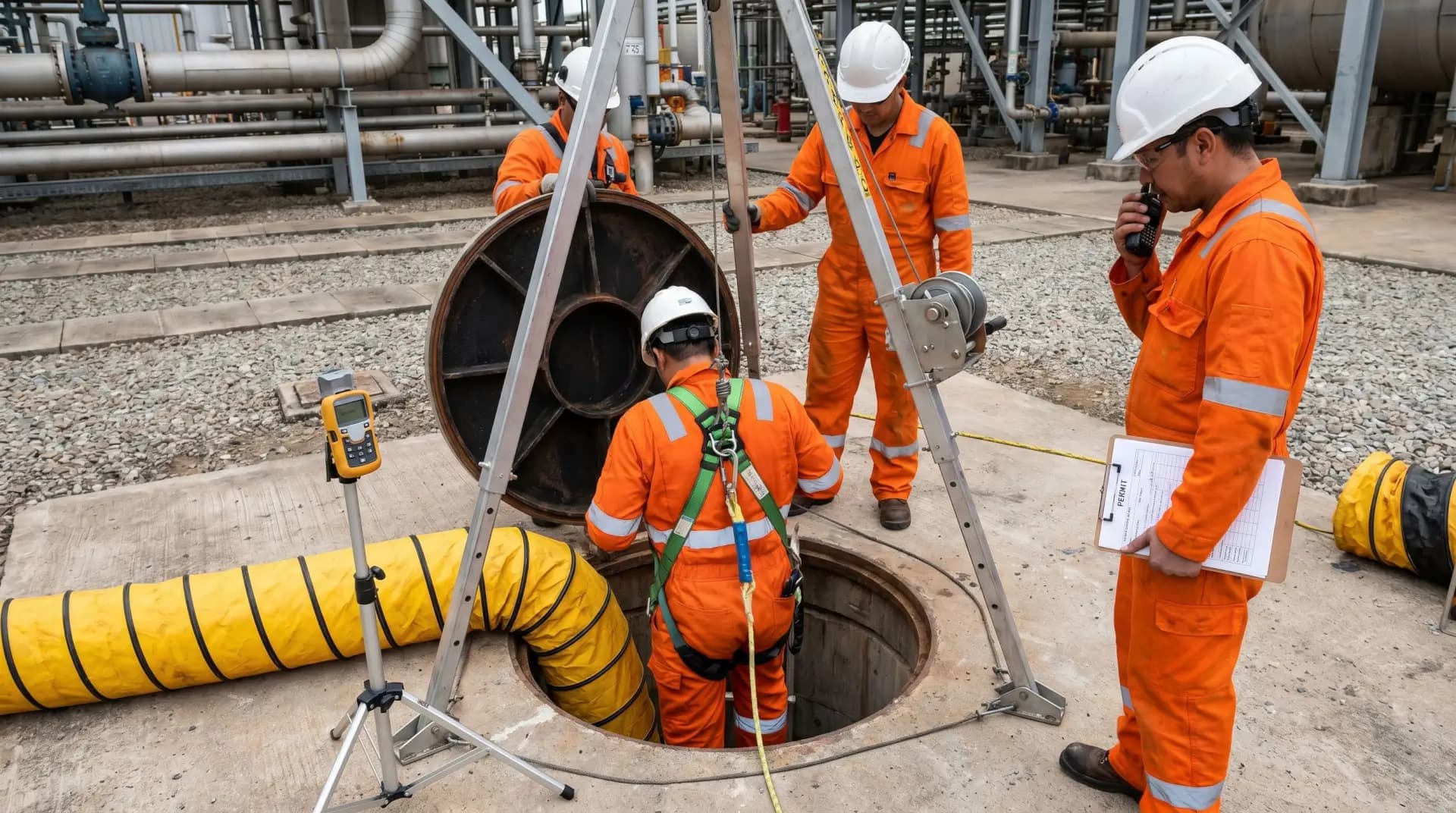
On most sites, both methods exist whether people realize it or not. A supervisor using a risk matrix before lifting work is applying a qualitative method. A process safety engineer calculating explosion overpressure, toxic dispersion, or fatality probability is using a quantitative method.

The practical distinction becomes clearer when you look at how each method behaves in the field:

  • Qualitative assessment: Relies on expert judgment, experience, task knowledge, and category-based ranking.
  • Quantitative assessment: Relies on measurable inputs, statistical data, modelling tools, and numerical outputs.
  • Qualitative output: Usually produces risk ratings such as low, moderate, substantial, or intolerable.
  • Quantitative output: Usually produces values such as exposure concentration, annual probability, expected loss, or frequency.
  • Qualitative strength: Fast, practical, and usable where conditions change by the hour.
  • Quantitative strength: Stronger for complex hazards, design decisions, and major accident prevention.

When I audit risk systems, I do not ask which method a company prefers. I ask whether the method matches the hazard. That is usually where the real answer sits.

Risk assessment is not a form-filling exercise. It is a decision process to understand what can go wrong, how bad it can get, and what barriers must hold.

How Qualitative Risk Assessment Works in Real Operations

Qualitative risk assessment is the method most supervisors, safety officers, and permit issuers use every day. It is built around observation, task breakdown, hazard identification, and a judgment call on likelihood and severity.

In construction, logistics, maintenance, healthcare, and routine plant operations, this method works because teams often need an answer before the work starts, not three weeks later. The value comes from structured judgment, not guesswork.

Typical tools used in qualitative risk assessment

I see the same core tools across industries. The tool may change in name, but the logic stays similar: identify the hazard, estimate the risk, and decide the controls.

  • Risk matrices: Usually 3x3 or 5x5 grids combining likelihood and severity.
  • Job Safety Analysis (JSA): Breaks a task into steps and identifies hazards and controls at each stage.
  • Task Risk Assessment (TRA): Common for non-routine work, shutdowns, and contractor activities.
  • What-if reviews: Team-based questioning of what could go wrong during a task or change.
  • Bowtie-style qualitative reviews: Useful for identifying threats, consequences, and barriers without full numerical modelling.

These tools are effective when the team using them understands the job properly. I have seen excellent JSAs written on the tailgate of a service truck and useless ones printed in colour from an office template.

Where qualitative assessment is strongest

Qualitative methods perform best where hazards are visible, task-based, and manageable with direct controls. They are also useful when data is limited but experienced personnel understand the work conditions well.

  • Routine maintenance: Isolations, hand tools, access, dropped objects, and manual handling.
  • Construction activities: Excavation, scaffolding, lifting, hot work, and temporary works interfaces.
  • Permit-to-work screening: Deciding whether conditions are safe to authorize work.
  • Short-duration non-routine jobs: Valve replacement, line breaking, confined space entry preparation.
  • Dynamic site changes: Weather, congestion, simultaneous operations, and access restrictions.

Pro Tip: If the job conditions are changing faster than the paperwork can keep up, use a qualitative assessment supported by a live field review, not a stale document from yesterday.

Common weaknesses in qualitative assessment

The method is fast, but speed can hide poor thinking. Most failures I investigate are not caused by the matrix itself. They come from weak hazard recognition, group bias, or false confidence in broad labels.

  • Subjectivity: Two competent people may rate the same hazard differently.
  • Over-simplification: A single colour box can hide multiple escalation paths.
  • Inconsistent scoring: Teams apply likelihood definitions differently from one department to another.
  • Control inflation: People assume PPE and procedure compliance without checking field reality.
  • Poor barrier testing: Existing controls are listed, but nobody verifies whether they actually work.

This is the point where some organizations should move beyond a simple matrix and bring in quantitative analysis. That shift matters most where failure can kill many people, damage assets severely, or create long-term environmental harm.

How Quantitative Risk Assessment Works in High-Hazard Settings

Quantitative risk assessment takes the same basic question—what can go wrong—and pushes it into measurable territory. Instead of saying a toxic release is “high risk,” the team estimates release frequency, dispersion distance, exposure dose, ignition probability, occupancy, and possible fatality impact.

I have used quantitative approaches in major hazard facilities, high-energy systems, chemical storage, and process design reviews. It takes more time and better data, but it gives decision-makers something a colour-coded matrix cannot: scale.

What quantitative risk assessment uses

The method depends on data quality. If the numbers are weak, the output can look precise while being badly wrong. That is why I always check assumptions before I trust the result.

  • Failure rate data: Historical performance of valves, pumps, instruments, vessels, and protective systems.
  • Exposure measurements: Noise dosimetry, airborne contaminant sampling, radiation levels, or ergonomic force data.
  • Consequence modelling: Fire radiation, explosion overpressure, toxic gas dispersion, or spill impact modelling.
  • Human reliability inputs: Probability of operator error under specific conditions.
  • Occupancy and population data: How many people are exposed, where, and for how long.
  • Loss and damage data: Asset value, downtime cost, environmental remediation, and business interruption.

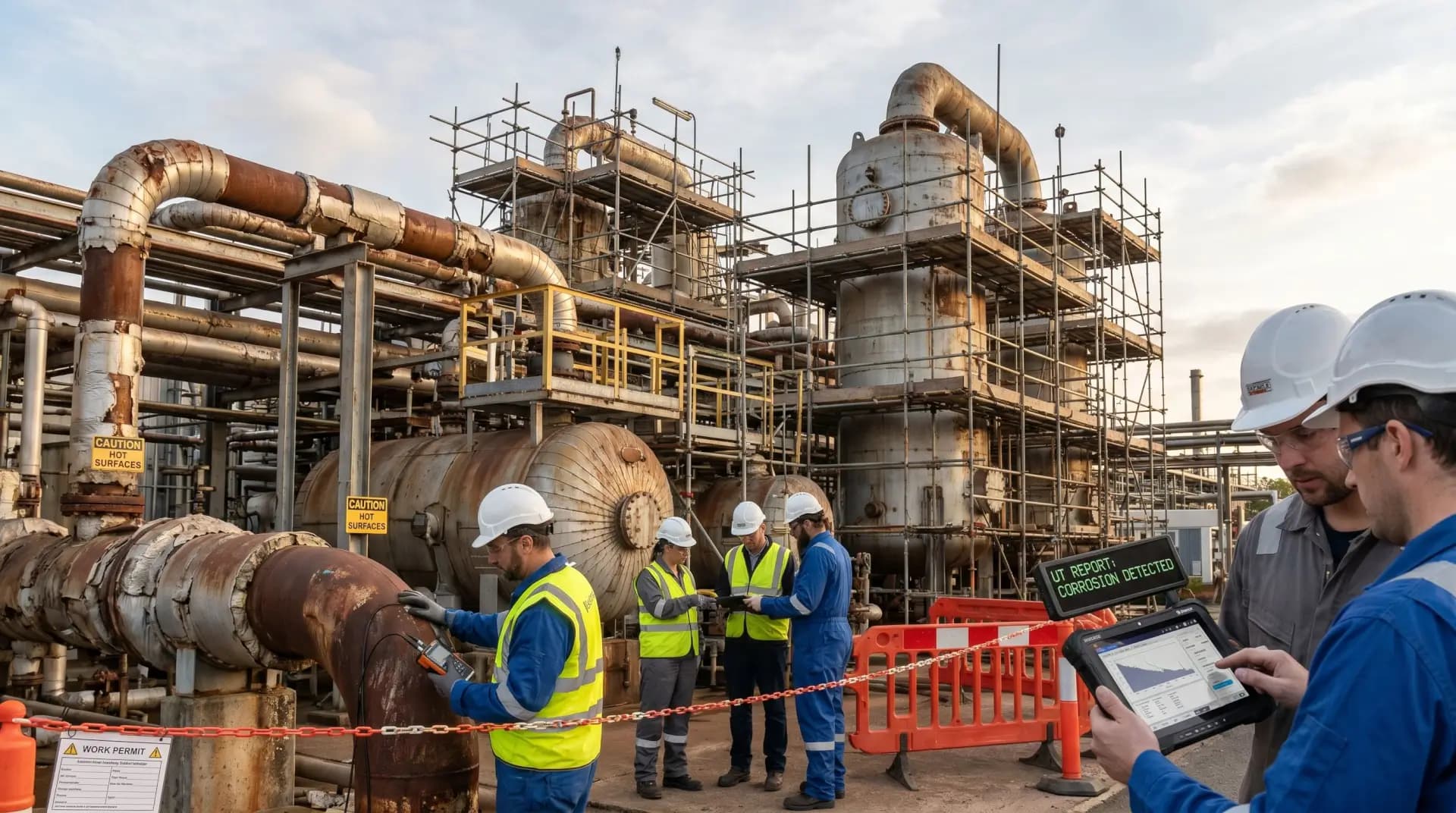
In occupational hygiene, quantitative risk assessment often means measuring actual exposure against occupational exposure limits. In process safety, it may mean calculating individual risk per year or scenario frequency. The principle is the same: use numbers to support a higher-stakes decision.

Where quantitative assessment is strongest

This method earns its cost where the hazard is complex, the consequences are severe, or the organization needs defensible evidence for design, land use, or major investment decisions.

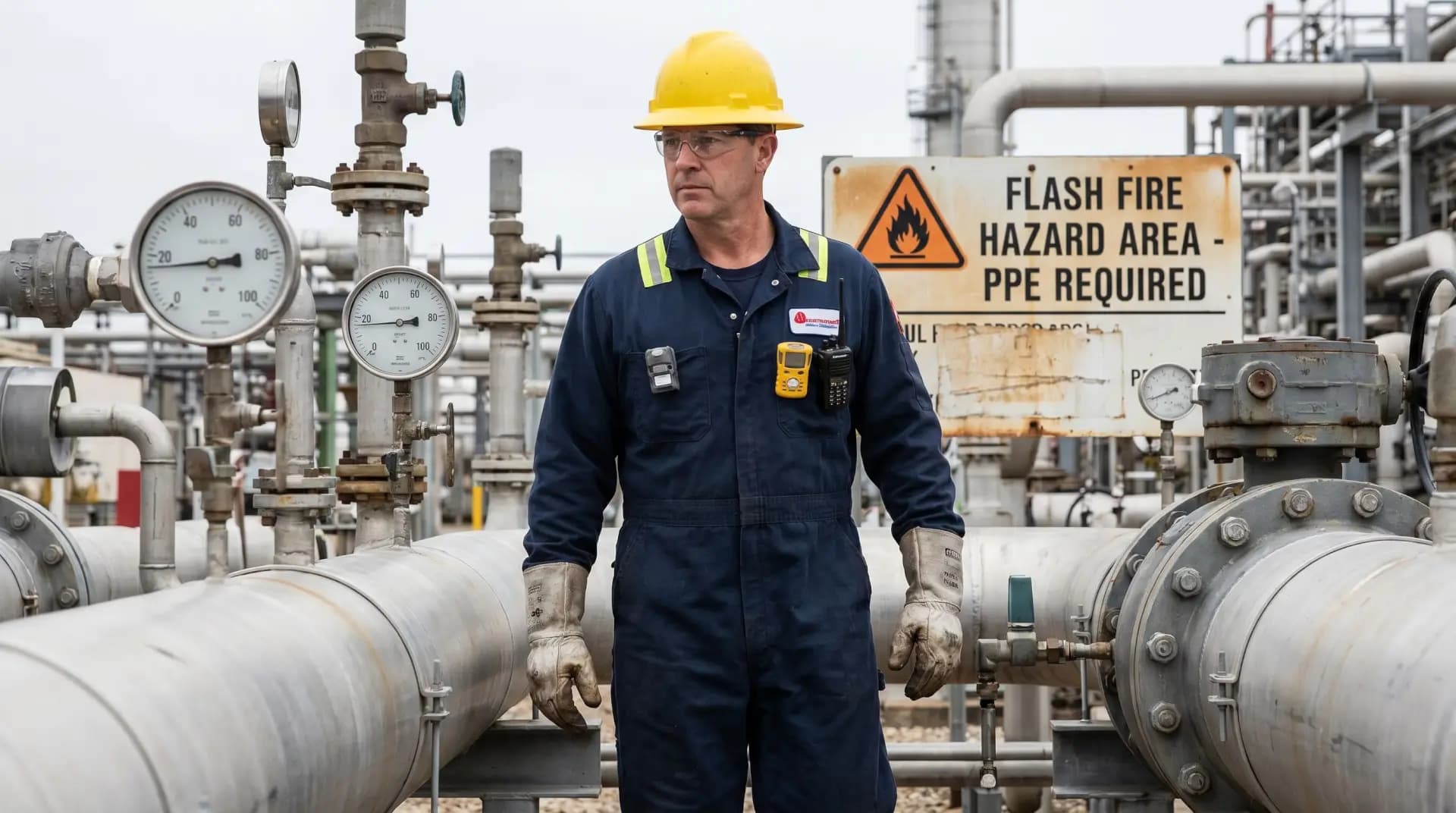
  • Major accident hazards: Toxic release, explosion, fire, structural collapse, tailings failure, or well control loss.
  • Process safety studies: Layer of protection analysis, consequence modelling, and societal risk review.
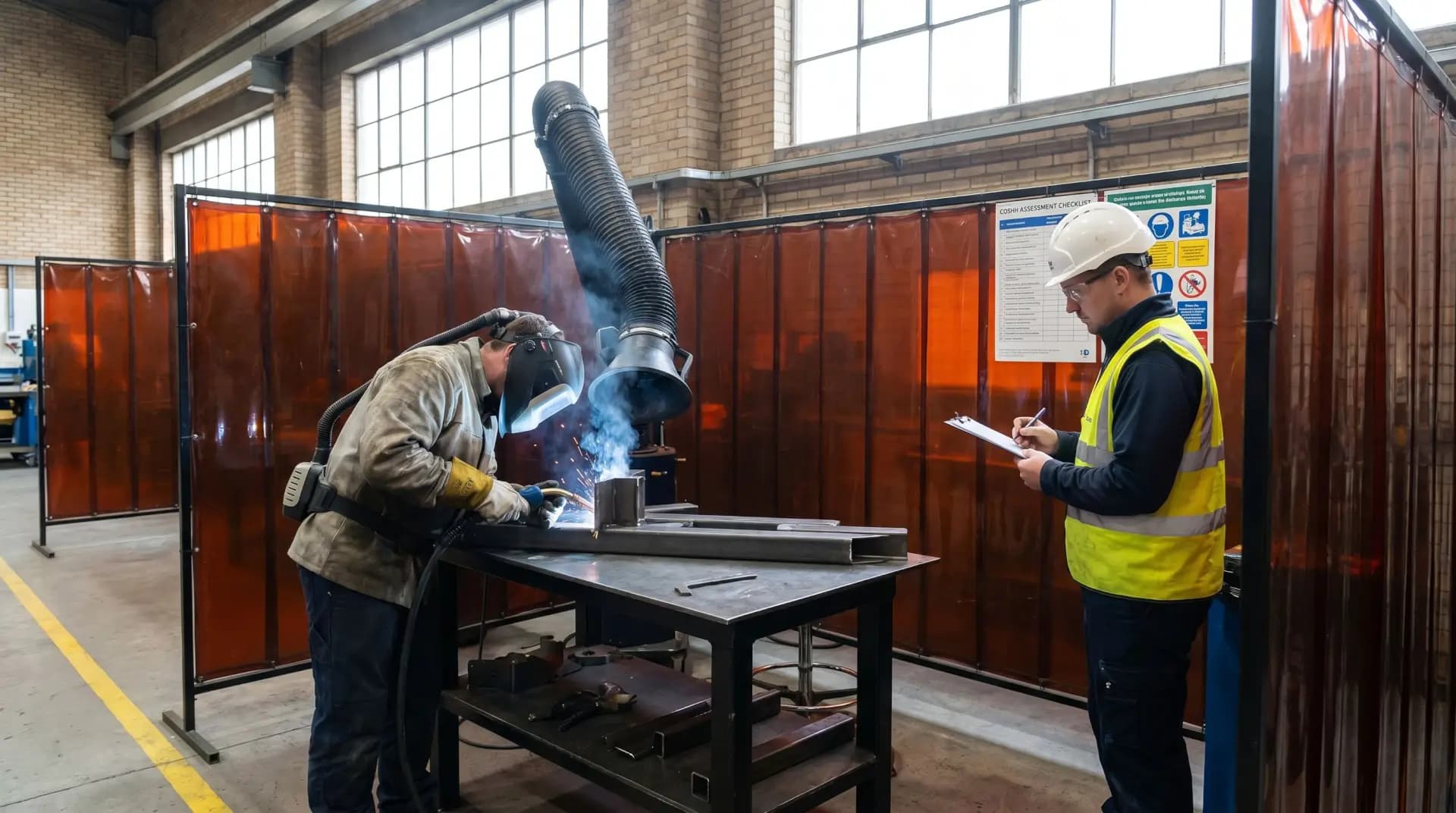
  • Occupational exposure assessment: Noise, silica, solvents, welding fume, asbestos, or radiation.
  • Engineering design decisions: Ventilation rate, blast wall need, detector placement, relief system sizing.
  • Regulatory demonstration: Showing that risks are reduced to a tolerable level with evidence.

Pro Tip: Quantitative risk assessment is only as reliable as the assumptions behind it. If the team guesses occupancy, maintenance condition, or barrier availability, the decimal places mean nothing.

Common weaknesses in quantitative assessment

I have seen organizations hide behind numbers the same way others hide behind matrices. Precision can create false comfort if the model is detached from the plant, the workforce, or the way work is actually done.

  • Data gaps: Good models still fail when input data is outdated or generic.
  • Complexity: Frontline teams may not understand the result or its limitations.
  • False precision: A numerical output can appear more certain than it really is.
  • High resource demand: It requires competent analysts, software, time, and validation.
  • Weak field linkage: Controls may look strong in the model but fail under real operating conditions.

That is why I never treat quantitative assessment as a replacement for field verification. It is a decision tool, not a substitute for walking the plant and checking the barriers yourself.

Key Differences Between Qualitative and Quantitative Risk Assessment

Teams often confuse these methods because both aim to evaluate risk. The real difference is not the form. It is the level of evidence, the type of output, and the decision each method supports.

The table below reflects how I explain the difference during training sessions with supervisors, engineers, and managers who need to decide which tool fits the hazard.

Aspect Qualitative Risk Assessment Quantitative Risk Assessment
Primary basis Judgment, experience, categories Measured data, calculations, modelling
Typical output Low, medium, high, or matrix score Numerical probability, exposure, loss, or frequency
Speed Fast Slower
Resource need Low to moderate Moderate to high
Best use Task-level and operational decisions Complex, high-consequence, design-level decisions
Main weakness Subjective and sometimes inconsistent Can appear precise despite weak assumptions
User level Supervisors, permit issuers, work teams Specialists, engineers, analysts, major hazard teams
Field adaptability High Lower unless supported by field review

In practice, the strongest risk systems use both. They do not force every decision through the same tool. They scale the method to the hazard.

When to Use Qualitative vs Quantitative Risk Assessment

This is the question most readers are really asking. The answer depends on what decision you need to make, how much uncertainty exists, and what happens if you get it wrong.

When I review a risk assessment process, I look at consequence potential first. If failure can trigger a fatal release, multiple casualties, or major environmental damage, a simple qualitative ranking is rarely enough on its own.

Use qualitative risk assessment when

Qualitative methods fit operational control, day-to-day supervision, and fast-changing work where the team needs a practical decision before starting the task.

  • The job is task-based: The work can be broken into steps with visible hazards and direct controls.
  • Conditions change quickly: Weather, access, crew mix, or simultaneous operations may shift during the shift.
  • Historical data is limited: There is not enough reliable numerical data for meaningful modelling.
  • The consequence range is understood: Injury mechanisms and control measures are already well known.
  • The assessment supports frontline action: Permit issue, toolbox talk, supervisor briefing, or pre-task review.

Use quantitative risk assessment when

Quantitative methods fit strategic, design, and major hazard decisions where the organization needs stronger evidence than a category score can provide.

  • The hazard is complex: Multiple failure paths, interacting systems, or delayed consequences exist.
  • Potential consequences are severe: Fatalities, off-site impact, major fire, toxic exposure, or large environmental release.
  • Controls need engineering justification: Ventilation, detection, separation distance, relief capacity, or barrier reliability.
  • Regulators or stakeholders need evidence: The decision must be defensible beyond internal judgment.
  • Good data is available: Measurements, failure statistics, testing results, or validated modelling inputs exist.

Pro Tip: If a single-point failure can kill people beyond the immediate work party, stop relying on a coloured matrix alone. Escalate the assessment method.

A practical decision sequence

On site, teams need a simple way to decide whether a qualitative review is enough or whether they need quantitative support. I use a short screening sequence during planning and management of change reviews.

  1. Define the decision: Are you controlling a task, approving a design, or justifying a major hazard barrier?
  2. Check consequence potential: Could failure cause single injury, multiple injuries, fatality, or off-site impact?
  3. Assess complexity: Are there interacting systems, hidden failure modes, or delayed effects?
  4. Review data availability: Do you have valid measurements, statistics, or tested assumptions?
  5. Select the method: Use qualitative for operational control, quantitative for complex high-consequence decisions, or combine both.

That final point matters most because the strongest assessments often blend the two methods rather than treating them as rivals.

Why Qualitative vs Quantitative Risk Assessment Is Often a False Choice

In real operations, the best answer is often not one or the other. It is layered use. A plant may use quantitative modelling to set design safeguards, then use qualitative task risk assessment to control maintenance on that same system.

I have seen this work well in offshore maintenance campaigns, tunnel projects, and chemical transfer operations. The numerical study defines the major hazard envelope. The qualitative review manages the human work inside that envelope.

How the two methods complement each other

When organizations combine the methods properly, they get both strategic depth and operational control. That closes the gap between engineering assumptions and field execution.

  • Quantitative sets the baseline: It identifies high-consequence scenarios, credible frequencies, and barrier performance needs.
  • Qualitative manages execution: It addresses task steps, human factors, access issues, and simultaneous operations.
  • Quantitative supports design: It informs spacing, detection, ventilation, and emergency planning requirements.
  • Qualitative supports supervision: It helps teams adapt controls when conditions change during the job.
  • Together they test reality: One checks the numbers, the other checks the work as actually performed.

Where companies fail is at the handover point. Engineering assumptions stay in a report, and the permit office never sees them. That disconnect is where major incidents start to build.

ISO 45001 requires organizations to assess risks and opportunities in a way that reflects real work conditions. In practice, that means choosing a method proportionate to the hazard, not the easiest template to complete.

Common Mistakes I See in Risk Assessment Programs

Most weak risk assessment systems do not fail because staff lack forms. They fail because the organization confuses documentation with understanding. I see the same errors in audits, incident investigations, and contractor mobilizations.

These mistakes affect both qualitative and quantitative risk assessment, although they show up differently in each method.

  • Using one tool for every hazard: A generic matrix gets applied to everything from office slips to toxic release scenarios.
  • Scoring before identifying: Teams rush to assign numbers or colours before understanding the hazard mechanism.
  • Ignoring human factors: Fatigue, time pressure, competence, language barriers, and supervision gaps are left out.
  • Assuming controls exist: The assessment lists gas testing, isolation, or training without verifying field compliance.
  • Copying old assessments: Legacy documents are reused despite changed equipment, layout, or contractor interface.
  • Separating assessment from work planning: Schedules, resources, and permit conditions do not reflect the identified risk.
  • Failing to review after change: Temporary modifications, degraded barriers, or new process conditions are missed.

What these mistakes look like on site

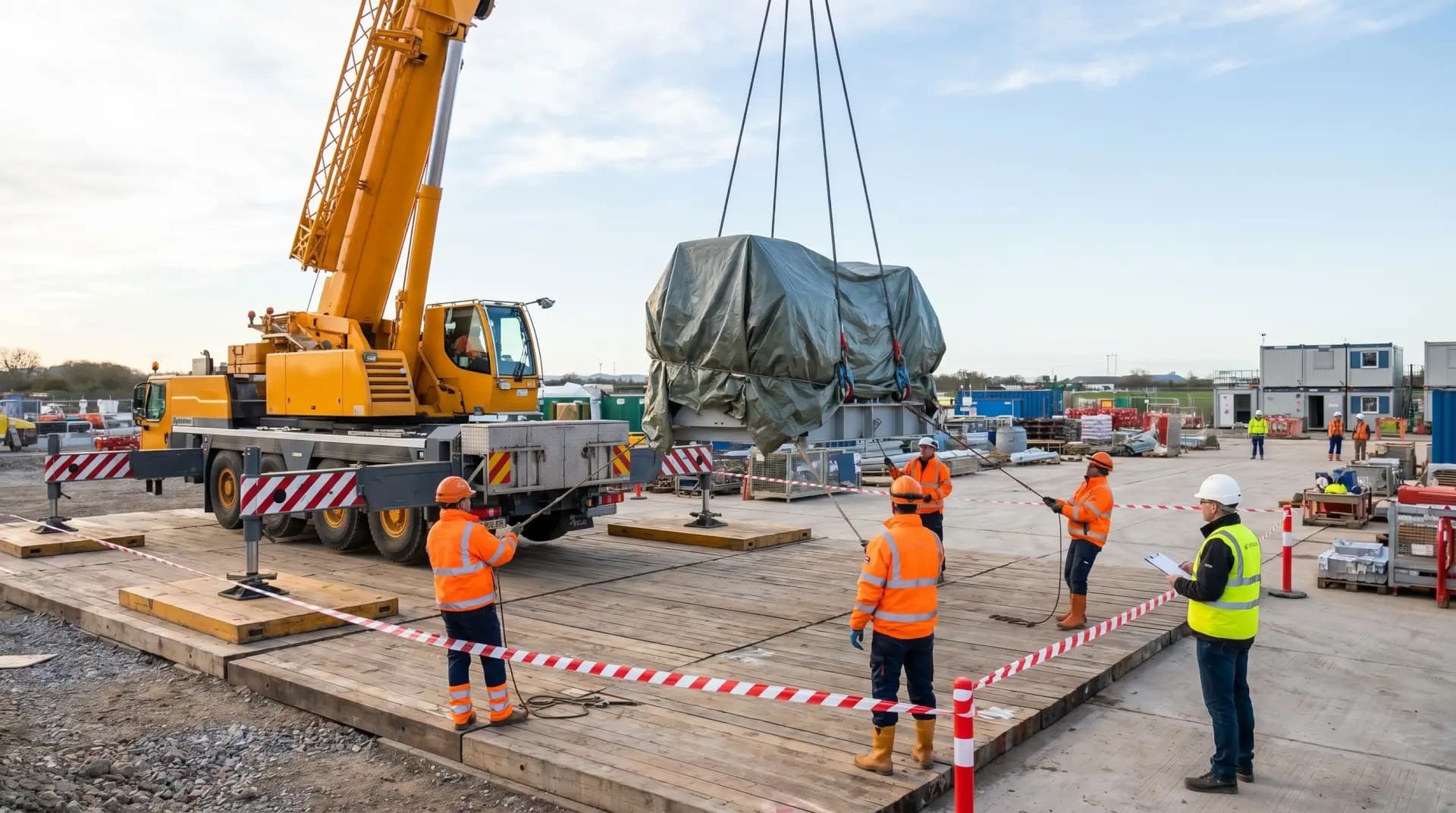
During one contractor audit on a large construction package, I found a lifting risk assessment rated as “low” because the template assumed open access and clear weather. In reality, the lift path crossed live traffic routes, the ground bearing was marginal after rain, and the banksman had no radio. The document was technically complete and operationally useless.

That is why risk assessment quality must always be tested against field conditions. If the paper says one thing and the workface shows another, trust the workface and stop the job.

Practical Control Measures That Make Risk Assessment Effective

A risk assessment only has value when it changes the controls. I do not judge an assessment by how well it describes risk. I judge it by whether it improves isolation, supervision, engineering barriers, exposure control, emergency readiness, or work sequencing.

The following measures consistently improve both qualitative and quantitative risk assessment programs.

  • Match the method to the hazard: Use simple tools for simple tasks and deeper analysis for major hazards.
  • Verify controls in the field: Check barriers physically instead of accepting them as assumed safeguards.
  • Use competent teams: Include supervisors, operators, maintainers, and specialists who know the work.
  • Define likelihood clearly: Standardize scoring criteria so departments assess risk consistently.
  • Capture degraded conditions: Temporary overrides, failed detectors, bypasses, and impaired access must be visible.
  • Link assessment to permits and planning: The controls must show up in the work pack, manpower plan, and schedule.
  • Review after incidents and near misses: Update assumptions using real failure information.
  • Train people on limitations: Teach teams what the method cannot tell them, not just how to fill the form.

Controls by hierarchy, not by habit

One recurring weakness is over-reliance on administrative controls. Teams write “toolbox talk,” “PPE,” and “be careful” while ignoring stronger barriers that remove or reduce the hazard earlier.

When I challenge a weak assessment, I usually ask the team to rebuild controls using the hierarchy of controls.

  1. Eliminate: Remove the hazardous task, substance, or energy source entirely if possible.
  2. Substitute: Replace the method, chemical, or equipment with a lower-risk option.
  3. Engineer: Add guards, ventilation, interlocks, containment, automation, or separation.
  4. Administer: Use procedures, permits, supervision, scheduling, and competency controls.
  5. Protect personally: Apply PPE only after stronger controls are considered and implemented.

Whether the assessment is qualitative or quantitative, weak controls remain weak controls. The method does not rescue poor barrier selection.

Regulatory and Standard Expectations for Risk Assessment

Most recognized HSE frameworks do not force one universal method for every risk. They require a suitable and sufficient assessment, proportionate to the hazard and based on credible information.

That wording matters. It means the organization must justify its approach, especially where high-consequence hazards exist.

  • OSHA framework: Requires hazard assessment and control across general industry and construction activities, with stronger expectations where specific standards apply.
  • HSE UK approach: Emphasizes suitable and sufficient risk assessment and major hazard control through systematic demonstration.
  • ISO 45001: Requires hazard identification and assessment of OH&S risks under actual work conditions, including routine and non-routine tasks.
  • IFC/World Bank EHS Guidelines: Expect risk evaluation methods proportionate to project scale, hazard profile, and community impact.
  • Process safety frameworks: Often require quantitative support where low-frequency, high-consequence scenarios drive the risk picture.

Where standards differ in detail, I apply the stricter practical expectation. If a hazard can escalate beyond the immediate work area, the assessment should move beyond a basic matrix unless a competent review shows that simpler treatment is genuinely sufficient.

The test is not whether the form was completed. The test is whether the assessment was suitable and sufficient for the hazard in front of the organization.

How I Explain Qualitative vs Quantitative Risk Assessment to Supervisors

Supervisors do not need academic language. They need a decision rule they can use before work starts. When I train frontline leaders, I explain the difference in plain operational terms.

I tell them qualitative assessment helps answer, “Can we do this job safely today under these conditions?” Quantitative assessment helps answer, “How dangerous is this system, exposure, or scenario in measurable terms, and what barriers do we need by design?”

  • If the work is immediate: Start with a qualitative task review and verify the controls on the ground.
  • If the hazard is invisible or cumulative: Bring in measurement, sampling, or modelling.
  • If one failure can escalate badly: Do not rely only on a matrix and discussion.
  • If assumptions drive the result: Challenge them before authorizing the work.
  • If the controls are not practical: The assessment is not finished, no matter how polished it looks.

That approach usually changes the conversation. Teams stop asking which form to use and start asking what level of understanding the job actually requires.

Final Field Lessons on Qualitative vs Quantitative Risk Assessment

Qualitative vs quantitative risk assessment is not a debate about paperwork style. It is a decision about how much understanding the hazard demands. For routine work, a good qualitative assessment can prevent injuries, stop bad permits, and catch changing site conditions before they hurt someone. For complex and high-consequence hazards, quantitative risk assessment provides the depth needed to justify design choices, barrier performance, and tolerable risk decisions.

The failure I see most often is not choosing qualitative over quantitative, or quantitative over qualitative. It is choosing the easiest method instead of the appropriate one. Once that happens, the organization starts managing forms, not risk. People then walk into jobs with controls that looked adequate in a meeting and collapse under real conditions.

Use the method that matches the hazard, test every assumption against the field, and never let a neat risk score replace hard evidence. In risk assessment, the number that matters most is still the headcount going home alive.

Responses (0)

    More from author

    Badar Javed

    How to Communicate With Lone Workers

    Effective communication with lone workers is not just about checking in. It is about building a reliable contact system, clear escalation rules, and practical site controls that still work when a worker is tired, distracted, out of signal, or facing an emergency alone.

    19 min read11 views
    Badar Javed

    Emergency Assembly Points Selection and Management

    Emergency assembly points only work when they are selected from a real hazard picture, clearly marked, accessible, and actively managed. I have seen evacuations fail because the muster area looked acceptable on paper but was unsafe once smoke, wind, traffic, or secondary hazards developed.

    18 min read30 views
    Badar Javed

    Contractor Safety Orientation and Induction Guide

    A field-based contractor safety orientation and induction guide for supervisors, HSE teams, and project managers. It covers what induction must include, where sites fail, and how to turn a briefing into a real control against incidents, permit breaches, and contractor non-compliance.

    19 min read3 views
    Badar Javed

    How to Segregate Waste in the Workplace

    Waste segregation in the workplace fails when bins, labels, training, and supervision do not match the actual waste stream. This guide explains how to separate waste correctly, prevent contamination, and build a practical system that crews will follow on site.

    18 min read5 views
    Badar Javed

    Mental Health First Aid in the Workplace

    Mental Health First Aid in the workplace gives supervisors, HSE teams, and colleagues a practical way to recognize distress, respond early, and guide a worker to proper support. When it is done properly, it reduces harm, strengthens reporting, and prevents avoidable escalation after stress, trauma, fatigue, bullying, or crisis.

    20 min read2 views