

Process safety key performance indicators are the measures that show whether major accident risks are being controlled before a loss of containment, fire, explosion, toxic release, or uncontrolled energy event occurs. A good process safety KPI system does not simply count incidents after damage is done. It checks whether critical safeguards are healthy, whether operating discipline is stable, and whether weak signals are being acted on early enough.
I treat process safety KPIs as an assurance tool, not as a reporting exercise. They should help leaders answer three practical questions:
Are our major hazards clearly understood?
Are our critical controls working as intended?
Are we seeing early signs of deterioration before a serious event?
When process safety indicators are designed well, they connect boardroom visibility with field-level reality. When they are designed poorly, they become a spreadsheet that looks green while the plant is quietly drifting toward risk.
What Process Safety KPIs Should Actually Measure
Process safety is different from personal safety. Slips, trips, cuts, and minor injuries matter, but they do not reliably show whether a pressure vessel, reactor, ammonia system, hydrocarbon unit, boiler, storage tank, or chemical process is safe from a major event.
Process safety KPIs should focus on the condition of systems that prevent, detect, control, and mitigate high-consequence events. That includes engineering barriers, procedural controls, human performance, maintenance integrity, management of change, emergency readiness, and operational discipline.
The strongest KPIs are linked to specific major accident hazards. For example, if the credible scenario is overpressure of a vessel, the indicators should look at pressure relief devices, alarm response, interlocks, operating limits, inspection status, bypass control, and overdue corrective actions. A generic safety metric will not give that level of assurance.
In my professional view, a process safety KPI becomes useful only when it has four qualities:
It is connected to a defined process safety risk.
It measures a control that matters.
It has a clear owner and response action.
It triggers decisions, not just discussion.
A KPI without action criteria is only a number.
Leading and Lagging Process Safety Indicators
Most process safety KPI systems divide indicators into leading and lagging measures. Both are needed. One tells you what has already failed; the other tells you what may be weakening.
Lagging indicators
Lagging indicators measure events that have already happened. They are important because they show actual failures of containment, controls, or process safety systems.
Examples include:
Tier 1 process safety events
Tier 2 process safety events
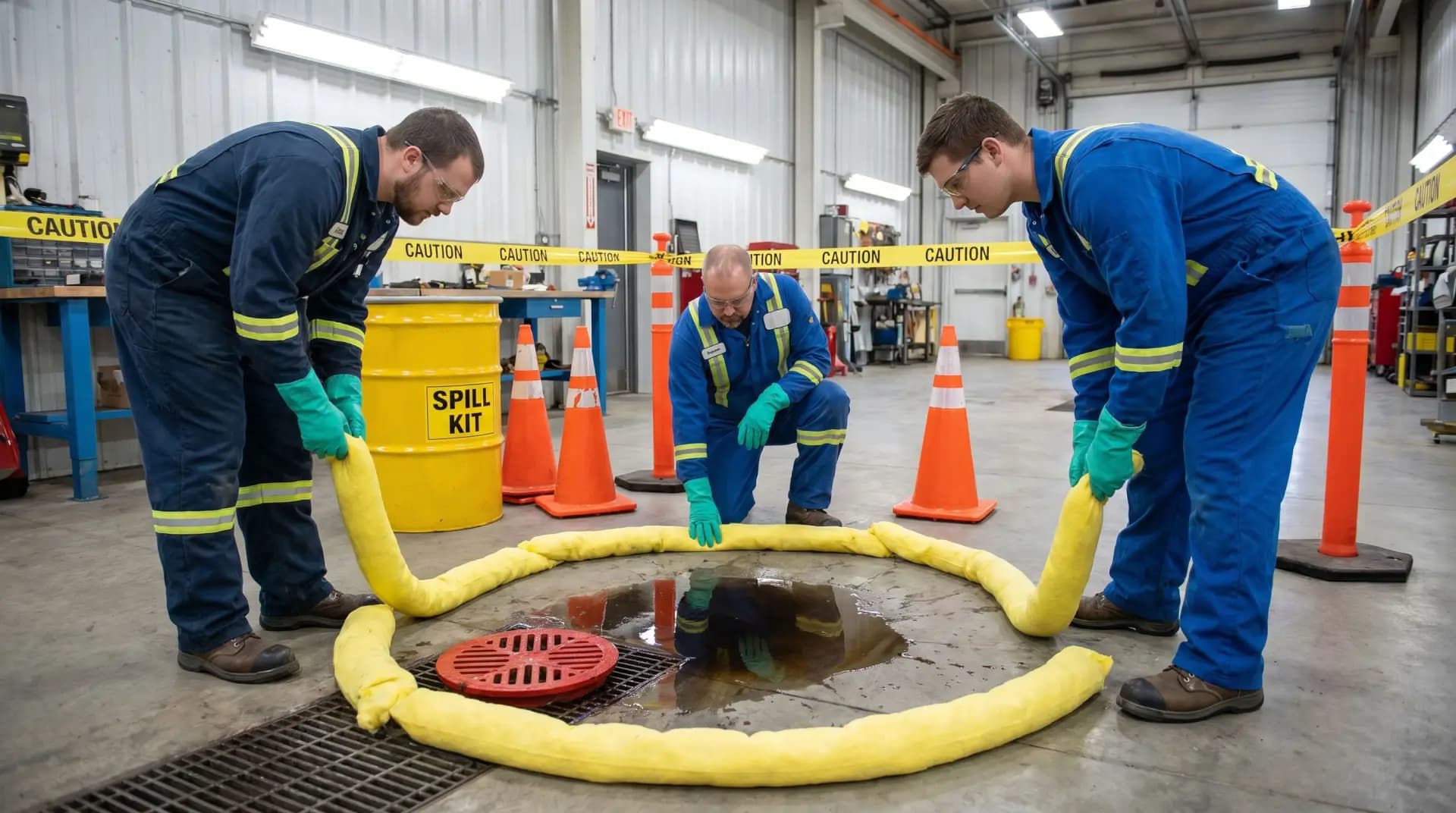
Loss of primary containment events
Fires, explosions, or toxic releases involving process materials
Activation of emergency response due to process conditions
Pressure relief device lifts caused by abnormal process conditions
Safety-critical equipment failures found during demand or testing
Process-related environmental releases
Lagging indicators should never be dismissed as “old news.” They show the quality of past control and the severity of actual failure. However, they are not enough on their own because major process safety events are relatively infrequent. A site can have no major incident for years and still carry serious hidden risk.
Leading indicators
Leading indicators measure the health of systems that prevent incidents. They are forward-looking and should give early warning before barriers fail.
Examples include:
Overdue safety-critical maintenance
Failed proof tests of safety instrumented functions
Temporary repairs beyond approved duration
Management of change actions overdue
Process hazard analysis recommendations overdue
Alarm rationalization gaps
Operating procedure reviews overdue
Safety-critical training not completed
Permit-to-work audit findings
Bypassed or inhibited safety systems
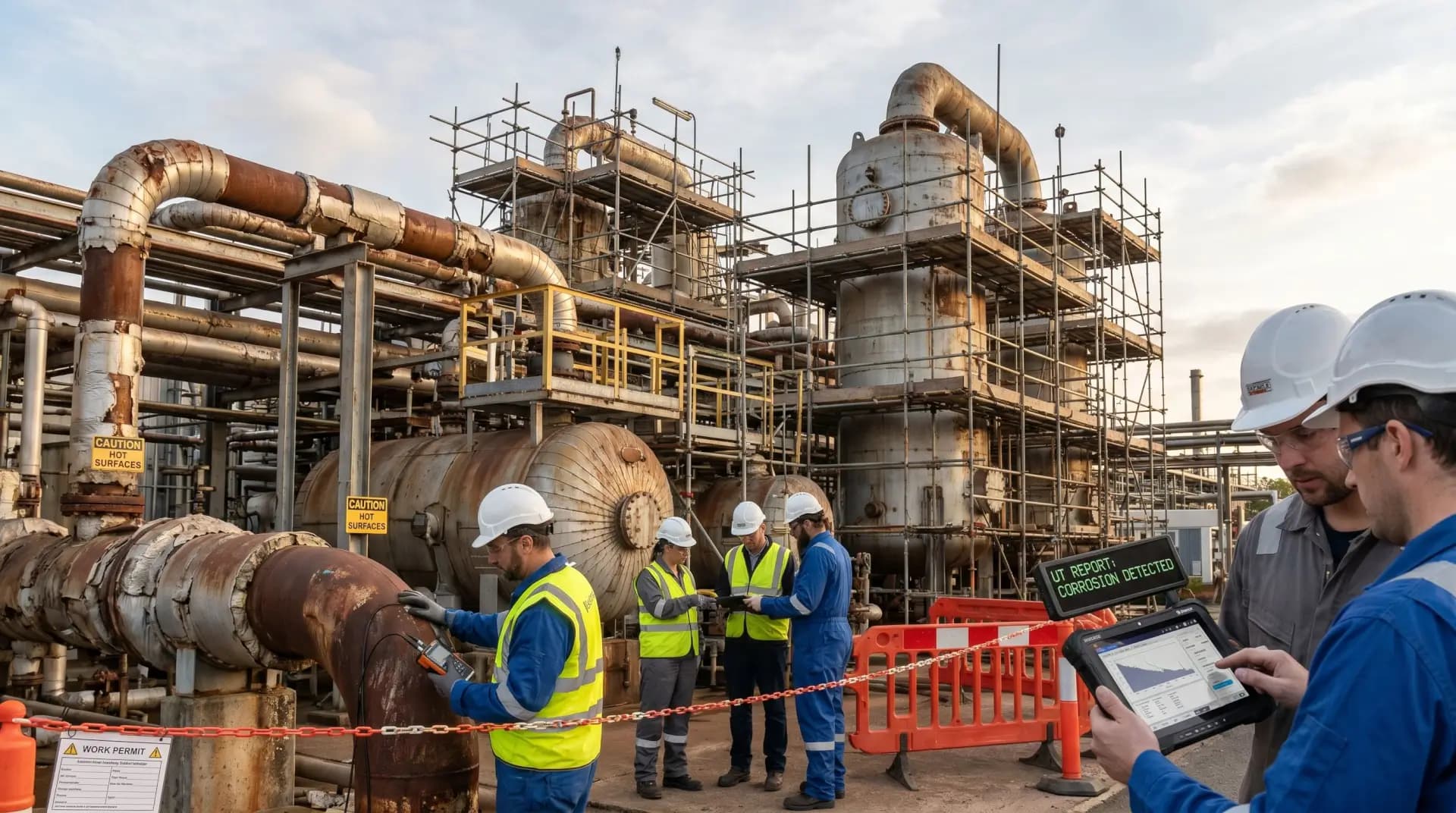
Inspection deferrals on pressure systems or containment equipment
The best leading indicators are not chosen because they are easy to count. They are chosen because they reveal whether a critical barrier is degrading.
Near-miss and barrier-challenge indicators
Between leading and lagging indicators, I place strong value on near-miss and barrier-challenge indicators. These include situations where a safeguard was challenged but the final consequence did not occur.
Examples include:
High-high level alarms during tank filling
Compressor trips due to abnormal process conditions
Unplanned shutdowns caused by process instability
Safety valve lift events
Chemical transfer errors caught before release
Unauthorized process parameter deviations
Repeated alarm flooding in critical operations
Emergency shutdown activation
These events are valuable because they show where the process came close to losing control. They deserve serious review, not casual closure.
Core Process Safety KPIs Every High-Hazard Facility Should Consider
There is no universal KPI list that fits every site. A refinery, fertilizer plant, offshore installation, pharmaceutical facility, cold storage ammonia system, and chemical warehouse will not have identical risk profiles. Still, several KPI families are commonly useful across high-hazard operations.
KPI Category | Example KPI | What It Reveals |
|---|---|---|
Loss of containment | Number of process leaks by severity | Condition of containment systems and operating control |
Mechanical integrity | Overdue inspection of safety-critical equipment | Weakness in asset integrity assurance |
Safety instrumented systems | Failed proof tests or overdue proof tests | Reliability of automatic protection layers |
Pressure relief systems | PSV overdue testing, failed tests, or lifts in service | Overpressure protection health |
Management of change | MOC actions overdue before startup or closeout | Quality of change control |
Process hazard analysis | PHA recommendations overdue by risk rank | Whether known risk-reduction actions are being completed |
Operating discipline | Critical procedure deviations found during audits | Gap between written controls and actual work |
Alarm management | Standing alarms, alarm floods, or critical alarm response failures | Operator overload or impaired abnormal situation management |
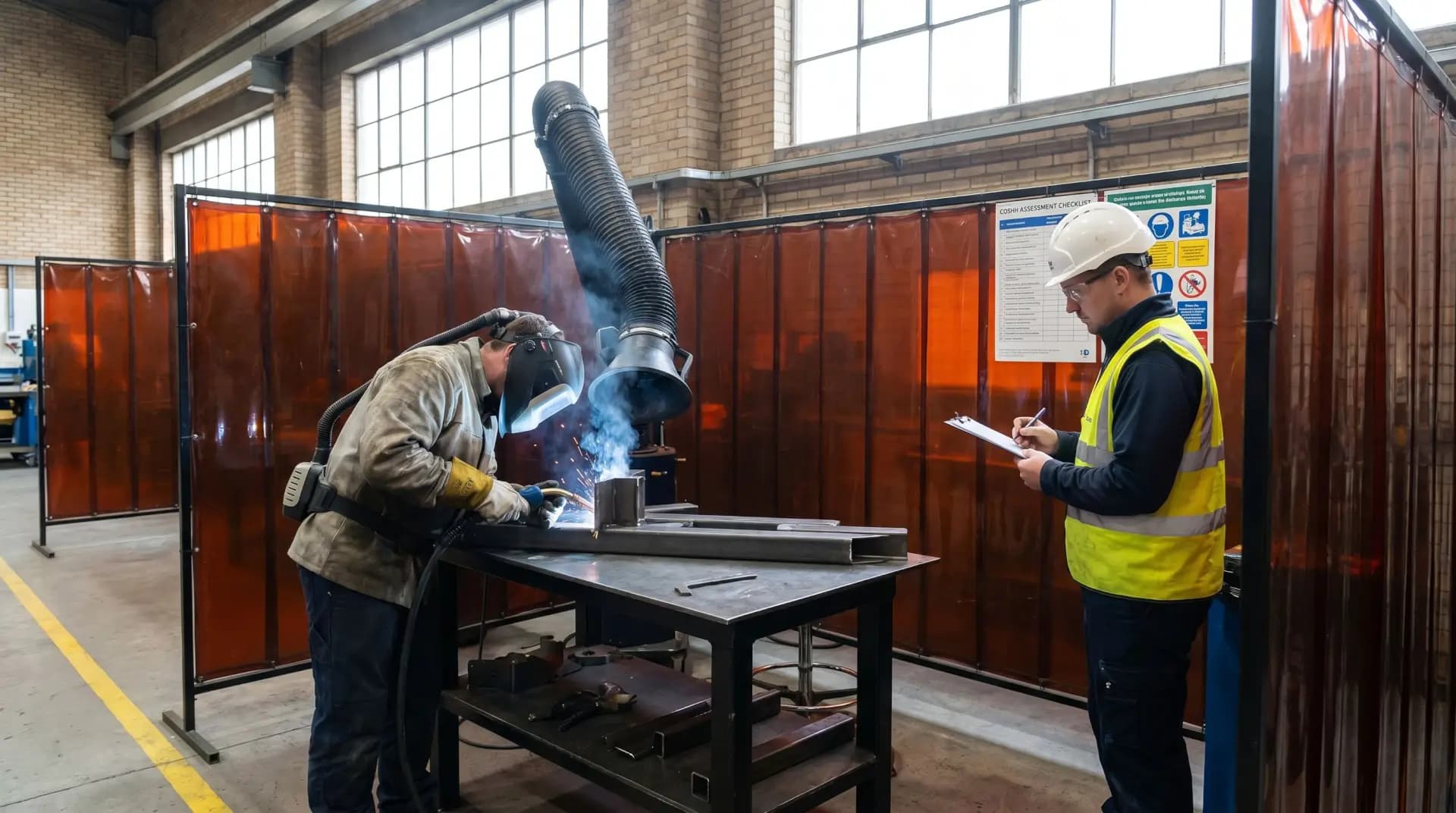
Permit to work | High-risk permit audit nonconformities | Control of ignition, isolation, confined space, and line-breaking risks |
Competence | Safety-critical role training overdue | Human reliability in critical tasks |
Emergency preparedness | Failed drills, equipment gaps, or overdue corrective actions | Readiness to limit consequences |
Contractor interface | Process safety permit violations by contractors | Third-party exposure to major hazard controls |
I prefer a small set of strong KPIs over a large set of weak ones. Too many indicators dilute attention. A practical process safety dashboard should show the few measures that tell leaders where risk is increasing.
How to Build a Process Safety KPI Framework
A reliable framework starts with the hazard, not the metric. Many organizations make the mistake of choosing KPIs from a template and then trying to make them fit the facility. That approach creates measurement activity without risk focus.
A better method is to build the KPI framework in six steps.
1. Identify major accident scenarios
Start with the credible high-consequence events from process hazard analysis, hazard studies, layers of protection analysis, bowtie assessments, or equivalent risk reviews.
Examples include:
Toxic gas release
Flammable vapor cloud explosion
Tank overfill
Reactor runaway
Boiler explosion
Overpressure of piping or vessels
Loss of containment during chemical transfer
Ammonia release from refrigeration systems
Dust explosion in combustible powder handling
The KPI system should reflect the site’s actual major hazards.
2. Identify critical barriers
For each major scenario, identify the barriers that prevent, detect, control, or mitigate the event. These may include engineered systems, procedures, alarms, interlocks, inspections, permits, competence controls, and emergency arrangements.
A barrier is not critical because it appears in a document. It is critical because failure of that barrier can materially increase the likelihood or consequence of a major event.
3. Define performance expectations
Each barrier needs a performance expectation. For example:
Relief valves must be inspected and tested within approved intervals.
Safety instrumented functions must meet proof-test requirements.
Critical alarms must be available, rationalized, and understood.
Operators must be trained on abnormal and emergency procedures.
Temporary changes must have risk review and time-bound approval.
Safety-critical corrective actions must be closed within risk-based deadlines.
Without a defined expectation, KPI interpretation becomes subjective.
4. Select leading and lagging indicators
For each critical barrier, select at least one indicator that shows whether the barrier is healthy and one that shows whether it has failed or been challenged.
For example, for a pressure relief barrier:
Leading KPI: percentage of PSVs tested within due date
Leading KPI: number of overdue corrective actions from PSV inspection
Lagging or challenge KPI: number of PSV lifts due to abnormal process conditions
Lagging KPI: number of PSV failures during test
This pairing is important. A leading KPI tells whether the system is being maintained. A lagging or challenge KPI tells whether the system is being stressed or failing.
5. Set thresholds and escalation rules
Every KPI needs defined limits. A red, amber, green dashboard is only useful when the thresholds are risk-based and action-oriented.
For example:
Green: no overdue safety-critical inspections
Amber: overdue item approved by formal risk review with compensating measures
Red: overdue item without approved risk assessment or beyond maximum deferral period
The escalation rule should state who acts, what action is required, and when the issue must be resolved.
6. Review trends and learn
Single-month performance can mislead. Process safety KPIs should be trended over time and reviewed for repeated weaknesses.
One overdue inspection may be a planning issue. Repeated overdue inspections across safety-critical equipment may indicate a deeper resource, maintenance, or leadership problem.
The purpose of trending is not to defend performance. It is to detect drift.
Regulatory and Standard Expectations
Process safety KPI requirements vary by jurisdiction and industry, but the expectation to monitor major hazard controls is widely established.
In the United States, OSHA’s Process Safety Management standard, 29 CFR 1910.119, applies to covered highly hazardous chemical processes and includes elements such as process safety information, process hazard analysis, operating procedures, training, mechanical integrity, management of change, incident investigation, emergency planning, and compliance audits. KPIs should support these elements where the standard applies.
In the United Kingdom, major hazard operators under the Control of Major Accident Hazards framework are expected to manage major accident risks through systematic arrangements, including performance monitoring of critical controls. UK HSE guidance on process safety indicators emphasizes structured measurement of leading and lagging indicators linked to major hazard risk.
In the European Union, Seveso-related major accident hazard requirements focus on prevention, safety management systems, emergency planning, and control of major accident risks. KPI systems should support these duties where applicable.
Internationally, organizations often align process safety metrics with guidance from CCPS, API RP 754, IOGP, OECD, and ISO-based management system principles. API RP 754 is especially influential in refining, petrochemical, and related process industries because it organizes process safety events and indicators into a tiered structure. CCPS guidance similarly supports the use of leading, lagging, and near-miss indicators to drive improvement.
A KPI dashboard does not replace legal compliance. It should help verify that legal and internal process safety controls are working.
Professional caution: Process safety KPIs must be validated against the facility’s actual hazards, applicable laws, license conditions, engineering standards, and risk assessments. They should not be copied blindly from another site or industry.
Common Mistakes in Process Safety KPI Programs
The most common mistake I see is measuring what is convenient instead of what is critical. A facility may track total training hours, total audits, or total maintenance tasks completed, but still miss the condition of safety-critical barriers.
Another mistake is mixing occupational safety performance with process safety performance. A low injury rate does not prove that major accident controls are strong. A site can perform well on personal safety while still carrying serious process safety weaknesses.
Other common problems include:
Too many KPIs with no clear priority
Indicators not linked to major accident scenarios
No distinction between safety-critical and non-critical equipment
Overdue actions reported by quantity but not by risk severity
Green dashboards created through weak thresholds
Poor investigation of near misses and barrier challenges
KPI ownership assigned to HSE only, instead of operations, maintenance, engineering, and leadership
No verification that reported data is accurate
Corrective actions closed administratively without field confirmation
Repeated deferrals accepted as normal business practice
One misconception needs correction: a process safety KPI is not good just because it is leading. A weak leading indicator can create false confidence. For example, “number of safety meetings held” is less useful than “percentage of operators assessed competent in emergency depressurization procedure” if emergency depressurization is a critical barrier.
The question is not whether the KPI is easy to report. The question is whether it reveals risk.
Making Process Safety KPIs Useful for Decision-Making
A process safety KPI program should influence decisions at different levels of the organization.
At the frontline level, KPIs should help supervisors identify immediate weaknesses such as bypassed alarms, overdue inspections, or permit quality issues.
At the department level, they should help operations, maintenance, engineering, and HSE identify recurring system problems.
At the senior leadership level, they should show whether major hazard controls are stable, deteriorating, or improving.
For this to work, each KPI should have:
A clear definition
A data source
An accountable owner
A reporting frequency
A performance threshold
A required action when limits are exceeded
A method for verification
A review forum with authority to allocate resources
I also recommend separating process safety KPIs into three dashboard layers.
Executive dashboard
This should contain a small number of high-level indicators, such as Tier 1 and Tier 2 process safety events, high-risk overdue actions, safety-critical maintenance backlog, major barrier impairments, and repeated critical control failures.
Site or asset dashboard
This should show operational detail, including unit-level loss of containment, alarm performance, permit findings, MOC status, overdue PHA actions, inspection compliance, and emergency drill gaps.
Barrier-level dashboard
This should focus on specific critical controls, such as relief systems, shutdown systems, containment integrity, ignition control, gas detection, emergency isolation, and operator response.
Good governance turns KPI data into risk decisions. If a red KPI does not trigger management attention, resource review, and corrective action, the dashboard is not managing process safety.
Conclusion
Process safety key performance indicators are most effective when they measure the health of critical controls against real major accident hazards. The goal is not to produce a perfect dashboard. The goal is to detect deterioration early, correct weak barriers, learn from near misses, and prevent high-consequence events.
A balanced KPI system includes lagging indicators for actual failures, leading indicators for control health, and near-miss indicators for barrier challenges. It is risk-based, owned by line management, verified through field reality, and reviewed with enough seriousness to drive action.
My practical test is simple: if the KPI turns red, does the organization know what risk has increased and what decision must be made? If the answer is yes, the indicator has value. If the answer is no, it is only decoration.

Responses