

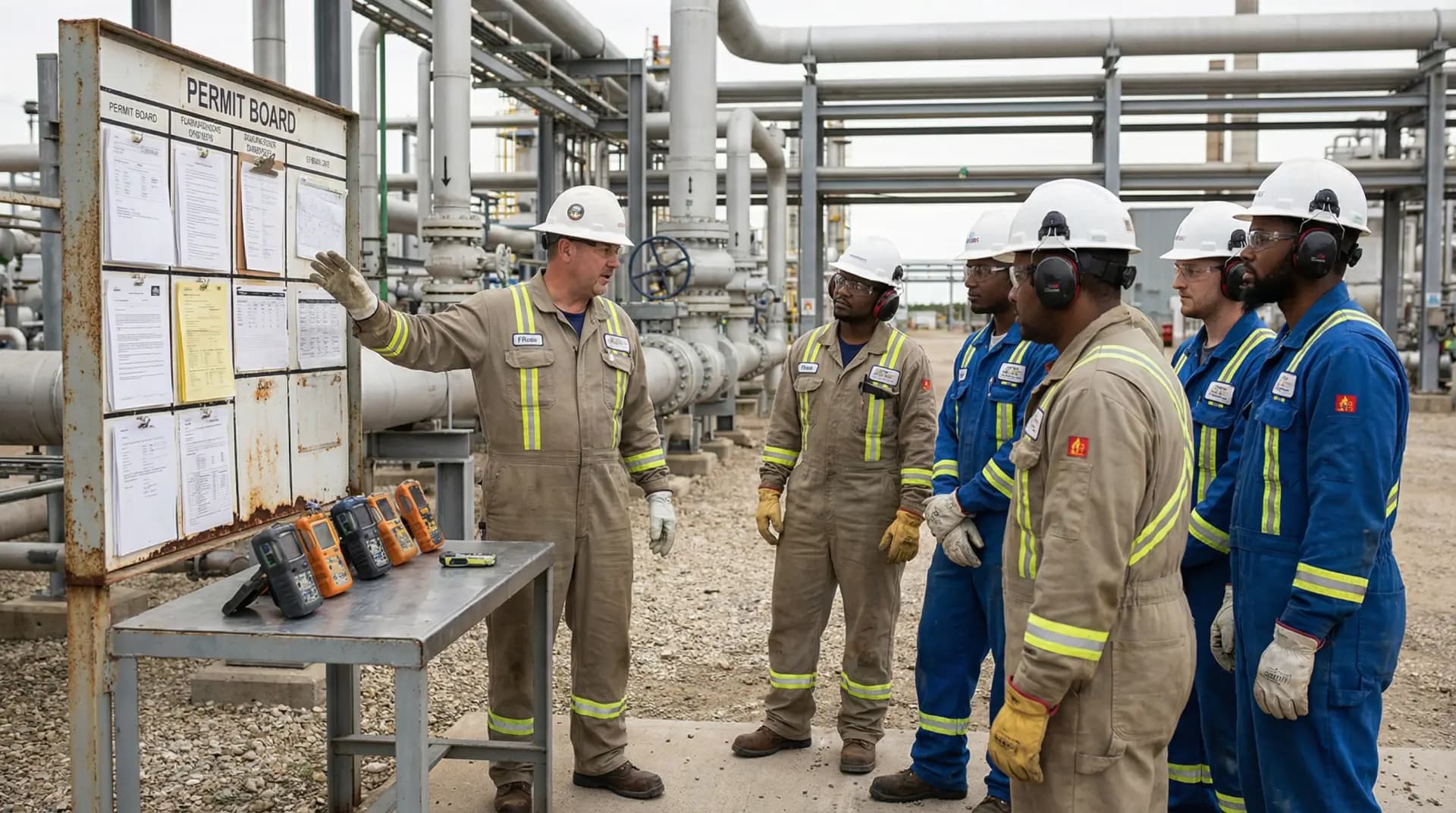
Oil and gas safety training requirements are never just one course or one certificate. In practice, they sit in layers: site induction, hazard-specific legal training, task and equipment competency, and emergency response preparation. The exact minimum depends on where the work is done, what hazards are present, whether the activity falls under construction or general industry rules, and whether the worker is onshore, offshore, or in a well-control role. In the United States, OSHA addresses oil and gas training through multiple hazard-based standards rather than a single oil-and-gas-only training rule, while offshore work often adds operator, client, and industry scheme requirements on top of legal duties.
When I build or audit a training matrix, I start with a simple question: what must this person know and demonstrate before I can safely let them do the job? That is the right lens. HSE defines competence as the combination of training, skills, experience, and knowledge applied safely, and OSHA standards repeatedly follow the same logic by requiring training before exposure to specific hazards such as chemicals, PPE use, respirators, confined spaces, and hazardous energy.
Compliance note: exact minimum training always depends on jurisdiction, facility type, contractor status, operator rules, and the hazards identified in the risk assessment. Treat any generic checklist as a framework, then validate it against applicable law and the site training matrix before mobilization.
What counts as required training in oil and gas
I separate oil and gas safety training into five practical layers:
Training layer | What it covers | When it becomes required |
|---|---|---|
Site induction | site rules, emergency arrangements, reporting lines, restricted areas, permit systems | before first entry to the site or asset |
Hazard-specific legal training | chemicals, PPE, respirators, confined spaces, energy isolation, emergency procedures | whenever the hazard exists and the standard applies |
Task and equipment competency | driving, lifting, rigging, pressure testing, maintenance, well servicing, production operations | before independent work on that task |
Emergency response training | alarms, evacuation, muster, firefighting awareness, rescue roles, H2S escape, offshore emergency response | before exposure to credible emergency scenarios |
Client and operator requirements | contractor onboarding, local procedures, offshore travel training, asset-specific control-of-work expectations | before mobilization to that operator or asset |
This is a practical synthesis of OSHA’s hazard-based approach, HSE’s competence model, and offshore industry training structures. It is the clearest way I know to stop training from becoming a box-ticking exercise.
The most important point is that “required” does not only mean legally named in a regulation. In oil and gas, required training can come from four places at once: law, risk assessment, employer procedures, and operator or client access rules. A worker may be legally allowed to perform a job only after one set of training, but still be barred from a site until additional asset-specific or operator-specific training is complete.
Core training topics most operations need
Across drilling, servicing, production, terminals, and storage, most training matrices should at least test for these categories:
Chemical hazard communication
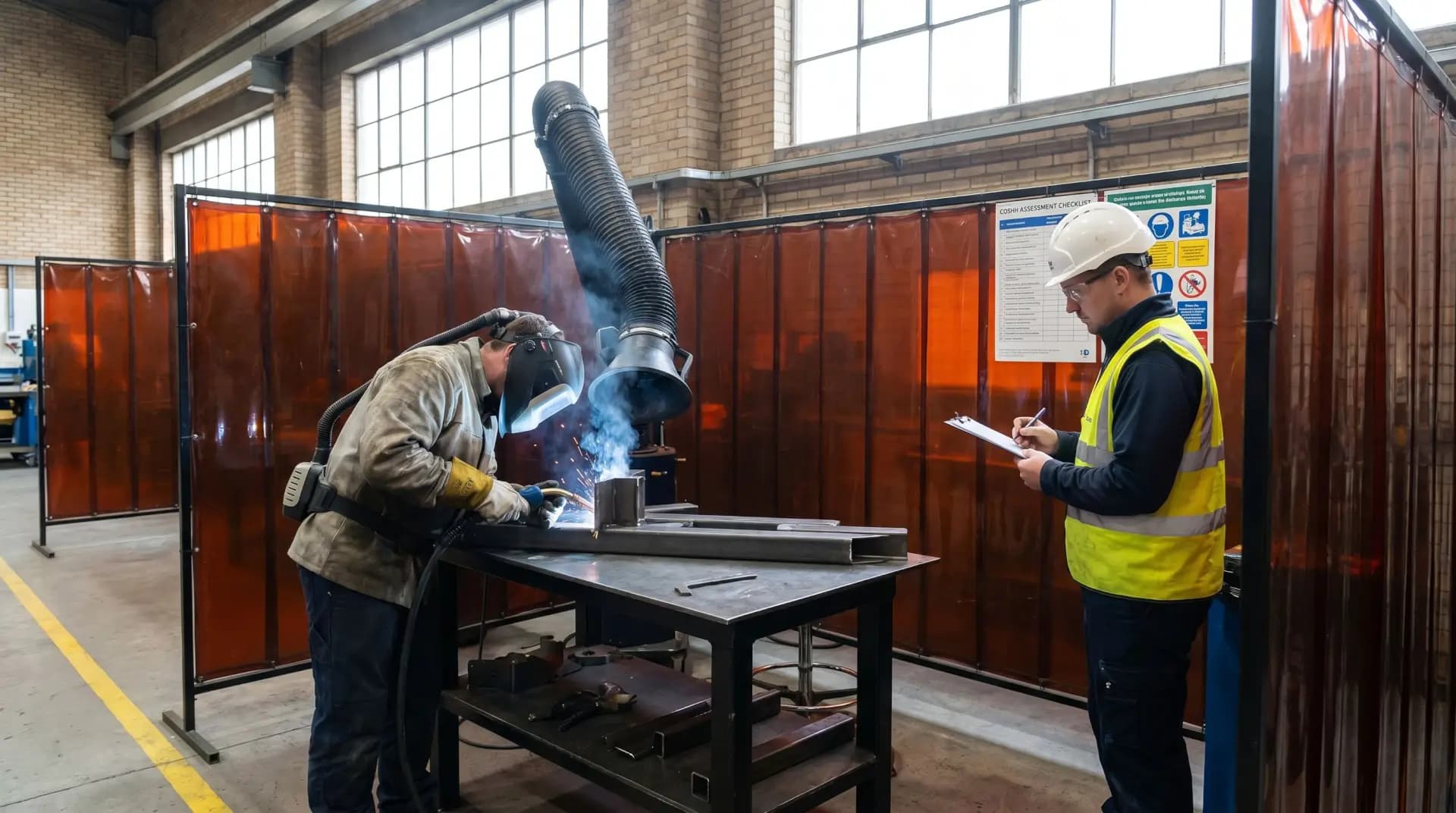
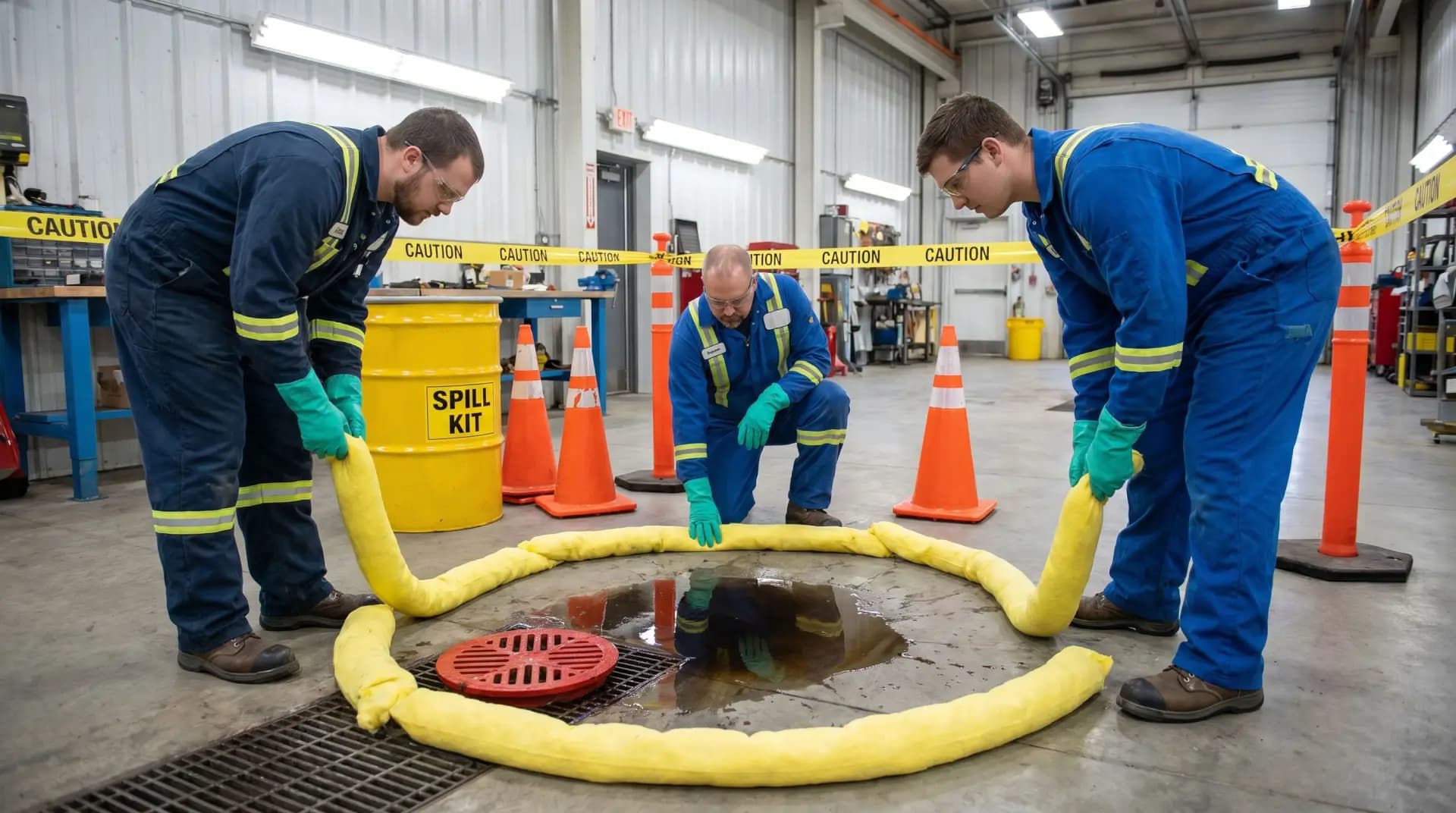
Where hazardous chemicals are present, workers need training on how hazards are identified, how releases may be detected, what protective measures apply, and how to use labels and safety data sheets. For oil and gas, that usually affects fuels, treatment chemicals, solvents, corrosion inhibitors, gases, and process-related substances.
PPE and respiratory protection
If the hazard assessment shows PPE is necessary, workers must be trained on when PPE is needed, what type is required, how to wear it properly, its limitations, and how to maintain and dispose of it. Where respirators are required, the employer must run a written respiratory protection program and provide understandable training before use, with annual retraining and additional retraining when conditions change.
Lockout/tagout and isolation
Maintenance and intervention work in oil and gas frequently involves stored energy, rotating equipment, electrical systems, hydraulic pressure, and line isolation. OSHA requires training so employees understand the purpose and function of the energy control program, with different expectations for authorized, affected, and other employees, and retraining when assignments, equipment, processes, or procedures change.
Confined space entry
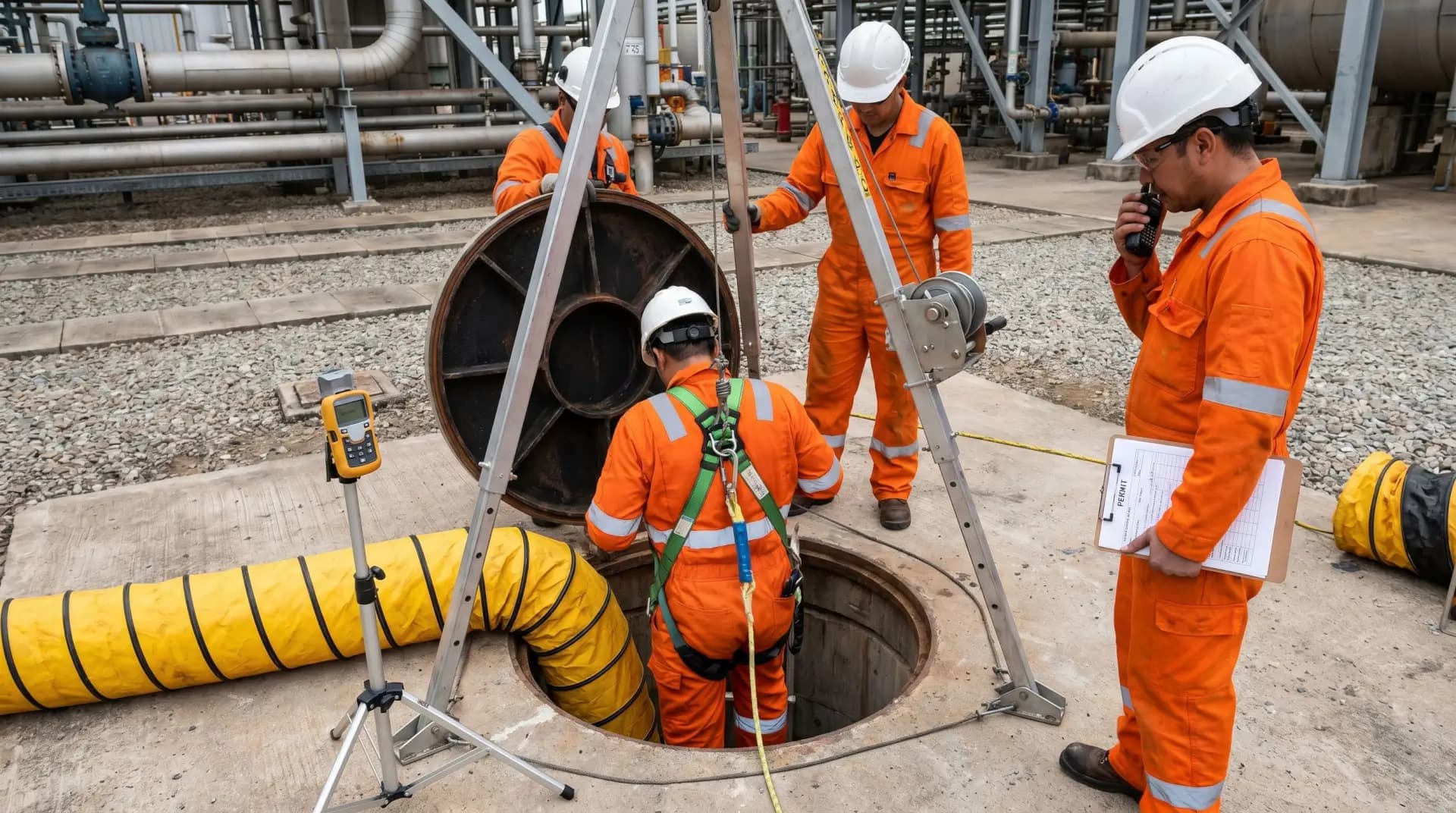
Tanks, vessels, pits, cellars, and similar spaces can turn routine work into high-risk work. Confined space training must be role-specific because entrants, attendants, supervisors, and rescuers do not carry the same duties. Host employers and contractors also have to coordinate when both are involved in or near permit space work.
H2S and atmospheric hazard response
Where sour gas or process conditions could generate hydrogen sulfide, I treat H2S awareness and emergency response as non-negotiable. OSHA identifies hydrogen sulfide as a serious inhalation hazard and its oil and gas eTool specifically calls for training before work assignments in H2S-risk areas. In offshore industry schemes, dedicated H2S training commonly covers detection, respiratory protection equipment, and escape actions.
Emergency preparedness and control of work
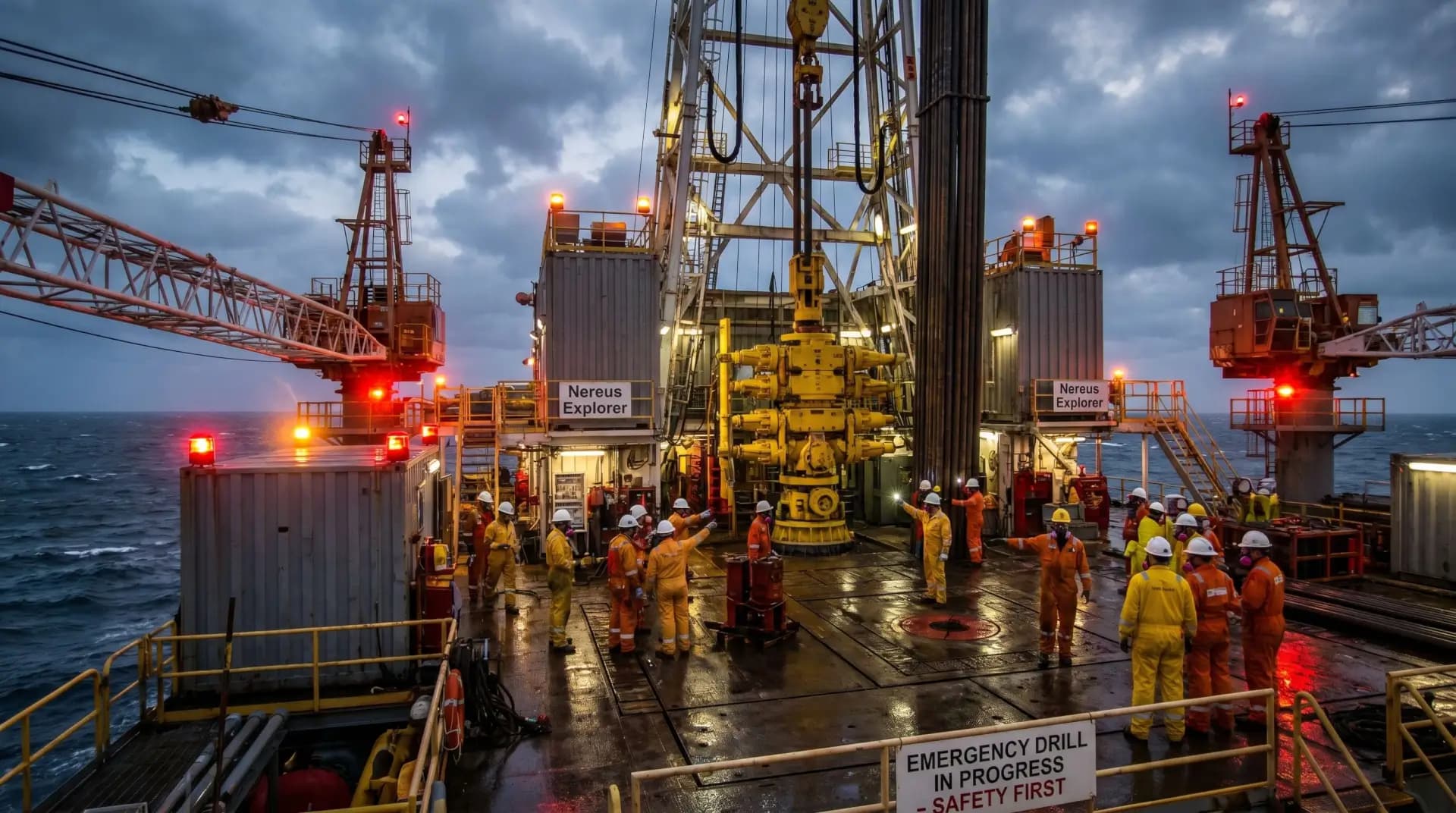
Even when a regulation does not prescribe a named course title, workers still need to know alarms, evacuation routes, muster points, stop-work expectations, permit-to-work rules, and how job safety analysis connects to the task in front of them. OSHA’s oil and gas eTool explicitly frames drilling and servicing safety around safety meetings, JSAs, and general plus task-specific training.
How requirements change by role and work environment
The mistake I see most often is using one training list for everyone. Oil and gas does not work that way. A roustabout, instrument technician, mud engineer, production operator, tanker loading technician, and offshore catering worker do not face the same risk profile, so they should not sit under the same competence assumptions.
A practical role-based view looks like this:
Site preparation and civil work: training often sits under construction rules in the U.S., not the same framework used later for production or storage operations. That affects how fall protection, excavation, equipment operation, and contractor supervision are managed.
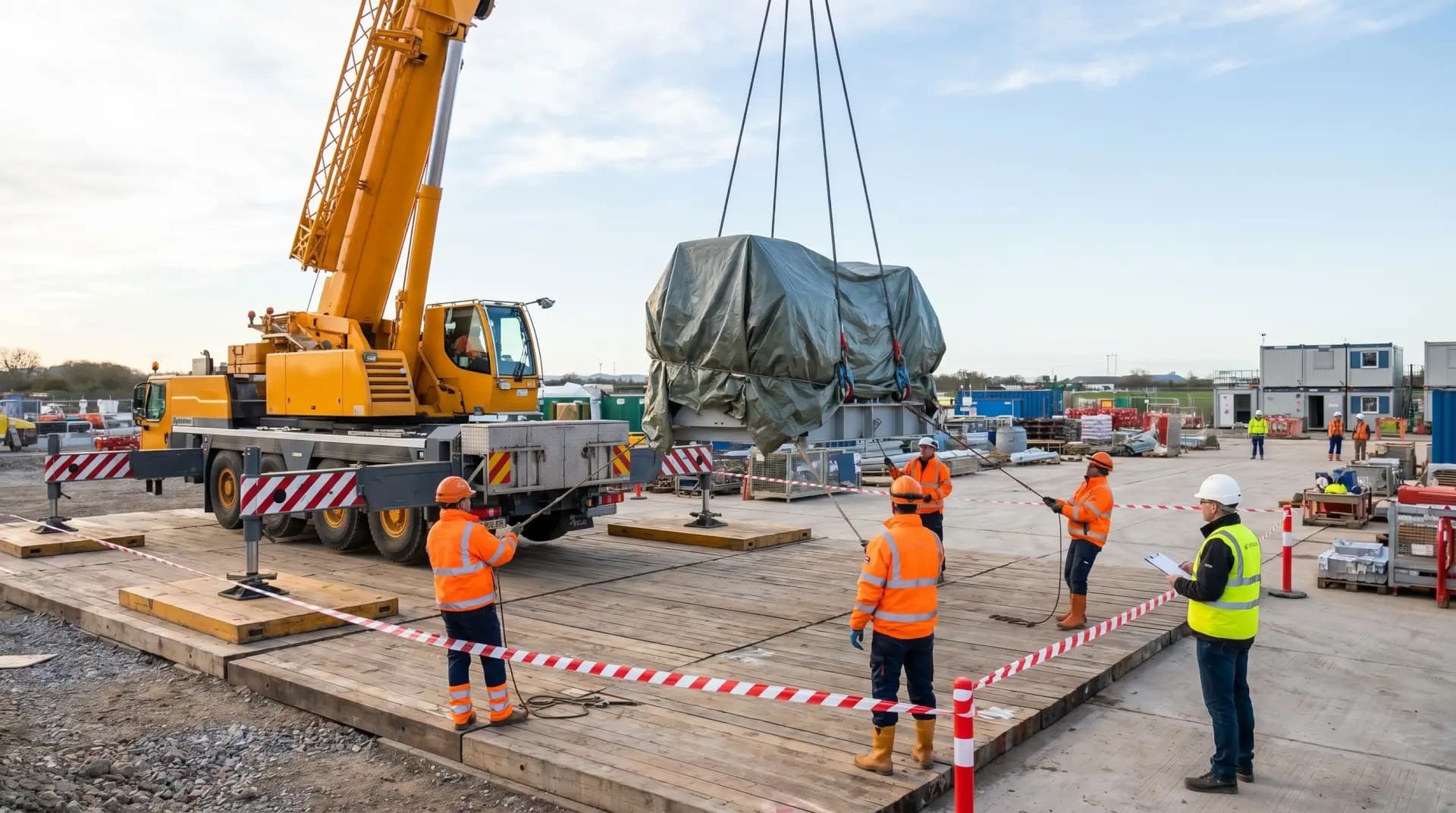
Drilling and well servicing crews: beyond induction, they typically need strong coverage for JSAs, line-of-fire hazards, dropped objects, rig-up and rig-down controls, H2S where relevant, pressure hazards, lifting operations, and well control awareness appropriate to the role.
Production, terminals, and storage personnel: the matrix often leans more heavily on general industry topics such as hazard communication, respiratory protection, emergency action, process hazards, confined spaces, and lockout/tagout.
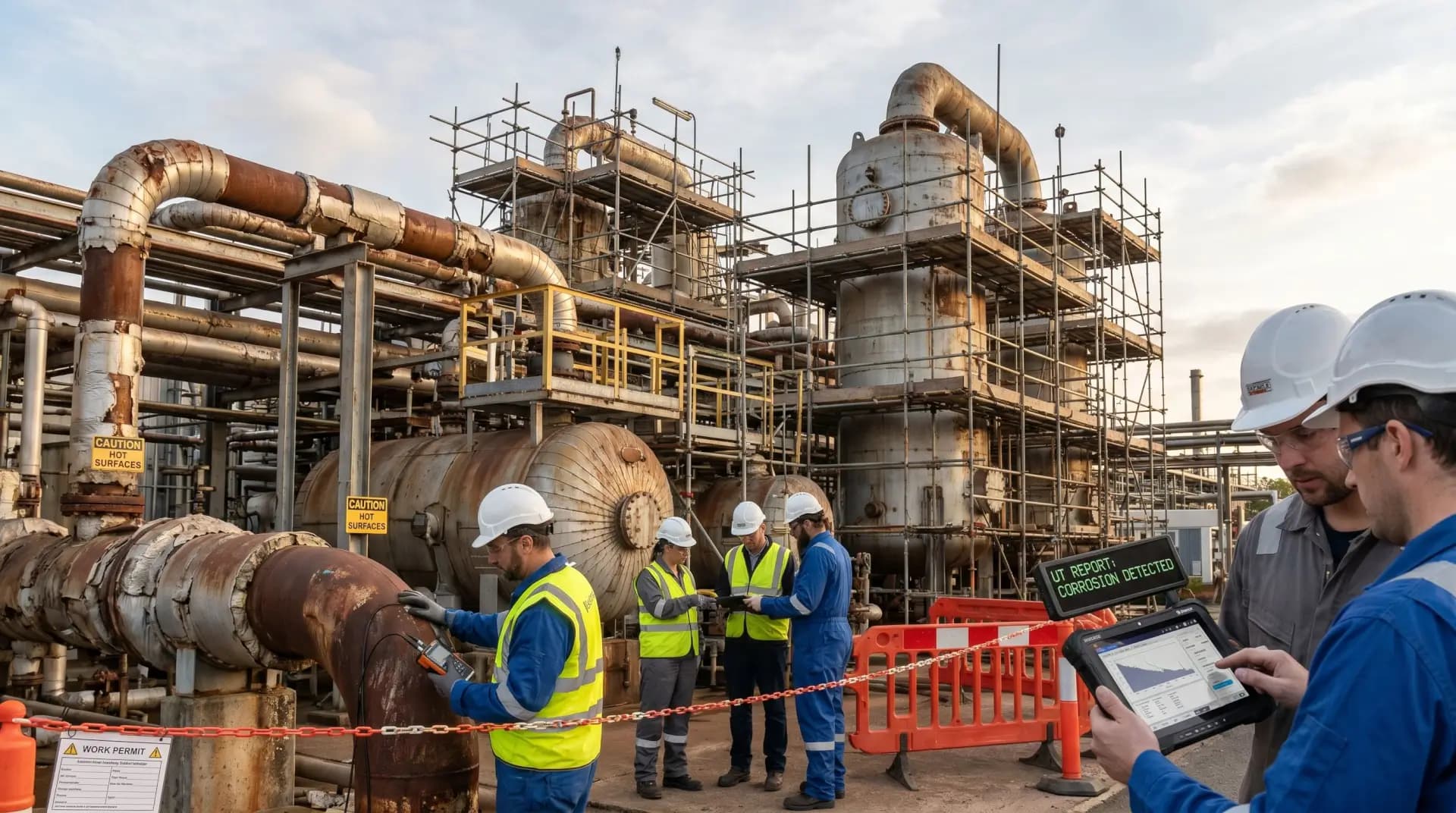
Maintenance and turnaround contractors: they usually need the widest cross-section of hazard-specific training because they move across tasks, systems, and isolations quickly. Confined space coordination, contractor control, and permit interface become especially important.
Supervisors and permit issuers: they need more than awareness. They must understand how to verify competence, authorize work, manage deviations, and stop unsafe work before it escalates.
For that reason, I recommend building the training matrix by role family first, then adding asset-specific and hazard-specific modules, not the other way around. That approach aligns much better with how regulators and competent operators think about competence.
Offshore requirements are usually more structured
Offshore oil and gas tends to be more formal because the emergency environment is harsher and the consequence of error is higher. In UK offshore well operations, HSE guidance states that duty holders must ensure those engaged in well operations are adequately informed, supervised, and trained for the job they are doing. HSE also treats competence as more than course attendance; it includes skills, knowledge, experience, and the ability to apply them safely.
That is why offshore training commonly uses a layered scheme model. For example, OPITO’s MIST standard is designed to introduce new offshore workers to major accident hazards, workplace hazards, and associated controls. OPITO’s BOSIET standard is aimed at personnel new or returning to the offshore oil and gas industry who will travel offshore by helicopter and need initial safety and emergency response training.
I am careful here: MIST and BOSIET are not universal legal requirements for every country, every asset, or every role. They are, however, widely used industry standards in offshore environments and are often treated by operators and clients as entry conditions for access and mobilization. That distinction matters. Legal minimums and operator access requirements are related, but they are not the same thing.
For well operations, the same principle applies. IOGP’s well control guidance says well control training should be tailored to roles and responsibilities, and that its recommendations apply to onshore and offshore well control operations worldwide. IWCF likewise positions its accredited programmes as building the skills needed to manage well control safely. In plain terms, if a role can influence barrier integrity or response to an influx, role-based well control competence should be part of the requirement, not an optional extra.
Refresher training should be event-driven, not calendar-driven alone
One of the biggest weaknesses in oil and gas training systems is relying only on expiry dates. Some topics do have formal renewal cycles, but a strong system also retrains when the work changes, the equipment changes, the hazards change, or the worker’s performance shows that the original learning did not hold. OSHA makes this very clear in multiple standards. PPE requires retraining when workplace changes, PPE changes, or employee understanding is inadequate. Lockout/tagout requires retraining when assignments, equipment, processes, or procedures change. Respirator training must recur annually and more often when needed. Confined space training must be updated when duties or hazards change, or when deviations and knowledge gaps appear.
Where formal schemes apply, the calendar still matters. OPITO lists MIST validity at four years. For BOSIET with EBS, the maximum interval to the subsequent FOET with EBS is four years. OPITO’s Basic H2S Practical Training shows a two-year certificate validity. Those are useful anchors, but they should sit inside a wider competence assurance process, not replace it.
My rule is simple: renew by time where a standard says so, and retrain sooner where risk tells you so. That is the only defensible position after incidents, audits, or management of change.
Common mistakes that leave gaps in compliance and safety
These are the gaps I correct most often when reviewing oil and gas training requirements:
Treating site induction as complete compliance. Induction gets a worker onto the site, but it does not replace hazard-specific training, task competence, or authorization.
Using one matrix for all roles. Competence has to be proportionate to the job and place of work. What is reasonable for a visitor is not enough for a maintenance technician, and what is enough for a maintenance technician may still be too thin for a permit issuer or well-control role.
Confusing certificates with competence. A valid certificate proves attendance or assessment against a standard. It does not automatically prove that the person can perform a specific job safely on a specific asset under specific conditions.
Ignoring host-contractor interface risks. Confined spaces, isolations, SIMOPS, and contractor coordination create failure points if the training system only looks inward at direct employees.
Not linking refresher training to change. Expiry dates are useful, but management of change, incident learning, audit findings, and poor field performance should all trigger review and retraining.
Oil and gas safety training requirements are strongest when they are built like the operation itself: layered, role-based, hazard-specific, and verified in the field. If you want a reliable benchmark, do not ask whether everyone has “the training.” Ask whether each person has the right training, for the right hazards, at the right asset, with the right level of supervision and demonstrated competence. That is the standard I trust.
A compliant and effective oil and gas training system is never just a spreadsheet of course titles. It is a risk control. Build it from the hazards, separate legal minimums from operator access rules, assign training by role, and make refreshers responsive to change. Do that well, and training starts supporting operational integrity instead of merely decorating it.

Responses