

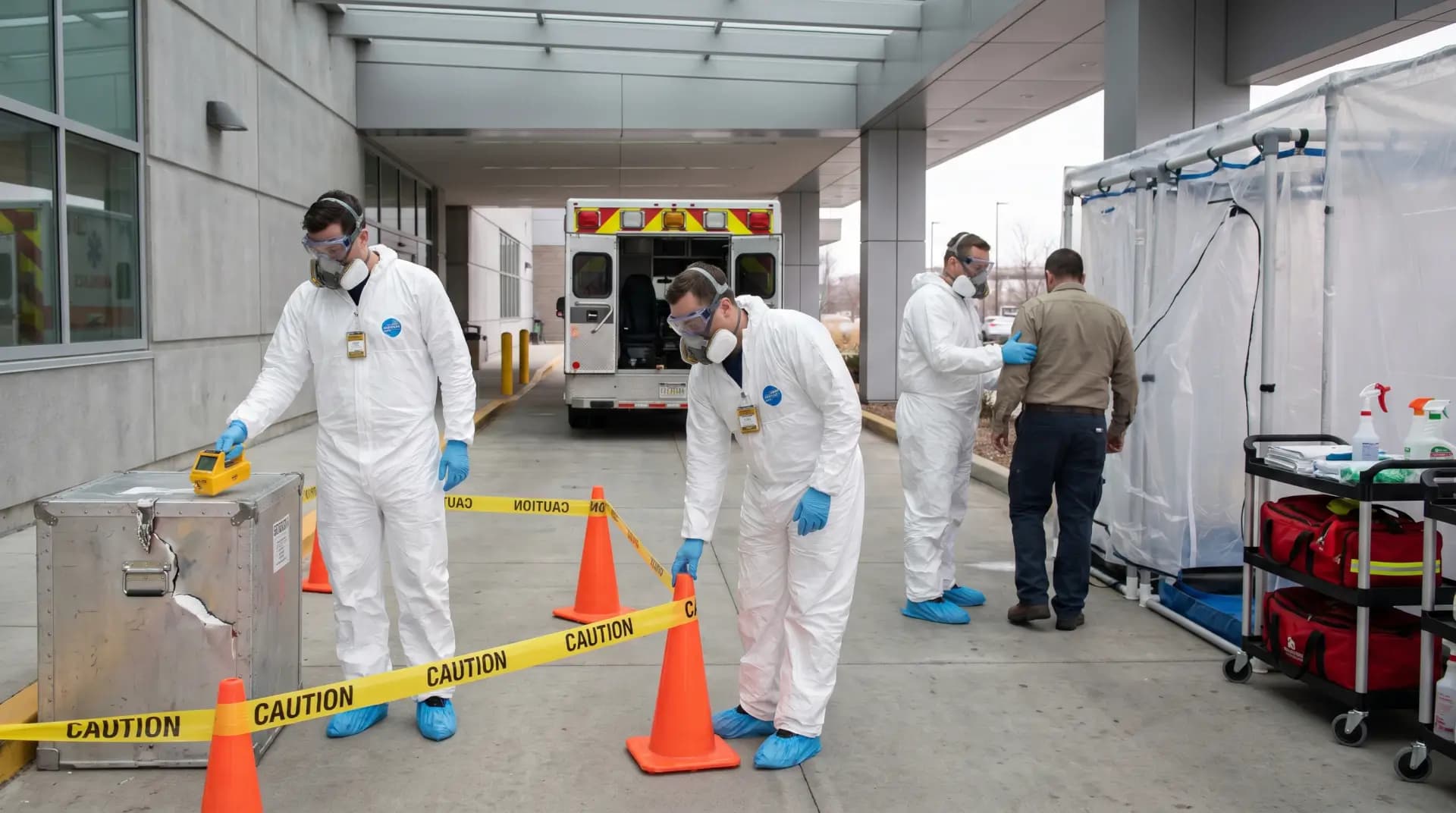
A radiation emergency may involve a nuclear power plant release, lost or damaged radioactive source, transport accident, industrial radiography incident, contaminated scrap material, malicious dispersal device, or nuclear detonation. These scenarios differ in scale, but the management principles stay consistent: protect people from radiation, stop radioactive contamination from spreading, support medical triage, and maintain disciplined incident command.
Understand the Type of Radiation Emergency Before Acting Too Widely
The first mistake I see in radiation emergency planning is treating every event as the same. A sealed-source incident inside an industrial facility is not managed like fallout after a nuclear detonation. A small contamination event in a laboratory does not require the same public protective actions as a large off-site release.
Radiation emergencies generally fall into three practical categories:
Emergency Type | Main Concern | Immediate HSE Priority |
|---|---|---|
Exposure without contamination | People may have received radiation dose, but no radioactive material is on them | Remove from source, assess dose, medical evaluation |
External contamination | Radioactive material is on clothing, skin, tools, vehicles, or surfaces | Control spread, remove outer clothing, decontaminate |
Internal contamination | Radioactive material may have been inhaled, swallowed, or entered wounds | Medical assessment, specialist treatment, bioassay if available |
A person who is exposed to radiation is not automatically contaminated. This distinction matters. Exposure is like standing near a source; contamination means radioactive material is physically present where it should not be. Confusing the two leads to unnecessary fear, poor triage, and unsafe movement of people.
Apply the First Protective Actions: Get Inside, Stay Inside, Stay Tuned
For public-facing radiation emergencies, the strongest early protective action is often sheltering. Buildings place material between people and radioactive particles. Time also matters because radioactive materials decay, and exposure rates can fall after the initial release or fallout period.
The basic public action sequence is:
Get inside the nearest substantial building.
Move away from windows and outer walls where practical.
Stay inside until emergency officials give clear instructions.
Stay tuned through official alerts, radio, television, mobile alerts, or workplace emergency channels.
Do not self-evacuate unless instructed, because moving outdoors can increase exposure and obstruct emergency response routes.
In an HSE-controlled facility, this means shelter-in-place instructions must already exist before an event occurs. Security guards, supervisors, reception staff, drivers, contractors, and visitors should know where to go and who gives the order. A shelter plan that exists only in a binder will not protect people during a fast-moving event.
Control Contamination Without Delaying Life-Saving Care
Contamination control is important, but it must never delay urgent medical treatment. Serious trauma, burns, airway problems, bleeding, or shock take priority. Radiation contamination can usually be managed with controlled removal of clothing, isolation of personal items, and careful washing.
For potentially contaminated people:
Remove outer clothing carefully and avoid shaking it.
Place clothing and personal items in a sealed bag or controlled container.
Keep the bag away from people, clean areas, and air intakes.
Wash exposed skin gently with soap and water.
Avoid aggressive scrubbing, which can damage skin.
Do not use hair conditioner during decontamination, because it may bind radioactive material to hair.
Cover wounds before washing surrounding skin where practical.
CDC guidance states that removing the outer layer of clothing can remove up to 90% of radioactive material from a person’s body, making this one of the simplest and most valuable early decontamination actions.
For workplaces, contamination control should be organized into zones:
Zone | Purpose | Typical Controls |
|---|---|---|
Hot zone | Suspected or confirmed contamination area | Restricted access, monitoring, specialist responders |
Warm zone | Decontamination and transition area | PPE removal, contamination checks, waste control |
Cold zone | Clean support area | Command post, medical support, communication, accountability |
The practical goal is not perfection in the first minutes. The goal is to stop uncontrolled spread while protecting life.
Protect Responders With Time, Distance, Shielding, and Dose Control
Responder protection depends on four controls: time, distance, shielding, and contamination control. Reduce time near the source, increase distance, place shielding between the source and people, and prevent radioactive material from entering the body or spreading to clean areas. The IAEA describes time, distance, and shielding as core radiation protection principles for staff protection.
Emergency responders should not rush into a suspected radiological scene without command, monitoring, and role clarity. A disciplined response starts with:
Establishing incident command.
Identifying the suspected source or release.
Creating an initial safety perimeter.
Requesting radiation specialists or competent authorities.
Using radiation detection instruments where available.
Assigning trained personnel only to radiation-related tasks.
Tracking responder entry, exit, dose, and contamination status.
In the United States, OSHA states that employers must comply with applicable ionizing radiation requirements, including worker dose limits during emergency response operations. OSHA also provides emergency preparedness and response guidance for employers and workers who may be involved in radiation emergencies.
A common misconception is that PPE alone makes radiation response safe. PPE can help prevent contamination of skin and clothing, but it does not automatically shield against penetrating radiation. Lead aprons, turnout gear, Tyvek suits, respirators, gloves, and boots each have limits. Selection must be based on the hazard, not fear.
Build Communication Around Clarity, Not Reassurance
Radiation emergencies create fear because the hazard is invisible. People may not know whether they are exposed, contaminated, safe, or in danger. Poor communication can become a secondary emergency.
Good HSE communication during a radiation emergency should answer five questions:
What happened?
What area is affected?
What should people do now?
What should people avoid doing?
When and where will the next update come?
Avoid vague phrases such as “there is no danger” unless the hazard has been verified. A better message is: “Move to the designated shelter area, stay away from windows, do not leave the building, and wait for the next update from incident command.”
Communication should also address specific groups:
Workers in open yards or remote areas
Drivers and delivery personnel
Contractors unfamiliar with the site
Security and gate staff
Pregnant workers
People with disabilities
Visitors and members of the public
Medical and first aid teams
In my professional view, the best radiation emergency messages are short, repeated, and action-based. People under stress do not process technical explanations well. They need clear protective instructions.
Manage Medical Triage and Potassium Iodide Correctly
Medical management must separate radiation concerns from immediate clinical priorities. Life-threatening injuries are treated first. Contamination control supports treatment; it should not obstruct it.
Emergency medical planning should include:
Triage for trauma, burns, and conventional injuries
Identification of potentially contaminated patients
Controlled entry routes to medical areas
Decontamination capability before or near treatment areas
Radiation survey support where available
Documentation of location, time, symptoms, and possible exposure route
Referral pathways to radiation medicine specialists
Potassium iodide, often called KI, is frequently misunderstood. KI is not a general anti-radiation medicine. It only helps protect the thyroid from radioactive iodine under specific conditions. It does not protect against external radiation, all radioactive materials, burns, trauma, or whole-body exposure. CDC and FDA guidance both state that KI should be taken only when instructed by public health, emergency response, or medical authorities.
This is important for HSE planning. Stocking KI without training, distribution criteria, medical screening, and official coordination can create false confidence. KI belongs inside a wider emergency plan, not as a substitute for sheltering, evacuation control, contamination management, and official monitoring.
Prepare the Workplace Before a Radiation Emergency Happens
Radiation emergency management depends heavily on preparation. Once the event starts, there is limited time to design a system.
A practical workplace plan should include:
Preparedness Element | What It Should Cover |
|---|---|
Risk assessment | Nearby facilities, radioactive sources, transport routes, industrial radiography, laboratories, scrap yards |
Emergency roles | Incident commander, HSE lead, security, communications, first aid, facility maintenance |
Shelter areas | Interior rooms, basements where available, away from windows and air intakes |
Communication system | Public address, SMS alerts, radios, notice boards, backup methods |
Accountability | Visitor logs, contractor control, muster or shelter registration |
Training | Shelter-in-place, contamination control, PPE limits, reporting |
Equipment | Barriers, bags, labels, gloves, respiratory protection where justified, monitoring equipment if applicable |
External coordination | Fire service, emergency management agency, regulator, medical facilities |
Recovery criteria | Re-entry, clearance, waste handling, investigation, worker support |
The IAEA’s emergency preparedness and response framework emphasizes that governments, response organizations, operating organizations, regulators, and other authorities need predefined arrangements for nuclear or radiological emergencies. For HSE teams, that translates into a simple requirement: roles, decisions, equipment, and communication channels must be arranged before the alarm.
Professional Scope and Safety Note
Radiation emergency response should be directed by competent authorities, radiation protection specialists, emergency services, and medical professionals. This article provides HSE management guidance and does not replace jurisdiction-specific regulations, emergency authority instructions, medical advice, or site-specific radiation protection procedures.
Conclusion
Managing radiation emergencies is not about dramatic response; it is about disciplined control. Protect people first, reduce exposure, prevent contamination spread, communicate verified instructions, protect responders, and involve competent radiation and medical specialists early.
The most reliable early action for most people is still the simplest: get inside, stay inside, and stay tuned. For HSE leaders, the deeper responsibility is to make sure those words are supported by real arrangements: trained people, usable shelter areas, clear command, contamination controls, medical coordination, and calm communication.
A radiation emergency becomes far harder to manage when the first plan is made during the incident. Preparation is the control that gives every other control a chance to work.


Responses