

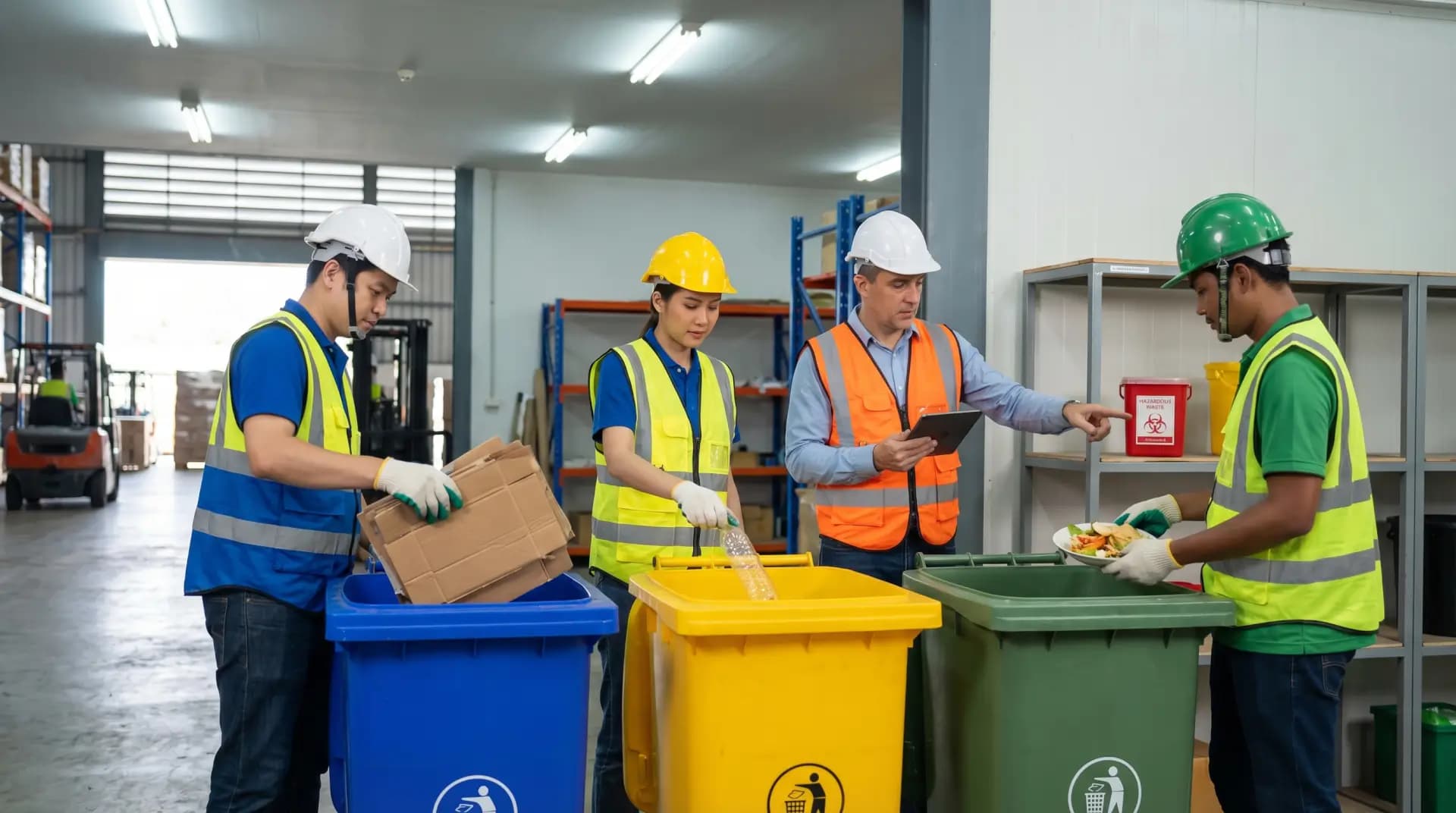
Waste segregation in the workplace means separating waste at the point where it is produced so that each stream can be stored, handled, recycled, treated, or disposed of safely. The correct approach is simple: identify the waste type, place it in the right labelled container immediately, keep hazardous and incompatible waste separate, prevent contamination of recyclable streams, and make sure collection arrangements match local legal requirements.
I treat workplace waste segregation as both an environmental control and a safety control. Poor segregation does not only reduce recycling quality; it can create fire risks, chemical exposure, biological contamination, pest issues, manual-handling problems, and regulatory breaches.
What Workplace Waste Segregation Should Achieve
A good waste segregation system should achieve four things:
Protect workers from cuts, chemical contact, infection risk, fumes, spills, and unnecessary handling.
Prevent environmental harm by keeping hazardous, recyclable, organic, and general waste streams separate.
Support legal compliance by aligning waste containers, labels, storage, and collection with the rules in the jurisdiction where the workplace operates.
Make correct disposal easy for employees, contractors, cleaners, and waste handlers.
The waste hierarchy should guide the system before bins are even selected. In the EU and UK approach, the preferred order is prevention, preparing for reuse, recycling, other recovery, and disposal as the least preferred option. That hierarchy is important because segregation is not only about sorting waste after it appears; it is also about reducing avoidable waste at source.
Start With a Waste Survey
Before placing bins around the workplace, I recommend a practical waste survey. Walk through the site and record what waste is generated, where it is generated, how often it is produced, and who handles it.
Typical workplace waste streams include:
Waste stream | Common examples | Main segregation rule |
|---|---|---|
General waste | Non-recyclable packaging, contaminated tissues, mixed small waste | Keep separate from recyclables and hazardous waste |
Paper and cardboard | Office paper, cartons, cardboard boxes | Keep clean and dry |
Plastics, cans, and glass | Bottles, containers, metal cans | Follow local collector instructions |
Food waste | Leftovers, fruit peels, tea bags, coffee grounds | Use covered containers and frequent removal |
Hazardous chemical waste | Solvents, paints, oils, acids, contaminated absorbents | Use compatible, labelled containers only |
Universal or special waste | Batteries, lamps, aerosol cans, mercury-containing equipment | Store separately under applicable local rules |
Biological or clinical waste | Blood-contaminated materials, infectious waste, sharps | Use approved medical or biohazard containers |
E-waste | Computers, cables, printers, circuit boards | Keep separate for approved recycling or disposal |
Construction or maintenance waste | Wood, scrap metal, rubble, insulation, filters | Segregate by material and hazard potential |
The mistake I often see is starting with bin colours instead of waste risk. Colours help communication, but the real foundation is waste classification.
Use Clear Waste Categories and Containers
Every workplace should have a written waste segregation matrix. It does not need to be complicated, but it must be specific enough that a worker can make the right decision without guessing.
A practical workplace system usually includes:
General waste bins for non-recyclable, non-hazardous waste.
Dry recycling bins for clean paper, cardboard, plastics, cans, and glass where accepted.
Food waste bins for kitchens, canteens, pantries, and welfare areas.
Hazardous waste containers for chemical, oily, flammable, corrosive, toxic, or contaminated materials.
Battery and lamp containers for commonly generated special waste.
Sharps containers where needles, blades, lancets, or similar sharp objects are present.
E-waste storage points for electronic equipment and accessories.
In England, workplace recycling rules require dry recyclable waste, food waste, and non-recyclable waste to be separated before collection, with dry recyclables separated according to the waste collector’s instructions. This is a jurisdiction-specific requirement and should not be assumed to apply in the same way everywhere.
For ordinary office recycling, I avoid overpromising. Many materials that look recyclable are rejected if they are contaminated with food, liquid, grease, or mixed materials. A clean cardboard box is useful recycling material; the same box soaked with oil or chemical residue may require a different disposal route.
Segregate Hazardous Waste With Extra Control
Hazardous waste needs stronger control than ordinary waste because the consequences of mixing can be serious. Chemical waste should never be placed into an unlabelled container, food container, office bin, drain, or general skip.
For chemical waste, I use the following practical rules:
Identify the substance before disposal.
Use the product label, safety data sheet, process knowledge, and local waste classification rules.Keep incompatible waste apart.
Acids should not be casually mixed with alkalis. Oxidizers should be kept away from flammables. Reactive chemicals need specialist assessment.Use compatible containers.
The container must resist corrosion, leakage, pressure build-up, and reaction with the waste.Label the container immediately.
The label should identify the waste, hazard, accumulation date where required, department or area, and responsible person.Keep containers closed except when adding waste.
Open hazardous waste containers increase spill, vapour, fire, and exposure risk.Provide secondary containment.
Use bunds, trays, or cabinets where leakage could spread.
Under US federal hazardous waste generator rules, incompatible hazardous wastes must not be placed in the same container in a satellite accumulation area unless specific regulatory conditions are met, and incompatible waste containers nearby must be separated or otherwise protected by practical means.
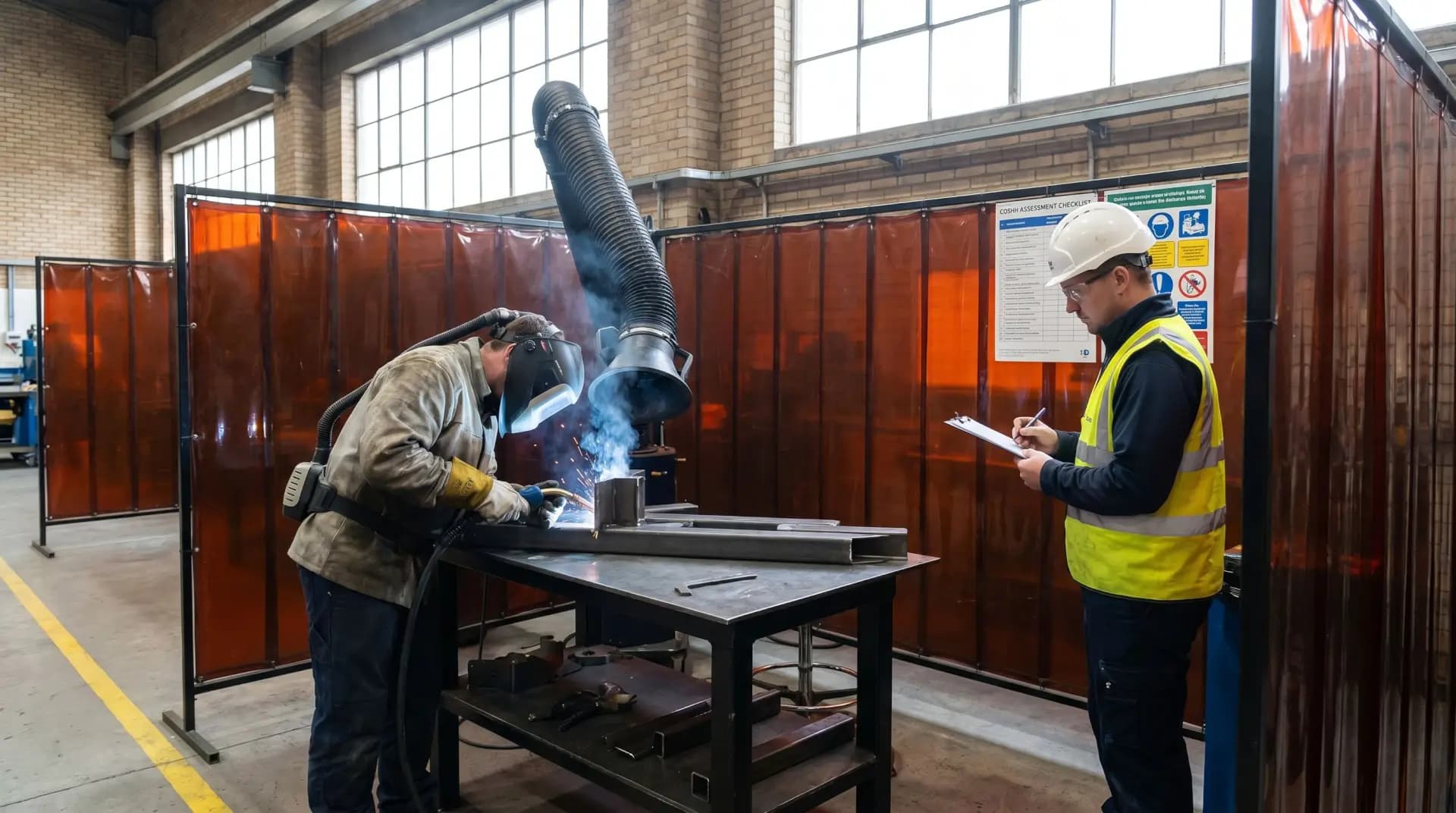
For hazardous chemicals in the workplace, the US OSHA Hazard Communication Standard at 29 CFR 1910.1200 requires hazard information to be communicated to employees, including labels and safety data sheets for hazardous chemicals. In the UK, COSHH requires employers to assess and control risks from substances hazardous to health; waste from such substances should be managed consistently with that risk assessment.
HSE judgment point: if employees cannot confidently identify a chemical waste, they should not guess. Unknown chemical waste should be isolated, labelled as unknown, secured, and escalated to a competent person or licensed waste contractor.
Control Food, Recycling, and General Waste Contamination
For non-hazardous waste, the main problem is contamination. A single wrong item can downgrade a recyclable load or create hygiene problems.
I apply these simple rules:
Keep food waste out of dry recycling.
Empty liquids before placing containers in recycling bins, where local rules allow.
Keep paper and cardboard dry.
Do not place oily rags, chemical wipes, paint tins, batteries, or lamps into ordinary office bins.
Do not mix broken glass with paper or general hand-sorted waste.
Use lids in food areas to control odour and pests.
Place bins where the waste is produced, not only where space is available.
The best bin arrangement is usually a cluster system. Instead of placing a single general waste bin under every desk, provide grouped bins for general waste, recycling, and food waste in shared areas. This nudges people to choose correctly and reduces “everything goes in one bin” behaviour.
Label Bins So People Do Not Have to Guess
A waste bin label should be visual, specific, and local. Generic labels such as “recycling” are often not enough.
A strong label includes:
Waste stream name.
Accepted items.
Rejected items.
Hazard symbol where applicable.
Colour coding.
Language understood by the workforce.
A simple instruction such as “empty liquids first” or “no food waste.”
For hazardous, biological, or clinical waste, labels must follow the legal and industry requirements of the jurisdiction. In healthcare and similar settings, sharps must be placed in sharps disposal containers rather than ordinary trash, and OSHA’s US Bloodborne Pathogens standard includes controls for contaminated sharps and regulated waste.
Do not rely on colour alone. Waste colours vary by country, company, industry, and contractor. Colour coding is useful only when it is supported by clear wording, symbols, training, and consistent placement.
Train Workers and Contractors on the System
Waste segregation fails when training is treated as a poster campaign. Posters help, but people still need to understand the risk behind the rule.
Training should cover:
The main waste streams at the site.
Where bins and waste storage areas are located.
What must never go into general waste.
What to do with unknown, leaking, or damaged waste.
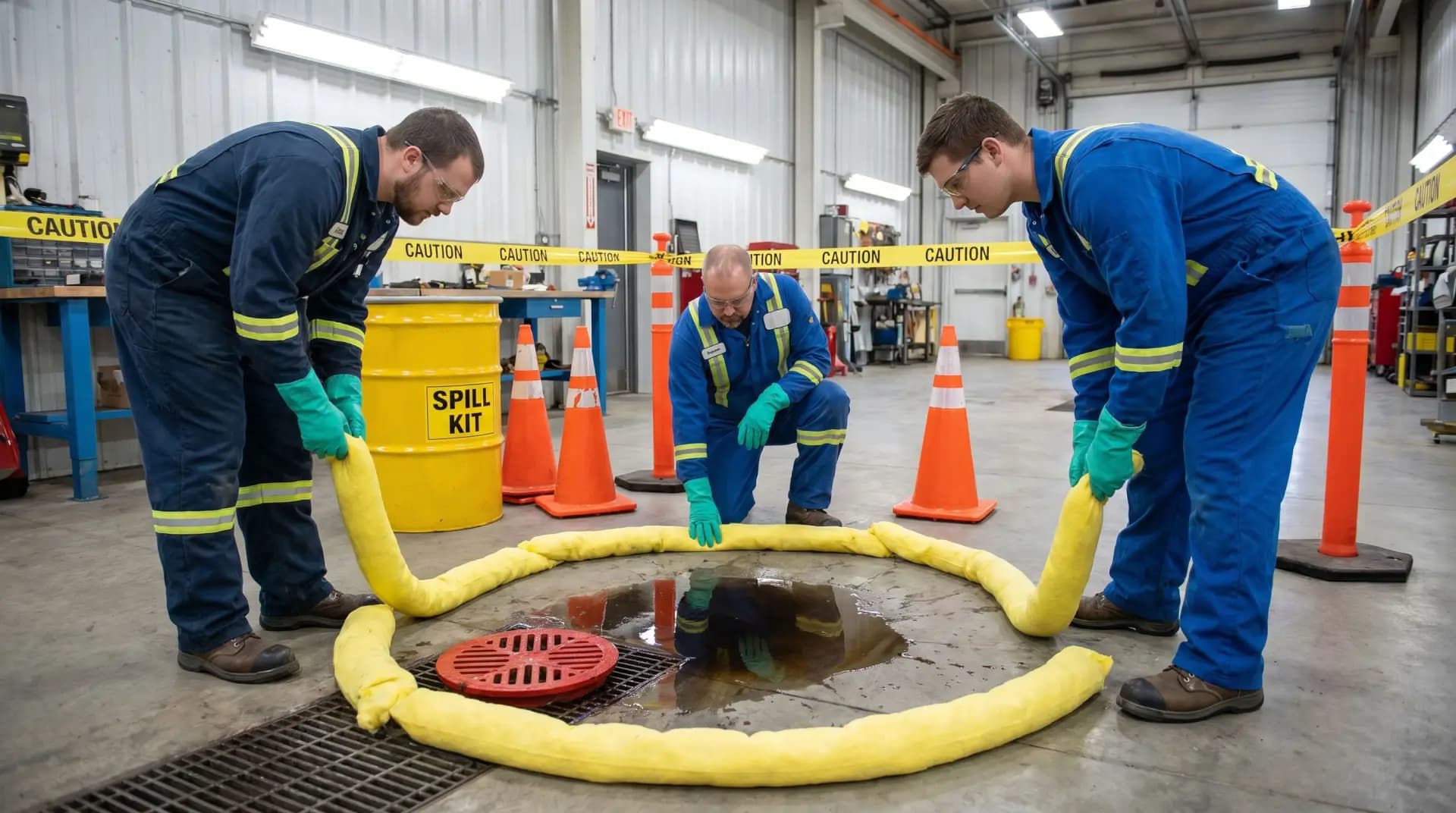
Spill response and reporting.
PPE requirements for waste handling.
Manual handling precautions.
Who to contact before disposing of unusual waste.
Cleaners, maintenance teams, contractors, laboratory staff, production workers, canteen staff, and security teams may all interact with waste differently. I prefer short, role-specific training over long generic sessions.
A common misconception is that waste segregation is only the cleaner’s responsibility. It is not. Segregation starts with the person who generates the waste. Cleaners and waste handlers should not be expected to correct unsafe disposal by hand-sorting unknown waste.
Manage Waste Storage, Collection, and Records
Segregation does not end at the bin. Waste storage areas must be controlled so that separated waste does not become mixed again before collection.
A good waste storage area should have:
Clear signage.
Separate zones for each waste type.
Weather protection where needed.
Spill containment for liquid or hazardous waste.
Fire control measures where flammable waste is stored.
Restricted access for hazardous or regulated waste.
Good housekeeping.
Safe vehicle and pedestrian access.
Collection records, transfer notes, manifests, or consignment records where legally required.
For batteries, lamps, aerosol cans, pesticides, and mercury-containing equipment in the United States, EPA’s universal waste rules provide a streamlined system for specific commonly generated hazardous wastes, but states may have their own requirements. This is why I never advise copying another company’s waste procedure without checking local law and the approved waste contractor’s acceptance criteria.
Practical Workplace Waste Segregation Procedure
Use this sequence to build or improve a workplace waste segregation system:
Map waste sources
Identify offices, workshops, laboratories, stores, kitchens, clinics, maintenance areas, and outdoor yards.Classify the waste
Separate ordinary, recyclable, food, hazardous, biological, sharps, e-waste, and special waste.Check legal duties
Confirm local environmental, occupational safety, public health, transport, and waste contractor requirements.Select containers
Use containers that are durable, compatible, labelled, leak-resistant where needed, and easy to access.Place bins at the point of generation
A bin that is too far away will not be used correctly.Label clearly
Show what goes in and what stays out.Train everyone involved
Include employees, contractors, cleaners, and waste handlers.Inspect routinely
Check contamination, overflowing bins, missing labels, damaged containers, blocked access, and poor housekeeping.Correct and improve
Use inspection findings to improve layout, labels, collection frequency, and training.
Compliance and Safety Note
Waste segregation requirements vary by jurisdiction and waste type. This article provides practical HSE guidance, not legal advice. Before implementing or revising a waste system, the workplace should confirm the applicable requirements with the local regulator, licensed waste carrier, environmental consultant, or competent HSE professional.
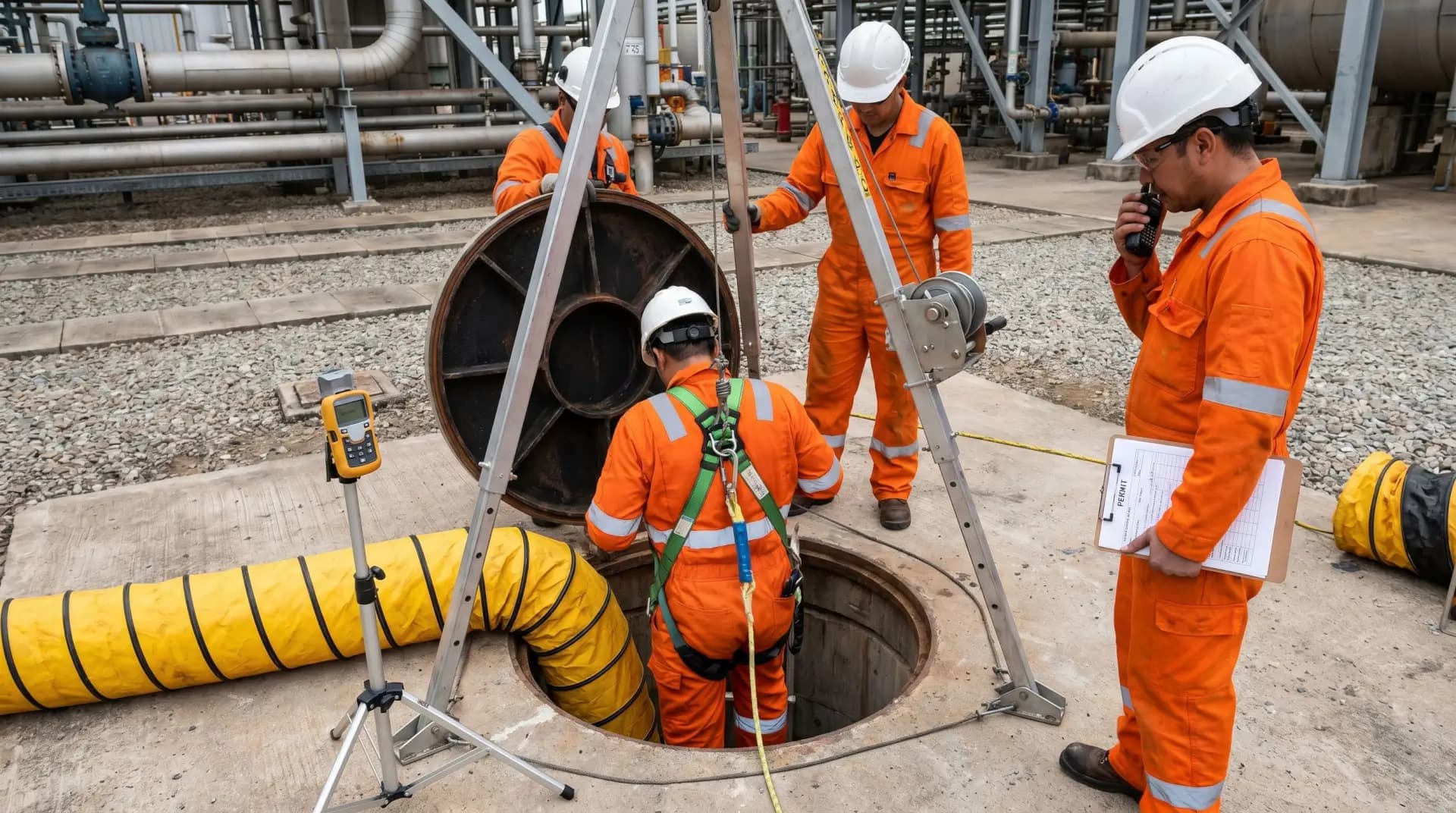
Immediate escalation is needed when waste is unknown, leaking, reactive, producing fumes, contaminated with blood or body fluids, sharp, pressurized, radioactive, asbestos-containing, or suspected to be illegally disposed of. No employee should be asked to sort such waste manually without proper assessment, controls, PPE, and authorization.
Conclusion
Workplace waste segregation works best when it is designed around risk, not convenience. The right system starts with knowing what waste is produced, separating it at the source, using clear labels and suitable containers, training the people who generate and handle waste, and checking that the system is actually followed.
In my practice, the strongest waste systems are simple enough for daily use and strict enough to control hazardous materials. When workers know exactly where waste belongs, when hazardous waste is never mixed casually, and when storage and collection are controlled, waste segregation becomes a reliable part of workplace safety and environmental management.




Responses