

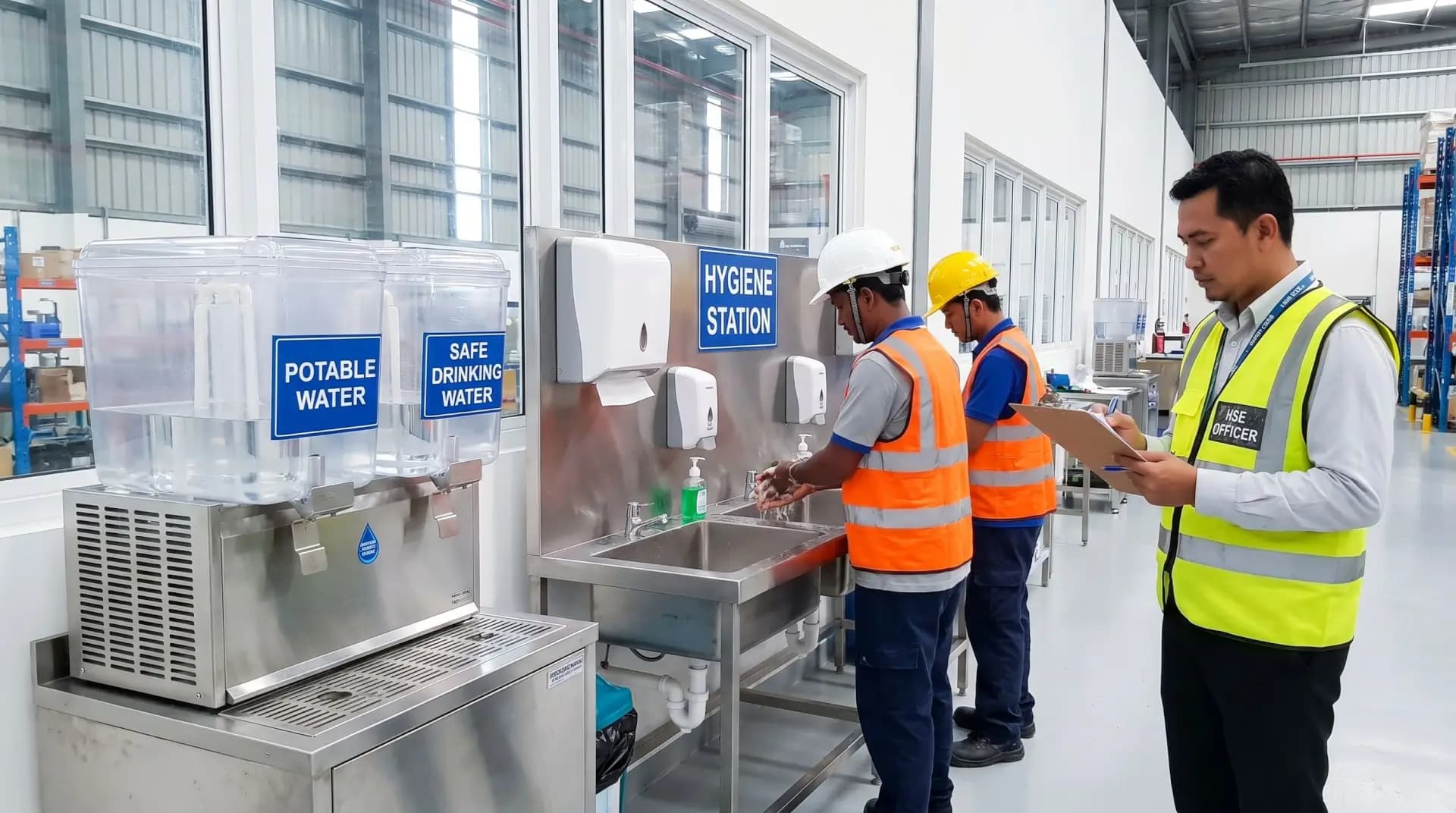
Waterborne diseases at work are prevented by controlling exposure to contaminated water through safe supply systems, proper sanitation, hygiene enforcement, and risk-based monitoring. In occupational environments—especially construction sites, remote camps, agriculture, and industrial facilities—the risk escalates when water quality is assumed rather than verified. Prevention is not a single control; it is a managed system combining engineering safeguards, administrative controls, and worker behavior.
Understanding Waterborne Disease Risks in Workplaces
Waterborne diseases originate from pathogenic microorganisms—bacteria, viruses, and parasites—transmitted through contaminated water. In occupational settings, exposure typically occurs through:
Drinking unsafe water
Poor hand hygiene before eating
Contaminated food preparation
Contact with polluted standing water or wastewater
Common illnesses include gastrointestinal infections, cholera-like symptoms, dysentery, and hepatitis-related conditions. The pattern I consistently observe is that outbreaks rarely stem from one failure—they emerge from layered breakdowns in water handling, storage, and hygiene practices.
Establishing a Safe Drinking Water System
A safe water system begins with verified sourcing and ends at the point of consumption. Any gap in between introduces risk.
Key Control Measures
Approved Water Sources
Use only tested and approved water sources. If relying on tankers or external suppliers, require documented quality assurance.Water Treatment Methods
Depending on risk level:Chlorination (commonly used in camps and large facilities)
Filtration systems (portable or centralized)
Boiling (temporary or emergency control)
Closed Storage Systems
Store water in clean, covered, non-reactive containers to prevent contamination.Distribution Integrity
Ensure pipelines, dispensers, and taps are maintained and protected from environmental contamination.
A critical professional judgment: even treated water becomes unsafe if storage and dispensing are poorly managed. The “last point of contact” is often where contamination occurs.
Hygiene and Sanitation Controls
Engineering controls fail without behavioral compliance. Hygiene is the frontline defense against ingestion of pathogens.
Workplace Hygiene Practices
Mandatory handwashing before eating and after restroom use
Provision of soap, clean water, or alcohol-based sanitizers
Designated eating areas separated from work zones
Regular cleaning of shared surfaces and utensils
Sanitation Infrastructure
Adequate number of clean toilets
Proper wastewater disposal systems
Routine inspection and cleaning schedules
A recurring issue across industries is underestimating sanitation maintenance. Facilities may exist, but without strict upkeep, they become sources of contamination themselves.
Monitoring and Water Quality Testing
Prevention requires verification. Assumptions about water safety are one of the most common root causes of outbreaks.
Monitoring Framework
Routine Testing
Microbiological and chemical testing at defined intervalsResidual Chlorine Checks
Ensures disinfection remains effective at the point of useVisual Inspections
Checking turbidity, odor, and storage conditionsRecord Keeping
Maintain logs for audits and trend analysis
From an HSE standpoint, trends matter more than single results. A gradual decline in water quality often precedes incidents.
Worker Awareness and Training
Even the best systems fail if workers do not understand risks.
Training Focus Areas
Recognizing unsafe water sources
Importance of hand hygiene
Safe food and water consumption practices
Reporting symptoms early
In practice, I emphasize simplicity: workers should clearly know what is safe, what is not, and what to do if unsure.
Risk Management in High-Exposure Work Environments
Certain workplaces require elevated controls due to higher exposure risks.
High-Risk Scenarios
Remote project sites with temporary water systems
Flood-prone or disaster-affected areas
Work involving wastewater or sewage
Agricultural settings with irrigation water exposure
Additional Controls
Point-of-use filtration devices
Bottled or certified potable water supply
Personal protective equipment (gloves, boots) when handling contaminated water
Vaccination programs where applicable
A key insight from field application: temporary setups often receive temporary thinking. However, most waterborne disease incidents occur in these “temporary” environments.
Management Responsibilities and System Accountability
Prevention is not solely a worker responsibility—it is a management system obligation.
Core Responsibilities
Conduct water risk assessments
Ensure compliance with applicable health and safety regulations (jurisdiction-dependent)
Allocate resources for testing, treatment, and sanitation
Appoint responsible personnel for water safety management
Investigate and respond to suspected contamination immediately
Leadership commitment is the difference between reactive response and proactive prevention.
Conclusion
Preventing waterborne diseases at work requires a structured, multi-layered approach: secure water sources, effective treatment, protected storage, strict hygiene practices, and continuous monitoring. In my professional experience, the most effective programs are those that treat water safety as a living system—not a one-time setup.
When water safety is managed with the same rigor as other critical risks, outbreaks become preventable rather than inevitable.

Responses