

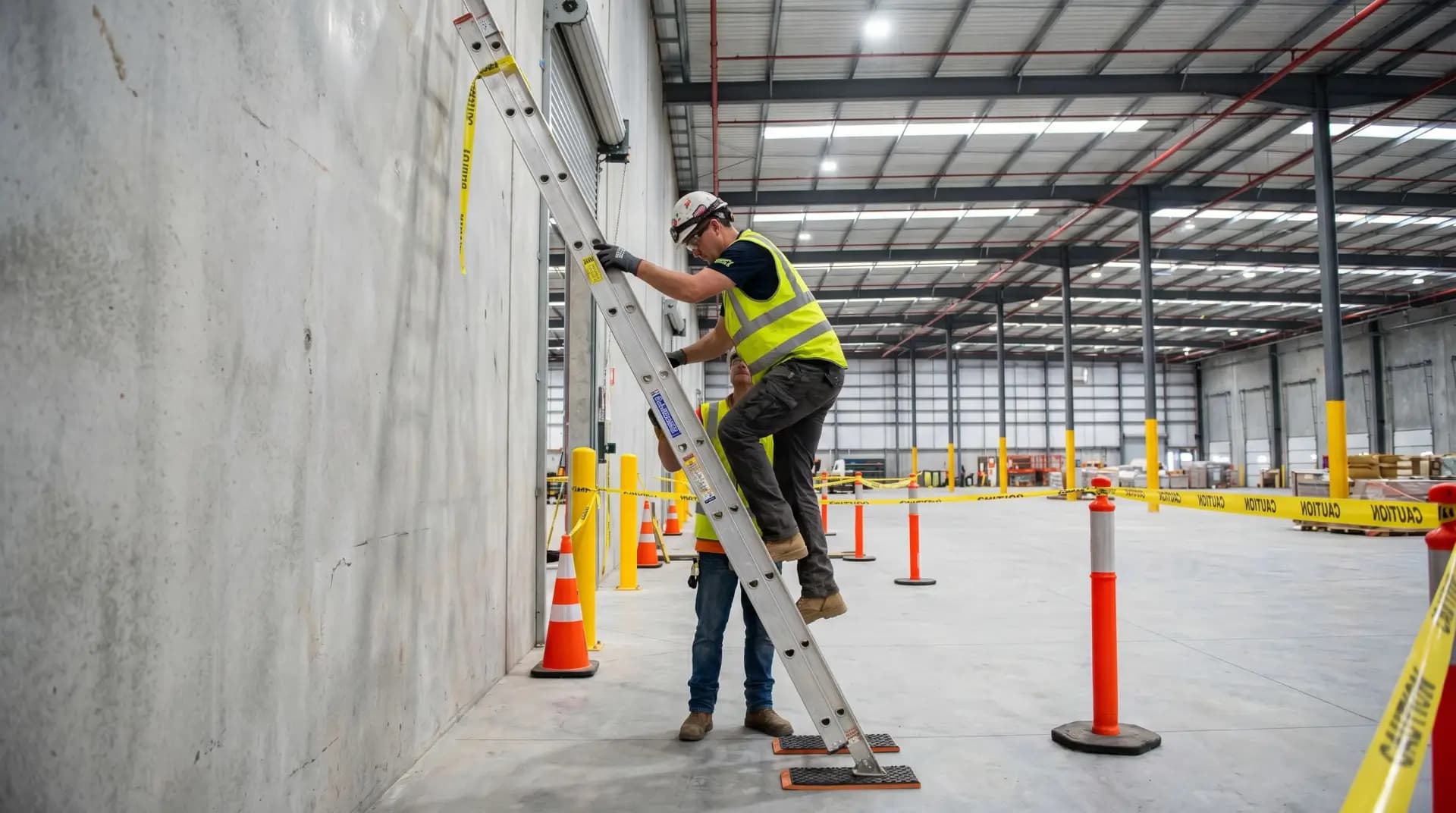
Preventing falls from ladders comes down to disciplined selection, correct setup, controlled use, and consistent inspection. Most ladder incidents are not due to equipment failure but to misuse—wrong angle, unstable footing, overreaching, or bypassing basic three-point contact. When these fundamentals are enforced, fall risk drops significantly.
Understanding Why Ladder Falls Happen
In practice, ladder falls follow predictable patterns:
Incorrect angle or positioning leading to base slip or top displacement
Unstable or uneven ground causing sudden movement
Overreaching shifting the center of gravity outside safe limits
Carrying tools improperly, compromising grip
Damaged or unsuitable ladders used beyond their design limits
Rushing tasks without proper setup or checks
These are controllable factors. Prevention is not complex—it requires consistency.
Selecting the Right Ladder for the Job
Choosing the correct ladder type is the first control measure.
Key Selection Criteria
Type of ladder
Step ladder for short, self-supported work
Extension ladder for height access
Platform ladder for prolonged tasks requiring stability
Duty rating (load capacity)
Ensure it supports worker weight + tools
Height requirement
Never stand on top rungs; select a ladder tall enough for safe reach
Material suitability
Fiberglass for electrical environments
Aluminum for lightweight general use
Using the wrong ladder forces unsafe behavior. Proper selection eliminates that pressure.
Correct Ladder Setup: The Non-Negotiables
Improper setup is one of the most common causes of falls.
The 4:1 Rule
For every 4 units of ladder height, the base should be 1 unit away from the wall.
Too steep → risk of tipping backward
Too shallow → risk of base slipping
Stable Placement
Always place on firm, level ground
Use ladder levelers or stabilizers if needed
Secure the top whenever possible
Extension Ladder Setup
Extend at least 3 feet above landing point
Ensure locking mechanisms are fully engaged
Skipping any of these steps introduces instability immediately.
Safe Climbing and Working Practices
Even a perfectly set ladder becomes unsafe with poor usage.
Maintain Three-Point Contact
Always keep:
Two hands and one foot, or
Two feet and one hand
This ensures balance and reduces slip risk.
Avoid Overreaching
A simple rule I reinforce on-site:
Keep your belt buckle between ladder rails
If you need to reach further—climb down and reposition.
Carry Tools Safely
Use tool belts or hoisting systems
Never climb while holding tools in hands
Face the Ladder
Climb up and down facing the ladder at all times. Descending backward increases fall risk significantly.
Inspection and Maintenance Practices
Ladders degrade over time. Regular checks are essential.
Pre-Use Inspection Checklist
Cracks, bends, or damaged rails
Loose or missing rungs
Faulty locking mechanisms
Slippery substances (oil, mud)
Ongoing Maintenance
Clean after use
Store in dry, protected areas
Remove damaged ladders from service immediately
A compromised ladder should never be “used one last time.”
Environmental Risk Control
Work conditions often amplify ladder risks.
Weather Considerations
Avoid use during strong winds
Do not use in rain unless absolutely necessary and controlled
Work Area Hazards
Keep area clear of obstacles
Ensure proper lighting
Maintain safe distance from energized lines
Environmental awareness is often overlooked but critical.
Training and Supervision
Even simple equipment like ladders requires structured training.
Key Training Topics
Correct ladder selection
Proper setup techniques
Safe climbing practices
Hazard recognition
Supervisors should actively monitor:
Unsafe positioning
Shortcut behaviors
Improvised solutions
Most unsafe ladder use is visible before an incident occurs.
Common Misconceptions That Lead to Falls
Over the years, I’ve seen recurring misconceptions:
“It’s a quick job, I don’t need full setup”
“I’ve done this a hundred times”
“The ladder looks fine”
These assumptions create risk. Ladder safety depends on routine discipline, not experience alone.





Responses