
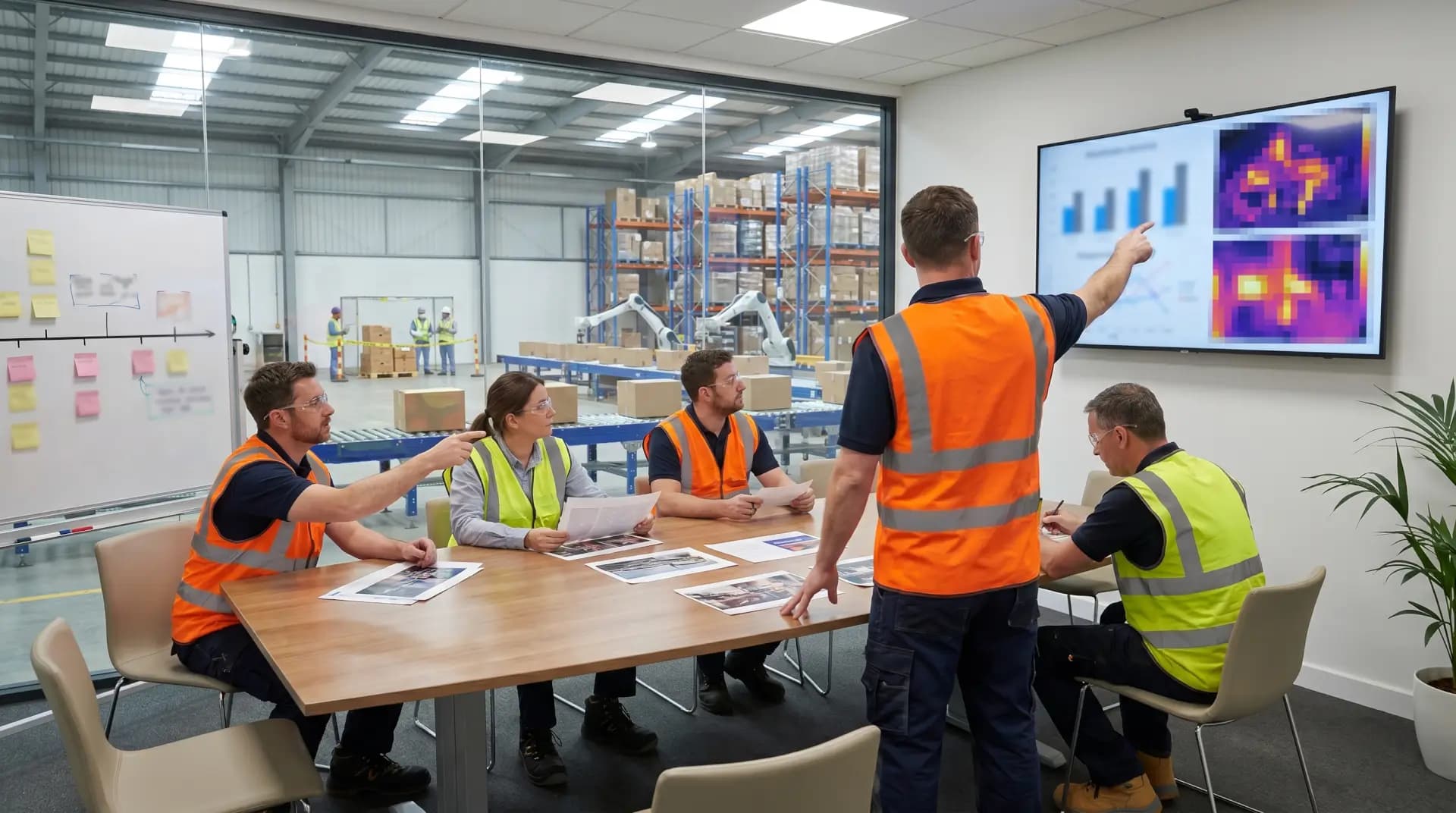
Presenting investigation findings to management is not about reading a report aloud. It is about turning evidence into decisions. Management needs to know what happened, why it happened, what risk remains, what must change, who owns the actions, and what support is required to prevent recurrence.
A strong presentation is factual, concise, risk-based, and free from blame. It should separate confirmed evidence from assumptions, explain failed controls clearly, and connect every recommendation to risk reduction, legal compliance, operational continuity, and worker protection.
Start With the Management Answer
When I present investigation findings, I begin with the conclusion management needs most:
What happened?
What was the actual and potential consequence?
What immediate actions were taken?
What were the direct, underlying, and root causes?
Which controls failed, were missing, or were not effective?
What corrective and preventive actions are required?
What decisions or resources are needed from management?
This opening should take only a few minutes. Senior leaders usually do not need every interview note, photograph, or technical detail at the start. They need a clear picture of the risk and the decision path.
A practical opening may follow this structure:
Management Question | What to Present |
|---|---|
What happened? | A short factual event summary |
How serious was it? | Actual impact and credible worst-case potential |
Why did it happen? | Immediate causes and deeper system weaknesses |
What did we do immediately? | Area made safe, injured person supported, temporary controls applied |
What must change? | Corrective and preventive actions |
What do you need from us? | Budget, authority, shutdown approval, staffing, policy decision, or enforcement support |
The mistake I often see is presenting the investigation chronologically instead of strategically. Management should not have to search for the message. The message should be visible from the first slide or first page.
Keep the Findings Evidence-Based and Blame-Free
Investigation findings must be built on evidence, not opinions. This is especially important when the incident involves injury, environmental release, asset damage, regulatory reporting, or possible disciplinary sensitivity.
A good management presentation uses language such as:
“The evidence indicates…”
“The investigation team confirmed…”
“Available records show…”
“The likely contributing factor was…”
“This point remains unverified and requires further confirmation…”
Avoid language such as:
“The worker was careless.”
“The supervisor failed completely.”
“Everyone knows this happens.”
“This was bound to happen.”
“The root cause was human error.”
“Human error” is rarely a complete finding. It is usually the starting point for deeper questions. Why was the error possible? Was the procedure usable? Was the person trained and competent? Was supervision available? Were workload, fatigue, time pressure, equipment design, permit controls, or communication gaps involved?
Authoritative safety investigation approaches, including those used in jurisdictions such as the United States and the United Kingdom, emphasize identifying underlying and root causes rather than assigning blame. That principle is not just ethical; it improves the quality of corrective actions.
Professional Caution
Where an investigation may involve legal exposure, regulatory enforcement, employment action, fatality, serious injury, major environmental impact, or public reporting, the presentation should be coordinated with the organization’s legal, HR, compliance, and senior HSE leadership functions. Investigation findings should remain factual and should not speculate beyond the evidence.
Organize the Presentation Around Risk, Controls, and Decisions
Management does not only need the “cause.” They need to understand control failure. A useful investigation presentation should show how the event passed through the organization’s defenses.
I prefer to group findings into three levels:
1. Event Facts
This is the clean factual summary:
Date, time, and location
Activity being performed
People, equipment, material, or process involved
Immediate outcome
Emergency response or first aid
Area isolation or temporary controls
Reporting status, where applicable
Keep this section short. Details can go into an appendix.
2. Causal Findings
This is where the investigation explains why the incident occurred. Separate causes clearly:
Cause Type | Meaning | Example Wording |
|---|---|---|
Immediate cause | The direct condition or action before the event | “The guard was not in position during operation.” |
Contributing factor | A condition that increased the likelihood or severity | “Pre-use inspection did not identify the missing fastener.” |
Root cause | A deeper system weakness that allowed the issue to exist | “The maintenance verification process did not define acceptance criteria for guard reinstatement.” |
This distinction matters because weak investigations stop at the immediate cause. Strong investigations identify the management system weakness that allowed the condition to continue.
3. Control and Barrier Analysis
Management should see which controls were expected and how they performed. This can be presented as:
Controls that were present and effective
Controls that were present but ineffective
Controls that were missing
Controls that depended too heavily on human memory or informal practice
Controls that need engineering, procedural, supervisory, or competency improvement
This approach moves the discussion away from blame and toward prevention.
Present Corrective Actions as a Management Action Plan
A corrective action is not useful because it sounds good. It is useful when it is specific, owned, resourced, prioritized, and verified.
Every action presented to management should include:
Action description
Risk addressed
Control type
Responsible owner
Due date
Required resources
Interim controls
Verification method
Effectiveness review date
A weak action says:
“Retrain all employees.”
A stronger action says:
“Revise the isolation procedure to include stored-energy verification steps, brief all affected maintenance employees, assess competency through field observation, and verify effectiveness through two planned audits within 60 days.”
Training may be necessary, but it should not become the default solution for every investigation. If the issue is poor design, weak supervision, missing equipment, unclear procedure, excessive workload, or ineffective maintenance control, training alone will not fix the risk.
Use the Hierarchy of Controls
When presenting recommendations, I link them to the hierarchy of controls wherever possible:
Eliminate the hazard
Substitute the hazard
Apply engineering controls
Improve administrative controls
Use personal protective equipment
Management should be able to see whether the recommendation reduces risk at the source or simply asks workers to be more careful. Higher-order controls usually provide stronger and more reliable prevention.
Use a Clear Slide or Report Structure
For management presentations, I recommend a concise structure. A full investigation report may be longer, but the management briefing should be sharp.
Recommended Presentation Flow
Executive summary
Incident overview
Actual and potential consequences
Immediate response and temporary controls
Investigation scope and evidence reviewed
Timeline of events
Key findings
Root causes and contributing factors
Failed or missing controls
Corrective and preventive action plan
Decisions required from management
Follow-up and verification plan
This structure works because it answers the main management concerns in a logical order: event, risk, evidence, causes, actions, decisions, and assurance.
Keep Visuals Simple
Use visuals only when they make the finding easier to understand. Effective visuals include:
One-page timeline
Incident location sketch
Barrier failure diagram
Cause-and-effect chart
Corrective action dashboard
Risk matrix before and after proposed controls
Avoid overcrowded slides. One slide should carry one main message. If the slide needs a long explanation, it probably belongs in the appendix.
Explain Risk Without Exaggeration
A good investigation presentation is honest about both actual and potential severity. Management should understand not only what happened, but what could reasonably have happened under slightly different conditions.
For example:
A dropped object may have caused no injury, but credible potential could include fatality if personnel were below.
A minor chemical exposure may indicate a wider ventilation, labeling, or storage weakness.
A vehicle near miss may reveal traffic management failures that could lead to serious injury.
A small fire may expose weaknesses in hot work control, housekeeping, detection, or emergency readiness.
The key phrase is credible potential. Do not exaggerate worst-case scenarios just to gain attention. Equally, do not minimize potential severity because the actual outcome was minor.
Management trust depends on balanced judgment.
Handle Sensitive Findings Professionally
Some findings are uncomfortable. They may involve supervision gaps, production pressure, ignored maintenance requests, incomplete risk assessments, weak contractor control, or repeated audit observations that were not closed.
These findings must be presented carefully but not softened to the point of uselessness.
Use neutral language:
“The permit review process did not identify the simultaneous activity conflict.”
“Supervisory verification was not defined for this high-risk task.”
“The risk assessment did not reflect the actual field condition.”
“Previous corrective actions addressed documentation but did not verify field effectiveness.”
“The contractor interface process did not clearly define responsibility for equipment isolation.”
This style protects professionalism while keeping the finding clear.
What Not to Do
Do not surprise management with serious findings for the first time in a crowded meeting. If the investigation identifies a major legal, ethical, operational, or reputational issue, senior leadership should be briefed through the proper internal channel before the formal presentation.
Do not dilute the finding to protect a department. Do not dramatize it to force action. Present the evidence, explain the risk, and show the required control improvement.
Ask for Decisions, Not Just Agreement
Many investigation presentations fail at the final step. The presenter explains the incident well, management nods, and then nothing substantial changes.
The closing section should clearly state what management must decide.
Examples include:
Approval for engineering modification
Temporary shutdown until controls are restored
Budget for equipment replacement
Additional competent supervision
Contractor performance review
Revision of a critical procedure
Enforcement of permit-to-work requirements
Closure of overdue maintenance backlog
Independent verification of high-risk controls
A strong close sounds like this:
“To prevent recurrence, the investigation team recommends three priority actions. Two can be completed within existing departmental authority. One requires management approval because it involves engineering modification and planned downtime. Until that modification is complete, interim controls are required.”
That is a management conversation. It links findings to action.
Verify Effectiveness After the Presentation
The presentation is not the end of the investigation process. It is the point where accountability should become visible.
Corrective actions should be tracked until closure, but closure alone is not enough. The organization must verify whether the action actually reduced the risk.
Verification may include:
Field observation
Competency check
Equipment inspection
Permit review
Maintenance record review
Worker interview
Audit of repeated activities
Trend review for similar events
Emergency drill or response test
An action is not effective just because it was marked complete in a system. It is effective when the risk control works in real operating conditions.
Conclusion
Presenting investigation findings to management requires discipline. The goal is not to defend the investigation team, overwhelm leaders with details, or assign blame. The goal is to help management make informed decisions that prevent recurrence.
A good presentation is built on facts, explains credible risk, identifies failed controls, separates immediate causes from root causes, and converts recommendations into accountable actions. It also makes clear what management must approve, resource, enforce, or monitor.
In my professional view, the best investigation presentations do three things well: they respect the evidence, respect the people involved, and respect the seriousness of risk. When those three elements are present, management receives more than a report. They receive a practical route to safer operations.

Responses