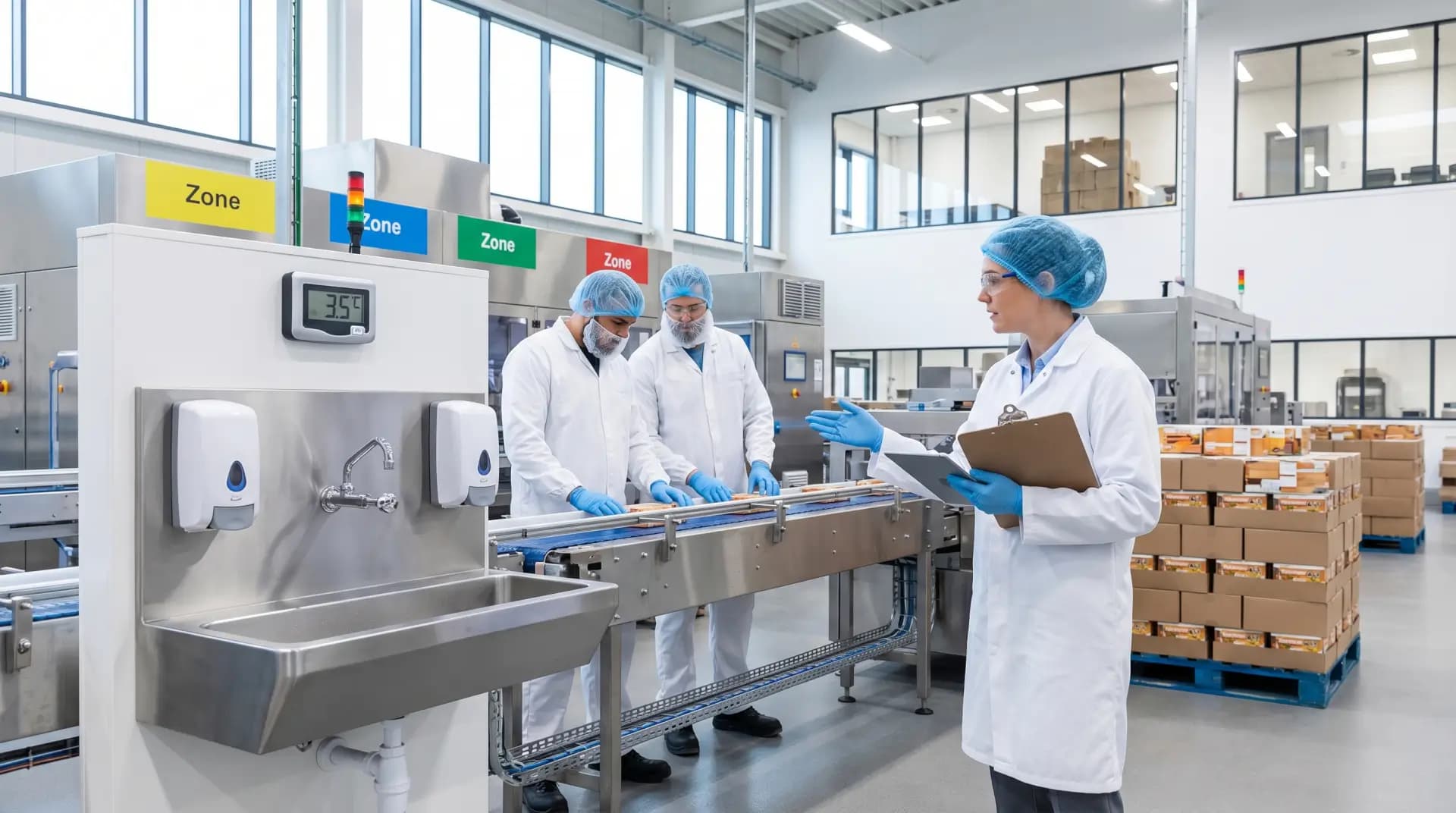
How to Comply With Food Safety Regulations

Food safety compliance is not built on paperwork alone. It comes from hazard control, hygiene discipline, traceability, training, and management action that hold up during inspections, audits, and real contamination events.
0Comments
7Views
How to Comply With Food Safety Regulations

TL;DR

  • Start with hazards: Food safety regulations require you to identify biological, chemical, physical, and allergen risks before you write procedures.
  • Control the process: Time, temperature, cross-contamination, cleaning, and personal hygiene failures drive most enforcement findings.
  • Document what matters: Monitoring records, corrective actions, supplier checks, and traceability logs must match what actually happens on shift.
  • Train for behavior, not signatures: A signed induction sheet does not prevent contamination if supervisors tolerate shortcuts.
  • Prepare for recall: If you cannot trace, isolate, and withdraw affected product quickly, your compliance system is already weak.

I was walking a food production line after a customer complaint investigation when I saw the real problem before I reached the end of the room. A raw ingredient scoop was sitting on a finished-product table, an operator had torn gloves, and the temperature check sheet had been filled in for the next two hours in advance. On paper, the site looked compliant. On the floor, contamination controls had already broken down.

That gap is where most businesses fail when they try to comply with food safety regulations. The regulations are not asking for attractive binders or polished audit language. They require a working system that controls food hazards, protects consumers, stands up to inspection, and produces evidence when something goes wrong. In this article, I will break down what food safety compliance means in real operations, how failures happen, what regulators and auditors look for, and the practical controls that keep a food business inside the law and out of a recall.

What It Means to Comply With Food Safety Regulations

To comply with food safety regulations, a food business must identify hazards, control them through validated procedures, monitor performance, correct failures, maintain records, and prove that safe food is consistently produced. Compliance is operational, not administrative. If the process on the floor does not match the written system, you are not compliant.

During audits, I look for one basic truth: does the site understand where contamination can occur, and can it prove those points are controlled every shift? That is the backbone of compliance whether the business is a catering kitchen, cold store, processor, packer, retailer, or hospital food service unit.

The core elements of food safety compliance usually include the following:

  • Hazard analysis: Identify biological, chemical, physical, and allergen hazards in each step of the process.
  • Process controls: Set limits for cooking, chilling, storage, segregation, cleaning, and handling.
  • Monitoring: Check temperatures, sanitation results, product conditions, and staff practices at defined frequencies.
  • Corrective action: Stop product, isolate affected batches, investigate the cause, and prevent recurrence when limits are breached.
  • Verification: Confirm the system works through audits, calibration, inspections, environmental monitoring, and review.
  • Traceability: Track ingredients and finished product one step back and one step forward through the supply chain.
  • Training and supervision: Ensure workers understand the risk behind each rule and supervisors enforce it consistently.

Under internationally recognized food safety principles based on HACCP, businesses must identify hazards, determine critical control points where applicable, establish limits, monitor them, take corrective action, verify the system, and maintain records.

Once that foundation is clear, the next question is where food businesses usually lose control in practice.

How Food Safety Compliance Fails in Real Operations

Most food safety breaches do not begin with one dramatic mistake. They build through tolerated deviation. I have seen sites pass internal checks for months while operators bypassed handwashing, thermometers were out of calibration, allergen changeovers were rushed, and cleaning verification was treated as a formality.

These are the failure patterns I see most often when businesses struggle to comply with food safety regulations:

  • Paper systems detached from reality: Procedures are copied from templates and do not match actual equipment, staffing, or product flow.
  • Weak supervision: Team leaders see non-compliance but allow production pressure to overrule food safety controls.
  • Poor zoning and segregation: Raw and ready-to-eat activities overlap, tools are shared, and traffic routes spread contamination.
  • Inadequate temperature control: Chillers drift, hot holding is inconsistent, and products sit too long during loading or prep.
  • Cleaning without verification: Surfaces look clean, but residues, allergen traces, or microbial contamination remain.
  • Supplier control failures: Ingredients arrive without proper approval, specification checks, or damage inspection.
  • Record falsification: Staff complete logs in advance or after the fact, which destroys the integrity of the system.
  • Poor maintenance: Damaged seals, cracked food-contact surfaces, condensation, and pest entry points are left unresolved.

In one chilled-food operation, the site had excellent procedures but recurring Listeria findings in a high-care area. The root cause was not the sanitation chemical. It was condensate dripping from an overhead unit during defrost. The lesson was simple: compliance fails when businesses only inspect what is easy to measure and ignore what the environment is doing to the product.

Main Food Safety Hazards You Must Control

Any serious compliance effort starts with hazard recognition. If the team cannot explain what could contaminate the food, where it could happen, and how the consumer could be harmed, the rest of the system becomes guesswork.

Food safety hazards normally fall into four categories, and each one needs different controls:

  • Biological hazards: Bacteria, viruses, parasites, yeasts, and molds introduced through raw materials, poor hygiene, poor temperature control, or contaminated environments.
  • Chemical hazards: Cleaning chemical residues, lubricants, pest control substances, packaging migration, and undeclared additives.
  • Physical hazards: Metal fragments, glass, hard plastic, wood splinters, stones, and equipment parts entering the product.
  • Allergen hazards: Cross-contact, mislabeling, ingredient substitution, and poor line clearance leading to undeclared allergens.

Because hazard categories behave differently, the control strategy also changes. The table below is the kind of practical view I use when training supervisors and production leads.

Hazard TypeTypical SourcesMain ConsequencesKey Controls
BiologicalRaw foods, handlers, drains, poor chilling, dirty equipmentFoodborne illness, outbreaks, product spoilageTime-temperature control, hygiene, sanitation, environmental monitoring
ChemicalCleaning agents, pesticides, lubricants, wrong chemical storageToxic exposure, product rejection, regulatory actionChemical segregation, labeling, rinsing control, approved chemical use
PhysicalBroken equipment, packaging debris, damaged utensils, glassInjury, choking, complaints, recallPreventive maintenance, foreign body control, sieves, filters, metal detection
AllergenShared lines, poor changeover, wrong labels, ingredient mix-upSevere allergic reaction, fatality risk, recallSegregation, validated cleaning, label verification, line clearance

Once the hazards are understood, the business can build controls that make sense instead of relying on generic checklists.

How to Build a Food Safety Compliance System That Works

A compliant food safety system has to survive busy shifts, staff turnover, equipment faults, and inspection pressure. I have rebuilt weak systems in processing plants and institutional kitchens, and the same rule applies every time: keep it site-specific, measurable, and enforceable.

The most reliable way to build that system is in a clear sequence. Each step supports the next, and skipping one usually creates a blind spot later.

  1. Map the process flow: Follow the product from receipt to dispatch and confirm the actual route on the floor, not just on a diagram.
  2. Identify hazards at each step: Consider contamination, growth, survival, cross-contact, and labeling errors.
  3. Determine control points: Decide where hazards are prevented, eliminated, or reduced to acceptable levels.
  4. Set measurable limits: Define temperatures, times, concentrations, inspection criteria, and acceptance standards.
  5. Assign monitoring responsibility: Name the role, frequency, method, and record required for each control.
  6. Define corrective actions: State exactly what happens when a limit is missed, including product hold and escalation.
  7. Verify the system: Audit records, calibrate instruments, review trends, inspect practices, and test where needed.
  8. Review after change: Reassess the system when products, ingredients, layout, equipment, or suppliers change.

Pro Tip: When I review a food safety plan, I walk the process with the supervisor who owns it. If they cannot explain the hazard and the reason for the control without reading the document, the system is too detached from operations.

Documentation still matters, but it only has value when it reflects genuine control on the floor.

Documents and Records Required to Comply With Food Safety Regulations

Regulators and third-party auditors do not just want to see that procedures exist. They want evidence that the procedures are followed, deviations are recognized, and unsafe product does not move forward. Missing records are bad. False records are worse because they show the business cannot be trusted to detect failure.

The exact documentation set will vary by operation, but these records are commonly expected in a compliant food safety system:

  • Hazard analysis and food safety plan: The documented basis for identifying hazards and defining controls.
  • Standard operating procedures: Cleaning, hygiene, receiving, storage, allergen handling, waste control, and product release instructions.
  • Monitoring logs: Cooking, chilling, storage, hot holding, sanitizer concentration, and metal detector checks.
  • Corrective action records: Product holds, disposals, rework decisions, investigation findings, and preventive actions.
  • Training records: Induction, refresher training, competency checks, and role-specific food hygiene instruction.
  • Calibration and maintenance records: Thermometers, weighing scales, dosing systems, refrigeration units, and critical equipment servicing.
  • Cleaning and sanitation verification: Pre-operational inspections, ATP swabs where used, microbiological results, and sign-off records.
  • Supplier approval and receipt checks: Specifications, certificates where applicable, inspection findings, and non-conformance actions.
  • Traceability and recall records: Batch coding, dispatch logs, ingredient linkage, mock recall results, and withdrawal decisions.
  • Pest control records: Trend reports, bait map checks, sightings, and corrective actions.

When I audit records, I compare them against physical reality. If a freezer log shows stable temperatures but the door seals are split and ice buildup is heavy, I start asking harder questions. Records must support observation, not contradict it.

Personal Hygiene and Staff Behavior Controls

Many food contamination events are traced back to human behavior, not equipment failure. A worker who touches waste bins and then handles utensils, a supervisor who enters a high-care area without changing protective clothing, or a sick employee who stays on shift can undo an expensive control system in minutes.

Strong hygiene compliance depends on clear rules, suitable facilities, and visible supervision. The controls below are the ones I expect to see enforced, not merely posted on walls:

  • Hand hygiene discipline: Wash hands at entry, after contamination events, after breaks, after toilet use, and after handling raw materials or waste.
  • Protective clothing control: Use clean coats, aprons, gloves, beard covers, and hair restraints appropriate to the area and product risk.
  • Illness reporting: Exclude or restrict staff with vomiting, diarrhea, fever, infected wounds, or diagnosed communicable disease as required by procedure.
  • No jewelry and unsecured personal items: Prevent physical contamination and reduce microbial harborage points.
  • Controlled glove use: Gloves do not replace handwashing and must be changed when contaminated or damaged.
  • Behavioral restrictions: No eating, drinking, smoking, chewing gum, or unnecessary touching of food-contact surfaces in production areas.
  • Visitor and contractor hygiene: Apply the same entry controls to non-production personnel entering food areas.

Pro Tip: If handwash stations are badly placed, poorly stocked, or slow to use, workers will bypass them under pressure. In food safety, poor facility design quickly becomes a behavior problem.

Behavior controls only hold when the workplace layout supports them. That brings us to zoning, segregation, and cross-contamination prevention.

Practical Controls to Prevent Cross-Contamination

Cross-contamination is one of the fastest ways to lose compliance with food safety regulations because it can involve pathogens, allergens, chemicals, or foreign material at the same time. I have seen one poorly managed changeover contaminate multiple batches before anyone recognized the pattern.

These controls are the field-tested measures that reduce cross-contamination risk in food operations:

  • Physical segregation: Separate raw and ready-to-eat operations by room, barrier, or controlled schedule.
  • Dedicated tools and utensils: Use color coding or clear assignment to stop transfer between zones or allergen lines.
  • Controlled personnel movement: Restrict staff crossover between dirty and clean areas unless full hygiene change procedures are followed.
  • Airflow and drainage management: Prevent contaminated air, condensate, and drain splash from moving toward exposed product.
  • Line clearance before changeover: Remove previous product, labels, packaging, and ingredients before the next run starts.
  • Validated allergen cleaning: Prove the cleaning method removes residues to an acceptable level before non-allergen production resumes.
  • Raw material containment: Keep open ingredients covered, identified, and stored to prevent spills and mix-ups.
  • Waste control: Remove waste promptly and keep waste routes away from exposed food and clean equipment.

In high-risk food environments, segregation is not a housekeeping preference. It is a contamination barrier. Once personnel, tools, air, or product cross that barrier uncontrolled, the burden shifts to proof that the food remained safe.

Temperature control is another area where weak discipline creates both microbiological risk and enforcement exposure.

Temperature Control Requirements in Food Safety Compliance

Temperature abuse sits behind a large share of foodborne illness cases and spoilage losses. In investigations, I rarely find one single catastrophic temperature failure. More often, I find repeated small exposures during receiving, preparation, cooling, storage, transport, or display.

To comply with food safety regulations, the business needs clear limits, reliable equipment, and active response when product drifts outside control. The exact legal temperatures vary by product and jurisdiction, so the stricter site standard should be adopted where regulations differ.

The controls below are the minimum practical expectations for temperature management:

  • Approved receiving criteria: Check delivery temperatures, packaging integrity, and signs of thawing or abuse before acceptance.
  • Cold storage control: Maintain chillers and freezers within defined ranges and verify with calibrated instruments.
  • Cooking validation: Confirm the process achieves the required internal temperature and hold time for the specific product.
  • Hot holding management: Keep food above the defined safe threshold and limit exposure during service.
  • Rapid cooling procedures: Cool cooked food within the required time frame using shallow containers, blast chilling, or portion control.
  • Transport temperature checks: Verify vehicle conditions, loading discipline, and product temperatures at dispatch and receipt.
  • Alarm and escalation response: Act immediately on refrigeration failure, including product hold, assessment, and maintenance intervention.

The monitoring sequence also needs to be practical. A control that depends on one thermometer for six rooms and one overloaded supervisor will fail sooner or later.

When I set up improvement plans for temperature control, I usually push this sequence:

  1. Define the legal and product-specific limits.
  2. Place calibrated instruments where the risk actually exists.
  3. Set realistic monitoring frequencies by product sensitivity.
  4. Train staff to respond, not just record.
  5. Trend the results to catch drift before product is lost.

Pro Tip: A temperature record without a product disposition decision is incomplete. If food was found outside limit, the record must show whether it was held, assessed, reworked, or discarded.

Cleaning, Sanitation, and Environmental Monitoring

A food business can have good recipes, good staff, and good suppliers and still fail because sanitation is weak. In ready-to-eat and high-care operations especially, I treat sanitation as a production control, not a janitorial task. If cleaning is rushed, poorly designed, or not verified, contamination will return.

The sanitation program should cover both visible cleanliness and invisible contamination risk. These are the controls I expect to see clearly assigned and checked:

  • Documented cleaning schedules: Define what is cleaned, when, by whom, with what chemical, and how it is verified.
  • Pre-operational inspections: Check equipment, food-contact surfaces, drains, and overhead structures before start-up.
  • Chemical control: Use approved chemicals at correct concentrations and prevent residue from remaining on food-contact surfaces.
  • Disassembly where needed: Clean hidden niches, seals, guards, fillers, slicers, and transfer points where residue accumulates.
  • Environmental monitoring: Sample areas based on product risk, especially in high-care environments where pathogen harborage is possible.
  • Drain and condensation control: Manage wet areas that can spread organisms through splash, aerosols, or dripping water.
  • Verification and review: Use inspections, swabs, trend analysis, and corrective actions to confirm sanitation effectiveness.

One recurring mistake is treating failed sanitation verification as a cleaning issue only. In practice, the root cause may be poor hygienic design, damaged equipment, inaccessible surfaces, poor scheduling, or production pressure cutting sanitation time.

Supplier Approval, Receiving Checks, and Traceability

Food safety compliance does not start at your door. If supplier controls are weak, the hazard enters your site already embedded in the product, packaging, or label. I have seen businesses focus heavily on internal hygiene while accepting ingredients from unverified sources with inconsistent documentation and damaged loads.

A reliable supplier and traceability program should cover these control points:

  • Supplier approval criteria: Assess specifications, risk category, audit status, complaint history, and legal compliance before use.
  • Defined receipt inspection: Check temperature, packaging condition, labeling, shelf life, vehicle hygiene, and signs of infestation or damage.
  • Material identification: Label and segregate accepted, rejected, quarantined, and allergen materials clearly.
  • Specification control: Ensure ingredients and packaging match approved formulation, allergen profile, and labeling requirements.
  • Batch traceability: Link incoming lots to production batches and outgoing dispatch records without gaps.
  • Non-conformance management: Reject, hold, or escalate materials that fail checks, and document supplier follow-up.
  • Mock recall testing: Periodically test whether the site can trace and account for affected product quickly and accurately.

Traceability is where many businesses discover whether their compliance system is real. If it takes half a day to identify where one ingredient lot was used, the recall risk is already too high.

Training, Competence, and Supervisor Accountability

Food safety training fails when it is treated as a classroom event instead of a shop-floor control. I have interviewed operators after contamination incidents who could repeat the hygiene rule but could not explain why it mattered. That tells me the training reached memory, not judgment.

To comply with food safety regulations, training has to be role-specific, practical, refreshed, and checked in the workplace. The strongest programs usually include the following:

  • Role-based instruction: Train handlers, cleaners, maintenance staff, supervisors, and temporary workers on the hazards they actually influence.
  • Task demonstration: Show correct handwashing, thermometer use, allergen changeover, line clearance, and cleaning steps on the job.
  • Competency checks: Verify the worker can perform the task correctly before independent work is allowed.
  • Refresher training: Repeat training after incidents, audit findings, process changes, or observed decline in standards.
  • Supervisor coaching: Train line leaders to challenge unsafe food handling in real time, not after the shift.
  • Contractor induction: Ensure maintenance and service personnel understand hygiene, tool control, and area restrictions.
  • Language and literacy fit: Use visual instructions, demonstrations, and simple wording where needed.

Supervisor accountability matters because culture follows tolerated behavior. If a line leader accepts shortcuts during peak demand, the workforce learns that output matters more than contamination control.

Inspection Readiness, Internal Audits, and Corrective Action

Sites often prepare for inspections by cleaning harder, filing records faster, and reminding staff to be careful for one day. That approach collapses the moment an inspector asks for trend evidence, product disposition decisions, or proof that previous findings were closed effectively.

Inspection readiness comes from routine internal challenge. These are the checks I use to judge whether a site is genuinely prepared:

  • Floor-to-paper verification: Compare actual practice against procedures, monitoring forms, and training claims.
  • Trend review: Look for repeated temperature drift, recurring sanitation failures, complaints, or supplier issues.
  • Corrective action closure: Confirm actions address root cause, not just the visible symptom.
  • Interview testing: Ask workers and supervisors to explain hazards and escalation steps in their own words.
  • Equipment condition checks: Inspect food-contact surfaces, seals, drains, thermometers, and protective devices.
  • Label and allergen verification: Confirm line clearance, artwork control, and product identity checks are effective.
  • Recall preparedness: Test whether the site can identify affected stock rapidly and stop further distribution.

When a non-conformance is found, the response has to be disciplined. Too many businesses stop at retraining, even when the real cause is staffing, maintenance backlog, poor design, or unrealistic production scheduling.

A stronger corrective action process normally follows this sequence:

  1. Contain the risk immediately.
  2. Assess product safety and isolate affected stock.
  3. Identify the direct and underlying causes.
  4. Implement corrective and preventive measures.
  5. Verify effectiveness after implementation.

An audit finding closed on paper but still visible on the line is not a closed finding. In food safety, unresolved repetition is evidence that management control is weak.

Common Mistakes That Put Food Businesses Out of Compliance

Across different food sectors, the same mistakes appear again and again. Some are technical. Most are management failures disguised as isolated operator error. Recognizing these patterns early helps prevent enforcement notices, customer complaints, and recalls.

The mistakes below are the ones I would challenge first during a site review:

  • Copying generic procedures: Documents do not reflect the actual process, equipment, or product risk.
  • Relying on end-product testing alone: Testing cannot replace process control and often detects problems too late.
  • Ignoring near misses: Small labeling errors, minor temperature excursions, or repeated hygiene lapses are treated as harmless.
  • Weak allergen management: Changeovers are rushed and label verification is treated as an admin step.
  • Poor maintenance response: Damaged surfaces, leaks, and condensation are accepted as normal operating conditions.
  • Understaffing sanitation and supervision: Critical controls are assigned without enough time or competent people.
  • Focusing only before audits: The site temporarily improves appearance without fixing system weaknesses.
  • Failing to empower stop-work or stop-release decisions: Staff see problems but do not feel authorized to hold product.

Those failures usually point to one deeper issue: management has not made food safety a production condition. If the product cannot be made safely, it should not be made until control is restored.

How Management Can Sustain Compliance With Food Safety Regulations

Long-term compliance depends on leadership decisions more than slogans. When management funds maintenance, supports product holds, staffs sanitation properly, and acts on trend data, the system strengthens. When management pushes output while tolerating drift, the system degrades even if certification remains in place.

These management actions make the biggest difference in sustaining compliance with food safety regulations:

  • Set clear food safety authority: Define who can stop production, hold product, and escalate risk without delay.
  • Resource the controls properly: Provide enough trained staff, calibrated equipment, sanitation time, and maintenance support.
  • Review leading indicators: Track deviations, complaints, environmental results, rework, and overdue actions, not just final audit scores.
  • Investigate recurring issues deeply: Repetition usually means the root cause was missed or ignored.
  • Manage change formally: Reassess hazards when ingredients, labels, suppliers, layouts, or processes change.
  • Walk the floor routinely: Senior managers should verify hygiene, segregation, and discipline where the product is exposed.
  • Protect reporting culture: Workers must be able to report contamination concerns without fear of blame for stopping the line.

Pro Tip: If senior management only reviews food safety after a complaint, failed audit, or regulator visit, the site is operating reactively. By then, the weak signals were already present on the floor.

Food safety compliance is sustained through routine control, honest reporting, and fast correction. That is what keeps the business inspection-ready every day, not only when someone important is visiting.

To comply with food safety regulations, a business has to do more than meet a legal checklist. It has to understand its hazards, control them where they occur, train people to recognize loss of control, and keep records that reflect the truth. The strongest systems I have seen are not the most complicated. They are the ones where the process, the people, and the paperwork all tell the same story.

When food safety breaks down, the consequence is not just a non-conformance or a failed audit. It can be illness, hospitalization, a recall, loss of trust, and a permanent mark on the business. That is why compliance has to be visible in receiving, storage, production, sanitation, labeling, dispatch, and supervision every day.

Food safety regulations are written to protect the person who eats the product, not the company that sells it. If your controls do not hold when production is busy, they were never controls at all.

Responses (0)

    More from author

    Badar Javed

    How to Communicate With Lone Workers

    Effective communication with lone workers is not just about checking in. It is about building a reliable contact system, clear escalation rules, and practical site controls that still work when a worker is tired, distracted, out of signal, or facing an emergency alone.

    19 min read13 views
    Badar Javed

    Emergency Assembly Points Selection and Management

    Emergency assembly points only work when they are selected from a real hazard picture, clearly marked, accessible, and actively managed. I have seen evacuations fail because the muster area looked acceptable on paper but was unsafe once smoke, wind, traffic, or secondary hazards developed.

    18 min read31 views
    Badar Javed

    Contractor Safety Orientation and Induction Guide

    A field-based contractor safety orientation and induction guide for supervisors, HSE teams, and project managers. It covers what induction must include, where sites fail, and how to turn a briefing into a real control against incidents, permit breaches, and contractor non-compliance.

    19 min read4 views
    Badar Javed

    How to Segregate Waste in the Workplace

    Waste segregation in the workplace fails when bins, labels, training, and supervision do not match the actual waste stream. This guide explains how to separate waste correctly, prevent contamination, and build a practical system that crews will follow on site.

    18 min read7 views