TL;DR
- An environmental management system is a control framework: It helps a site identify environmental aspects, manage legal duties, and reduce pollution, waste, and resource loss.
- It works through a cycle: Plan the risks, implement controls, check performance, correct failures, and improve the system continuously.
- Paperwork alone does not make an EMS work: I have seen certified sites fail badly because controls were not applied in the field.
- The strongest EMS links operations to environmental risk: Fuel storage, waste handling, emissions, drainage, contractors, and emergency response must sit inside the system.
- Good environmental management prevents business damage: It reduces spills, enforcement action, shutdown risk, community complaints, and avoidable operating losses.
I was walking a laydown yard beside a process area when I noticed stained soil under a diesel bowser, overflowing scrap bins, and a storm drain carrying a light sheen toward the perimeter channel. The site had procedures, registers, and a framed certificate in the admin block. On the ground, none of that was protecting the environment.
That gap is exactly why people ask what an environmental management system is and how it works. An environmental management system, usually called an EMS, is not a binder of forms. It is the way an organization identifies environmental impacts, sets controls, checks whether those controls work, and fixes failures before they become spills, violations, or long-term damage. In this article, I will break down how an EMS works in real operations, where it commonly fails, and what practical controls make it effective.
What Is an Environmental Management System?
An environmental management system is a structured framework an organization uses to manage its environmental aspects, legal obligations, objectives, operational controls, monitoring, and continual improvement. In practice, it is the system that turns environmental responsibility from a slogan into daily site decisions.
When I explain EMS to supervisors, I keep it simple: it is the environmental equivalent of running a site with discipline instead of reacting after something leaks, spills, or gets reported. The system gives management a repeatable way to control impacts before they escalate.
A working environmental management system usually includes the following core elements:
- Environmental policy: A formal commitment to compliance, pollution prevention, and continual improvement.
- Aspect and impact identification: A method to identify how activities affect air, water, soil, waste, energy, noise, and biodiversity.
- Legal and other requirements: A register of permits, discharge limits, waste rules, and client or lender obligations.
- Objectives and targets: Measurable goals such as reducing fuel loss, cutting waste to landfill, or improving spill response time.
- Operational controls: Procedures, engineering measures, inspections, segregation rules, containment, and permit conditions.
- Competence and awareness: Training for workers, supervisors, operators, and contractors on environmental risks relevant to their tasks.
- Monitoring and measurement: Inspections, sampling, meter readings, waste tracking, and performance indicators.
- Incident and nonconformance management: Reporting, investigation, corrective action, and verification of closure.
- Audit and management review: Periodic checks to confirm the system works and receives leadership attention.
ISO 14001 requires organizations to determine environmental aspects, compliance obligations, operational controls, and processes for monitoring and continual improvement. In field terms, that means knowing your risks, controlling them, checking them, and correcting drift before harm occurs.
The system becomes meaningful only when these elements connect to real site conditions. That leads directly to how an EMS actually works.
How an Environmental Management System Works in Real Operations
Most readers searching this topic want more than a definition. They want to know how the system functions from planning through field execution. The answer is that a good EMS works as a closed control loop, not a one-time document exercise.
On operating sites, I have seen the strongest results where the EMS follows a disciplined cycle that everyone understands, from the environmental coordinator to the forklift driver.
- Identify environmental aspects and impacts: Review activities, products, and services that can affect the environment under normal, abnormal, and emergency conditions.
- Determine legal and operational requirements: Match those risks to permits, standards, client requirements, and internal rules.
- Set objectives and controls: Establish targets and define how the site will prevent or reduce impact.
- Implement the controls: Apply containment, segregation, maintenance, inspections, training, emergency readiness, and contractor controls.
- Monitor performance: Inspect the field, track data, sample where needed, and verify compliance.
- Correct failures: Investigate spills, exceedances, poor segregation, or permit breaches and assign corrective action.
- Review and improve: Use audits and management review to strengthen weak points and update the system.
That cycle sounds straightforward, but it breaks down quickly when the site does not understand its actual environmental exposure. Before controls can work, the organization has to know what it is trying to manage.
Environmental Aspects and Impacts: The Foundation of an EMS
The first technical step in any environmental management system is identifying environmental aspects and impacts. If this step is shallow, the whole system becomes cosmetic. I have audited sites with beautiful EMS manuals and aspect registers that completely missed fuel transfer, contractor waste, or contaminated runoff.
An environmental aspect is the part of an activity that can interact with the environment. The impact is the change that interaction causes. The distinction matters because it drives risk assessment and control selection.
On most industrial, construction, logistics, and infrastructure sites, the significant environmental aspects often include:
- Fuel and chemical storage: Leaks, overfills, and poor transfer practices can contaminate soil and water.
- Waste generation: Mixed hazardous and non-hazardous waste leads to noncompliance, higher disposal cost, and cross-contamination.
- Air emissions: Combustion exhaust, dust, vapors, and process emissions can affect workers, neighbors, and permit conditions.
- Water use and discharge: Uncontrolled wash water, sewage, process water, or runoff can breach discharge limits.
- Noise and vibration: Plant, heavy equipment, and night work can trigger nuisance complaints and legal restrictions.
- Energy consumption: Poor housekeeping, idling equipment, and inefficient systems increase emissions and operating cost.
- Raw material use: Excessive consumption creates avoidable waste and raises environmental footprint.
- Land disturbance: Excavation, clearing, and stockpiles can affect drainage, erosion, and habitat.
- Emergency situations: Firewater runoff, major spills, tank failure, and storm damage can create severe off-site impact.
When evaluating significance, I do not rely only on volume. A small quantity of the wrong chemical near a drain can be more serious than a larger amount of inert waste in a controlled area.
The following factors usually determine whether an aspect is significant:
- Severity of potential impact: How serious the harm could be to water, soil, air, people, or ecology.
- Likelihood of occurrence: How often the activity happens and how easily control can fail.
- Legal exposure: Whether permits, discharge limits, or waste rules apply.
- Stakeholder sensitivity: Nearby communities, protected areas, watercourses, or client scrutiny.
- Scale and duration: Whether the impact is localized and temporary or widespread and persistent.
- Emergency potential: Whether abnormal conditions could escalate quickly.
Once significant aspects are identified properly, the EMS can move from a generic framework to practical control.
Key Components That Make an Environmental Management System Work
I have seen organizations claim to have an EMS because they have a policy, a few toolbox talks, and a waste contractor. That is not enough. The system works only when its core components are linked and enforced in operations, maintenance, procurement, and contractor management.
Environmental Policy and Leadership Commitment
The policy is not the control itself, but it sets the direction. If leadership signs a policy and then approves poor drainage, underfunded waste areas, or delayed maintenance, the workforce notices immediately.
Strong leadership commitment usually shows up in the following ways:
- Resources are provided: Bunds, spill kits, covered storage, sampling, and competent personnel are funded.
- Environmental issues stop work when needed: A blocked drain or active spill gets operational attention, not excuses.
- Environmental performance is reviewed: Management asks about waste trends, spills, permit breaches, and corrective action closure.
- Supervisors are held accountable: Environmental housekeeping sits with line management, not only the HSE team.
Without visible leadership, the rest of the EMS becomes reactive.
Legal Register and Compliance Obligations
One of the first things I check during an EMS audit is whether the site knows its legal duties. Many do not. They know they must “protect the environment,” but they cannot show discharge limits, waste classifications, permit conditions, or reporting timelines.
A usable legal and compliance register should cover:
- Environmental permits: Air, water, wastewater, abstraction, noise, storage, or waste-related approvals.
- Waste requirements: Classification, labeling, transport, manifesting, storage time limits, and disposal routes.
- Chemical controls: Storage compatibility, secondary containment, and emergency information requirements.
- Monitoring obligations: Sampling frequency, emission checks, inspections, and record retention.
- Incident reporting duties: Internal escalation and external notification where required.
- Client and lender standards: Contractual environmental conditions and IFC-style performance expectations where applicable.
Where legal requirements and internal standards differ, I always push the stricter control into the site standard. That avoids confusion and gives supervisors one clear line to follow.
Knowing the rules is only useful if the site translates them into field controls.
Operational Controls and Procedures
This is where the environmental management system either works or fails. Procedures must match the actual task, equipment, chemical, and site layout. A generic spill procedure does not control a tanker unloading point with damaged valves and no drain protection.
Operational controls that usually matter most on site include:
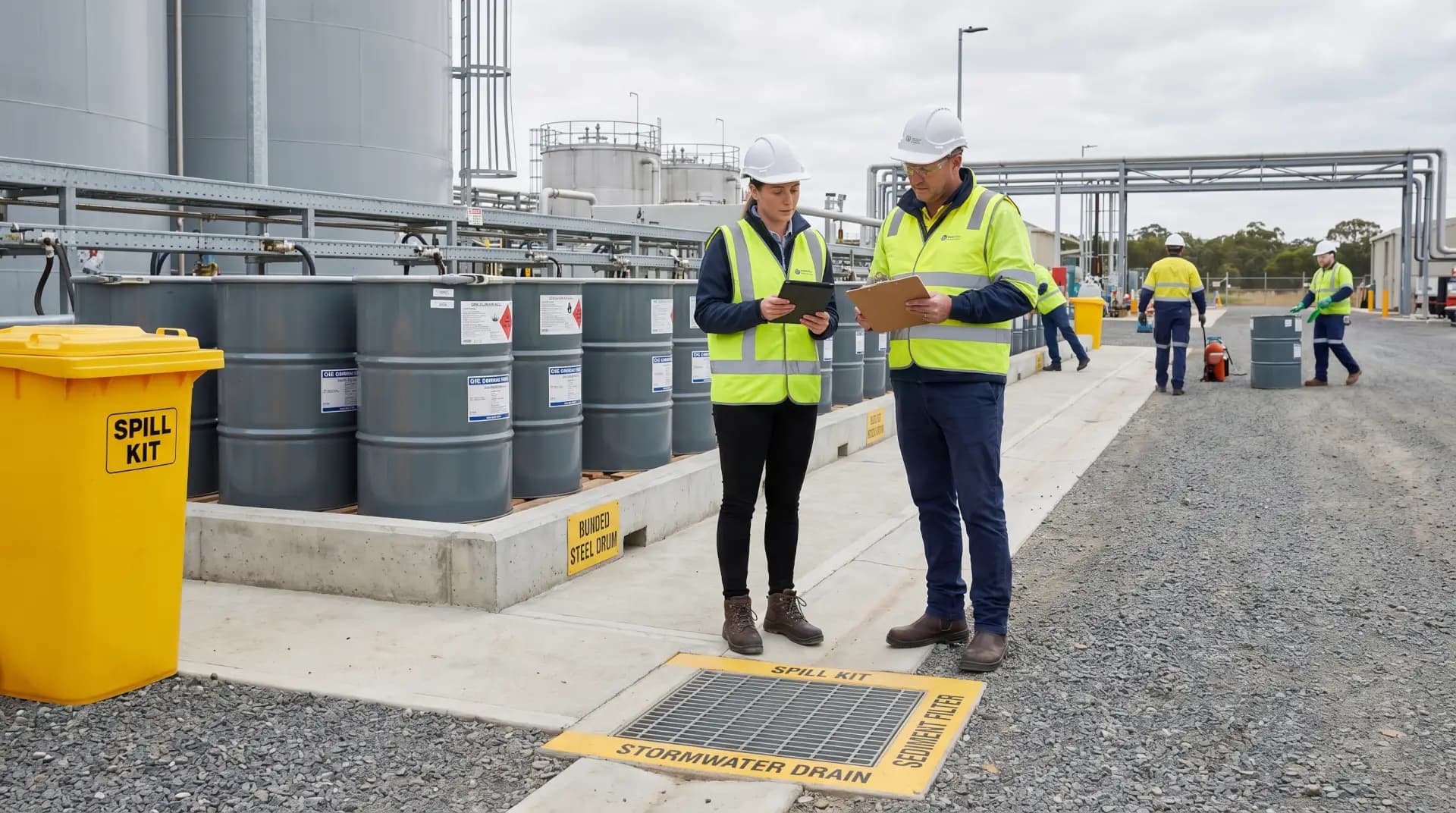
- Secondary containment: Bunds, drip trays, and lined areas for fuels, oils, and chemicals.
- Drainage protection: Drain covers, isolation valves, silt controls, and clear stormwater mapping.
- Waste segregation: Separate, labeled containers for hazardous waste, recyclables, general waste, and contaminated materials.
- Storage standards: Covered areas, compatible segregation, secure containers, and inspection routines.
- Transfer controls: Supervised refueling, hose inspection, overfill prevention, and emergency stop arrangements.
- Dust and emission controls: Water suppression, enclosure, maintenance, and idling reduction.
- Erosion and runoff controls: Berms, sediment traps, stabilized access routes, and stockpile protection.
- Contractor controls: Prequalification, induction, waste rules, and field verification of compliance.
Pro Tip: If a control depends entirely on perfect human behavior every time, it is weak. Add engineering measures such as bunding, interlocks, drain isolation, or physical segregation wherever you can.
Competence, Training, and Awareness
Environmental incidents often come from ordinary work done by people who were never told the environmental consequence. A mechanic drains oil into the wrong container. A labor crew washes concrete residue into a storm drain. A driver parks under a leaking hydraulic line and leaves it overnight.
Training is effective when it is role-based, not generic. Different groups need different environmental instructions.
The site should train these groups on the risks they actually control:
- Operators: Fuel transfer, leak recognition, drain awareness, and shutdown actions.
- Maintenance teams: Waste oil handling, contaminated absorbents, chemical storage, and spill cleanup.
- Supervisors: Inspection expectations, legal conditions, contractor oversight, and escalation triggers.
- Warehouse staff: Segregation, labeling, compatibility, and damaged container response.
- Contractors: Site-specific waste, discharge, refueling, and emergency arrangements.
- Emergency teams: Spill containment, runoff control, recovery, and reporting requirements.
Competence has to be checked in the field. A signed attendance sheet proves nothing if the wrong waste still ends up in the wrong skip.
Monitoring, Measurement, and Records
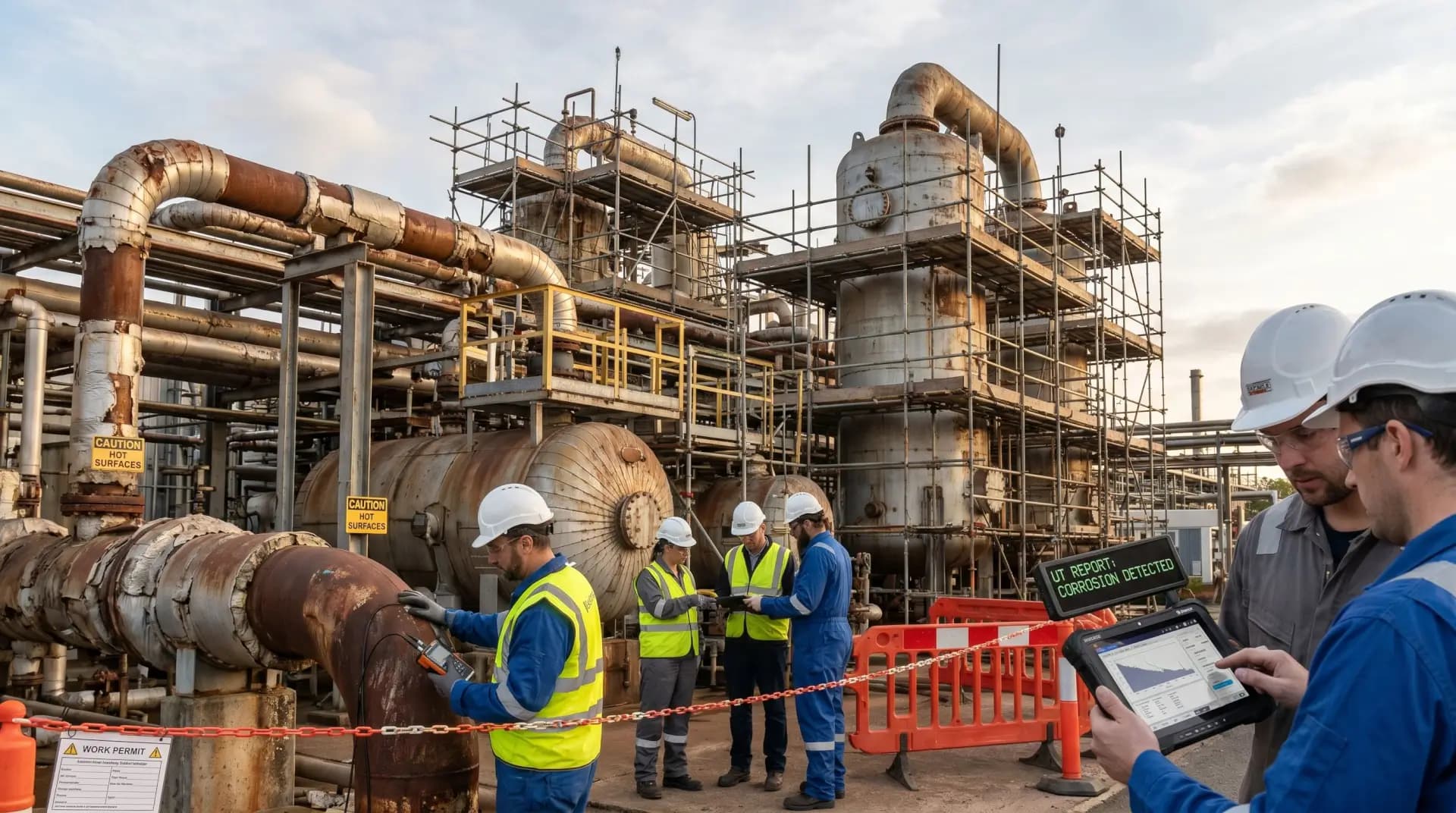
An EMS needs evidence. Not vanity metrics, but data that shows whether the site is under control. During audits, I compare records against field conditions because false confidence often sits in spreadsheets while the drains outside are already blocked with contaminated sediment.
Useful monitoring and records usually include:
- Routine inspections: Storage areas, drains, waste zones, workshops, and fuel points.
- Sampling and testing: Wastewater, emissions, groundwater, noise, or soil where risk justifies it.
- Waste tracking: Volumes, classifications, manifests, recycling rate, and disposal certificates.
- Resource data: Water use, electricity use, fuel consumption, and abnormal losses.
- Incident data: Spills, near misses, permit breaches, complaints, and corrective action trends.
- Calibration and maintenance records: Monitoring equipment and control systems must be reliable.
Those records feed the final piece of the system: review and improvement.
How ISO 14001 Supports an Environmental Management System
Most organizations discussing an environmental management system eventually come to ISO 14001 because it is the best-known international framework for EMS design and certification. In the field, I treat ISO 14001 as a disciplined structure, not a badge.
The standard does not tell a site exactly how to manage every spill point or waste stream. It tells the organization what management system elements must exist and function.
In practical terms, ISO 14001 pushes organizations to do the following:
- Understand organizational context: Know the internal and external issues affecting environmental performance.
- Identify interested parties: Regulators, communities, clients, lenders, workers, and contractors all matter.
- Assess environmental aspects: Determine which activities can cause significant impact.
- Manage compliance obligations: Keep legal and other requirements current and actionable.
- Control operations: Define and implement the controls needed to manage significant risks.
- Prepare for emergencies: Plan for spills, releases, firewater runoff, and abnormal events.
- Evaluate performance: Monitor, audit, and review whether the system is working.
- Improve continuously: Correct nonconformities and strengthen weak controls over time.
The table below shows how ISO-style EMS requirements translate into site practice.
| EMS Element | What It Means on Site | Common Failure |
|---|---|---|
| Aspect identification | Map activities that can affect air, water, soil, waste, and resources | Register misses abnormal and emergency conditions |
| Compliance obligations | Keep permits, limits, and waste rules current and assigned | Site teams do not know actual permit conditions |
| Operational control | Use bunds, segregation, inspections, drain control, and maintenance | Procedure exists but field control is absent |
| Competence | Train people by role and verify they can apply controls | Generic induction replaces task-specific training |
| Emergency preparedness | Plan and drill for spills, releases, runoff, and reporting | Spill kits exist but staff cannot use them properly |
| Performance evaluation | Inspect, sample, trend data, audit, and review management action | Records are collected but not analyzed or acted on |
| Improvement | Investigate failures and close corrective actions effectively | Repeat incidents with the same root cause |
Pro Tip: A certified EMS can still be weak. I have seen sites pass external audits and then fail basic containment checks the same week. Certification is evidence of a framework, not proof of field discipline.
Practical Control Measures Inside an Environmental Management System
This is the part supervisors usually need most. A working environmental management system has to show up in visible controls, task planning, inspections, and emergency readiness. If a site cannot point to practical controls, the EMS is not functioning.
Across construction, fuel storage, workshops, logistics yards, and industrial plants, these measures consistently make the biggest difference:
- Install and maintain secondary containment: Bunds should have capacity, integrity, and no rainwater neglect that reduces available volume.
- Protect storm drains: Mark drains, map flow direction, and keep drain covers or shutoff tools at high-risk points.
- Separate hazardous and non-hazardous waste: Clear labeling and container discipline prevent cross-contamination and disposal errors.
- Inspect transfer points before use: Hoses, couplings, valves, nozzles, and overfill controls need routine checks.
- Control runoff from dirty areas: Workshops, wash bays, fuel zones, and concrete works need dedicated containment or treatment.
- Manage chemicals by compatibility: Acids, alkalis, oxidizers, oils, and solvents should not be stored as if they are all the same risk.
- Maintain equipment proactively: Leaking hydraulics, worn seals, and damaged tanks create predictable environmental loss.
- Use spill response equipment correctly: Place kits where the risk is, not where they look good during a walk-through.
- Verify contractors in the field: Waste haulers, civil crews, and maintenance contractors need active oversight.
- Trend environmental data: Repeated small spills, rising waste volumes, or abnormal water use usually signal deeper control failure.
On one infrastructure project, the biggest improvement came from something basic: we redrew the drainage map, marked every inlet, and retrained supervisors on which drains went off-site. That one step changed how they planned refueling and washout activities.
Common Mistakes That Cause EMS Failure
Environmental management systems rarely fail because the concept is weak. They fail because organizations treat them as administrative compliance instead of operational control. The same weak patterns appear across sectors.
These are the mistakes I see most often during audits, investigations, and site interventions:
- Aspect registers are generic: They are copied from templates and do not reflect actual equipment, chemicals, or drainage routes.
- Legal registers are outdated: Permit conditions change but site documents and work practices do not.
- Controls are written, not implemented: Procedures describe containment and segregation that the site has never physically installed.
- Inspections are superficial: Checklists are ticked without checking drains, labels, leaks, or storage condition properly.
- Contractors sit outside the system: The principal site has rules, but subcontractors create the actual waste and spill exposure.
- Incidents are underreported: Small spills and near misses are cleaned up quietly, so trends stay hidden.
- Corrective actions are weak: Teams replace absorbents and call it closed without fixing root causes.
- Emergency drills are unrealistic: Staff know the theory but cannot isolate drains or recover product under pressure.
- Management review is passive: Leadership receives data but does not challenge poor performance or fund improvements.
Pro Tip: If the same environmental issue appears in three inspections, stop calling it housekeeping. It is a system failure and should be investigated as one.
Those mistakes become expensive quickly when they turn into real environmental incidents.
Why Environmental Management System Failures Are Dangerous
Some managers still treat environmental failures as lower priority than safety events because the harm is not always immediate. That is a serious mistake. Environmental damage can spread quietly, persist for years, and trigger legal, financial, and reputational consequences that far outlast the original event.
When an environmental management system fails, the consequences can include:
- Soil and groundwater contamination: Leaks can migrate below grade and remain undetected until remediation becomes costly.
- Surface water pollution: A spill entering stormwater can move off-site within minutes.
- Air quality impacts: Dust, vapor release, and uncontrolled emissions can affect workers and nearby receptors.
- Regulatory action: Notices, fines, permit restrictions, and enforced corrective programs can follow.
- Operational disruption: Cleanup, investigation, and damaged equipment can delay production or construction.
- Community complaints: Odor, noise, visible pollution, and dirty runoff quickly damage trust.
- Client and investor concern: Poor environmental performance can affect contract confidence and project approvals.
- Long-term remediation costs: The final cost is often many times higher than the cost of prevention.
I have been involved in incidents where the initial spill volume looked minor, but the pathway made it severe. Once contamination reaches drainage, groundwater, or a sensitive receptor, the event changes category immediately. That is why emergency preparedness must sit inside the EMS, not beside it.
Emergency Preparedness Within an Environmental Management System
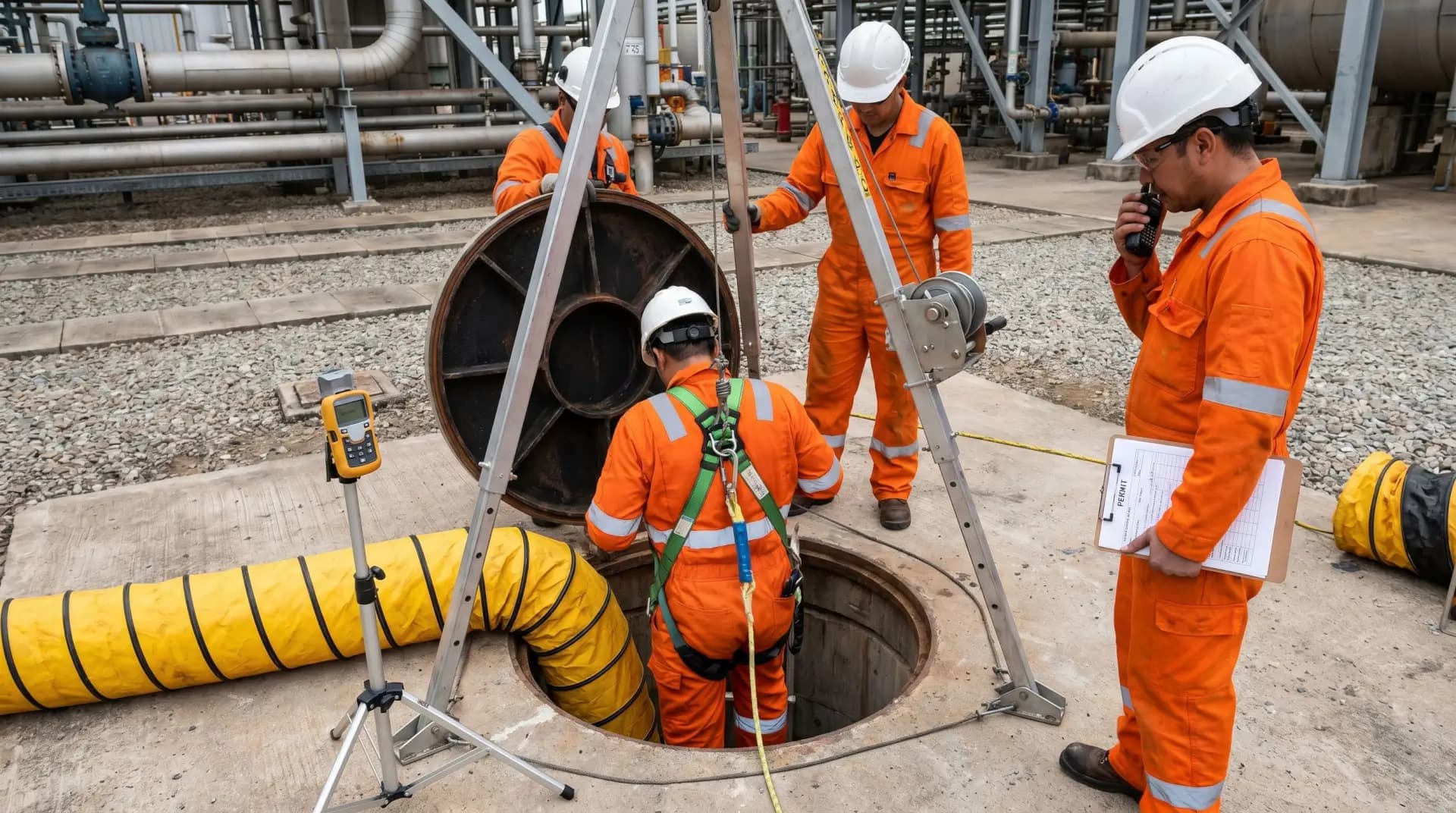
A credible environmental management system plans for abnormal and emergency conditions, not just routine work. I always test this during audits because many sites are prepared for a small workshop spill but not for a tanker overfill in rain, a ruptured hydraulic line near a watercourse, or firewater runoff from a storage area.
Environmental emergency preparedness should include the following elements:
- Scenario-based planning: Identify realistic spill and release events based on inventory, drainage, and operations.
- Response equipment at the point of risk: Booms, absorbents, drain covers, neutralizers where appropriate, and recovery tools.
- Clear roles and escalation: Workers must know who isolates, who reports, who contains, and who contacts external support.
- Drainage and receptor awareness: Teams need to know where runoff goes and what must be protected first.
- External communication protocols: Reporting routes for regulators, landowners, clients, or emergency agencies where required.
- Recovery and waste disposal arrangements: Contaminated absorbents, soil, and liquids need compliant handling after the incident.
- Drills and lessons learned: Practice under realistic conditions and revise plans after each exercise or event.
When a release happens, the first few minutes decide whether the event stays local or becomes a reportable environmental incident. The response sequence has to be simple enough to work under pressure.
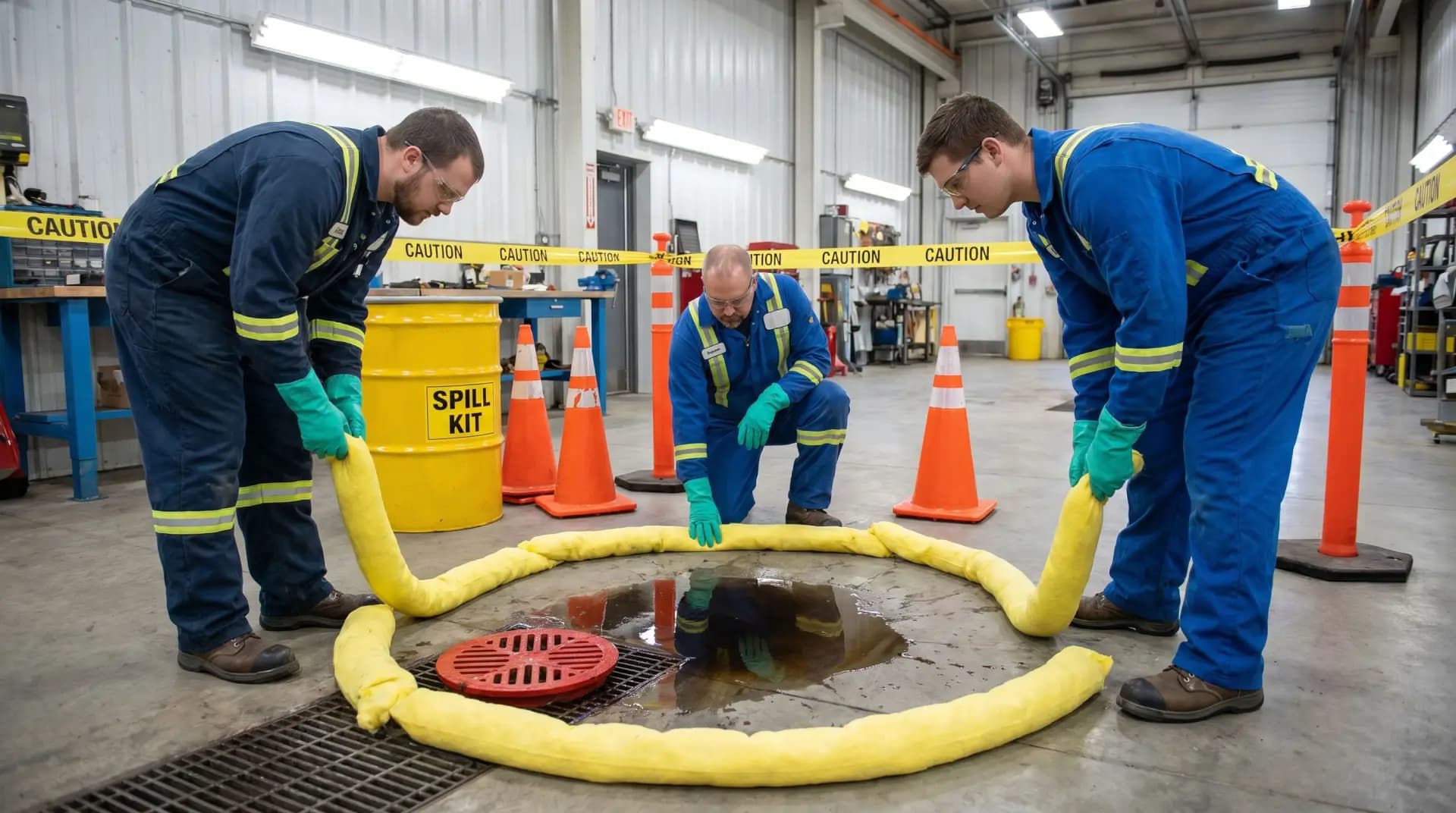
- Stop the source: Shut valve, upright container, isolate pump, or stop transfer if safe to do so.
- Protect pathways: Block drains, contain runoff, and keep product away from water and soil exposure routes.
- Contain and recover: Use absorbents, booms, pumps, or vacuum recovery as appropriate.
- Escalate and report: Notify site management and external parties according to legal and internal requirements.
- Clean up and verify: Remove contamination, inspect the affected area, and confirm no hidden spread remains.
- Investigate root cause: Fix the equipment, process, supervision, or planning failure that allowed the event.
Emergency readiness also exposes whether the organization truly understands its environmental risks. That is why audits and management review are so important.
Audits, Inspections, and Management Review in an Environmental Management System
An environmental management system does not stay effective by assumption. It needs challenge. I use inspections to catch drift early, audits to test system strength, and management review to force decisions on recurring weaknesses.
Each of these checks serves a different purpose:
- Routine inspections: Confirm that day-to-day controls such as bunds, labels, waste segregation, and drain protection are in place.
- Compliance inspections: Check whether permit and legal conditions are being met in practice.
- Internal audits: Test whether the EMS elements connect properly across departments and contractors.
- Management review: Evaluate trends, incidents, objectives, resources, and strategic improvement needs.
During a strong management review, leadership should be looking at more than lagging incidents. They should be asking whether the system is drifting before the next event occurs.
Useful management review inputs usually include:
- Spill and near-miss trends: Frequency, severity, pathways, and repeat causes.
- Compliance status: Permit results, overdue actions, and upcoming regulatory changes.
- Audit findings: Recurring nonconformities and delayed closure.
- Objective performance: Waste reduction, recycling, water use, energy use, and emissions performance.
- Stakeholder issues: Complaints, client findings, lender concerns, and community observations.
- Resource needs: Equipment replacement, infrastructure upgrades, staffing, and training gaps.
When management review is done properly, the EMS stops being an HSE-side activity and becomes part of business control.
How to Tell if an Environmental Management System Is Actually Effective
I do not judge an environmental management system by the number of procedures it has. I judge it by whether the site can control environmental risk during normal work, upset conditions, and contractor activity. That test is practical and unforgiving.
You can usually tell an effective EMS by these signs:
- Field conditions match the procedure: If the procedure says bunded storage, the bund exists and is maintained.
- Supervisors know the key risks: They can identify drains, sensitive receptors, and permit-critical controls without guessing.
- Workers understand consequences: They know why a task matters environmentally, not just what box to tick.
- Data drives action: Trends lead to changes in equipment, layout, training, or maintenance.
- Contractors follow the same rules: The highest-risk temporary work is not left outside the system.
- Incidents reduce in quality, not only quantity: The repeat causes disappear because root causes are fixed.
- Management funds prevention: The site invests before the next spill forces the decision.
The opposite is also easy to spot. If the site looks clean only before audits, if records are perfect but storage is poor, or if small spills are normalized, the EMS is not working no matter what certificate hangs on the wall.
Final Field Lessons on What an Environmental Management System Is and How It Works
An environmental management system works when it connects environmental risk to how the site is actually run. That means identifying significant aspects honestly, understanding legal duties, applying physical and procedural controls, training the people who create the risk, and checking performance hard enough to catch drift early. If any one of those links fails, the system weakens fast.
In my experience, the best environmental management system is never the thickest manual. It is the one that supervisors can explain, workers can apply, and managers are willing to fund when the control costs money. Pollution prevention is cheaper than cleanup, but more importantly, prevention is the only approach that respects the land, water, and communities around the work.
When an environmental management system is treated as paperwork, the environment absorbs the failure. When it is treated as an operating discipline, the site stays in control. That is the difference between managing impact and merely documenting it.


Responses (0)