

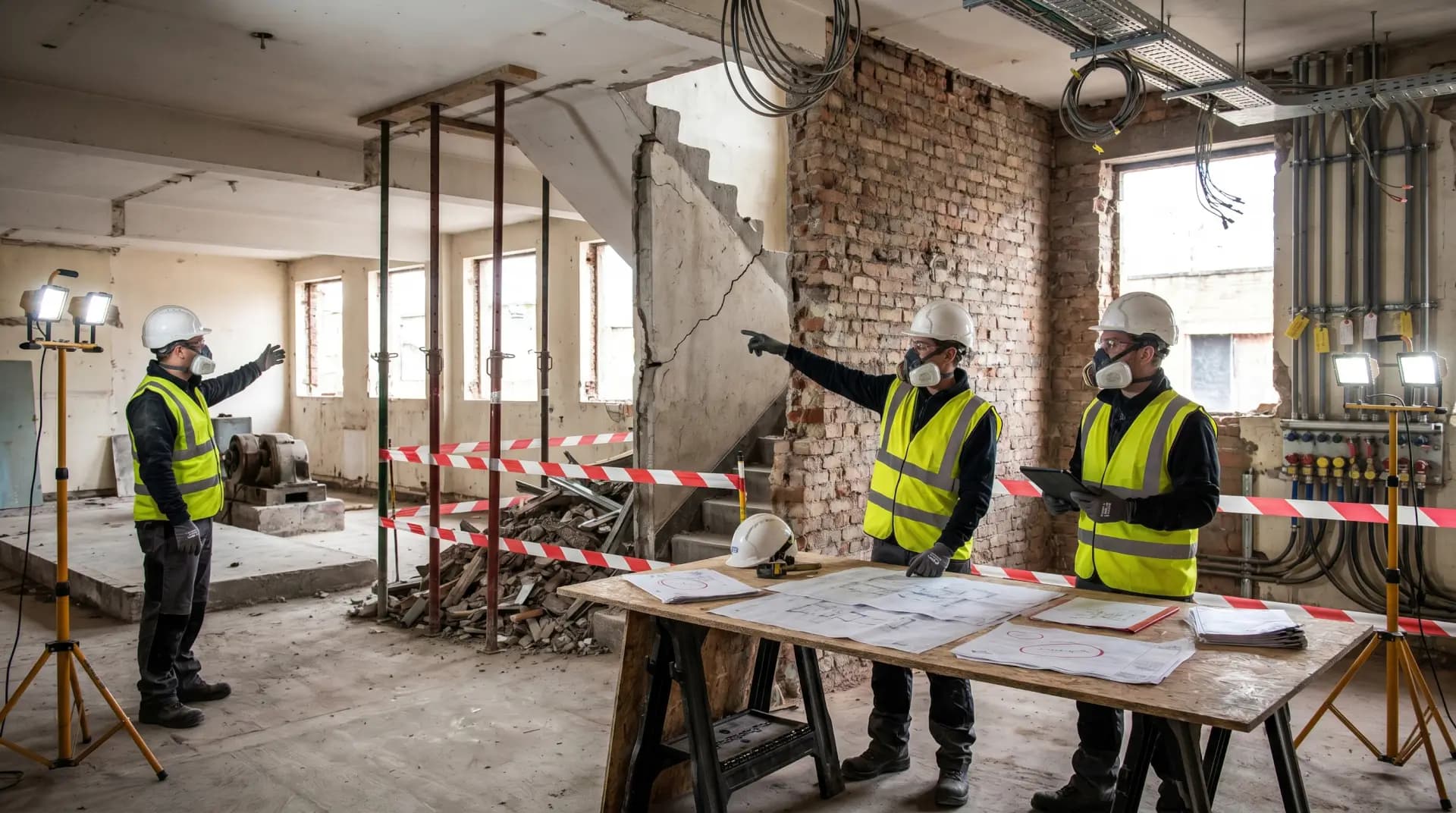
A demolition risk assessment is a structured evaluation of everything that can injure people, damage property, affect nearby structures, or release harmful substances during demolition work. It must be completed before demolition starts, reviewed as the work changes, and supported by competent structural, environmental, and site-safety input.
The purpose is not only to fill a form. The purpose is to decide whether the demolition method is safe, what could fail unexpectedly, who may be harmed, and which controls must be in place before anyone breaks, cuts, pulls, burns, lifts, drops, or removes part of the structure.
A reliable demolition risk assessment should answer six practical questions:
What is being demolished?
What is known and unknown about the structure?
What hazards can arise before, during, and after demolition?
Who can be harmed?
What controls will prevent collapse, exposure, falls, fire, impact, and public risk?
How will the assessment be reviewed as the structure changes?
Why Demolition Risk Assessment Is Different from Normal Construction Risk Assessment
Demolition is construction in reverse, but with more uncertainty. In new construction, the structure generally becomes stronger as work progresses. In demolition, the structure becomes weaker each time a support, wall, slab, beam, service, or connection is removed.
That is why a demolition risk assessment must focus heavily on sequencing, temporary stability, hidden materials, and changing site conditions.
The most serious demolition risks usually come from:
Unplanned structural collapse
Falls from height or through fragile surfaces
Falling debris and struck-by incidents
Contact with live electrical, gas, water, or communication services
Asbestos, lead, silica dust, contaminated residues, or biological hazards
Fire, explosion, hot work, or trapped flammable materials
Plant movement and reversing equipment
Noise, vibration, dust, and flying particles
Public interface, adjacent properties, traffic, and nearby utilities
Poor sequencing or uncontrolled manual removal
In the United States, OSHA demolition requirements under 29 CFR 1926 Subpart T place strong emphasis on a competent person carrying out an engineering survey before demolition starts. In Great Britain, demolition must be planned and managed under the Construction (Design and Management) Regulations 2015, with specific attention to pre-construction information, structural stability, asbestos, services, and safe working zones.
My practical view is simple: if the risk assessment does not clearly control collapse, services, hazardous materials, falling objects, plant interface, and public protection, it is not ready for demolition work.
Step 1: Define the Scope of Demolition Work
Before identifying hazards, define exactly what work is included. Many demolition risk assessments fail because the scope is too vague.
Do not write “demolish building” as the activity. Break the work into phases.
A better scope would include:
Site preparation and isolation
Utility disconnection and verification
Soft stripping
Asbestos or hazardous material removal
Removal of fixtures, cladding, partitions, or services
Mechanical demolition
Manual demolition
Work at height
Lifting operations
Waste segregation and removal
Final clearance and making the area safe
For each phase, identify the location, structure type, demolition method, equipment, workforce, public exposure, and expected waste streams.
Information to Collect Before Assessment
A competent assessment should be based on evidence, not assumptions. Collect:
Information Required | Why It Matters |
|---|---|
Structural drawings and alteration history | To understand load paths and possible weaknesses |
Engineering survey or structural assessment | To prevent unplanned collapse |
Asbestos refurbishment/demolition survey | To identify asbestos before disturbance |
Service drawings and isolation certificates | To prevent electrocution, fire, flooding, or gas release |
Adjacent building information | To protect neighbouring structures |
Ground condition information | To assess plant stability and buried hazards |
Previous use of the building | To identify contamination, chemicals, tanks, or residues |
Traffic and public interface details | To plan exclusion zones and access control |
Environmental constraints | To manage dust, noise, vibration, waste, and runoff |
Where information is missing, the risk assessment should state the uncertainty and specify further investigation. “Unknown” is not a control measure.
Step 2: Identify Demolition Hazards Systematically
Hazard identification should follow the actual demolition sequence. I prefer walking the site with the demolition supervisor, engineer where needed, plant operator, client representative, and HSE lead. A desk review alone is not enough for demolition.
Use the following hazard groups as a minimum.
Structural Stability Hazards
Assess:
Weak or damaged floors
Unsupported walls
Previous structural alterations
Fire-damaged or weather-damaged elements
Post-tensioned concrete
Cantilevered sections
Basements, voids, trenches, or pits
Load-bearing masonry
Chimneys, parapets, facades, and cladding
Temporary works requirements
Adjacent structures that may be affected
The key question is: what could collapse if this element is removed, cut, loaded, pulled, or struck?
Hazardous Materials and Health Hazards
Demolition can release substances that were safely contained while the structure was intact.
Assess for:
Asbestos-containing materials
Lead-based paint
Respirable crystalline silica from concrete, brick, stone, and mortar
Mould, bird droppings, sewage, or biological contamination
Chemical residues
Fuel tanks, oil lines, or contaminated soil
Mercury, PCBs, refrigerants, or old industrial materials
Dust, fumes, noise, and vibration
For asbestos, do not rely on visual inspection. A proper refurbishment or demolition survey by a competent surveyor is required in jurisdictions where asbestos regulations apply. If the survey is incomplete or access was restricted, the risk assessment must treat affected areas as suspect until confirmed otherwise.
Services and Energy Sources
Live services are one of the most unforgiving demolition hazards.
Assess:
Electrical supply
Gas lines
Water mains
Steam lines
Fire protection systems
Telecommunications
Underground cables
Solar panels and battery systems
Stored pressure
Hydraulic, pneumatic, or mechanical energy
Fuel tanks or generators
Controls should include isolation, lockout/tagout where applicable, verification testing, marking of residual services, and permit-to-work controls for intrusive work.
Falls, Openings, and Fragile Surfaces
During demolition, safe access can disappear quickly.
Assess:
Roof work
Edge exposure
Floor openings
Lift shafts and stairwells
Fragile roofs or skylights
Incomplete floors
Temporary platforms
Scaffolds and mobile elevated work platforms
Access and egress routes as the structure changes
A common error is to assess fall risk only at the start. In demolition, fall risk must be reviewed after each major removal stage.
Plant, Equipment, and Lifting Hazards
Assess:
Excavators and high-reach machines
Attachments such as breakers, pulverisers, shears, and grabs
Cranes and lifting accessories
Skid steers, dumpers, loaders, and trucks
Reversing movements
Slewing zones
Ground bearing capacity
Operator visibility
Pedestrian segregation
Falling or swinging loads
Maintenance and refuelling risks
Plant should be matched to the demolition method, structure height, reach, ground condition, and exclusion zone. A machine that is suitable on one demolition site may be unsafe on another.
Public, Environmental, and Neighbouring Property Risks
Demolition risk assessment must look beyond the site fence.
Assess:
Public footpaths and roads
Nearby homes, schools, hospitals, offices, or shops
Adjacent buildings
Shared walls
Overhead lines
Dust migration
Noise and vibration impact
Flying debris
Traffic movements
Waste transport
Water runoff and drainage contamination
Emergency access
Where the public can be affected, controls must be stronger than simple warning signs. Use physical barriers, exclusion zones, traffic management, debris netting, hoarding, monitoring, and supervision.
Step 3: Decide Who May Be Harmed and How
A demolition risk assessment must identify all exposed groups, not only demolition workers.
Consider:
Demolition operatives
Plant operators
Scaffolders
Asbestos removal contractors
Waste handlers
Security staff
Engineers and surveyors
Client representatives
Visitors and inspectors
Neighbouring workers
Pedestrians and road users
Emergency responders
Vulnerable people near the site
Then describe the harm clearly.
For example:
Hazard | Who May Be Harmed | Possible Harm |
|---|---|---|
Unplanned wall collapse | Operatives, plant operator, public | Fatal crush injuries |
Silica dust | Workers, nearby occupants | Serious respiratory disease |
Live electrical cable | Workers | Electric shock, burns, fatality |
Falling debris | Workers, pedestrians, vehicles | Head injury, fractures, property damage |
Noise and vibration | Workers, neighbours | Hearing damage, nuisance, structural complaints |
Poor waste handling | Workers, waste contractor | Cuts, contamination, manual handling injuries |
This step prevents a narrow assessment. Demolition has a wider impact zone than many routine construction activities.
Step 4: Evaluate Risk and Select Controls
Risk evaluation should consider severity, likelihood, exposure, and the reliability of existing controls. For demolition, I give more weight to severity because collapse, asbestos release, fire, and plant impact can be fatal even from one failure.
Use the hierarchy of controls:
Eliminate the hazard where possible.
Substitute with a safer method.
Use engineering controls.
Apply administrative controls.
Provide suitable PPE.
PPE is important, but it must never be treated as the main control for collapse, falling objects, live services, or hazardous material release.
Practical Control Measures for Demolition
Risk Area | Strong Controls |
|---|---|
Structural collapse | Engineering survey, demolition sequence, temporary works, exclusion zones, competent supervision |
Asbestos | Refurbishment/demolition survey, licensed or competent removal, air monitoring where required, waste controls |
Live services | Isolation certificates, lockout/tagout, cable avoidance, permit-to-dig, verification testing |
Falls from height | Designed access, edge protection, working platforms, fall prevention systems, controlled openings |
Falling debris | Exclusion zones, debris chutes, controlled drop zones, toe boards, netting, covered walkways where needed |
Plant movement | Traffic management plan, banksmen, segregation, reversing controls, defined routes |
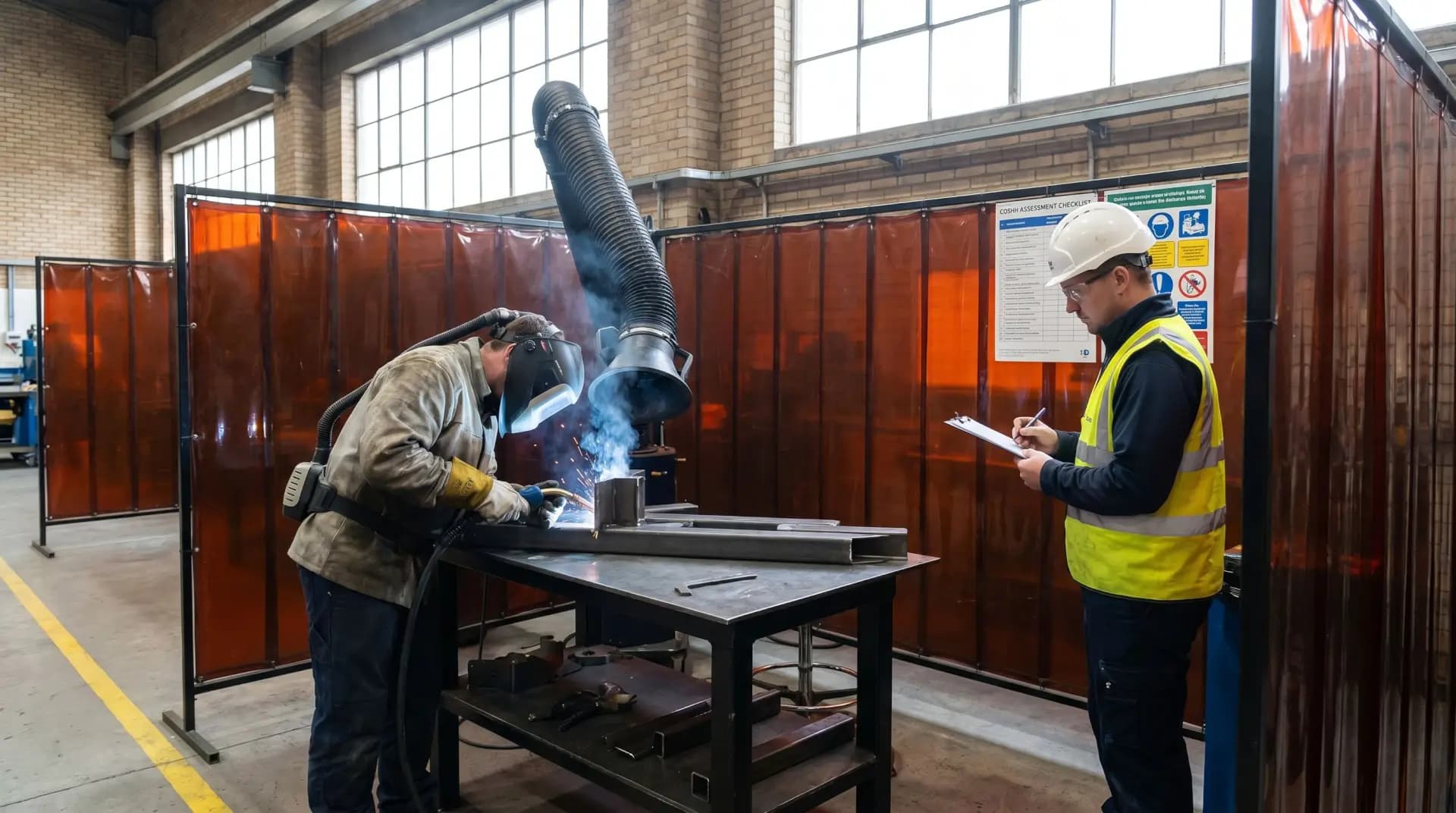
Dust and silica | Water suppression, extraction, respiratory protection, exposure controls, cleaning methods |
Noise and vibration | Low-noise methods, monitoring, restricted work periods, hearing protection, neighbour communication |
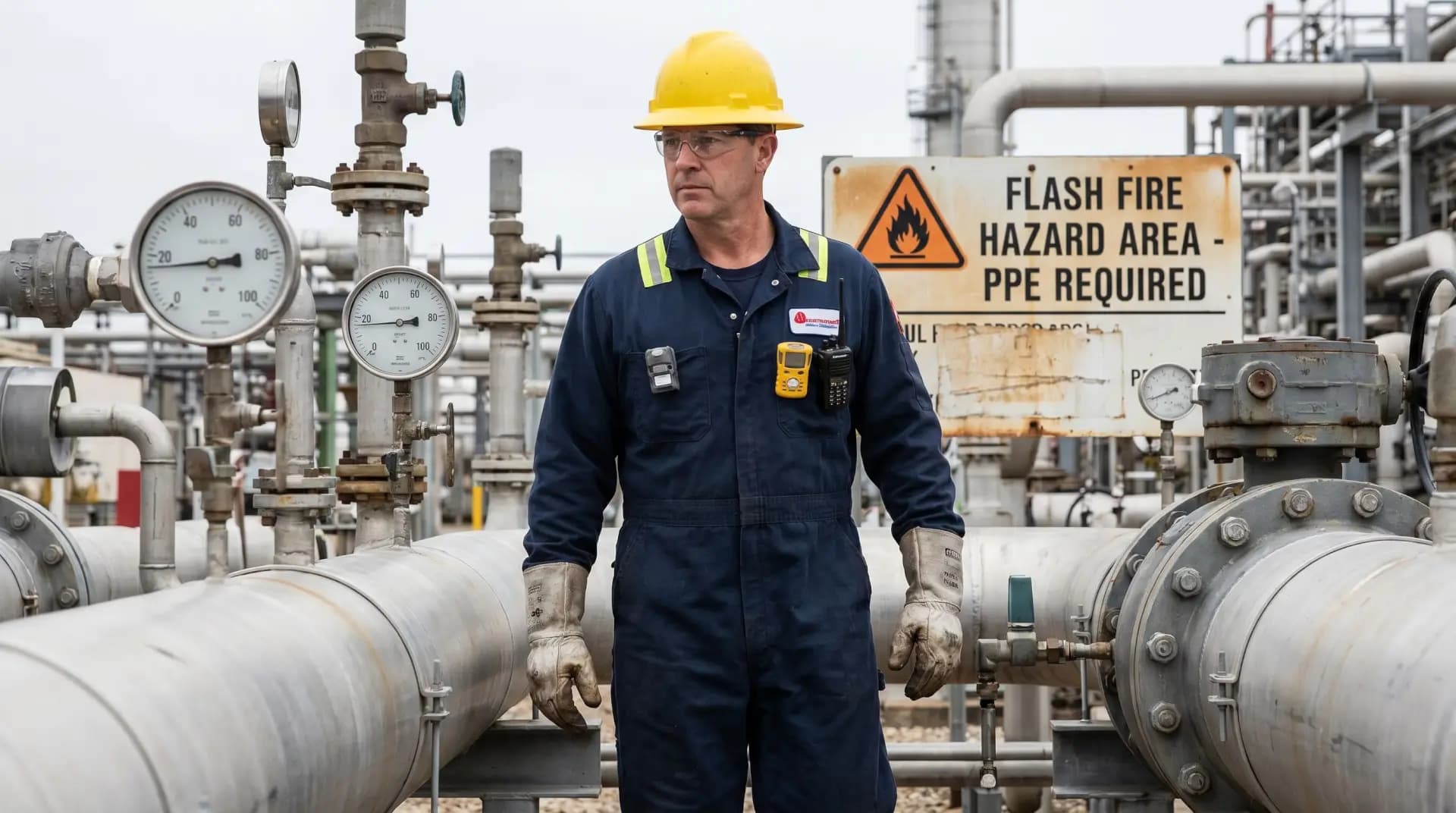
Fire and explosion | Hot work permit, gas-free checks, removal of flammables, fire watch, extinguishers, emergency plan |
Public interface | Hoarding, signage, road permits where required, controlled access, community communication |
A good demolition risk assessment does not simply say “use competent workers.” Competence is necessary, but it must be supported by a safe method, supervision, inspection, and controls that physically prevent harm.
Step 5: Link the Risk Assessment to the Demolition Method Statement
The demolition risk assessment and method statement must work together. The risk assessment identifies what can go wrong and what controls are required. The method statement explains how the work will be carried out safely.
The method statement should include:
Sequence of demolition
Plant and equipment to be used
Access and egress arrangements
Exclusion zones
Temporary works
Service isolation
Dust, noise, and vibration controls
Hazardous material controls
Waste handling
Emergency arrangements
Inspection points
Stop-work conditions
Roles and responsibilities
For higher-risk demolition, the sequence should be reviewed by a competent structural engineer or demolition specialist. This is especially important where load-bearing elements, multi-storey structures, basements, shared walls, or unstable structures are involved.
Stop-Work Triggers
Every demolition risk assessment should include clear stop-work triggers. Work must stop when:
Unexpected structural movement is observed
Unknown materials are exposed
Suspected asbestos or hazardous material is discovered
A live service is found
Exclusion zones are breached
Weather creates unsafe conditions
Plant becomes unstable
Dust, noise, or vibration controls fail
The planned sequence cannot be followed
There is any doubt about structural stability
Stopping work is not a delay. It is a control.
Step 6: Record, Communicate, and Review the Assessment
A demolition risk assessment must be recorded in a format workers can understand and supervisors can use.
At minimum, record:
Project and location
Scope of demolition
Assessment team and competence
Survey information reviewed
Identified hazards
Persons at risk
Initial risk level
Control measures
Residual risk level
Responsible persons
Required permits
Inspection and monitoring requirements
Emergency arrangements
Review dates and triggers
Communication Before Work Starts
Before demolition begins, brief the workforce through a task-specific toolbox talk. The briefing should cover:
Demolition sequence
Key hazards
Exclusion zones
Access routes
Plant movement routes
Emergency procedure
PPE requirements
Stop-work triggers
Reporting requirements
Ask workers to repeat back the critical controls. In my experience, this simple step reveals whether the assessment has actually been understood or only signed.
When to Review the Risk Assessment
Review the assessment:
Before each major demolition phase
After structural conditions change
After unexpected materials are found
After an incident, near miss, or unsafe condition
When plant, method, workforce, or weather changes
When adjacent activities are introduced
When monitoring results show controls are not effective
Demolition is dynamic. A risk assessment that is not reviewed becomes outdated very quickly.
Demolition Risk Assessment Checklist
Use this checklist as a practical review tool before authorising demolition work.
Checkpoint | Yes/No/Action |
|---|---|
Scope of demolition clearly defined | |
Competent person appointed | |
Structural or engineering survey completed | |
Adjacent structures assessed | |
Asbestos refurbishment/demolition survey completed | |
Other hazardous materials assessed | |
Services isolated and verified | |
Demolition sequence confirmed | |
Temporary works identified where needed | |
Exclusion zones designed and marked | |
Safe access and egress provided | |
Fall protection controls in place | |
Plant suitable for the task and ground conditions | |
Traffic management plan prepared | |
Dust, noise, and vibration controls defined | |
Waste handling and disposal arrangements confirmed | |
Fire and emergency arrangements prepared | |
Public protection measures installed | |
Workforce briefed on method and risks | |
Stop-work triggers communicated | |
Review process established |
Common Mistakes to Avoid
The most common mistake is treating demolition risk assessment as a standard construction form. Demolition needs deeper thinking because the structure, hazards, and access conditions change continuously.
Avoid these errors:
Starting demolition before completing surveys
Assuming services are dead without verification
Using a generic risk assessment from another project
Ignoring adjacent structures
Failing to plan temporary stability
Allowing workers into poorly controlled drop zones
Treating asbestos, lead, or silica as minor dust issues
Relying only on PPE for high-consequence hazards
Not updating the assessment after conditions change
Letting production pressure override stop-work rules
A strong demolition risk assessment is specific, evidence-based, and actively used by supervisors. A weak one is generic, paperwork-heavy, and disconnected from the actual sequence of work.
Conclusion
To conduct a demolition risk assessment properly, start with reliable information, understand the structure, identify hazards by demolition phase, assess who may be harmed, select controls using the hierarchy of control, and link the assessment directly to the demolition method statement.
The critical controls are structural stability, service isolation, hazardous material management, exclusion zones, safe access, plant segregation, dust control, public protection, and continuous review.
Demolition work should never begin on assumption. It should begin only when the risks are understood, the method is controlled, the workforce is briefed, and the site team knows exactly when to stop.

Responses