

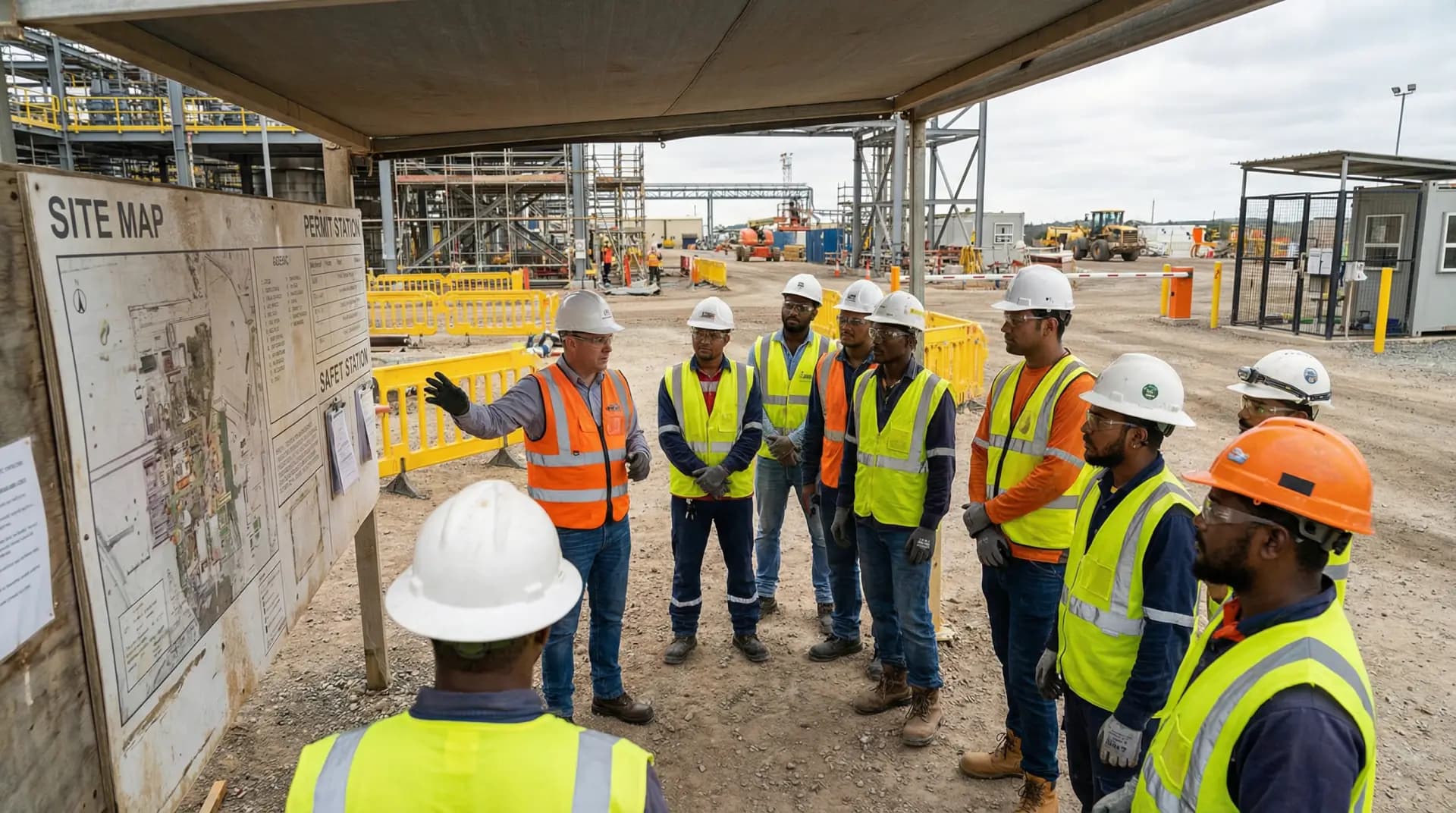
Contractor safety orientation and induction is the formal process of preparing contractors to work safely, legally, and competently before they begin work on a site. A good induction does not simply tell contractors where the toilets and muster points are. It confirms who they are, what work they will perform, what hazards they may face, what controls are mandatory, who supervises them, how emergencies are handled, and when work must stop.
In my view, contractor induction fails when it becomes a one-time presentation instead of a control point. The purpose is not to “tick the training box.” The purpose is to make sure a contractor can enter the workplace, understand the risk environment, and work under the same safety expectations as employees, visitors, subcontractors, and site leadership.
Regulators treat contractor safety as a shared management responsibility, not a handover of risk. In the United Kingdom, HSE guidance on using contractors emphasizes defining the job, selecting competent contractors, assessing risk, providing information and instruction, consulting workers, and managing the work. In the United States, OSHA requires employers to provide appropriate safety training before workers engage in potentially hazardous activities, and OSHA’s multi-employer policy recognizes that more than one employer can be accountable for hazards on a shared worksite.
What Contractor Safety Orientation and Induction Should Achieve
Contractor safety orientation gives contractors the baseline knowledge they need to enter and move around the site safely. Contractor induction goes further. It connects that general knowledge to the specific work, location, equipment, permits, interfaces, emergency arrangements, and supervision requirements.
A strong contractor induction should achieve six outcomes:
Confirm contractor competence
The person attending induction should be the person who will actually do the work. Their trade certificates, licenses, medical fitness where applicable, equipment authorization, and task experience should be checked before site access is granted.Explain site-specific hazards
Contractors need to know the hazards that are unique to the site, not only the hazards of their trade. These may include moving vehicles, live process equipment, confined spaces, chemical exposure, high-voltage rooms, overhead lifting, work at height, pressure systems, radiation sources, noise zones, poor lighting, unstable ground, or simultaneous operations.Define the rules of control
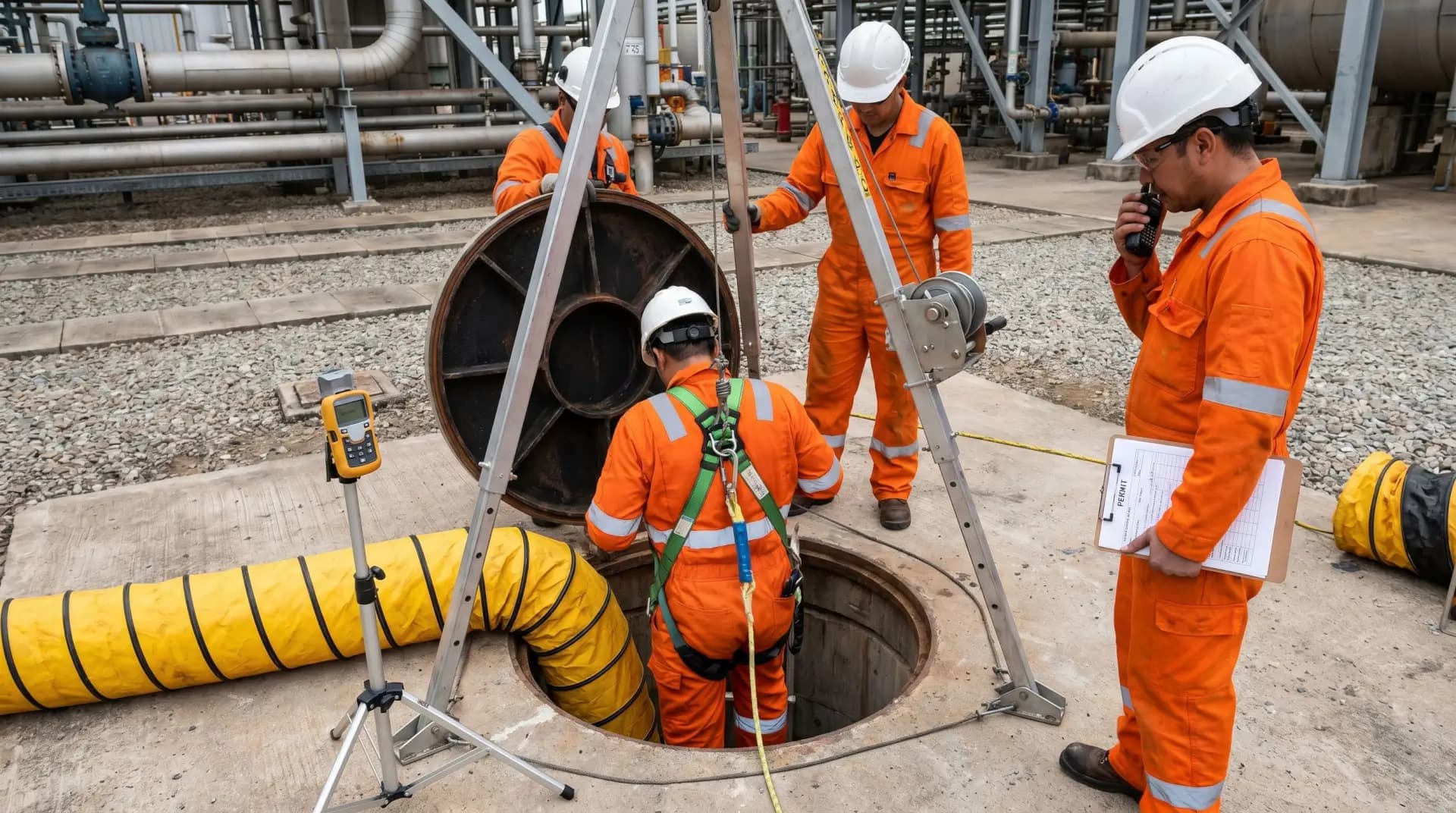
Induction must explain the controls that cannot be bypassed: permits to work, lockout/tagout or isolation, hot work controls, confined space entry, lifting plans, excavation permits, traffic rules, fall protection, PPE, barricading, gas testing, and emergency communication.Clarify responsibilities
Contractors should know who approves the work, who supervises them, who stops the job, who receives incident reports, who authorizes permit changes, and who coordinates with other contractors.Set stop-work expectations
Every contractor should leave induction knowing that unsafe work must stop. This includes unclear instructions, missing permits, changed conditions, damaged equipment, absent rescue arrangements, and uncontrolled interactions with other work groups.Create a record
The organization must be able to show who was inducted, when they were inducted, what topics were covered, who delivered the induction, what site or task restrictions apply, and when refreshers are required.
Professional judgment note: I do not consider a contractor “inducted” just because they sat through a slide deck. I consider them inducted when they can explain the critical site rules, identify the supervisor, understand emergency actions, and demonstrate that their task controls are in place.
Contractor Orientation vs Contractor Induction
Many organizations use the terms interchangeably, but separating them improves control.
Element | Contractor Safety Orientation | Contractor Safety Induction |
|---|---|---|
Main purpose | Introduces general site safety rules | Confirms safe readiness for specific work |
Timing | Before site access or at first arrival | Before starting the assigned job |
Scope | General hazards, emergency rules, PPE, conduct | Task hazards, permits, controls, interfaces, supervision |
Delivered by | HSE team, site admin, security, operations, or designated trainer | Supervisor, permit issuer, HSE representative, or work owner |
Output | Site access approval | Work authorization readiness |
Typical record | Attendance sheet, card, system entry | Permit pack, toolbox talk record, task briefing, JSA acknowledgement |
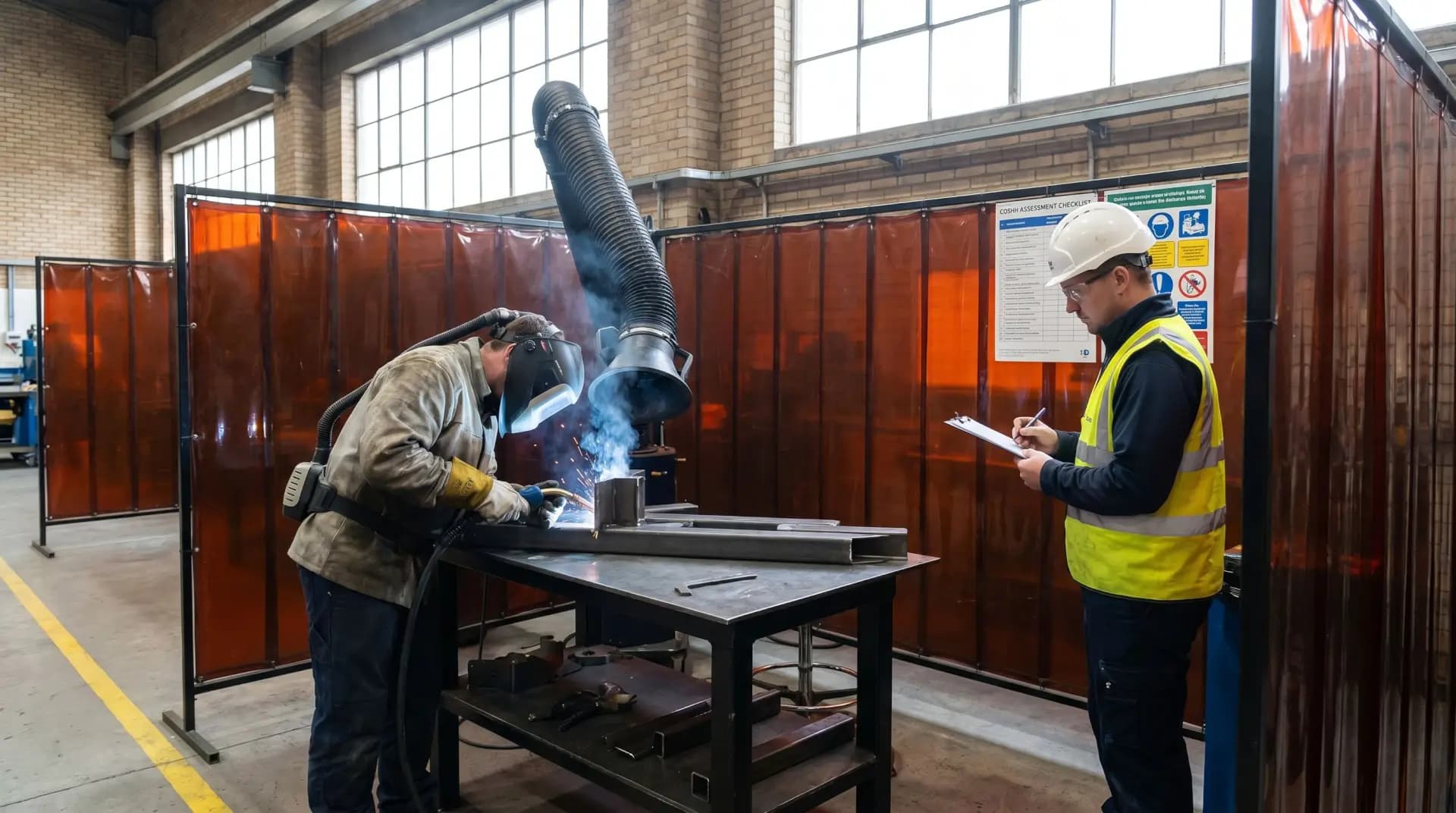
A contractor may pass orientation but still not be ready to work. For example, a welder may understand site emergency alarms and PPE rules but still need hot work authorization, gas testing, fire watch arrangements, isolation confirmation, and area handover before striking an arc.
That distinction matters because many serious contractor incidents happen after general access has been granted but before task-level controls are fully understood.
Pre-Induction Checks Before Contractors Enter the Site
Contractor induction should not be the first filter. By the time a contractor arrives for orientation, the organization should already have completed basic contractor management checks.
A practical pre-induction review includes:
Company prequalification and scope approval
Valid contract or work order
Risk assessment or method statement review
Trade licenses and competency evidence
Equipment inspection certificates where required
Operator authorization for cranes, forklifts, MEWPs, pressure equipment, electrical work, or other regulated activities
Insurance and legal documentation where applicable
Medical fitness or health surveillance clearance for safety-critical work, where required by law or site risk assessment
Emergency response requirements for high-risk work
Subcontractor approval, if subcontracting is allowed
Language and literacy needs
Site access validity period
The HSE UK contractor guidance is useful because it frames contractor control as a complete process: identify the job, select a suitable contractor, assess the risks, provide information and training, consult the workforce, and manage the work. That is the right mindset. Induction is one part of contractor control, not the whole system.
Red Flags Before Induction
I would pause contractor access when I see any of the following:
The contractor cannot explain the job scope clearly.
The worker’s name does not match the approved personnel list.
Certificates are expired, incomplete, or unrelated to the task.
The method statement is generic and does not match site conditions.
The contractor intends to use unapproved subcontractors.
Tools or equipment have no inspection status.
High-risk work is planned without rescue arrangements.
The contractor does not understand the permit requirements.
There is no named site contact or responsible supervisor.
These red flags are not administrative annoyances. They are early warnings that the work is not yet under control.
Core Topics to Cover in Contractor Safety Induction
A contractor induction should be specific enough to control risk but not so overloaded that workers remember nothing. I prefer a layered approach: general site induction first, task-specific briefing second, and daily toolbox communication for changing conditions.
1. Site Access and Conduct Rules
Start with the basics that keep people controlled from the gate onward:
Entry and exit procedures
ID badge or access card requirements
Restricted areas
Escort requirements
Working hours and overtime controls
Smoking, drugs, alcohol, weapons, photography, and mobile phone rules
Welfare facilities
Parking and pedestrian routes
Speed limits and traffic segregation
Housekeeping expectations
Disciplinary consequences for serious breaches
Contractors must understand that site access is conditional. It can be withdrawn if they violate critical safety rules, bypass controls, or perform unapproved work.
2. Emergency Arrangements
Emergency information must be simple, repeated, and visible.
Cover:
Alarm types and what each alarm means
Muster points
Evacuation routes
Emergency contact numbers
First-aid arrangements
Fire extinguisher rules
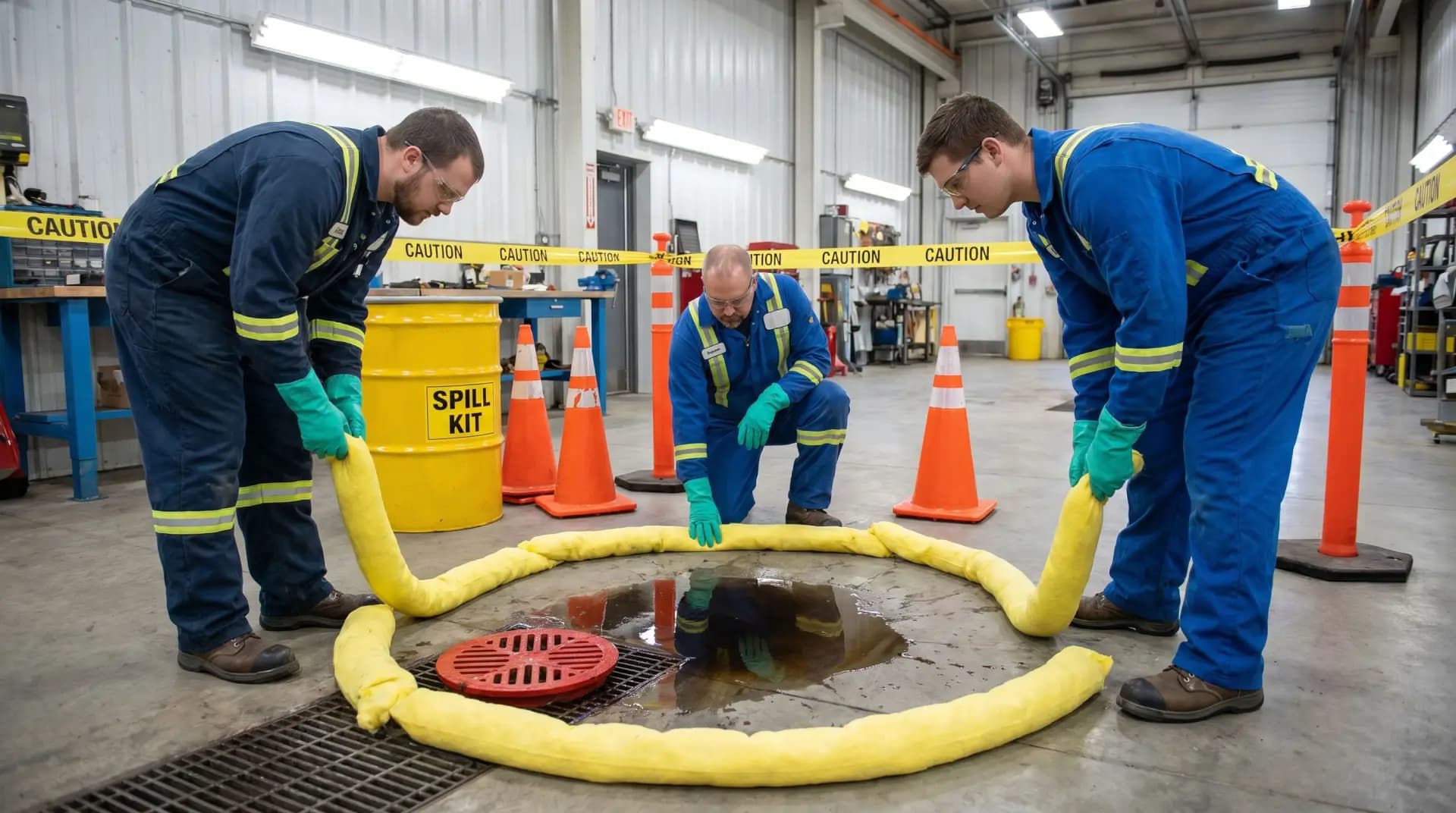
Spill response expectations
Medical emergency reporting
Rescue arrangements for confined space, height, excavation, or remote work
Severe weather or natural hazard procedures where relevant
Do not assume contractors will behave correctly during an emergency just because signs are posted. Induction should make emergency response practical and site-specific.
3. Permit-to-Work and High-Risk Activities
For many contractor jobs, permit control is the heart of safe execution. Induction should explain which activities require written authorization and what the contractor must do before, during, and after the job.
Common permit-controlled activities include:
Hot work
Confined space entry
Electrical work
Isolation and lockout/tagout
Work at height
Excavation
Lifting operations
Line breaking
Roof access
Pressure testing
Work near live plant
Work in hazardous atmospheres
Work involving hazardous substances
The contractor should understand that a permit is not a formality. It is a live agreement between the work party, area owner, permit issuer, and supervisor. If conditions change, the permit must be reviewed, suspended, or reissued.
4. PPE and Task-Specific Protection
The induction should separate mandatory site PPE from task-specific PPE.
Mandatory site PPE may include:
Safety helmet
Safety footwear
Eye protection
High-visibility clothing
Gloves
Hearing protection in designated areas
Task-specific PPE may include:
Respiratory protective equipment
Arc-flash protection
Chemical gloves and suits
Fall arrest harness
Welding shield
Cut-resistant gloves
Face shield
Life jacket
Heat-resistant clothing
PPE should never be presented as the main control when elimination, substitution, engineering controls, isolation, and administrative controls are available. However, where PPE is required, contractors must know the correct type, limitations, inspection method, storage rules, and replacement process.
5. Hazard Reporting, Near Misses, and Incident Notification
Contractors need a clear reporting route. They should know what to report, when to report it, and to whom.
Reportable items should include:
Injuries and illness symptoms related to work
Near misses
Unsafe conditions
Equipment defects
Chemical spills
Fire or smoke
Dropped objects
Permit deviations
Damaged barriers or guards
Environmental releases
Security concerns
Unexpected underground services
Changes in job scope
A contractor who hides a minor incident today may leave behind the conditions for a serious incident tomorrow. Induction must make reporting normal, expected, and free from blame when raised in good faith.
A Practical Contractor Induction Process
The most effective contractor induction systems are simple enough to follow and strong enough to stop unsafe work. I use the following sequence as a practical model.
Step 1: Confirm Scope and Contractor Approval
Before induction, confirm that the contractor is approved for the work they are being asked to perform. A civil contractor approved for painting should not automatically be accepted for excavation. A maintenance contractor approved for mechanical fitting should not be assigned electrical isolation unless separately competent and authorized.
Step 2: Verify Personnel and Competence
Check names, identification, role, qualifications, licenses, and authorization. Where local law requires certified persons, the induction record should not override that requirement.
For safety-critical work, confirm that the person is medically fit where required. This must be handled with confidentiality and within applicable privacy and employment laws.
Health and fitness note: Contractor induction should not be used to collect unnecessary medical details. The organization needs confirmation of fitness for the task where required, not private health information beyond what is legally and operationally necessary.
Step 3: Deliver General Site Orientation
Use a consistent orientation package covering emergency arrangements, traffic routes, PPE, prohibited actions, welfare, reporting, and general site hazards. Keep the content practical and test understanding.
A short written or verbal assessment can be useful, especially for high-risk workplaces. The test should check comprehension, not memory of minor administrative details.
Step 4: Provide Area-Specific Briefing
Before the contractor enters the work area, the area owner or supervisor should explain local hazards. This includes live plant, stored energy, nearby operations, restricted zones, access routes, hazardous substances, noise, heat, ventilation, and emergency equipment.
Area briefings are especially important in operating facilities where conditions change daily.
Step 5: Conduct Task-Specific Induction
Review the method statement, job safety analysis, permit conditions, isolation plan, lifting plan, rescue plan, drawings, and interface risks. Make sure the actual work team is present.
The contractor should be able to answer:
What exactly are we doing?
What can harm us?
What controls must be in place before we start?
What other work is happening nearby?
What permit applies?
What equipment are we using?
What will make us stop the job?
Who is supervising?
What is the emergency response?
Step 6: Authorize Work and Record the Induction
Once the contractor has completed the required orientation and task briefing, record the approval. The record should show:
Contractor company
Worker name
Role or trade
Date of induction
Induction type
Topics covered
Trainer or responsible person
Assessment result if used
Site or area access limits
Expiry date
Signatures or electronic acknowledgements
Restrictions or special conditions
Step 7: Monitor, Refresh, and Re-Induct
Induction does not end at the gate. Supervisors should verify contractor behavior in the field. Refreshers should be given when:
The contractor returns after a long absence
The job scope changes
Site conditions change
New hazards are introduced
A serious rule breach occurs
An incident or near miss reveals a knowledge gap
Regulations or site rules change
The induction validity period expires
In contractor-heavy workplaces, I recommend treating refresher induction as a risk-based control rather than a calendar-only exercise.
Contractor Safety Induction Checklist
Use this checklist as a practical template and adapt it to the legal requirements of your country, industry, and site risk profile.
Induction Item | Minimum Expectation | Completed |
|---|---|---|
Identity verified | Name and ID match approved list | ☐ |
Company approved | Contractor approved for the work scope | ☐ |
Competency checked | Licenses, training, and certificates verified | ☐ |
Scope explained | Contractor understands assigned work | ☐ |
Site rules covered | Access, conduct, PPE, restricted areas | ☐ |
Emergency briefing completed | Alarms, muster points, first aid, emergency contacts | ☐ |
Traffic rules explained | Vehicle routes, pedestrian routes, speed limits | ☐ |
Hazard communication completed | Chemicals, SDS access, labeling, exposure controls | ☐ |
Permit requirements explained | High-risk work permits and authorization rules | ☐ |
Isolation requirements explained | Lockout/tagout or energy isolation process | ☐ |
Work at height controls explained | Platforms, ladders, scaffolds, fall protection | ☐ |
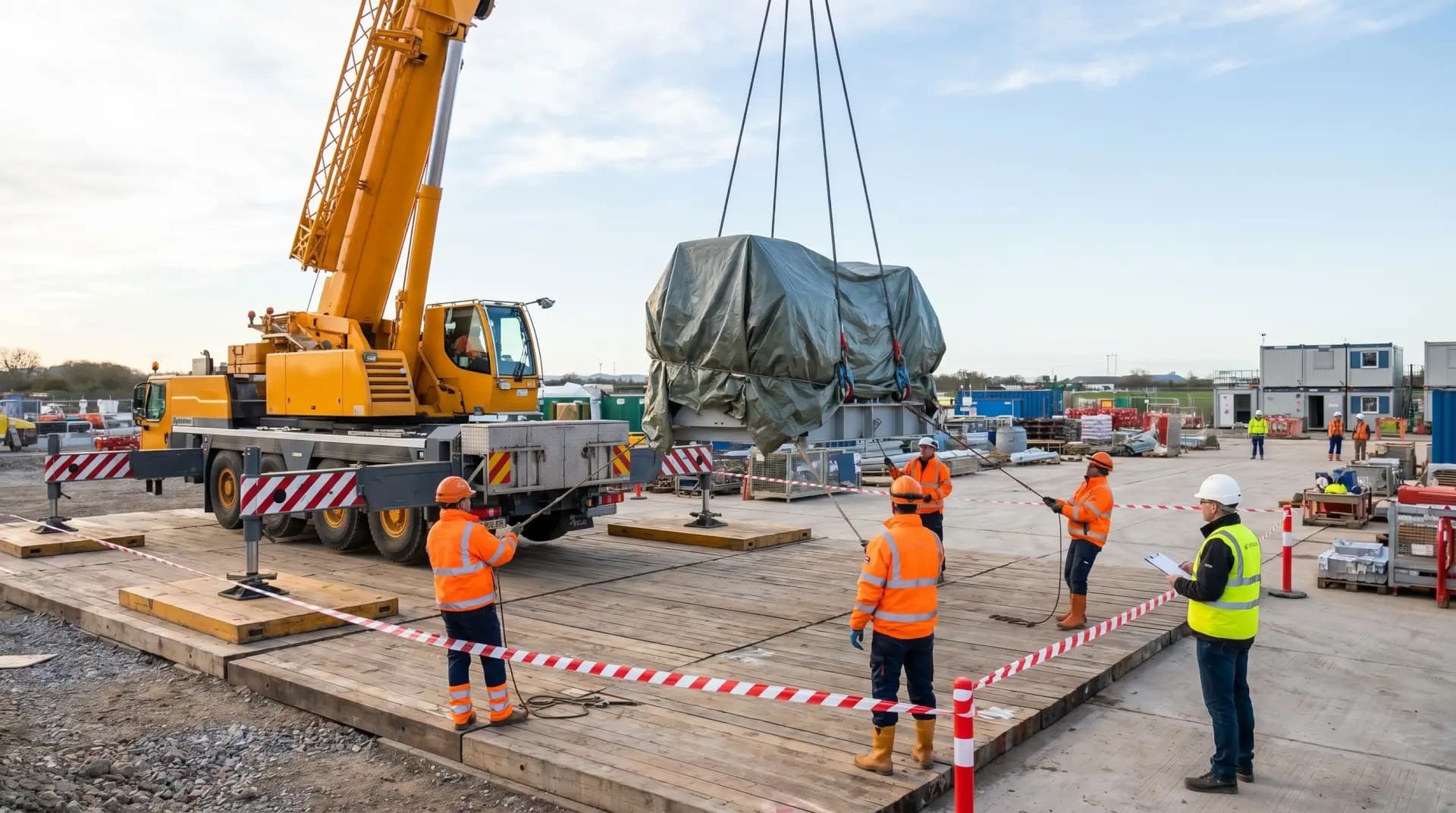
Lifting rules explained | Lifting plan, exclusion zones, rigging controls | ☐ |
Confined space rules explained | Entry permit, testing, attendant, rescue plan | ☐ |
Incident reporting explained | Injury, near miss, unsafe condition, spill | ☐ |
Stop-work authority explained | Contractor can and must stop unsafe work | ☐ |
Environmental rules covered | Waste, spills, emissions, drains, housekeeping | ☐ |
Supervisor identified | Contractor knows reporting line | ☐ |
Assessment completed | Understanding verified where required | ☐ |
Record filed | Signed or electronic induction record saved | ☐ |
Expiry date assigned | Re-induction or refresher date defined | ☐ |
Common Mistakes in Contractor Safety Orientation
The mistakes I see most often are not complicated. They are basic control failures repeated until they become normal.
Mistake 1: Treating Induction as a Slide Presentation
A slide deck can support induction, but it cannot replace field verification. Contractors need to see the work area, understand the hazards, and discuss the task controls with the responsible supervisor.
Mistake 2: Giving One Induction for Every Risk Level
A cleaner, scaffolder, crane operator, electrician, confined space entrant, and chemical cleaning team do not need the same induction depth. The general site rules may be the same, but the task-specific induction must match the risk.
Mistake 3: Ignoring Language and Literacy
A contractor who nods politely may still not understand the instruction. Use plain language, translated material where needed, demonstrations, pictograms, and verbal confirmation. For critical tasks, ask workers to explain the control back to you.
Mistake 4: Failing to Control Subcontractors
Subcontractors must not enter through the back door of contractor management. If subcontracting is allowed, the same approval, competence, induction, supervision, and reporting rules must apply.
Mistake 5: Not Explaining Shared Responsibilities
On multi-employer worksites, different employers may create, expose, correct, or control hazards. OSHA’s multi-employer policy in the United States reflects this shared accountability model. The practical lesson is clear: no party should assume that contractor risk belongs only to someone else.
Mistake 6: Allowing Work to Drift from the Approved Scope
Many incidents begin with small changes: “just one extra cut,” “only a quick lift,” “we can do it from this ladder,” or “the permit still covers it.” Induction should make it clear that scope changes require review before the work continues.
Legal, Regulatory, and Management System Considerations
Contractor safety induction must be aligned with the laws and standards that apply in the jurisdiction where the work is performed. Do not copy another company’s induction and assume it meets your legal duty.
In the United States, OSHA standards require appropriate training for workers exposed to job hazards, and the OSHA Outreach 10-hour and 30-hour programs are hazard awareness courses that may be required by employers or local rules even though OSHA states they are not themselves federally required.
In the United Kingdom, HSE guidance on using contractors emphasizes cooperation, information, instruction, training, supervision, and clear responsibility between the client and contractor.
For organizations using ISO 45001, contractor control should be built into procurement, operational planning, outsourced processes, hazard control, communication, competence, and performance evaluation. The practical expectation is that contractor safety is not handled separately from the occupational health and safety management system; it is part of it.
Legal boundary note: This guide is practical HSE guidance, not legal advice. Always check the current occupational safety and health laws, approved codes, client requirements, and industry-specific rules in the country and sector where the work is taking place.
Conclusion
Contractor safety orientation and induction is one of the most important control points in contractor management. It decides whether a contractor enters the workplace as an informed, competent, and controlled work party—or as an unmanaged risk.
A good induction explains the site. A better induction verifies competence, connects the contractor to the actual task, confirms critical controls, defines supervision, and gives every worker the authority to stop unsafe work. The strongest systems also refresh induction when risk changes, not only when a card expires.
My practical standard is simple: no contractor should start work unless they understand the hazards, controls, emergency actions, permit rules, reporting expectations, and limits of their authorization. Anything less is not induction. It is access without assurance.



Responses