TL;DR
- Set fixed check-in rules: Lone workers need scheduled contact points, not vague instructions to call if needed.
- Match communication to the task: A delivery driver, field technician, and night cleaner do not need the same contact method.
- Plan for communication failure: If signal drops or a worker misses a check-in, escalation must start immediately.
- Keep messages simple: Lone workers need clear triggers for when to stop work, report, or request help.
- Supervision still applies: Lone working does not remove the employer's duty to monitor risk and respond fast.
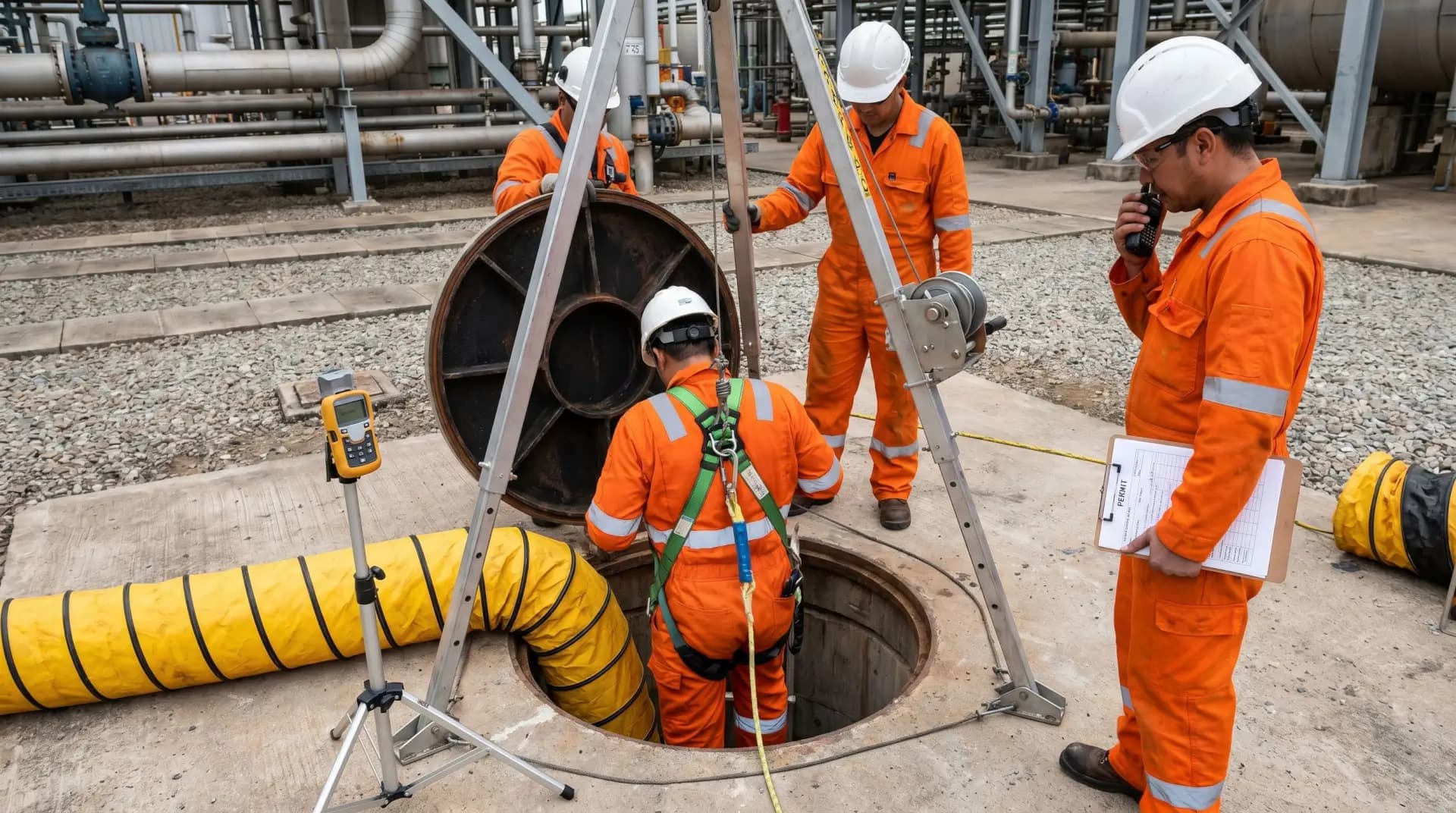
I stopped a maintenance job once because the technician had the right tools, the right permit, and the right PPE, but no reliable way to raise help once he moved behind a steel-clad structure with poor signal. The supervisor told me, “He has a phone.” That phone was useless where the task was actually being done, and the worker was effectively on his own with electrical isolation work still in progress.
That is where lone working communication usually fails. The issue is not whether a worker owns a phone; it is whether the communication system works under real operating conditions. In this article, I will break down how to communicate with lone workers in a way that holds up during routine work, deteriorating conditions, missed check-ins, medical events, aggression, fatigue, and emergency response.
What does it mean to communicate with lone workers effectively?
Communicating with lone workers effectively means using a planned, reliable, task-based system that allows routine contact, confirms welfare, identifies distress early, and triggers escalation quickly if the worker does not respond. Good communication is structured, tested, and backed by supervision; it is never left to chance.
When I review lone worker arrangements, I look beyond the device. I want to see whether the communication method matches the hazard, location, duration, and consequence of failure.
The strongest lone worker communication systems usually include the following elements:
- Defined contact intervals: The worker knows exactly when to check in and with whom.
- Primary and backup methods: If mobile signal fails, another channel is available.
- Clear emergency triggers: Everyone knows when silence becomes an incident.
- Location awareness: The control point knows where the worker should be, not just who they are.
- Competent monitoring: A responsible person actively watches the check-in schedule.
- Escalation steps: Missed contact leads to action, not repeated passive waiting.
Under HSE UK guidance on lone working, employers must assess the risks to lone workers and put measures in place so they can be supervised, kept in touch with, and assisted if something goes wrong.
That last point matters most. A communication plan only has value if somebody is ready to act when the plan starts to fail.
Why lone worker communication fails in real operations
Most failures I have seen were predictable. They came from assumptions made in offices that did not survive field conditions, changing weather, remote work areas, battery loss, or simple human distraction.
During audits across utilities, logistics yards, and shutdown maintenance, the same weaknesses kept appearing:
- Overreliance on mobile phones: Phones are treated as the full system, even where coverage is poor or hands-free use is unrealistic.
- No check-in discipline: Supervisors say “keep me posted,” but no one sets exact times.
- Unclear responsibility: The worker thinks the supervisor is monitoring; the supervisor thinks the control room is monitoring.
- No escalation threshold: A missed call leads to delay because nobody knows when to start emergency action.
- Task creep: A short inspection turns into troubleshooting, travel, or extra work without updating the contact plan.
- Fatigue and distraction: Night workers, drivers, and field staff forget to check in when workload rises.
- False confidence in technology: Devices are issued but never tested in the actual work zone.
These failures become more serious when the lone worker faces a high-consequence hazard. Electrical work, work at height, confined spaces, violence risk, remote travel, and hazardous substances all reduce the margin for delay.
Common situations where communication breaks down fastest
Some lone working environments are far less forgiving than others. I flag them early because any missed contact there can become a rescue delay, not just an administrative problem.
The highest-risk communication breakdowns usually happen in these situations:
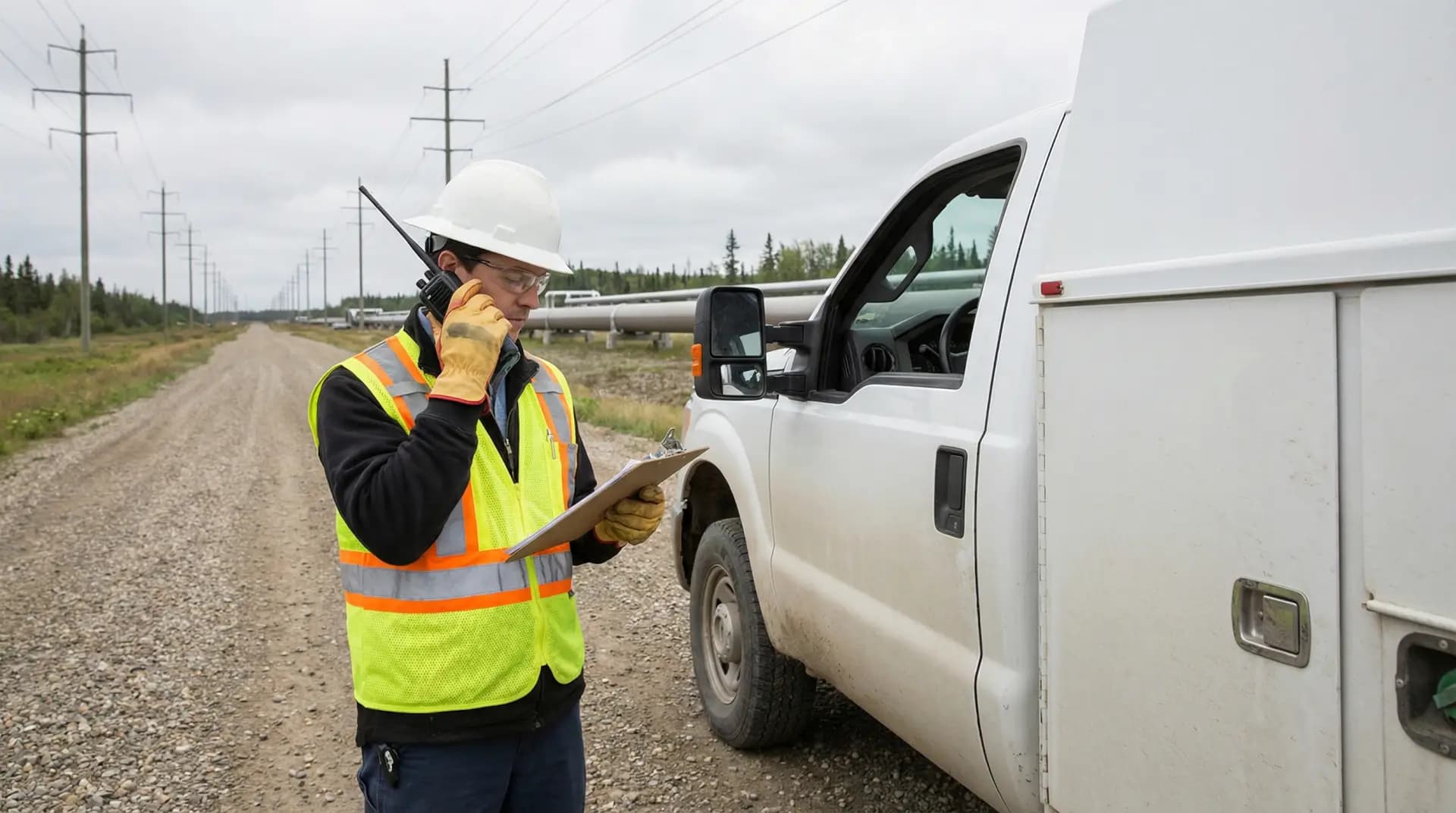
- Remote field inspections: Workers move in and out of signal while covering large areas alone.
- Night shift cleaning or security rounds: Low staffing means missed welfare signs go unnoticed.
- Utility or telecom maintenance: Workers access basements, rooftops, plant rooms, and service corridors with poor reception.
- Delivery and transport work: Drivers face route changes, aggression, fatigue, and variable stop durations.
- Home visits and community work: Social risk can escalate quickly, especially where violence or harassment is possible.
- Environmental monitoring or sampling: Workers may be near water, unstable ground, chemicals, or wildlife with no immediate support.
Once you understand where communication fails, the next step is selecting methods that still work when the job stops being routine.
Choosing the right communication method for lone workers
I never recommend one device for every lone working task. The right method depends on travel distance, environmental conditions, hazard severity, worker competence, and how quickly help must reach the person.
The table below reflects how I compare communication options during risk assessment and pre-job planning.
| Communication method | Best use | Main strengths | Main limitations |
|---|---|---|---|
| Mobile phone | Low to moderate risk work in areas with strong coverage | Simple, familiar, low cost | Signal loss, battery drain, worker may be unable to call |
| Two-way radio | Sites with established radio network and active supervision | Instant group contact, fast emergency call | Coverage dead spots, channel congestion, limited privacy |
| Lone worker device with panic alarm | Higher-risk field work and social risk tasks | Man-down alert, GPS, silent alarm options | Needs setup, training, charging, and response monitoring |
| Satellite communicator | Remote areas with poor cellular coverage | Works outside normal mobile network | Higher cost, slower messaging in some conditions |
| Vehicle telematics and dispatch system | Drivers and mobile service teams | Tracks route and movement patterns | Does not confirm worker welfare outside the vehicle |
| Scheduled voice or video check-in platform | Home-based lone work or isolated indoor work | Structured welfare confirmation | Depends on worker compliance and network reliability |
No device removes the need for judgment. I have seen expensive lone worker alarms fail because nobody in the control point understood what the alerts meant or how to respond.
What to consider before selecting a communication system
The selection process has to start with the job, not the supplier brochure. Before approving any arrangement, I check whether the chosen method can survive the conditions the worker will actually face.
These are the practical selection factors that matter most:
- Hazard severity: Higher-risk tasks need shorter check-in intervals and faster escalation.
- Coverage reliability: Test signal strength in the exact work area, not just at the gate or office.
- Worker mobility: Moving workers need portable, hands-free, durable communication.
- Ease of use under stress: Emergency activation must be simple with gloves, low light, or injury.
- Battery endurance: The device must last the full shift with margin for delay.
- Location accuracy: Responders need a usable position, not a vague map point.
- Monitoring capability: Someone must receive, interpret, and act on alarms immediately.
Pro Tip: I always ask workers to demonstrate the device in the actual work zone. A communication method that only works during induction is not a control measure.
Once the method is selected, the real control comes from how you structure contact.
How to set check-in procedures that lone workers will actually follow
The best communication plan is usually the one that is easiest to remember during a busy shift. If check-in rules are vague, too frequent for the task, or disconnected from the work pattern, workers start skipping them.
On sites where lone working is common, I build check-ins around natural task points rather than arbitrary clock times alone.
A workable check-in procedure should define the following:
- Start-of-task contact: Confirm location, job scope, expected duration, and hazards before the worker begins.
- Routine welfare checks: Set fixed intervals based on risk, travel time, and task complexity.
- Task-change notification: The worker must report if the job expands, moves, or runs late.
- End-of-task closure: The worker confirms the job is complete and they are clear of risk.
- Missed check-in threshold: State exactly how long to wait before escalation starts.
- Emergency phrase or code: Use simple wording if the worker cannot speak freely.
For higher-risk lone working, I prefer a structured sequence rather than informal calls. The sequence below has held up well in field operations:
- Pre-job contact: Worker confirms task, location, hazards, and expected completion time.
- Mid-task check-in: Worker confirms status and whether conditions have changed.
- Deviation report: Worker reports delay, route change, access issue, or new hazard immediately.
- Completion check-out: Worker confirms the task is finished and they are safe.
- Supervisor closure: Responsible person records closure and stands down monitoring.
This sounds simple because it should be. Lone workers do not need complicated scripts; they need short, repeatable communication steps that fit the job.
How often should lone workers check in?
There is no single interval that suits every task. The check-in frequency should rise as the consequence of delayed assistance rises.
In practice, I usually set contact frequency using these risk-based bands:
- Low-risk isolated office or indoor work: Start and end check-ins may be enough if emergency support is nearby.
- Moderate-risk mobile work: Check-ins every 30 to 60 minutes often work if travel and task conditions are stable.
- Higher-risk field tasks: Check-ins every 15 to 30 minutes may be necessary, especially where environment or public interaction is unpredictable.
- Very high-risk work: Lone working may be unacceptable regardless of communication frequency.
OSHA's position is clear in practice: if the hazard requires immediate assistance for safe performance, communication alone is not enough and the work may need another person present.
That is the line many organizations miss. Communication is a control, but it is not a substitute for adequate staffing where the risk demands direct support.
What lone workers must report during every contact
I have listened to many check-in calls that added no value. The worker says, “All good,” the supervisor says, “Okay,” and both move on. That exchange does not confirm welfare, location, hazard change, or whether the worker is drifting into a higher-risk situation.
Each contact should capture the minimum information needed to decide whether work can continue safely.
I train lone workers to report these points in every scheduled contact:
- Exact location: Where they are now, not where they started.
- Task status: What stage of the job they are in.
- Condition change: Any access issue, weather shift, equipment defect, or unexpected hazard.
- Personal condition: Fatigue, illness, stress, or any factor affecting safe work.
- Estimated next contact: When the next check-in should happen.
- Need for support: Whether they require assistance, standby, or job suspension.
For workers exposed to aggression or social risk, I also use simple coded phrases. These allow the worker to signal distress without escalating the situation in front of another person.
Pro Tip: Avoid long check-in scripts. If a worker cannot deliver the message in under 20 seconds, the process is too heavy for real operations.
How supervisors should respond when a lone worker misses contact
This is where weak systems collapse. I have seen missed check-ins treated as a minor delay until the worker eventually called back. In one case, the worker had fallen on uneven ground and lay injured for over an hour because everyone assumed the phone battery had died.
A missed contact must trigger a pre-agreed escalation sequence. Waiting without action is not supervision.
The response plan should set out these actions clearly:
- Immediate retry: Call or message using the primary method at once.
- Use backup channel: Switch to radio, secondary phone, app alert, or satellite message.
- Check last known details: Confirm location, route, task, vehicle, and expected movement.
- Contact nearby support: Ask local supervisor, gatehouse, dispatcher, or coworker for visual confirmation if possible.
- Escalate within set time: If no response, activate the emergency procedure without delay.
- Send competent assistance: Dispatch responders who understand the site hazards, not just the nearest person.
For higher-risk lone working, I use a time-bound sequence so no one improvises under pressure.
- At missed check-in time: Attempt immediate contact through the primary method.
- After a short defined window: Use all backup methods and verify last known location.
- At escalation trigger: Inform supervision and activate site or external emergency response.
- During response: Share hazards, access route, medical concerns, and communication history with responders.
- After resolution: Record the event, investigate the failure, and correct the system.
The exact timing depends on the task risk. What matters is that the timing is written, trained, and enforced before the worker goes out alone.
When missed contact becomes an emergency
Some jobs leave no room for prolonged uncertainty. If the worker is near water, electricity, hazardous atmospheres, violence risk, extreme weather, or remote terrain, a missed check-in should move to emergency status much faster.
I treat the following conditions as reasons to shorten escalation time sharply:
- Known medical vulnerability: History of seizures, cardiac issues, or other conditions needing rapid assistance.
- High-consequence task: Electrical isolation, remote climbing access, hazardous sampling, or unstable ground.
- Environmental exposure: Heat stress, cold stress, flooding, or storm conditions.
- Public-facing conflict risk: Home visits, enforcement work, cash handling, or security rounds.
- Poor terrain or access: Areas where responders may need extra time to reach the worker.
That leads directly to the next point: communication planning must be tied to the lone worker risk assessment, not managed as a separate paperwork exercise.
Linking lone worker communication to the risk assessment
When I audit lone working systems, I often find a generic communication procedure sitting in one folder and the risk assessment sitting somewhere else. That split creates blind spots. The communication plan should come directly from the hazards identified in the assessment.
A proper lone worker risk assessment should shape communication in these ways:
- Task risk determines contact frequency: The more severe the potential harm, the shorter the interval.
- Location risk determines device type: Dead zones, remote areas, and enclosed spaces need different solutions.
- Worker capability affects the method: New staff, agency workers, and fatigued workers may need closer monitoring.
- Emergency access affects escalation: Hard-to-reach areas require earlier response triggers.
- Social risk affects language: Workers facing aggression need duress codes and discreet alert options.
- Duration affects battery and welfare planning: Long shifts need charging, rest, and communication endurance.
The communication arrangement should also identify when lone working is not suitable at all.
In my field reviews, I stop lone working where these red flags exist:
- Immediate rescue may be needed: One person cannot self-recover safely.
- The task requires a standby person: The hazard control depends on direct support.
- Communication cannot be made reliable: No tested method works in the work zone.
- The worker is not competent for the task alone: Experience gaps increase delay and poor judgment.
- Violence risk is uncontrolled: The worker may face a threat without realistic support.
Pro Tip: If the only control keeping the worker safe is “call if there is a problem,” the risk assessment is not finished.
Training lone workers and supervisors to communicate under pressure
A communication procedure on paper means very little until people rehearse it. Under stress, workers forget steps, supervisors make assumptions, and control rooms become overloaded with partial information.
I have had the best results when training focuses on realistic failure points rather than policy wording.
Lone worker communication training should cover the following:
- How to use the device: Call, alarm, GPS, battery check, and backup method.
- What to report: Location, status, hazard change, and support need.
- When to stop work: Signal loss, deteriorating conditions, aggression, fatigue, or equipment failure.
- How escalation works: Who is monitoring and what happens after missed contact.
- Emergency language: Distress phrases, duress codes, or silent alert options.
- Practical drills: Simulated missed check-ins, dead battery, panic alarm, and route deviation.
Supervisors need separate training because they carry the decision burden when contact is missed or conditions change.
For supervisors and monitoring staff, I expect competence in these areas:
- Interpreting check-in quality: Recognizing vague or abnormal responses.
- Managing escalation time: Acting to the clock, not to personal guesswork.
- Maintaining records: Keeping accurate logs of contact and response.
- Sharing hazard information: Giving responders the right details fast.
- Post-incident review: Learning from near-misses, delays, and false alarms.
Training becomes credible when you run drills in the actual conditions. A desktop exercise will not show you what happens when rain affects touchscreens, radios distort in concrete basements, or a worker cannot speak openly during a threatening encounter.
Common mistakes that make lone worker communication unreliable
By the time a lone worker incident reaches investigation stage, the communication gaps are usually obvious. The problem is that they were also obvious before the event, but no one tested the system hard enough.
These are the mistakes I see most often on site and in audits:
- Treating possession as protection: Issuing a phone or alarm and assuming the risk is controlled.
- Using generic check-in intervals: Applying the same schedule to low-risk and high-risk tasks.
- Failing to test dead zones: Never checking signal in plant rooms, basements, tunnels, or remote roads.
- No backup contact method: One failed device leaves the worker isolated.
- Poor closure control: No one confirms the worker has finished and returned safe.
- Ignoring human factors: Fatigue, stress, language barriers, and workload reduce compliance.
- Weak escalation ownership: Monitoring responsibility is unclear during shift changes.
- Relying on memory: No written route, task, or expected duration is recorded.
The field consequence of these mistakes is always the same: delayed recognition, delayed response, and a worker spending longer than necessary without help.
Warning signs that your system is already failing
You do not need to wait for an injury to see the problem. Small failures in routine communication usually show up well before a serious event.
I treat these signs as early warnings that the lone worker system needs immediate correction:
- Frequent late check-ins: Workers regularly miss times and nobody challenges it.
- Supervisors cannot explain escalation: They know the device but not the response timeline.
- Workers give vague locations: “On site” or “near the unit” is accepted as enough.
- False alarms are ignored: Repeated nuisance alerts lead to complacency.
- No drill history: The system has never been tested end to end.
- Shift handovers are weak: Monitoring responsibility is lost between teams.
Once these signs appear, the fix is usually not more paperwork. It is tighter supervision, simpler rules, and better testing.
Practical communication rules for different lone working scenarios
Not all lone workers face the same communication challenge. A cleaner in a large building, a service engineer on the road, and a social worker visiting the public each need different controls.
The examples below reflect the task-based approach I use during planning and review:
- Mobile field technician: Use start, arrival, mid-task, departure, and job-close check-ins with GPS-enabled backup.
- Night cleaner in a large facility: Use radio or app check-ins by zone with supervisor welfare confirmation.
- Delivery driver: Link dispatch tracking with scheduled welfare contact at higher-risk stops.
- Home or community visitor: Use appointment logging, duress phrase, and fixed post-visit closure call.
- Remote environmental sampler: Use satellite or offline-capable device with strict missed-contact escalation.
- Security patrol worker: Use timed checkpoint confirmation plus panic alarm and location monitoring.
Where organizations go wrong is forcing one communication template across all of these jobs. The controls must follow the exposure, not the org chart.
A lone worker communication system is only credible when it still works after signal loss, delay, fatigue, route change, and human error are added to the job.
Building a lone worker communication procedure that works on site
If I had to reduce this topic to one field rule, it would be this: make the procedure short enough to use and strong enough to survive failure. Long procedures look complete in audits but collapse in live operations.
A site-ready lone worker communication procedure should include these essentials:
- Scope: Which jobs, locations, and workers are covered.
- Roles: Who the lone worker contacts and who monitors them.
- Approved methods: Primary and backup communication tools for each risk level.
- Check-in schedule: Required contact points before, during, and after work.
- Mandatory report content: Location, task status, hazard change, and welfare condition.
- Escalation timeline: Exact actions after missed contact and who authorizes response.
- Stop-work triggers: Conditions where the worker must withdraw or seek support.
- Training and drills: Frequency, competency checks, and review process.
To make that procedure stick, I recommend rolling it out in a fixed order rather than issuing it as a document and hoping for compliance.
- Identify lone working tasks: Separate low-risk, moderate-risk, and unacceptable lone work.
- Assess communication constraints: Coverage, travel, aggression risk, and emergency access.
- Select and test devices: Prove they work in the real environment.
- Set check-in and escalation rules: Keep them short and task-based.
- Train workers and supervisors: Practice normal and failed-contact scenarios.
- Review after incidents and near-misses: Tighten the system where delays appear.
That review step is where mature systems improve. Every missed contact, false alarm, or delayed response gives you evidence about whether the control is truly working.
Communicating with lone workers is not a courtesy call and it is not a box on a form. It is a live control measure that has to detect trouble early enough for somebody to intervene. When the contact plan is vague, untested, or disconnected from the actual risk, the worker carries the gap alone.
The organizations that manage lone working well do a few things consistently. They match the communication method to the task, set fixed check-in rules, train supervisors to escalate without delay, and stop lone work where communication cannot be made reliable. That is how you turn a policy statement into practical protection.
Any lone worker can sound calm right up to the point where they cannot call, cannot move, or cannot speak freely. Your communication system has to work before that moment, not after it. In lone working, silence is never neutral; it is a signal that demands action.


Responses (0)